Artwork
San Carlo Borromeo Giving Last Communion to Victims of the Plague
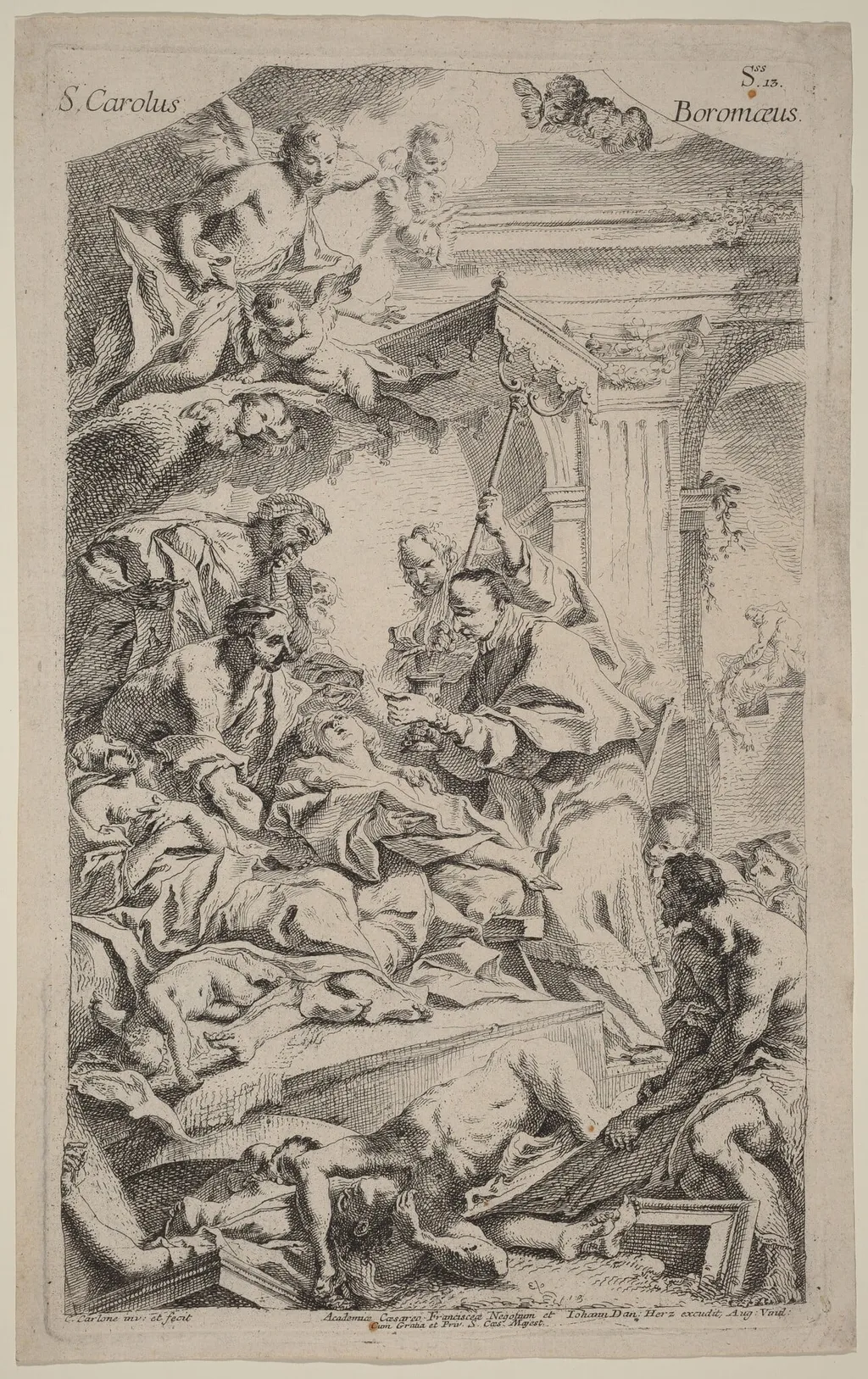
San Carlo Borromeo Giving Last Communion to Victims of the Plague is an ink print by the Baroque artist Carlo Innocenzo Carlone. It dates from 1724 and is held in the collection of the National Gallery of Art.
About this work
Overview
San Carlo Borromeo Giving Last Communion to Victims of the Plague is a circa 1724 etching on laid paper by Carlo Innocenzo Carlone, depicting a dramatic scene of religious devotion amidst turmoil.
Subject & Meaning
The etching illustrates Saint Carlo Borromeo administering last rites to plague victims, conveying a sense of urgent spiritual care amidst a catastrophic event. The composition emphasizes the yearning for divine comfort, with figures straining towards the saint and heavenly angels hovering above.
Technique & Style
Carlone employed expressive, rough etching lines to create a chaotic, emotionally charged atmosphere. The crowded, dynamic scene, with its strong sense of movement and intense facial expressions, aligns with the dramatic storytelling characteristic of Baroque art.
History & Provenance
Created around 1724, the etching's provenance details are not specified here, though its style and subject matter reflect the religious and artistic preoccupations of its time.
Context
The work reflects the Baroque period's emphasis on engaging, emotionally intense art. Such pieces were often designed to evoke strong feelings in viewers, drawing them into the depicted drama. The subject also touches on the historical reality of plague outbreaks in Europe, which frequently inspired artworks focusing on faith and suffering.
Artist & collection


 The Nativity
 The Holy Family Adored by Angels (The Large Nativity)
 The Adoration of the Shepherds
![Jacob and Rebecca before Isaac [recto], by French 18th Century](https://artifactworldgallery.com/img/french-18th-century--jacob-and-rebecca-before-isaac-recto--5393ee8d0dceb48c-w320.webp) Jacob and Rebecca before Isaac [recto]
Jacob and Rebecca before Isaac [recto]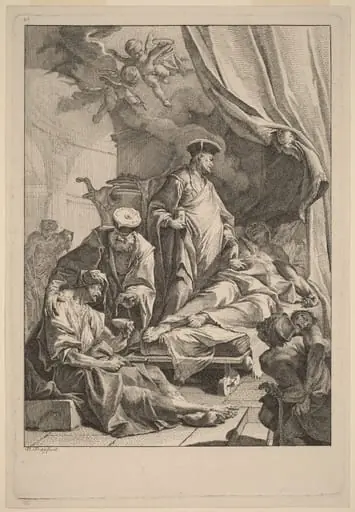 Saints Cosmas and Damian Caring for the Sick
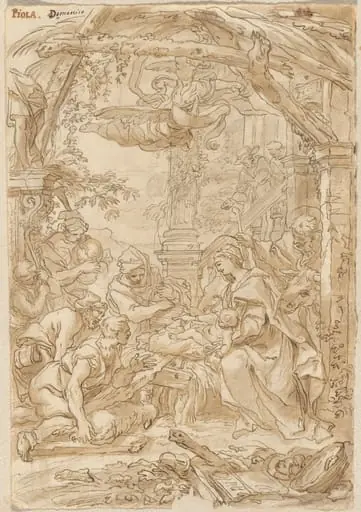 The Adoration of the Shepherds
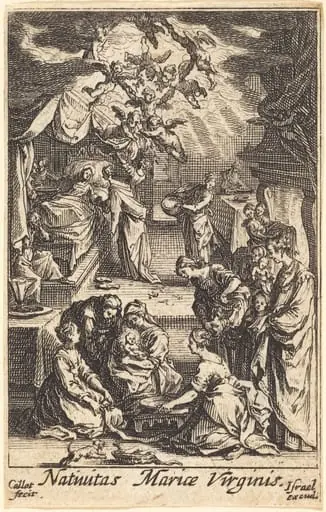 The Birth of the Virgin
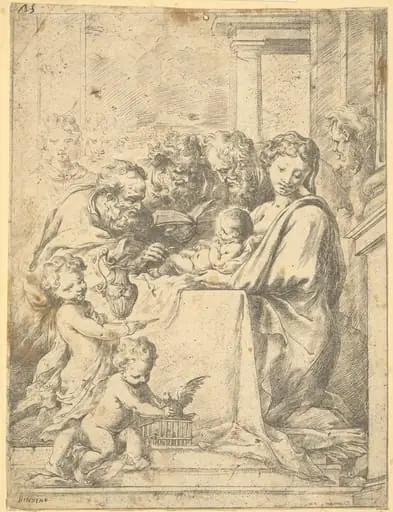 The Circumcision of Christ
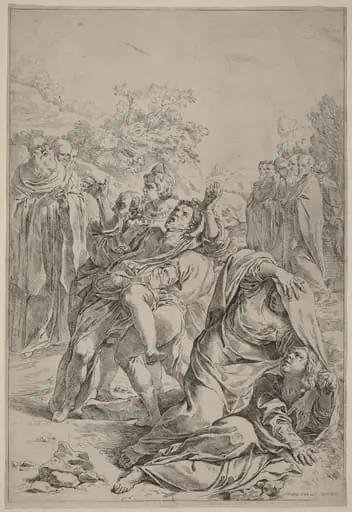 Saint Benedict Healing the Possessed
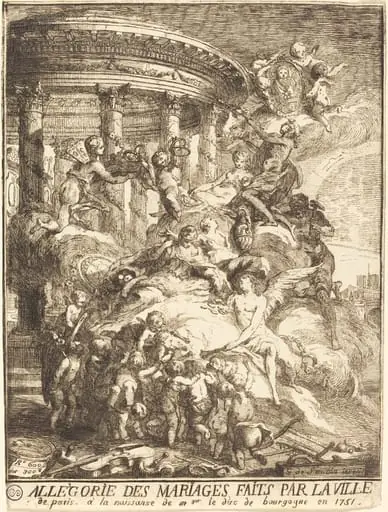 Allégorie des mariages faits par la ville de Paris à la naissance du duc de Bourgogne (Allegory of the Marriages Performed by the City of Paris in Honor of the Birth of the Duc de Bourgogne in 1751)
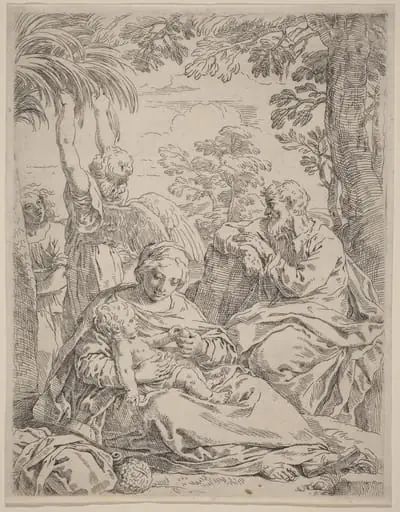 The Rest on the Flight into Egypt
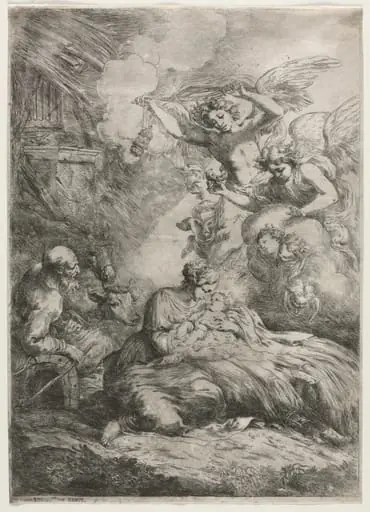 The Nativity