Artwork
Virgin and Child with Saint Jerome and Saint Catherine of Alexandria
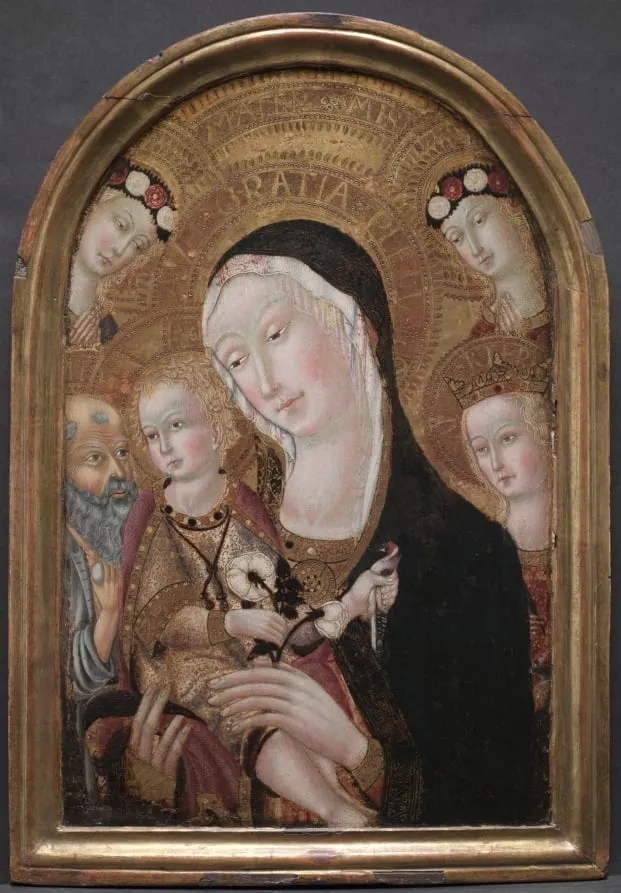
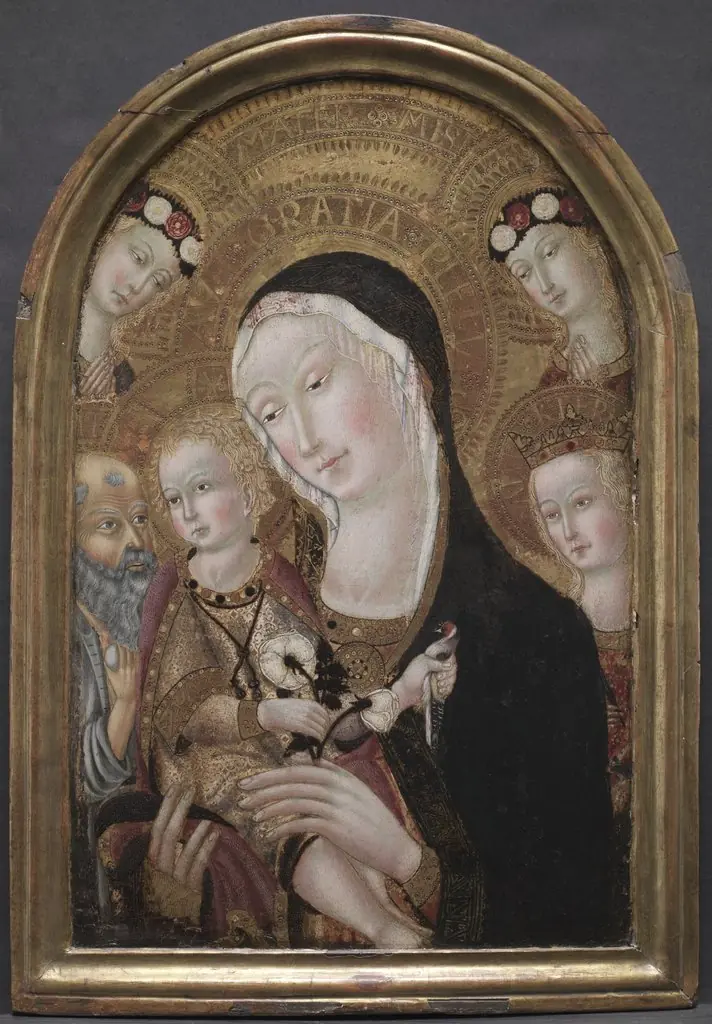
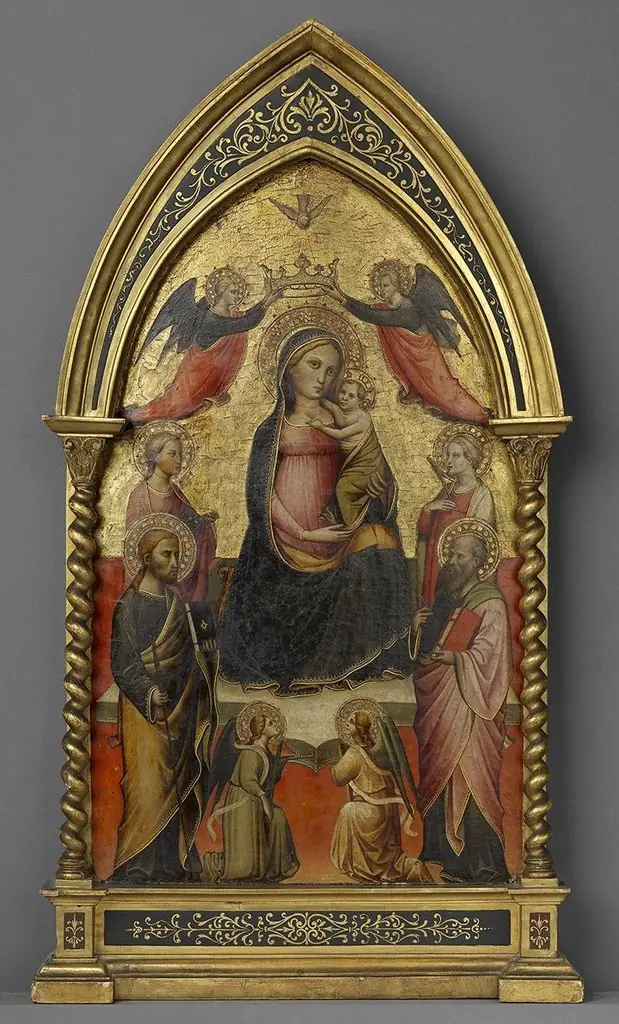
Virgin and Child with Saint Jerome and Saint Catherine of Alexandria is an unspecified painting by the Italo Byzantine artist Carolino da Viterbo. It dates from 1450 and is held in the collection of the Cleveland Museum of Art. This devotional painting depicts the Virgin Mary with the infant Christ, flanked by Saint Jerome and Saint Catherine of Alexandria.
About this work
Overview
This devotional painting depicts the Virgin Mary with the infant Christ, flanked by Saint Jerome and Saint Catherine of Alexandria. The figures are arranged in a serene, symmetrical composition, each identified by inscribed halos. The scene is rendered in a luminous, gold-ground style typical of late medieval religious art, emphasizing spiritual presence over naturalistic space.
Subject & Meaning
The Christ Child holds roses, whose fragrance evokes heavenly grace and whose thorns foreshadow his Passion.
The Christ Child holds roses, whose fragrance evokes heavenly grace and whose thorns foreshadow his Passion. In his other hand, a small bird symbolizes the human soul, suggesting divine guardianship. The inscriptions on the halos affirm the identities and sacred roles of each figure, with Mary’s halo quoting the Angelic Salutation and her title as 'Merciful Mother,' reinforcing her intercessory function in Christian devotion.
Technique & Style
The painting employs gold leaf for halos and backgrounds, creating a radiant, otherworldly atmosphere. Figures are rendered with delicate lines and flat, decorative surfaces, typical of International Gothic conventions. Latin inscriptions are carefully integrated into the halos, functioning both as identifiers and as sacred texts that elevate the image beyond mere representation.
History & Provenance
The work originates from the late 14th or early 15th century, likely produced in a Central European workshop influenced by Bohemian or South German traditions. Its survival in relatively intact condition suggests it was venerated in a private or monastic setting. No definitive record of its early ownership exists, but its iconography aligns with devotional practices of the period.
Context
During the late Middle Ages, images of the Virgin and Child with accompanying saints were common in both public altarpieces and private devotional objects. The inclusion of Saint Jerome, a scholar-saint, and Saint Catherine, a learned martyr, reflects a patron’s interest in intellectual and spiritual virtue. The use of Latin inscriptions catered to literate clergy and educated laypeople.
Legacy
This painting exemplifies the transition from medieval symbolic representation toward early Renaissance humanism. While retaining traditional iconography and gold-ground aesthetics, its careful arrangement and emotional restraint anticipate later developments in devotional art. It remains a quiet testament to the enduring power of visual theology in pre-Reformation Europe.
Artist & collection

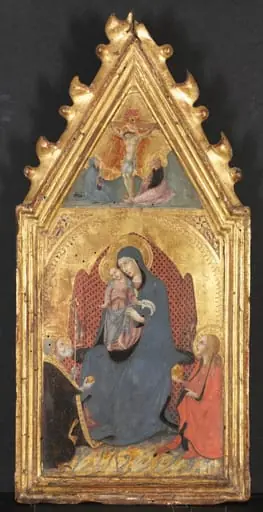 Virgin and Child Adored by Saints Mary Magdalene and Nicolas of Bari; Christ Crucified with the Virgin and Saint John the Evangelist
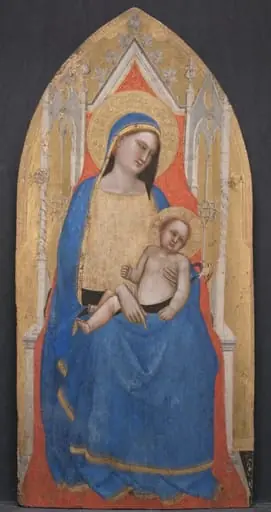 Madonna and Child Enthroned
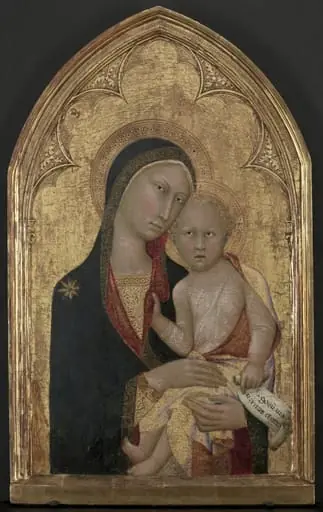 Madonna and Child
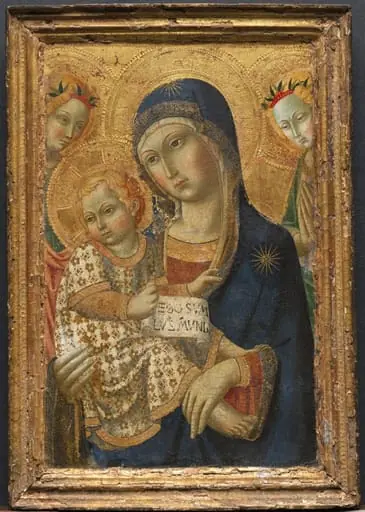 Virgin and Child Enthroned
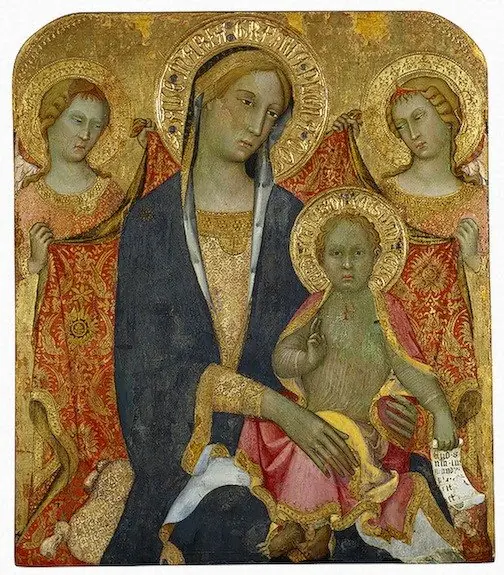 Madonna with Child and Two Angels
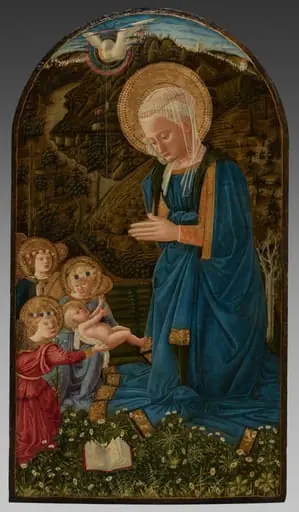 Virgin and Child with Angels
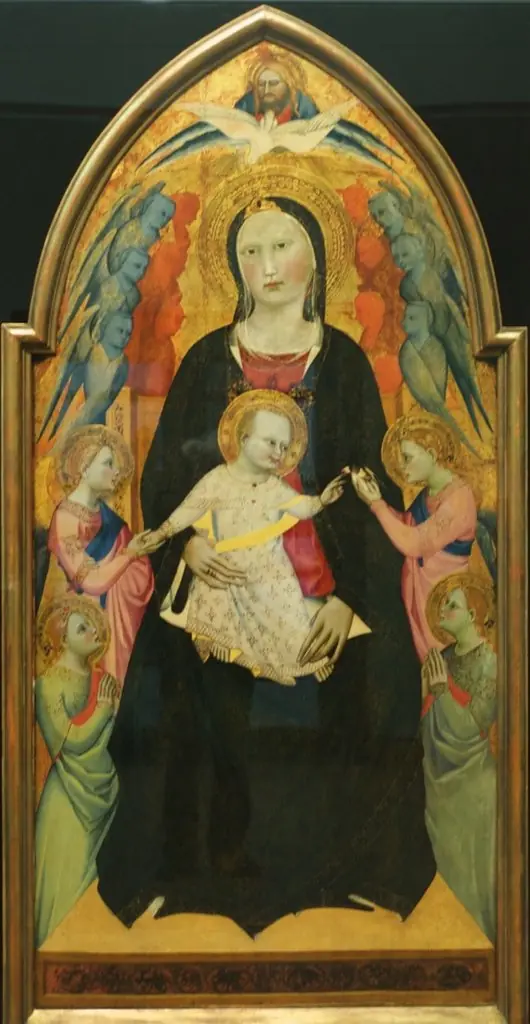 Virgin Mother and Child enthroned surrounded by the Holy Father, the Holy Ghost and Angels
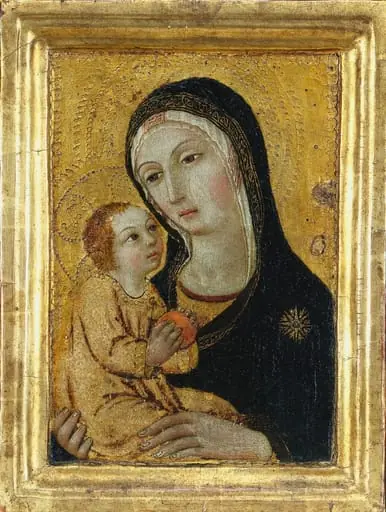 Virgin and Child
 Madonna mit vier Heiligen und Engeln (?)