Artwork
Madonna and Child Enthroned
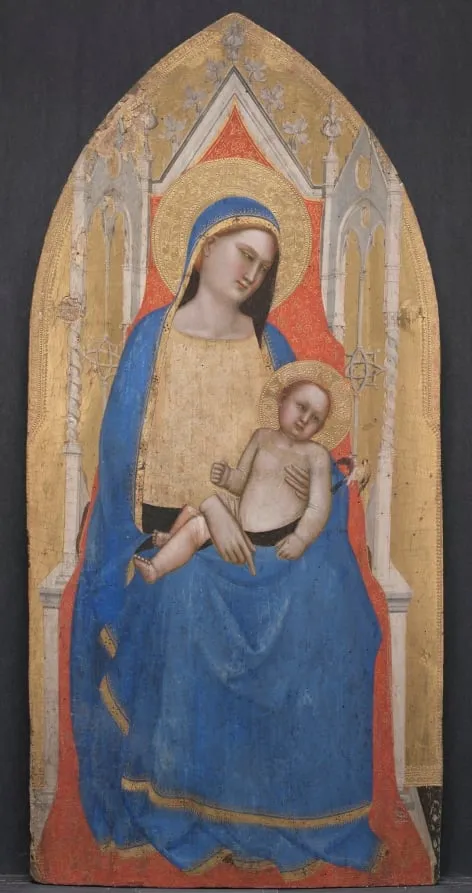
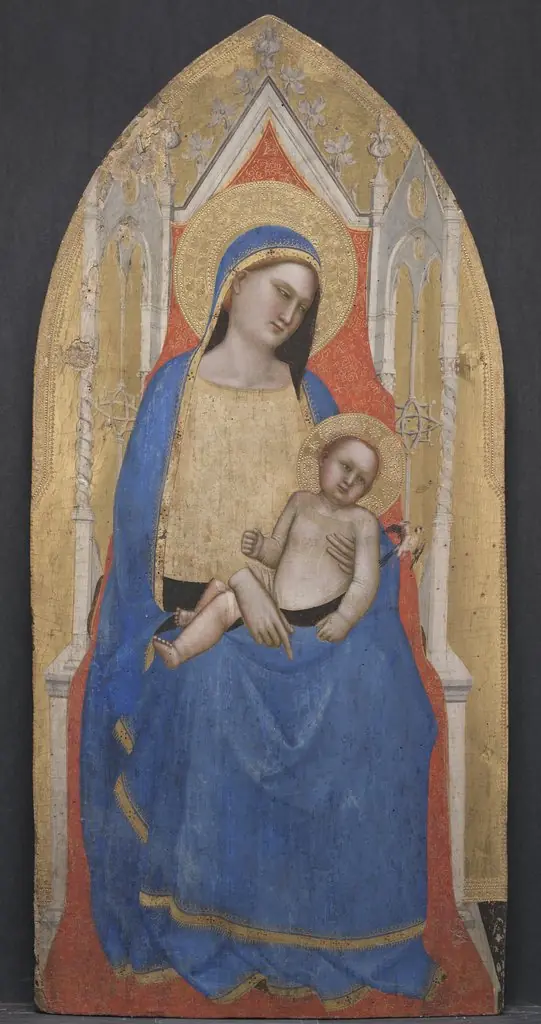
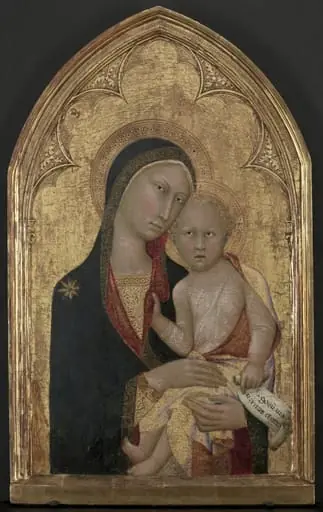
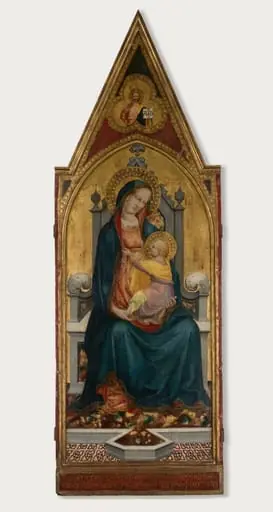
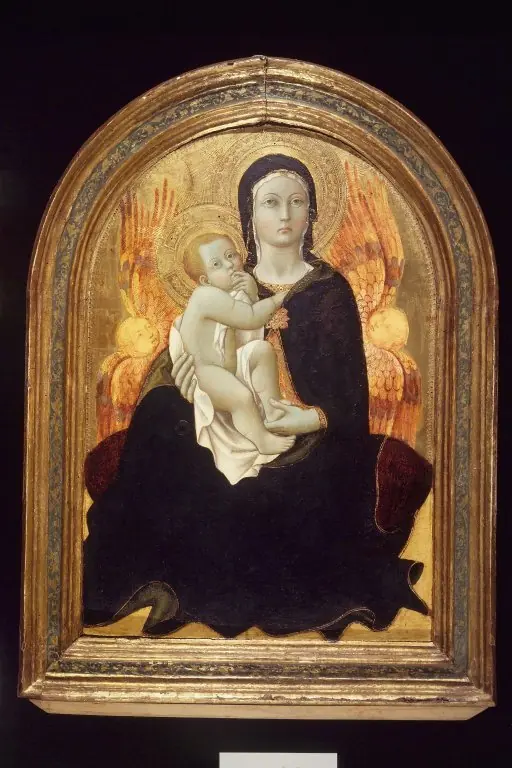
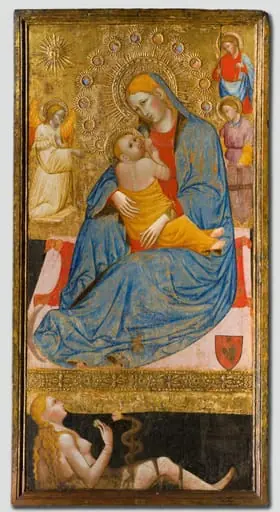
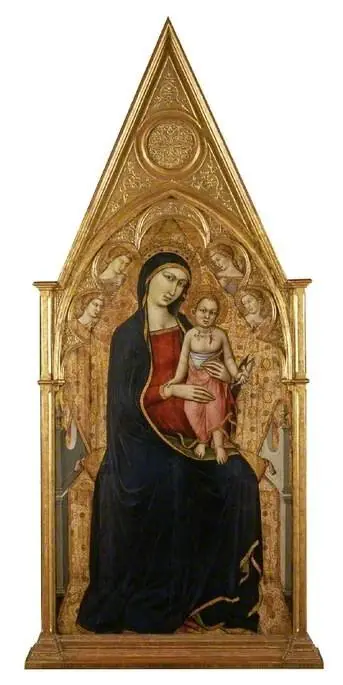
Madonna and Child Enthroned is an unspecified painting by the Italo Byzantine artist Master of San Lucchese. It dates from 1350 and is held in the collection of the Cleveland Museum of Art. The panel presents a seated Virgin on an ornate gold throne, her blue mantle framing the infant Christ who looks directly outward.
About this work
Overview
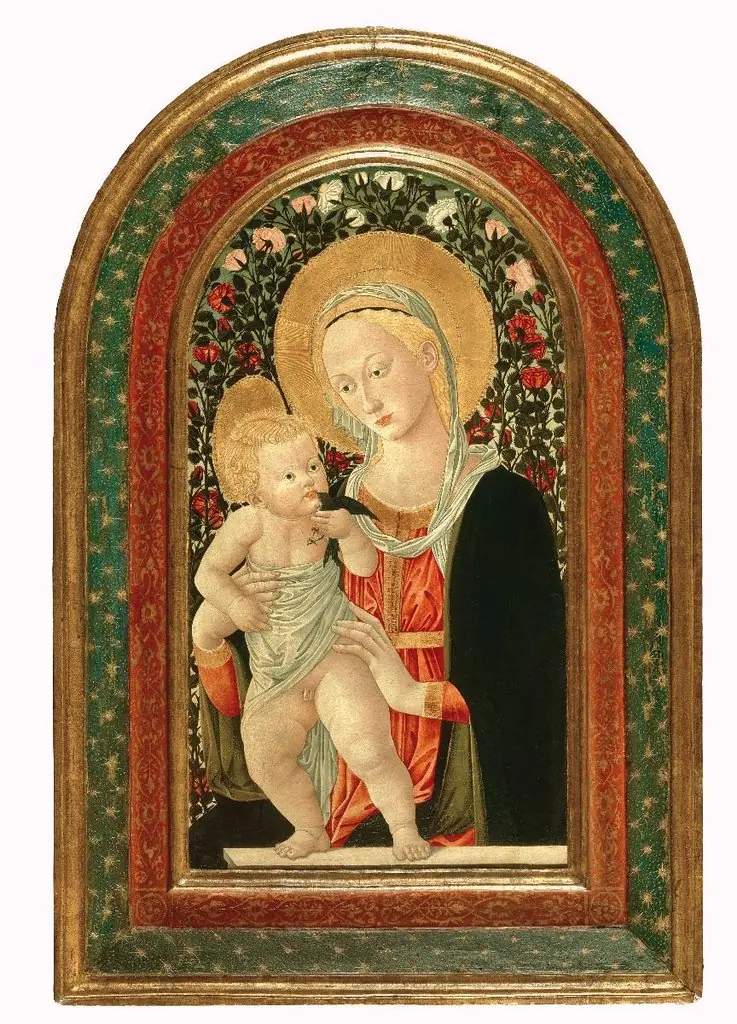
The panel presents a seated Virgin on an ornate gold throne, her blue mantle framing the infant Christ who looks directly outward. A small goldfinch with distinctive red spots rests nearby. The composition emphasizes the figures’ solemn presence, with the Virgin’s gaze directed toward the child and the child’s eyes engaging the viewer, creating a quiet devotional focus.
Subject & Meaning
The Virgin is portrayed as the heavenly queen, a traditional role underscored by her elevated throne and dignified posture. The infant Christ, facing the audience, invites contemplation of his divinity. The goldfinch, a common symbol of the Passion, alludes to the future suffering of Christ; its red markings were believed to echo drops of his blood.
Technique & Style
Executed in tempera on panel, the work displays fine brushwork and a luminous color palette typical of early 15th‑century Sienese painting. The gold leaf background and intricate throne carving reflect the period’s decorative richness, while the delicate rendering of the figures’ faces conveys a gentle naturalism within an otherwise formal setting.
History & Provenance
The creator remains anonymous; scholars refer to him as the Master of San Lucchese after an altarpiece originally installed in the church of San Lucchese in Poggibonsi, near Siena. No documentary evidence records the artist’s training or career, and the painting’s early ownership is traced only to the original ecclesiastical context.
Context
The image belongs to a tradition of Marian devotion prevalent in medieval Italy, where the Virgin was often depicted enthroned as an intercessor between the divine and the faithful. The inclusion of the goldfinch aligns with contemporary iconography linking the Virgin’s child to the narrative of Christ’s future crucifixion, a motif common in Sienese devotional art.
Artist & collection
Artist
This 14th-century Italian painter made small wooden panels glowing with gold leaf and jewel-bright colors.