Artwork
Madonna mit vier Heiligen und Engeln (?)
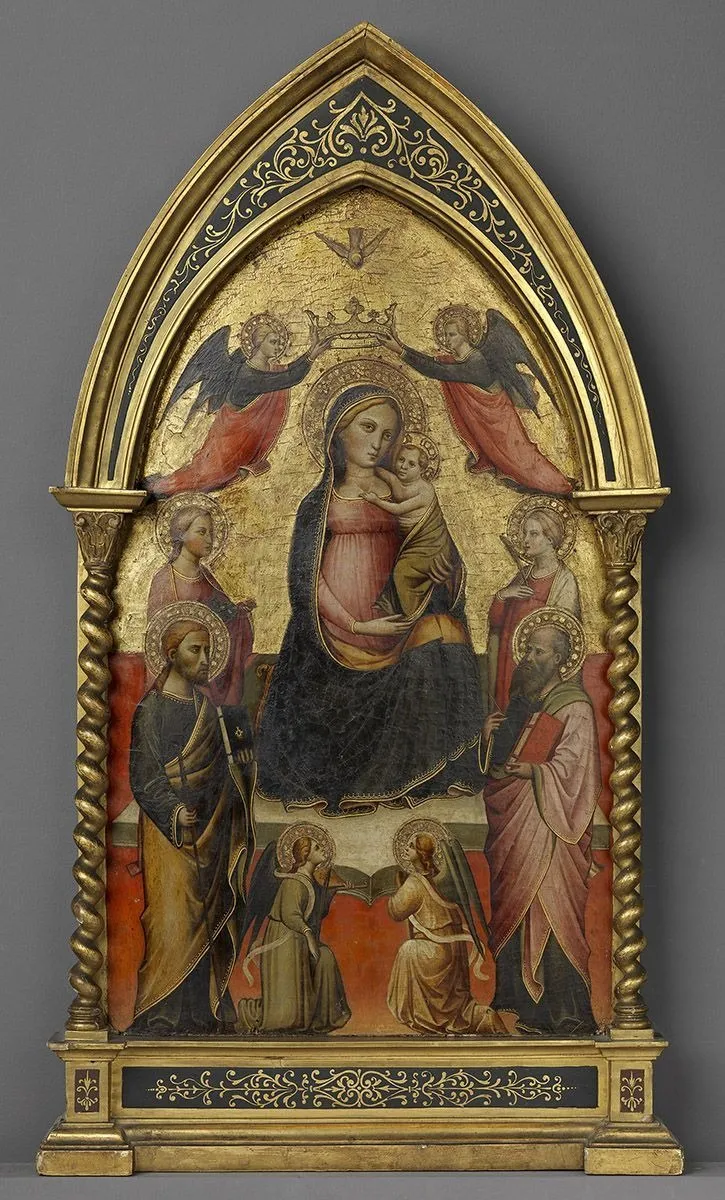
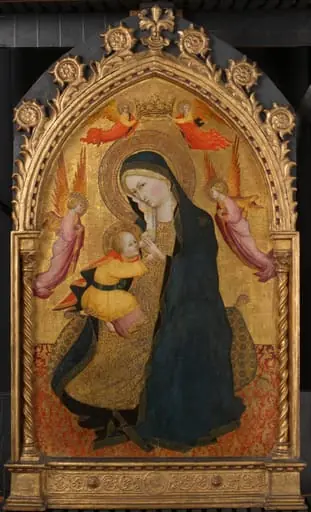
Madonna mit vier Heiligen und Engeln (?) is an unspecified painting by the Byzantine icon painting artist Unknown. It dates from 1400 and is held in the collection of the Bavarian State Painting Collections. The work depicts a seated female figure holding an infant, surrounded by four attendant figures and a group of winged angels.
About this work
Overview
The work depicts a seated female figure holding an infant, surrounded by four attendant figures and a group of winged angels. The central woman is dressed in a red garment beneath a blue mantle, while the child is swaddled in gold‑colored fabric. The surrounding figures wear flowing robes and bear halos, and the angels carry various objects, all set against a warm, golden background.
Subject & Meaning
The composition presents a traditional devotional scene: the mother and child are identified as the Virgin and the Christ Child, flanked by four canonized individuals, likely saints, whose presence reinforces the painting’s religious intent. The angels, positioned above and beside the group, serve as celestial witnesses, emphasizing the sanctity of the central figures.
Technique & Style
Executed with a flattened, two‑dimensional treatment, the figures lack the illusion of depth common in later Renaissance works. A restrained palette of muted reds, blues, and extensive gold tones dominates the surface, while the background’s uniform golden hue unifies the scene. The brushwork emphasizes clear outlines over modeling, contributing to the work’s iconic, emblematic quality.
History & Provenance
The painting is part of the collection of the Alte Pinakothek in Munich. Its acquisition history is recorded by the museum, which lists the work among its holdings of religious panel paintings, though specific details of its earlier ownership remain undocumented in the available sources.
Context
The stylistic flattening aligns it with earlier medieval aesthetics, preceding the full development of perspective.
Created within the tradition of Northern European devotional art, the piece reflects the iconographic conventions of the late medieval to early Renaissance period, when depictions of the Virgin with attendant saints and angels were common in private chapels and ecclesiastical settings. The stylistic flattening aligns it with earlier medieval aesthetics, preceding the full development of perspective.
Artist & collection

 Domestic Scene
 Giacomo and Cardinal Marco, investing Andrea, Abbot of San Zeno, with his Benefice
 The Nymph of Fontainebleau
 Portrait of a Woman
 Madonna and Child with Saints in the Enclosed Garden
 Venus and Minerva
 Family Group of Four on Sofa
 Wall painting from Room H of the Villa of P. Fannius Synistor at Boscoreale
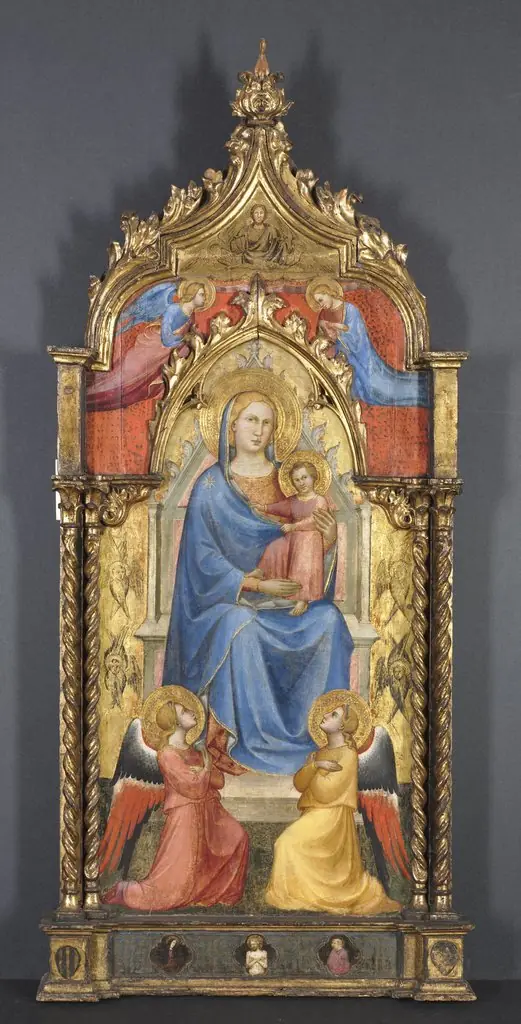 Virgin and Child with Angels
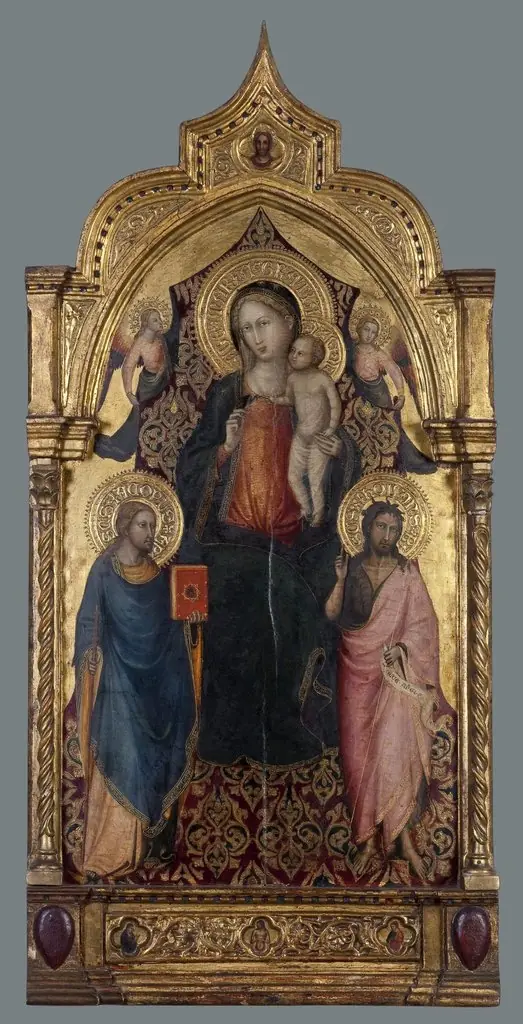 Madonna and Child, with St Jacob the Younger, St John The Baptist and Angels
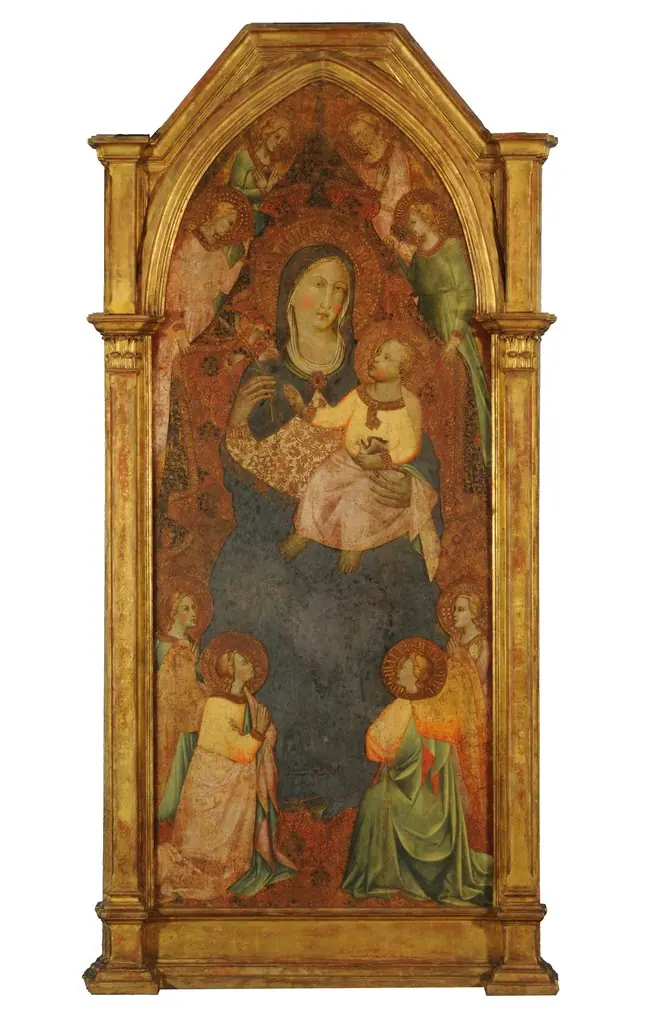 Virgin with child
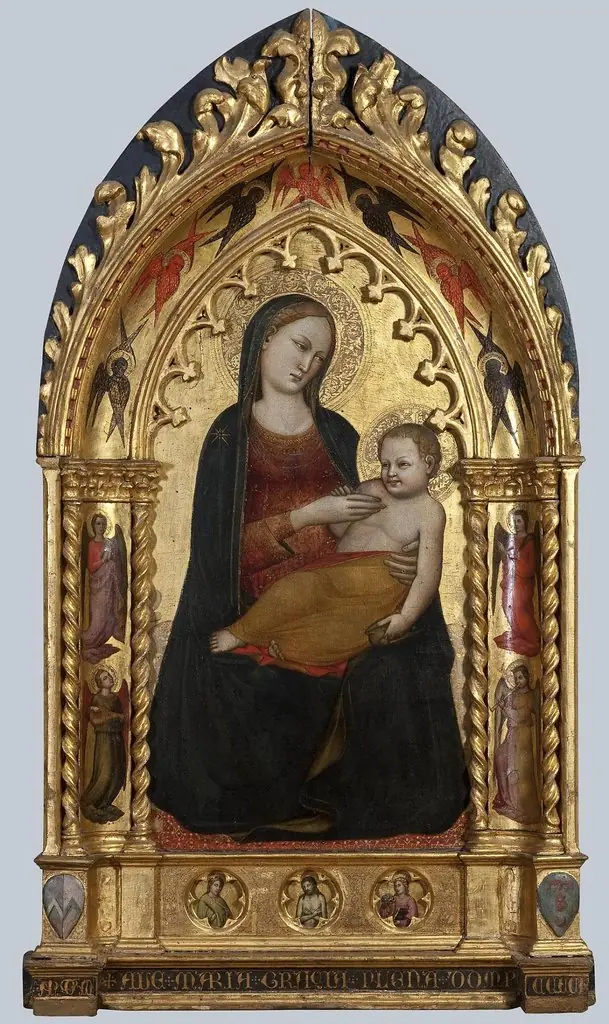 Madonna and Child
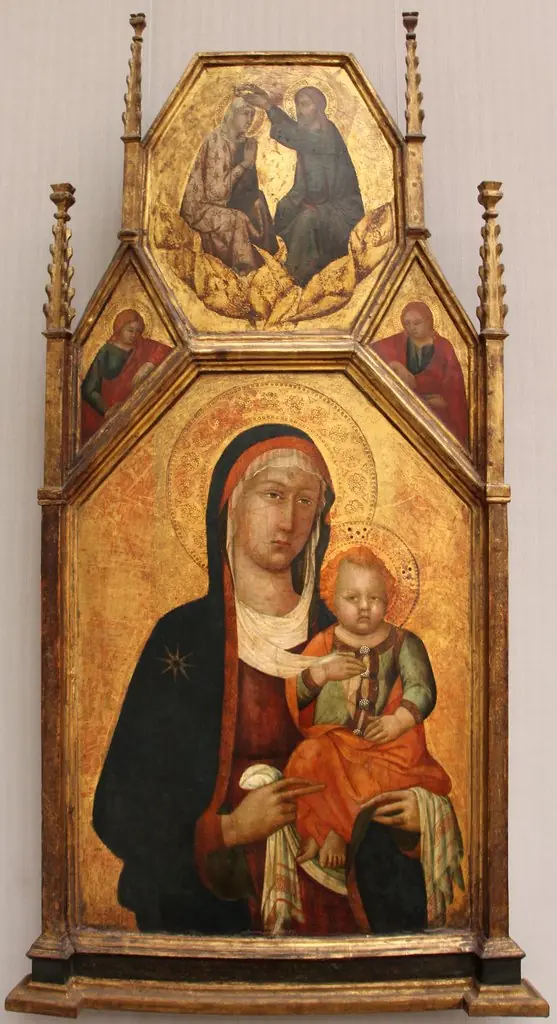 Maria mit dem Kind
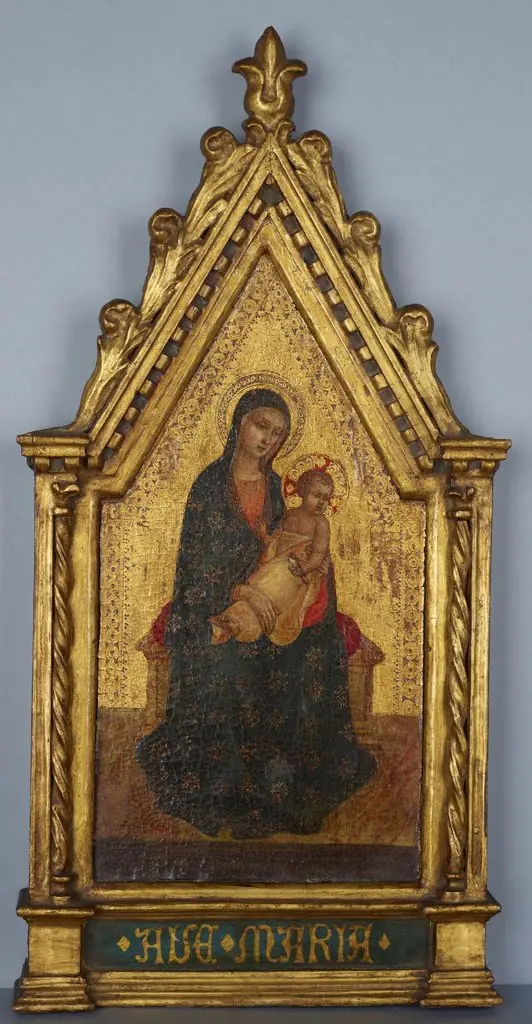 Madonna and Child Enthroned
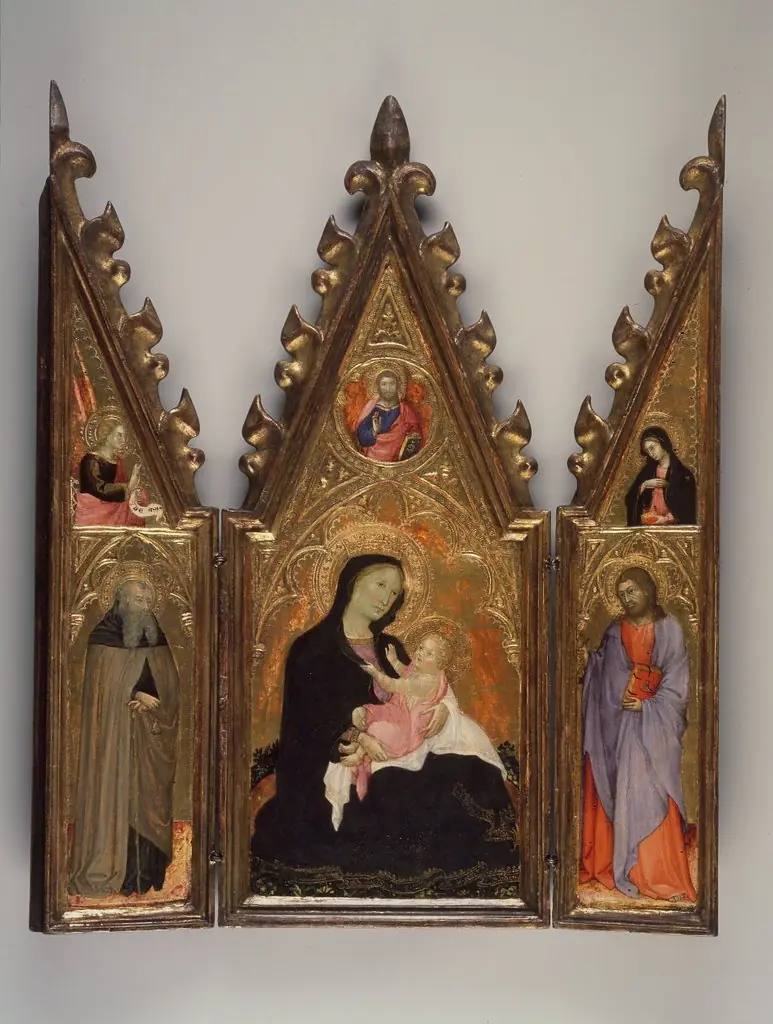 Madonna of Humility, portable altarpiece
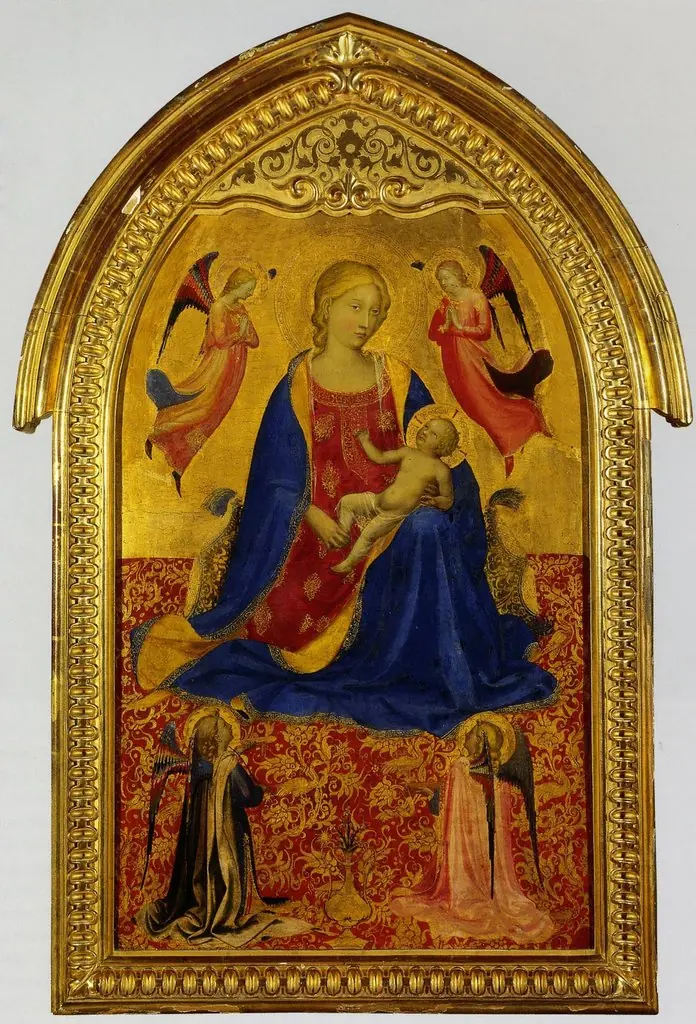 Madonna and Child with Four Аngels
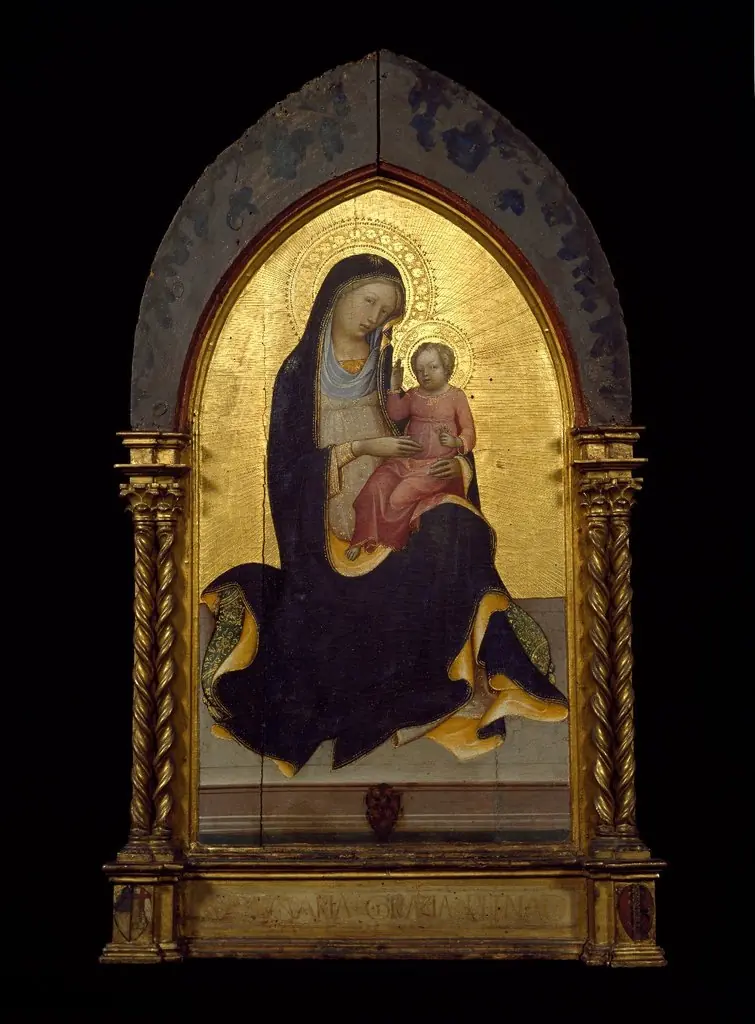 Madonna of humility
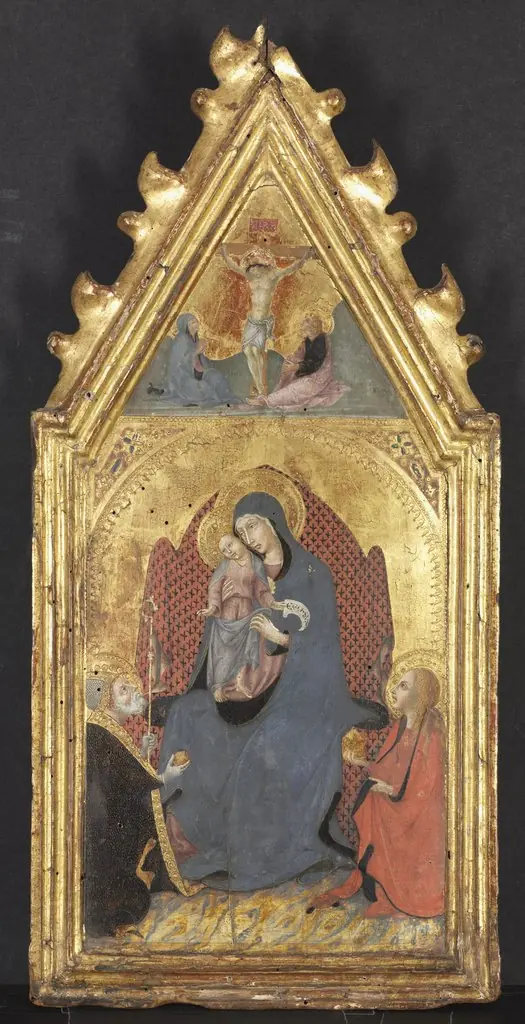 Virgin and Child Adored by Saints Mary Magdalene and Nicolas of Bari; Christ Crucified with the Virgin and Saint John the Evangelist
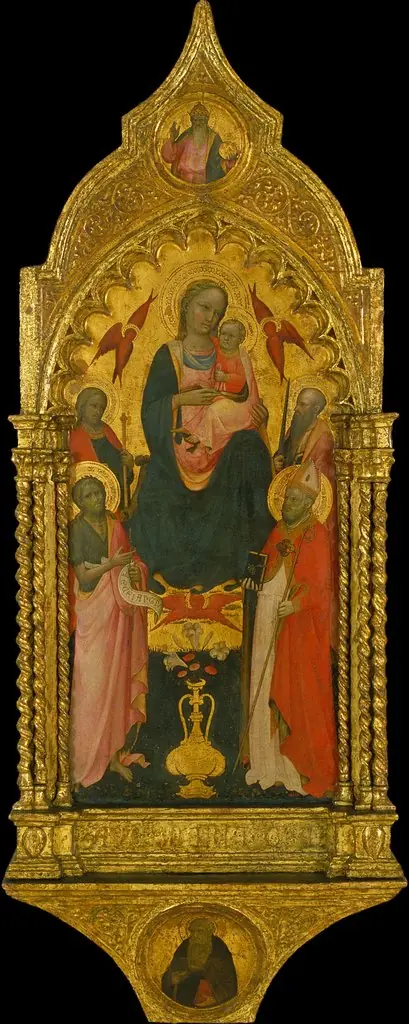 Virgin and Saints
 Madonna of Humility