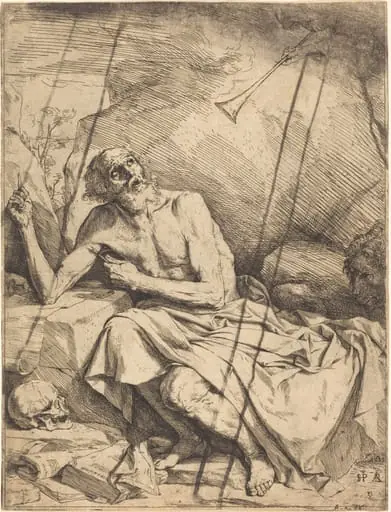
Artwork
Saint Jerome in the Wilderness
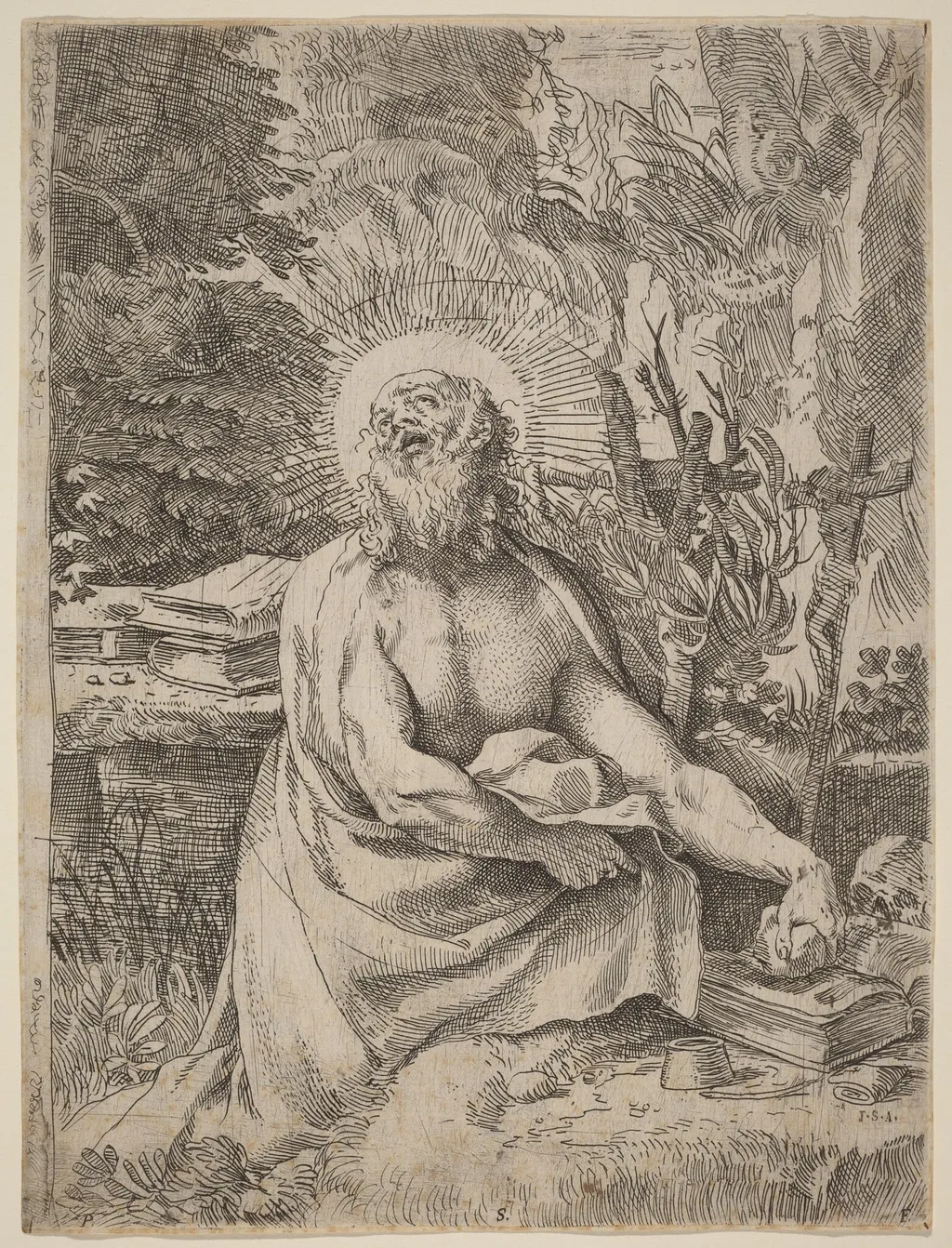
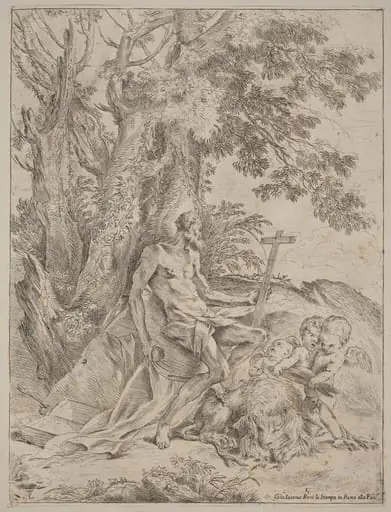
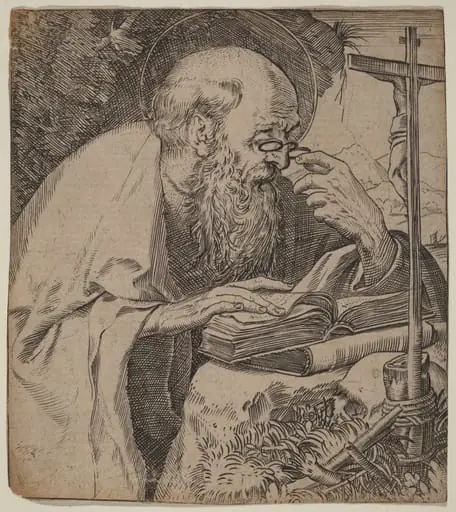
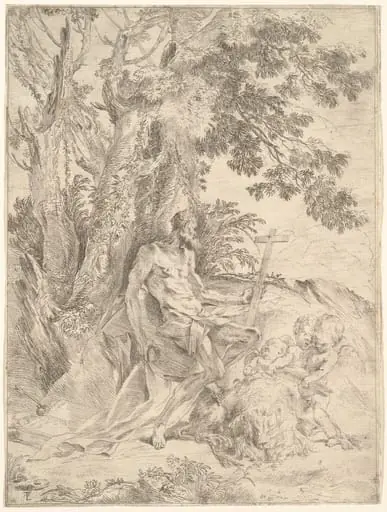
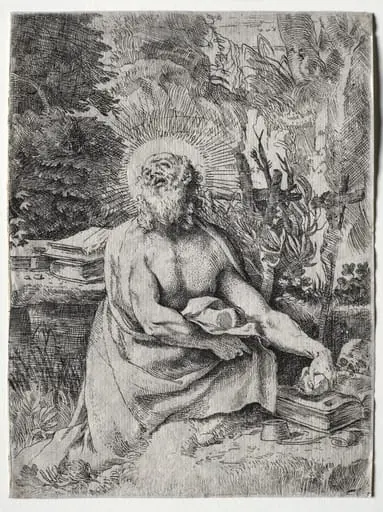
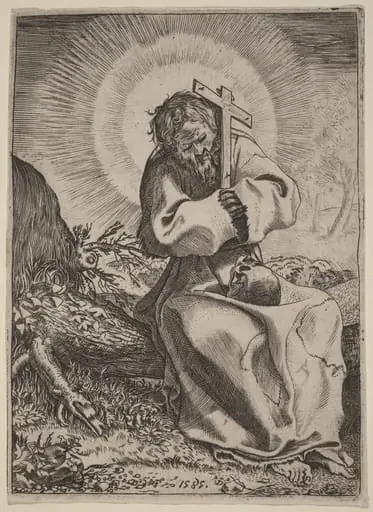
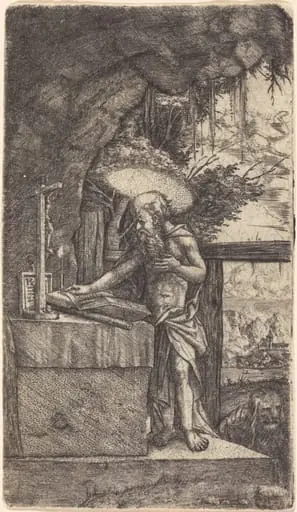
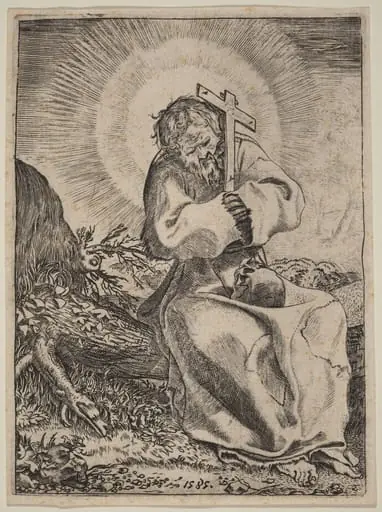
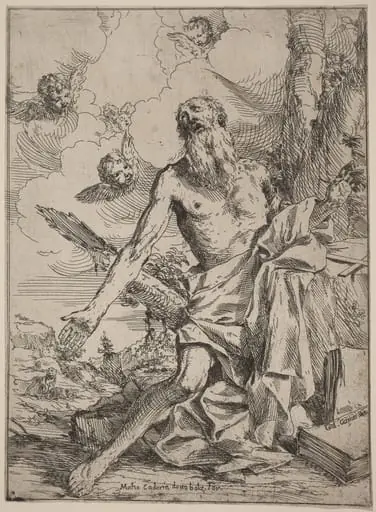
Saint Jerome in the Wilderness is an ink print by the Renaissance artist Annibale Carracci. It dates from 1591 and is held in the collection of the National Gallery of Art.
About this work
Overview
Created around 1591, this print by Annibale Carracci depicts Saint Jerome in a desolate landscape using etching and engraving on laid paper.
Created around 1591, this print by Annibale Carracci depicts Saint Jerome in a desolate landscape using etching and engraving on laid paper. Carracci, a pivotal figure in late 16th-century Italian art, employed these techniques to explore texture and mood. The work reflects his engagement with religious themes and his interest in translating emotional depth into graphic form, distinguishing it from purely decorative prints of the period.
Subject & Meaning
The image portrays Saint Jerome, the scholar-saint, in solitude amid rugged terrain, engaged in penitential contemplation. He holds a stone, symbolizing self-discipline, while a lion rests peacefully nearby—a reference to the legend of Jerome removing a thorn from the beast’s paw. The quiet companionship between man and animal underscores themes of harmony between the spiritual and natural worlds, reinforcing Jerome’s role as a hermit and translator of sacred texts.
Technique & Style
Carracci combined etching and engraving to achieve varied line quality: etched lines suggest soft shadows, while engraved strokes define sharp contours. The rocky terrain and gnarled trees are rendered with dense, intersecting marks that convey roughness and depth. The lion’s fur and Jerome’s drapery are suggested through subtle gradations, not solid forms, emphasizing the medium’s capacity for atmospheric suggestion over literal representation.
History & Provenance
This print emerged during Carracci’s formative years in Bologna, before his move to Rome. It likely served as a study for larger compositions or as a standalone work for collectors interested in religious subjects. Though no definitive early ownership records survive, its technical sophistication suggests it was circulated among artists and connoisseurs familiar with the emerging Baroque aesthetic.
Context
In the 1590s, Italian printmakers were redefining religious imagery through greater naturalism and emotional nuance. Carracci’s approach diverged from Mannerist stylization, favoring observed detail and psychological presence. His work responded to Counter-Reformation demands for accessible, morally grounded imagery, while also reflecting humanist interest in the solitary life of early Christian ascetics.
Legacy
Carracci’s etching influenced later generations of printmakers who sought to merge expressive line with narrative clarity. His integration of landscape and figure, grounded in direct observation, helped shift printmaking from reproductive function toward independent artistic expression. The work remains a key example of how print media could convey spiritual introspection with technical precision.
Artist & collection
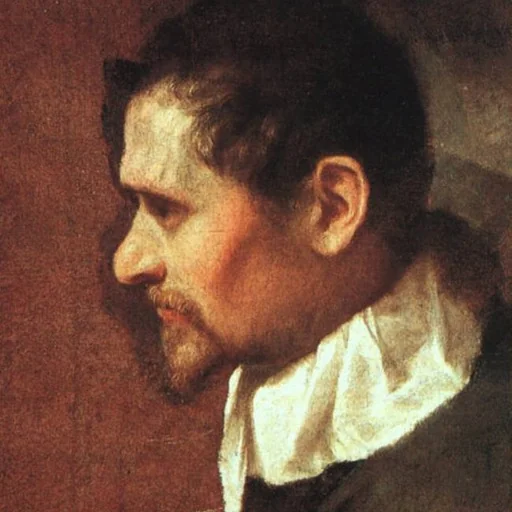
Artist
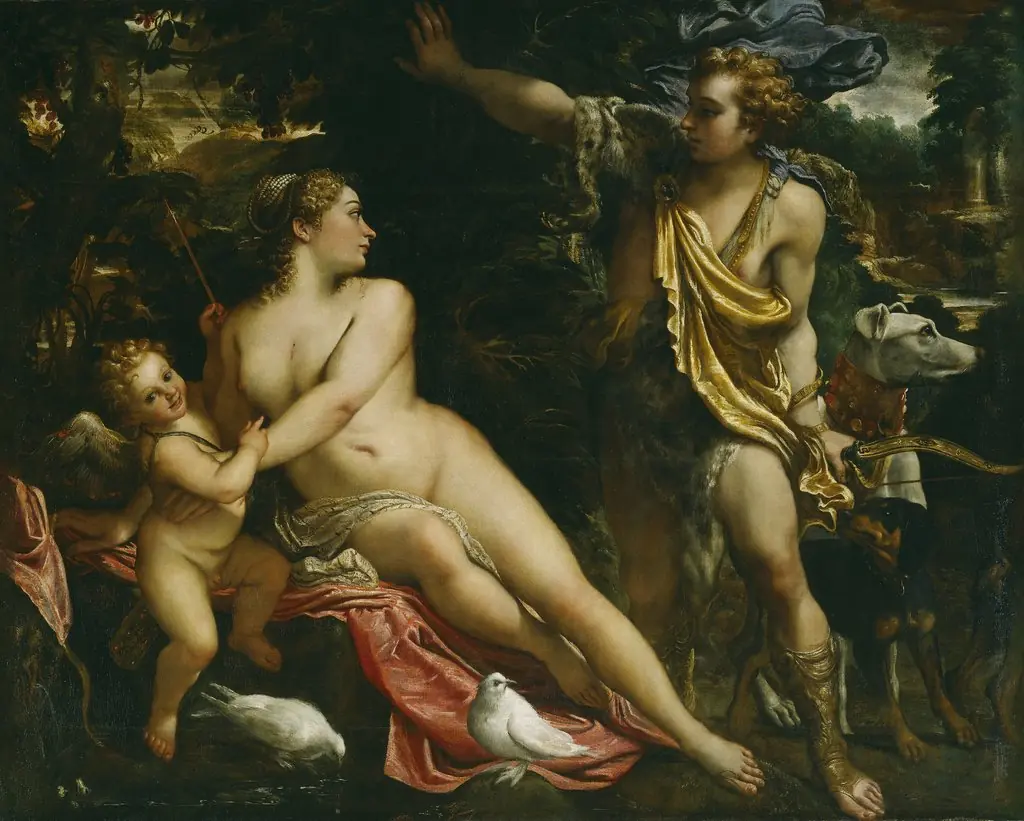
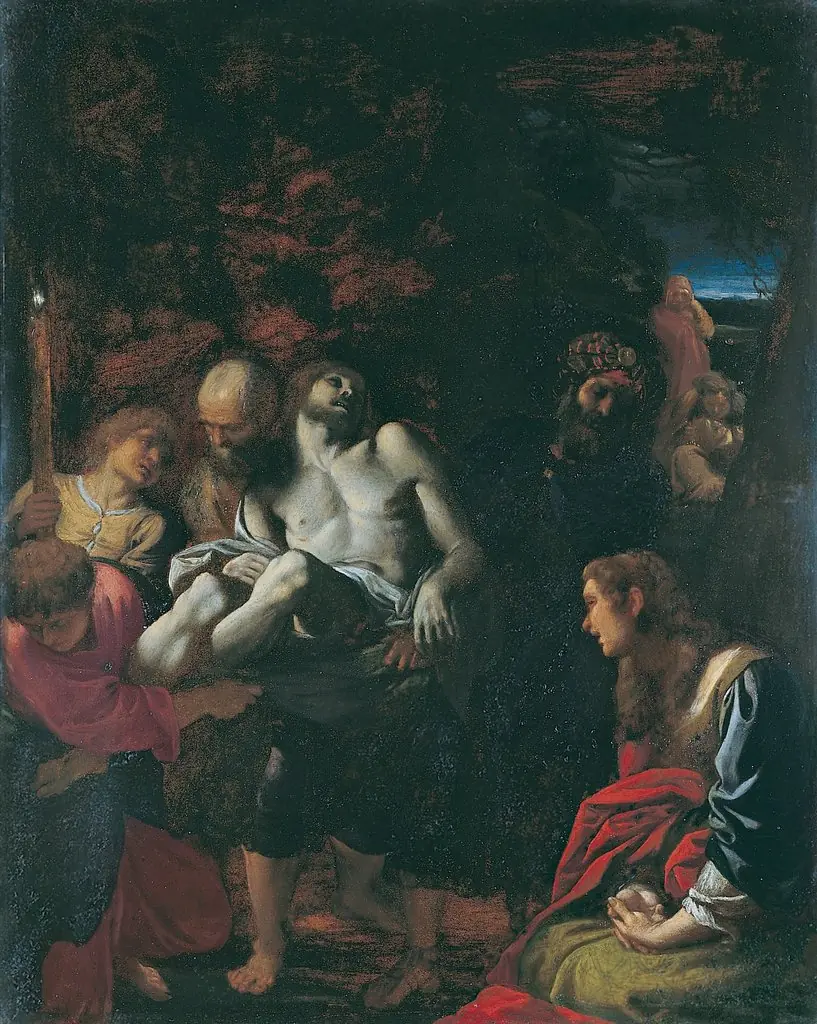
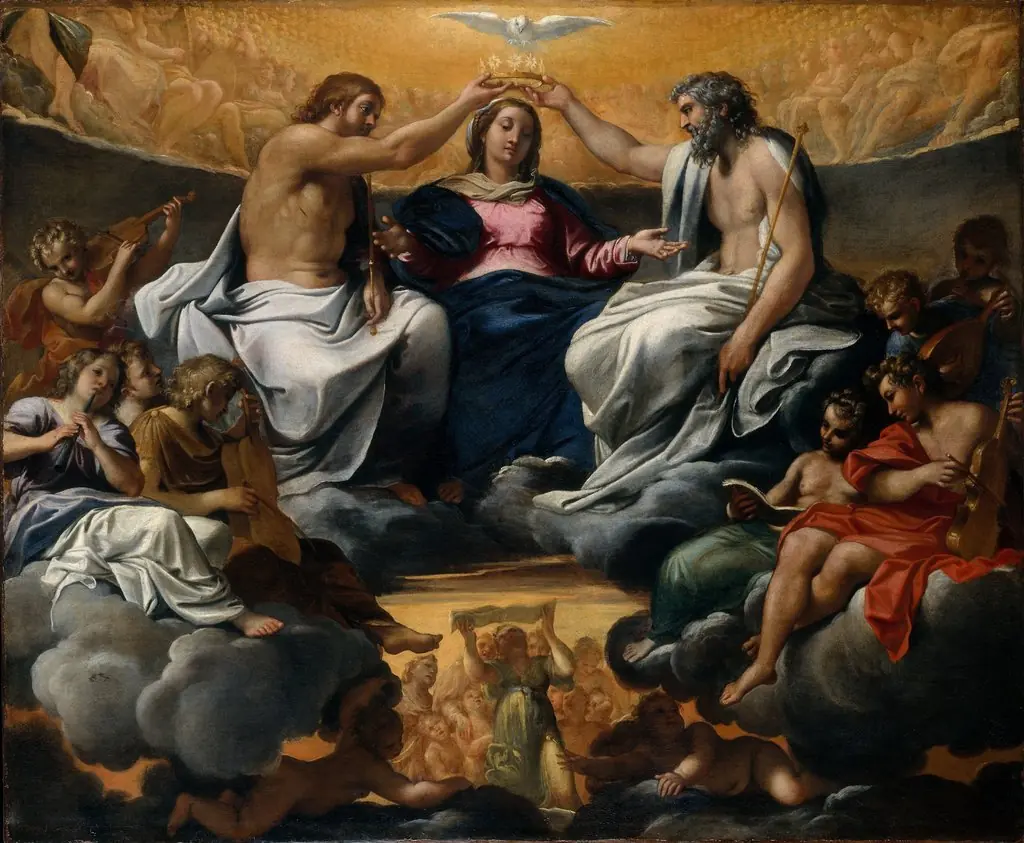
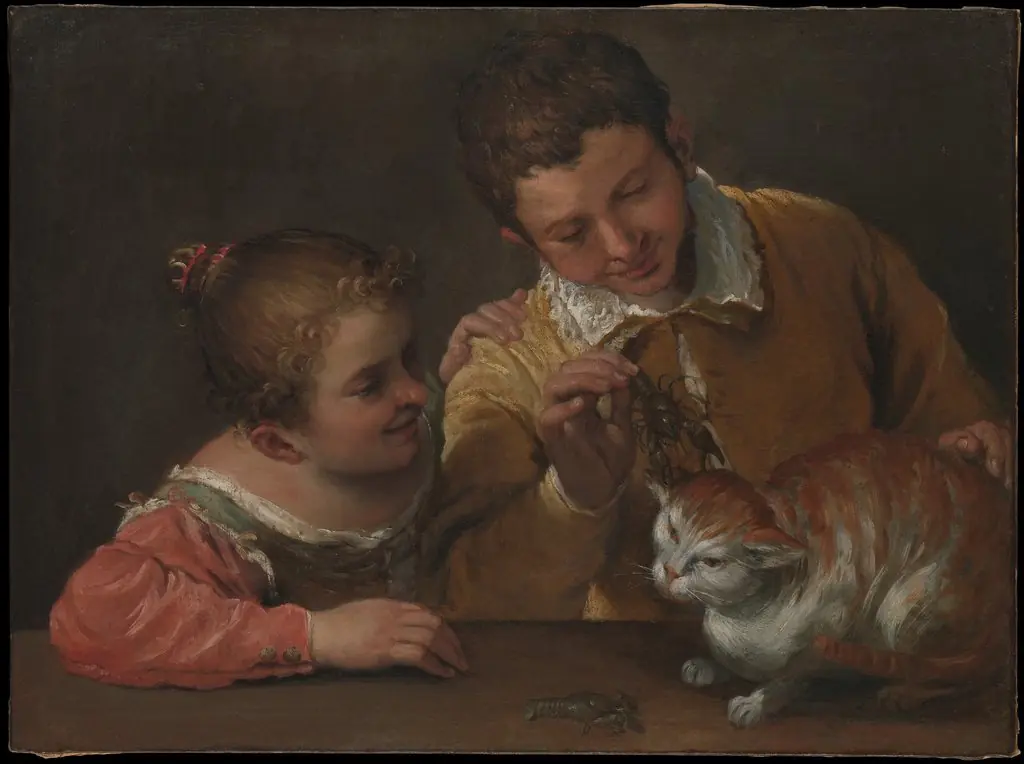
Annibale Carracci ( kə-RAH-chee, UK also kə-RATCH-ee, Italian: ; November 3, 1560 – July 15, 1609) was an Italian painter and instructor, active in Bologna and later in Rome.