Artwork
Edmond de Goncourt
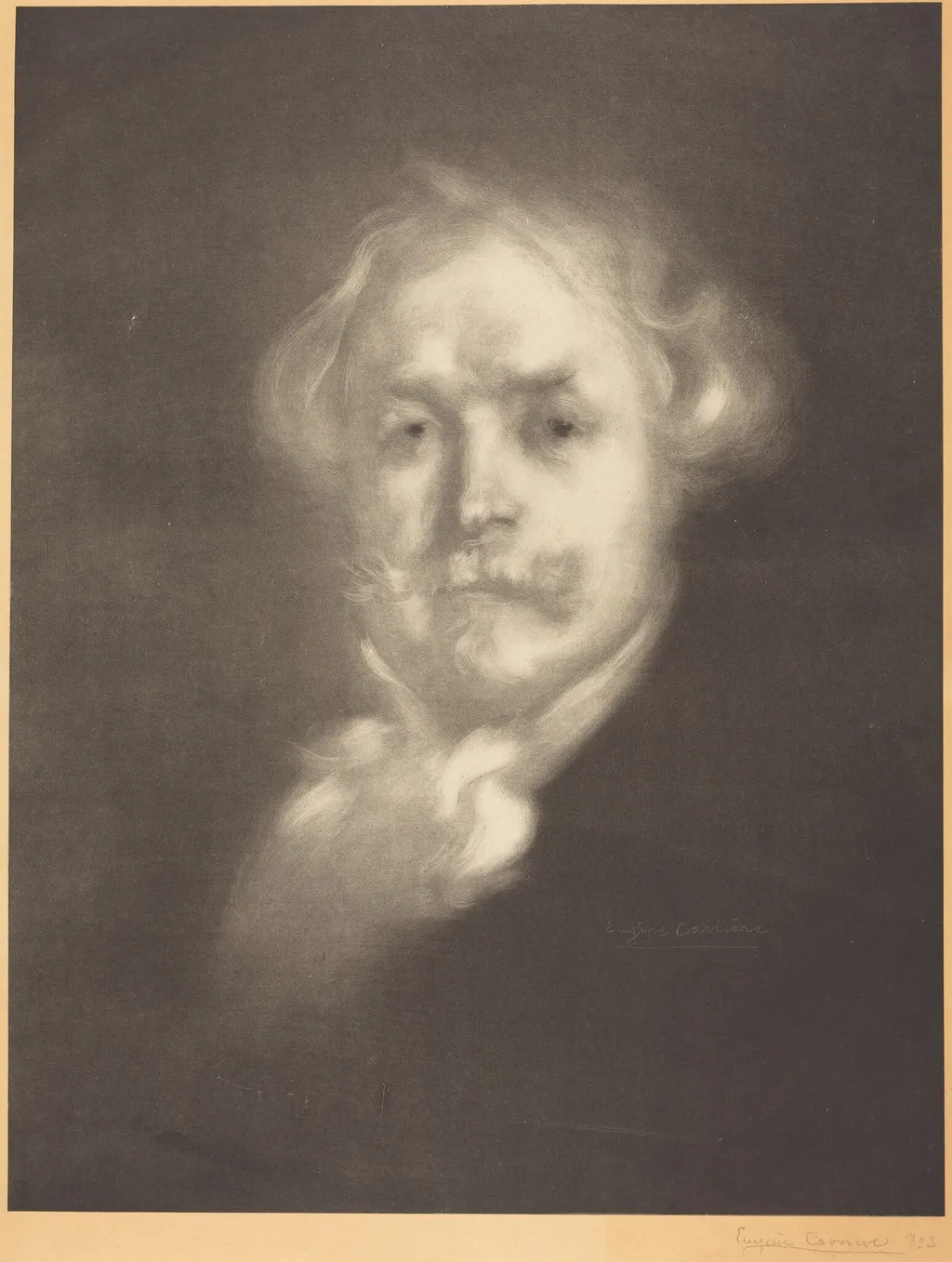
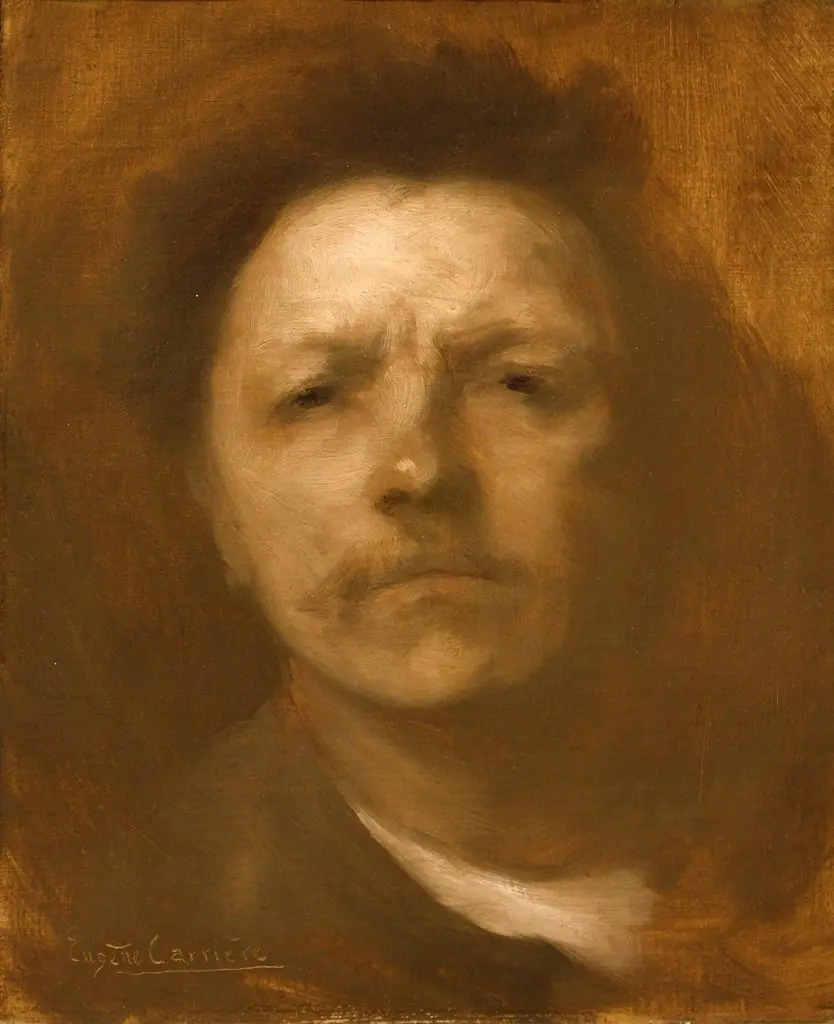
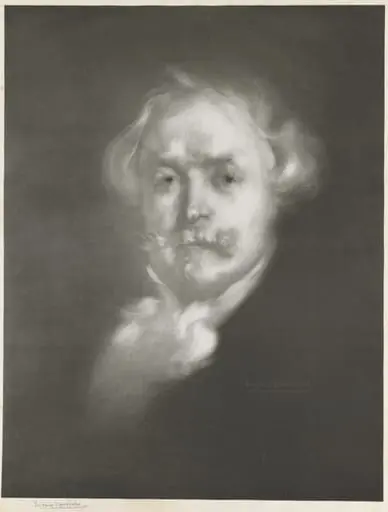
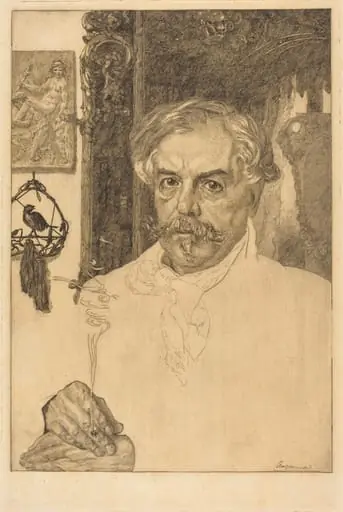
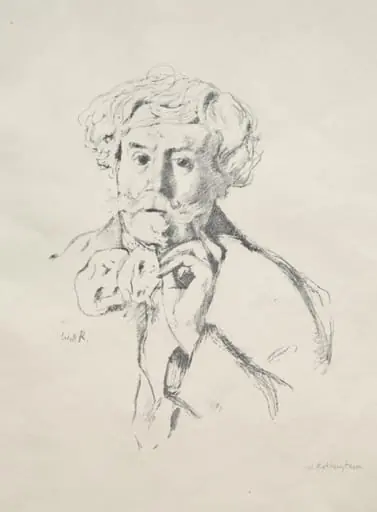
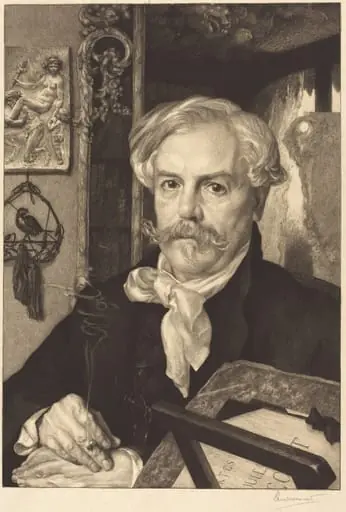
Edmond de Goncourt is an ink print by the Impressionist artist Eugène Carrière. It dates from 1896 and is held in the collection of the National Gallery of Art.
About this work
Overview
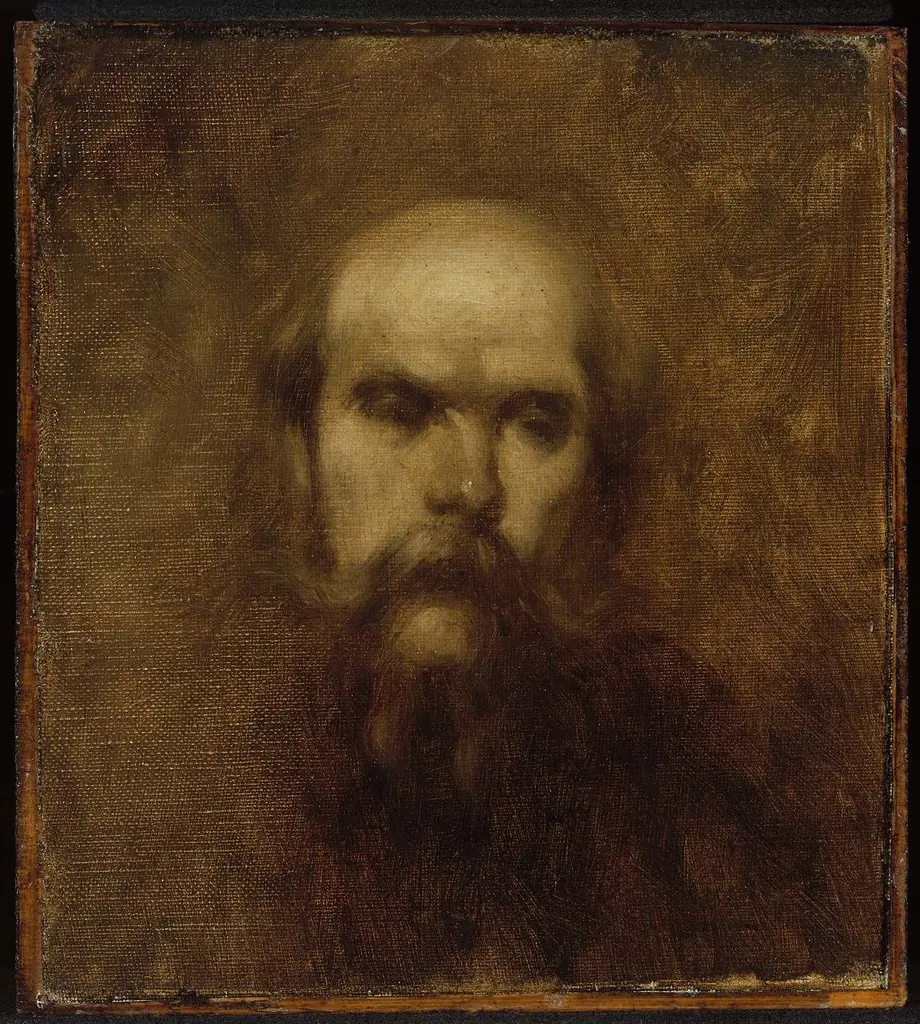
Eugène Carrière’s 1896 lithograph depicts Edmond de Goncourt, a French writer and critic known for his literary realism and diaries. Rendered in a muted brown tonality, the portrait captures the subject in quiet repose, emphasizing introspection over detail. The work exemplifies Carrière’s signature approach to printmaking, favoring atmospheric suggestion over precise definition.
Subject & Meaning
Edmond de Goncourt, a central figure in Parisian literary circles, is portrayed not as a public intellectual but as a private, contemplative man. The close framing and soft focus invite a sense of intimacy, aligning with Symbolist interests in inner life over external representation. Carrière’s choice to omit context underscores the psychological weight of the subject’s presence.
Technique & Style
Carrière employed lithography to achieve a hazy, chalk-like texture, using smudged lines and blurred edges to dissolve form. The monochromatic palette, limited to shades of brown, enhances the mood of quietude. The technique mimics rapid sketching, suggesting immediacy and emotional resonance rather than polished finish, characteristic of late 19th-century experimental printmaking.
History & Provenance
Created in 1896, the lithograph emerged during Carrière’s mature period, when he was deeply engaged with literary figures including Mallarmé and Verlaine. It was likely produced as a personal or editorial portrait, circulated among artistic circles. The work remains part of the broader legacy of Symbolist portraiture, though its specific early ownership history is not widely documented.
Context
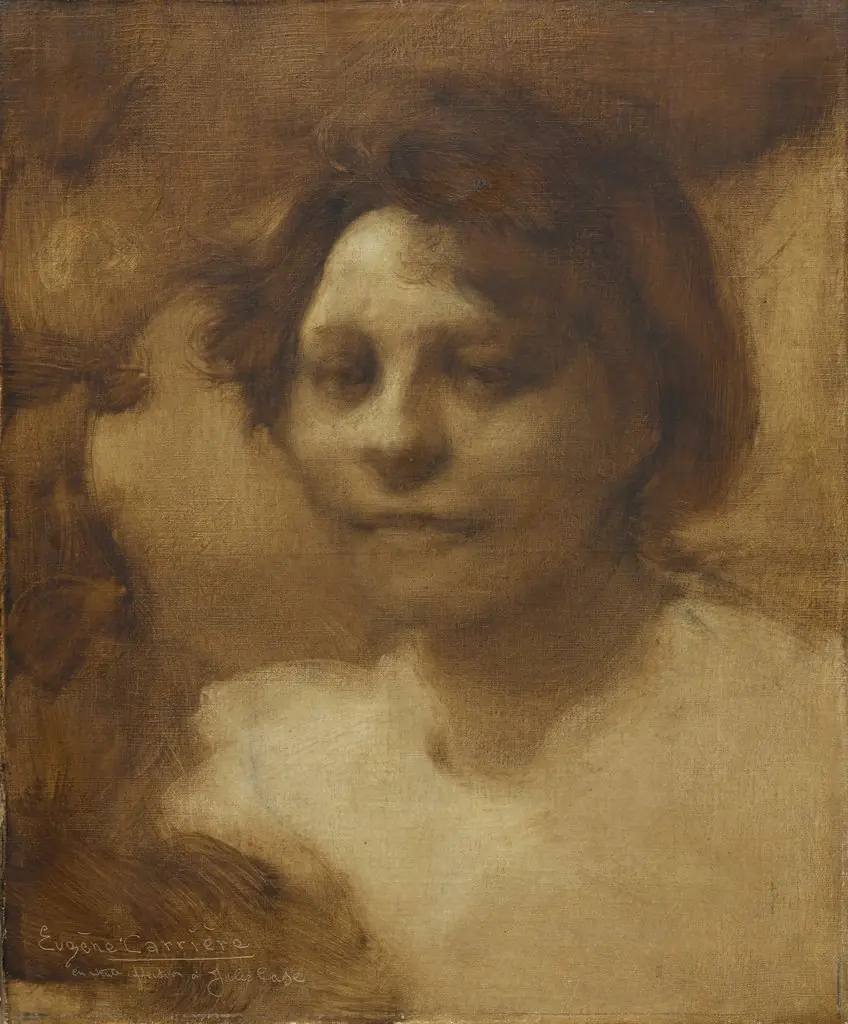
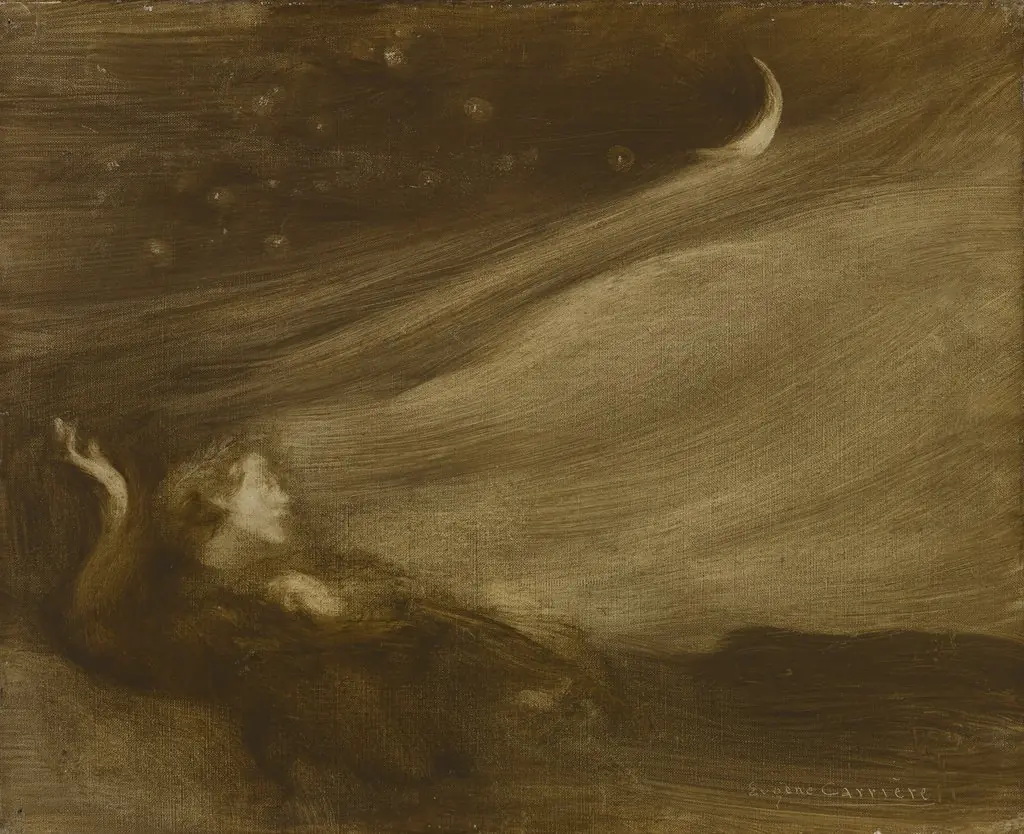
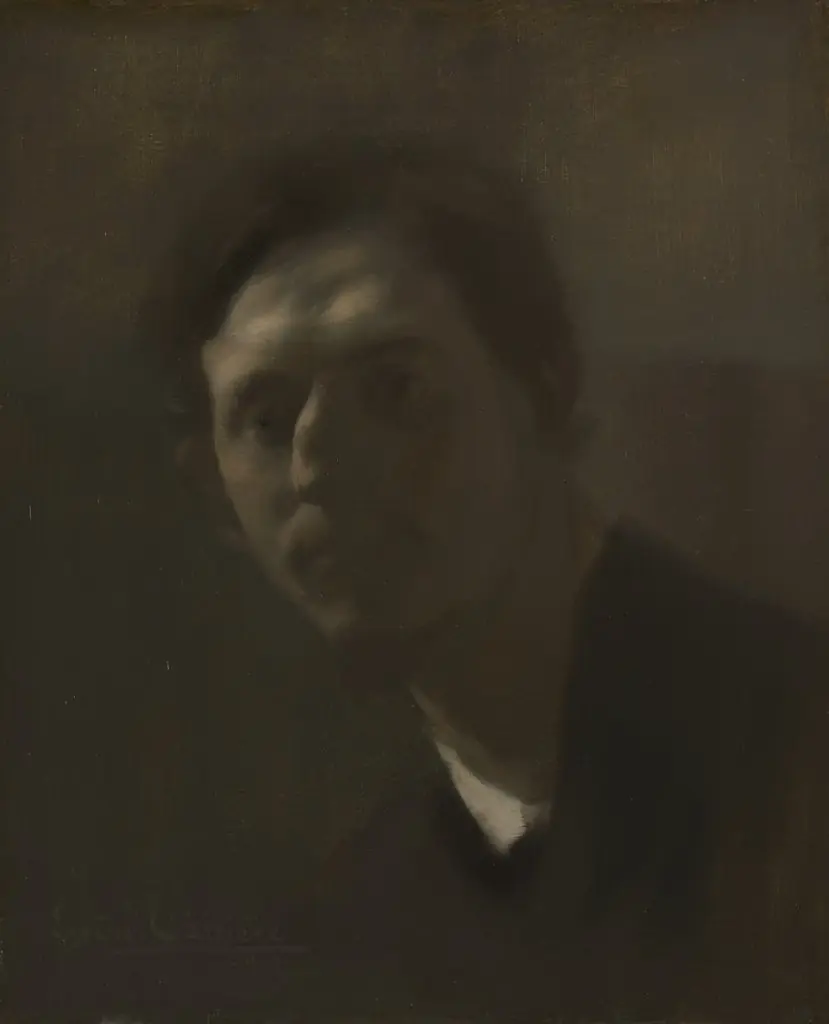
In the fin-de-siècle, artists increasingly turned to printmaking to explore mood and subjectivity beyond academic norms. Carrière’s work resonated with writers who valued ambiguity and psychological depth. His approach influenced emerging modernists, including Picasso, who absorbed the tonal restraint and emotional gravity seen in this portrait during his early development.
Legacy
Carrière’s portrait of Goncourt stands as a quiet landmark in Symbolist printmaking, illustrating how lithography could convey psychological nuance without narrative or color. Its influence extended beyond contemporaries, contributing to the visual language of early 20th-century expressive portraiture, particularly in the use of tone and blurred form to evoke inner states.
Artist & collection

Artist
Eugène Anatole Carrière was a French Symbolist artist of the fin-de-siècle period.