Artwork
Jules Destrée
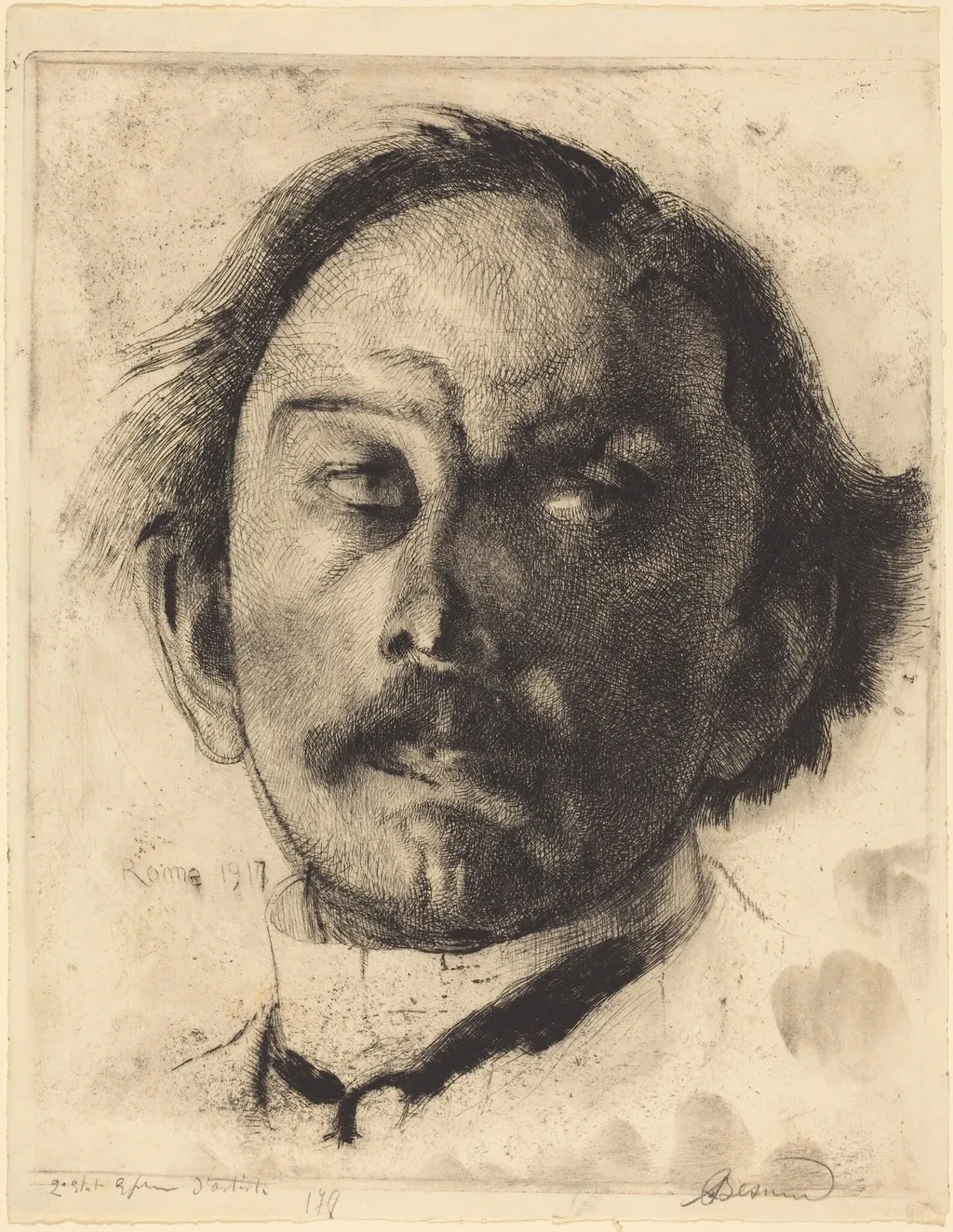
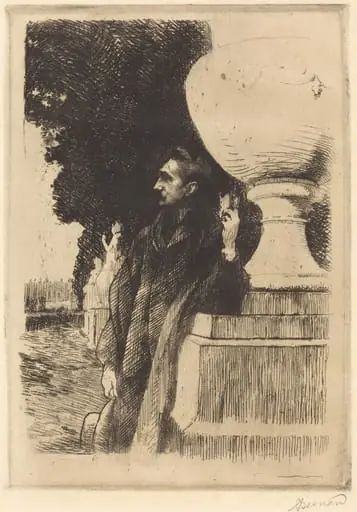
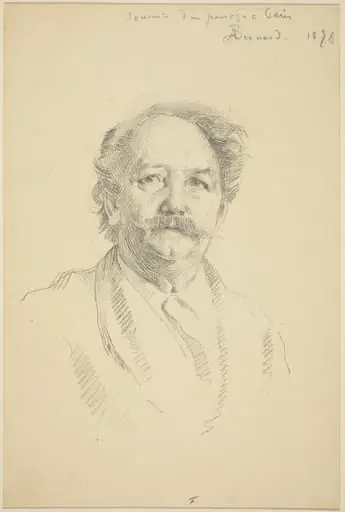
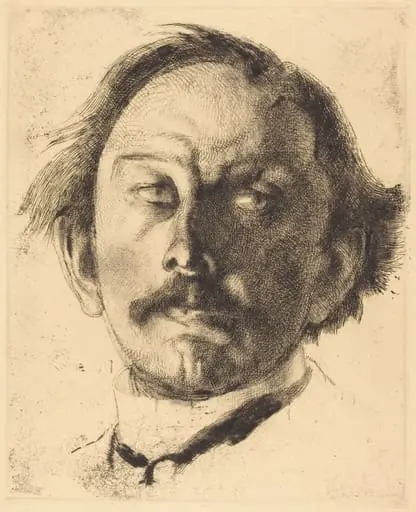
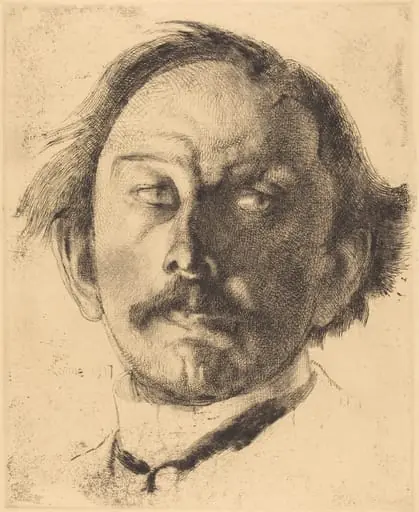
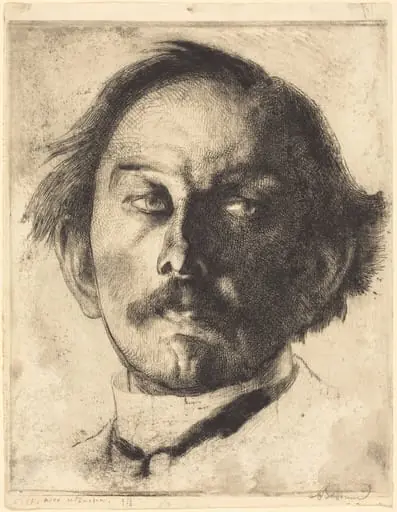
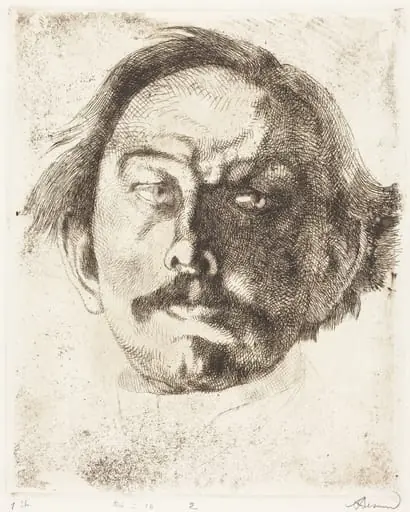
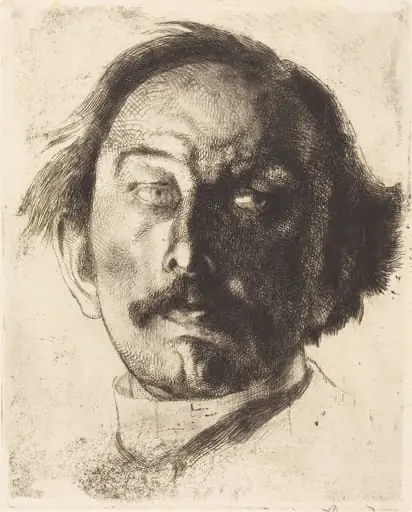
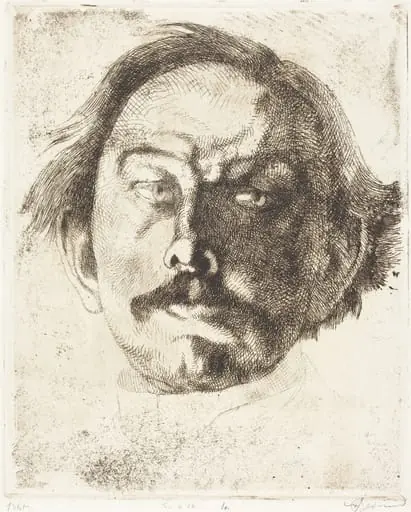
Jules Destrée is an ink print by Paul-Albert Besnard. It dates from 1917 and is held in the collection of the National Gallery of Art.
About this work
Next, check out etching, drypoint, aquatint to see how artists create these kinds of textures.
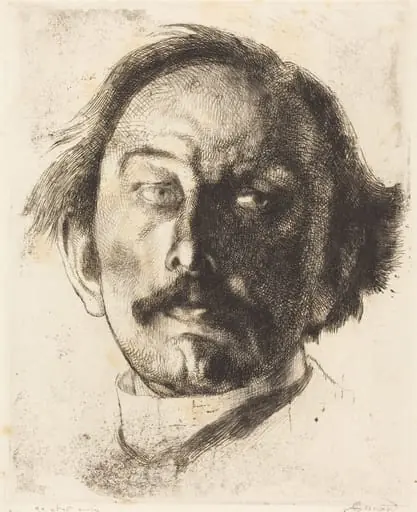
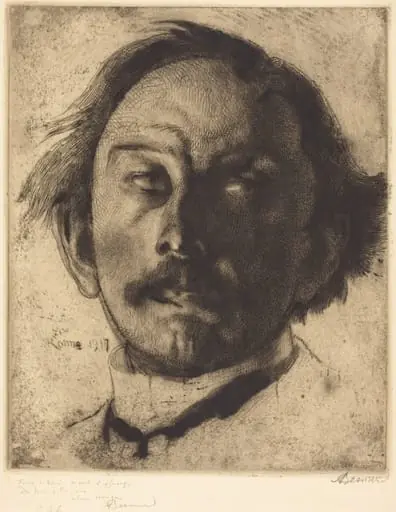
This sketch shows a man’s face in profile, looking down slightly. His hair is thick and wavy, and a mustache covers his upper lip. The lines are loose and scratchy, giving the drawing a rough, textured look. The paper has a warm, aged tone, with some smudges and faint marks around the edges.
The artist signed it in the corner and dated it 1917. The style feels quick and expressive, like it was drawn in one go. The dry, sketchy lines suggest the person was more important than perfect details.
Next, check out etching, drypoint, aquatint to see how artists create these kinds of textures.
Overview
Jules Destrée is a print created by Albert Besnard in 1917 using etching and drypoint techniques on Van Gelder laid paper.
Subject & Meaning
The print is a profile portrait of a man, likely Jules Destrée, with thick, wavy hair and a mustache. The subject is depicted looking downward, conveying a sense of introspection.
Technique & Style
The etching and drypoint techniques used create a rough, textured appearance. Loose and scratchy lines characterize the image, suggesting a rapid and expressive execution that prioritizes capturing the subject's essence over precise detail.
History & Provenance
The print is signed and dated 1917 by the artist, Albert Besnard.
Artist & collection
Artist
Paul-Albert Besnard (1849–1934) was a French artist, born in 7th arrondissement of Paris.