Artwork
Jules Destrée
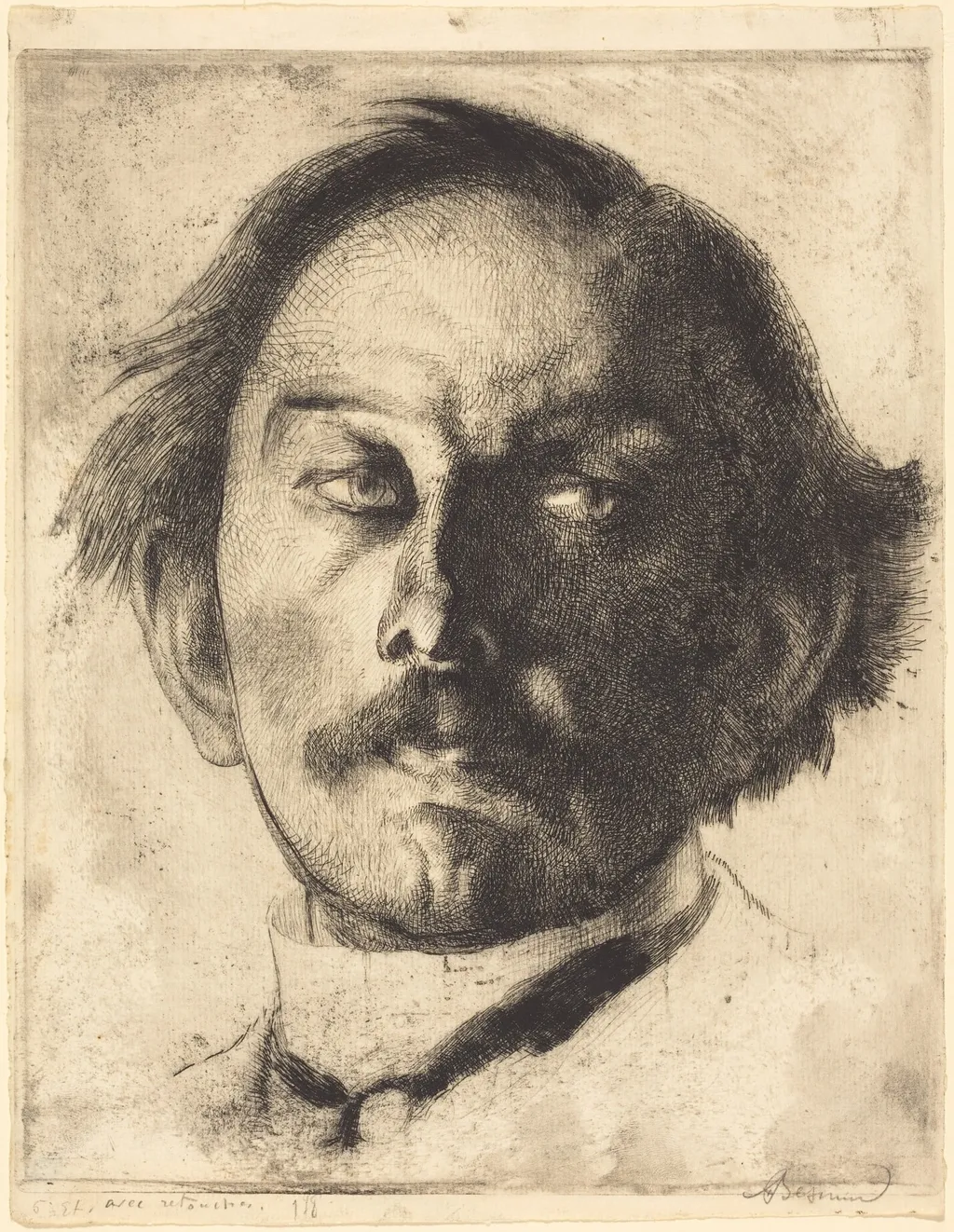
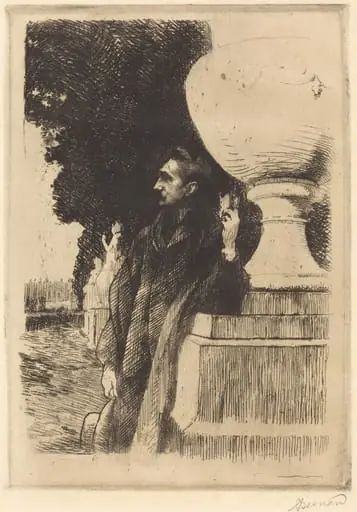
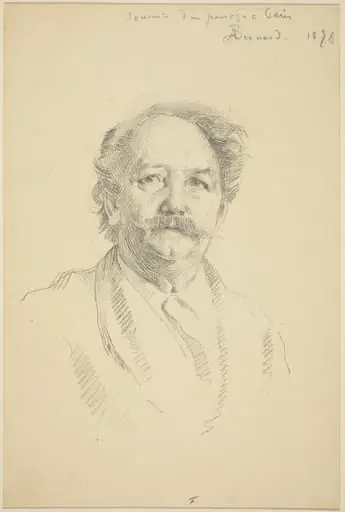
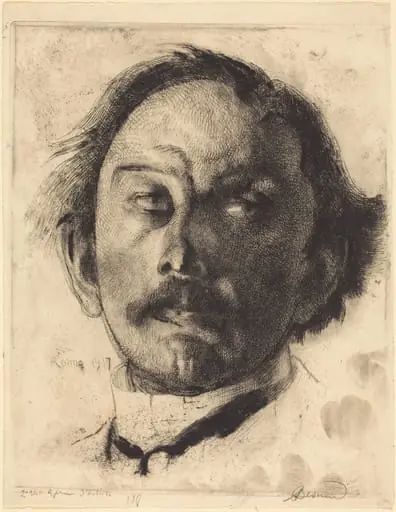
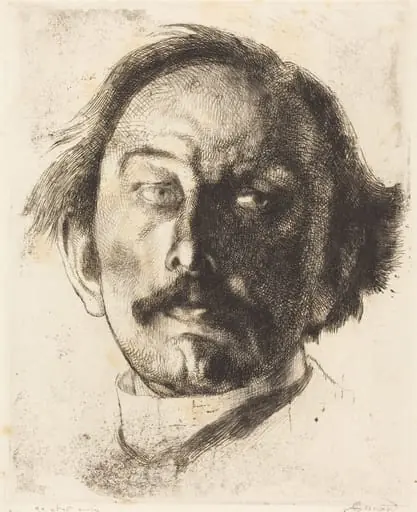
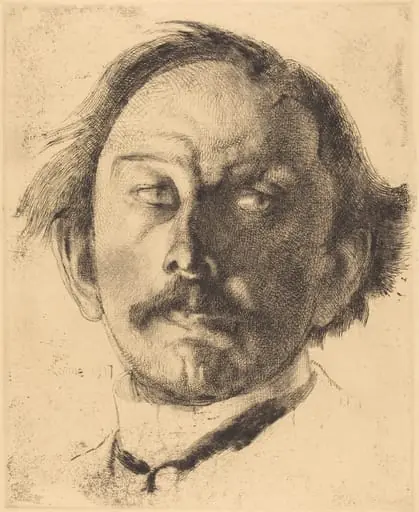
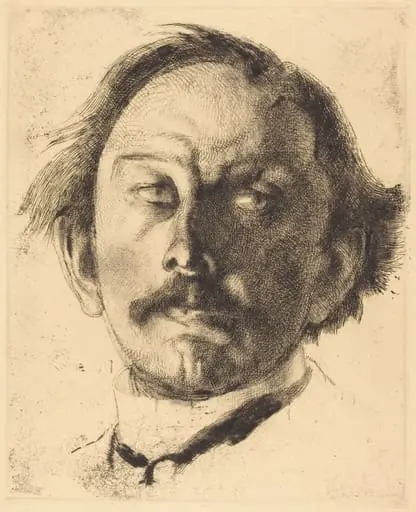
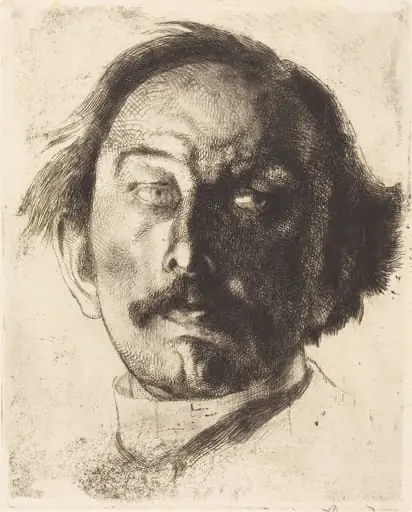
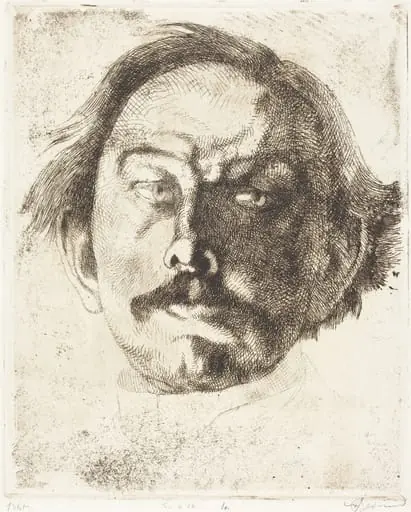
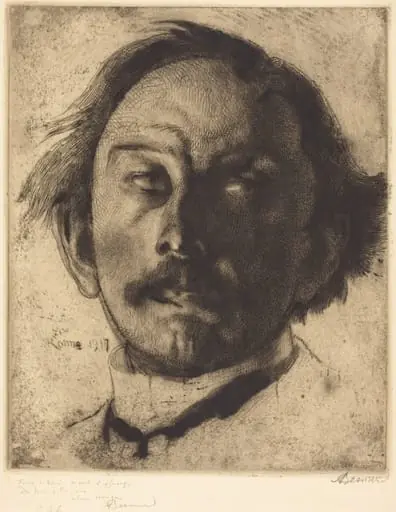
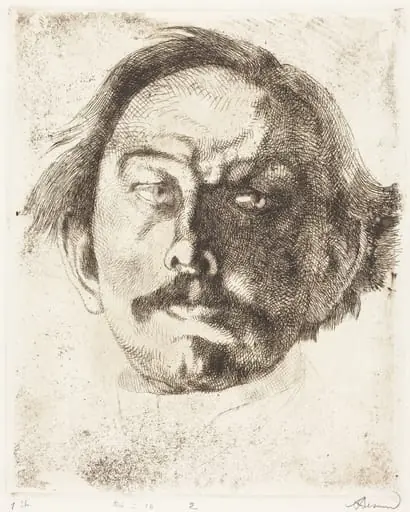
Jules Destrée is an ink print by Paul-Albert Besnard. It dates from 1917 and is held in the collection of the National Gallery of Art.
About this work
Overview
Albert Besnard’s 1917 print presents a monochrome portrait of Jules Destrée, rendered in etching and drypoint with supplemental black ink on Van Gelder laid paper. The composition captures the sitter’s head and shoulders, emphasizing a direct, steady gaze toward the viewer.
Subject & Meaning
The work depicts Destrée, a man with dark hair and a neatly trimmed mustache, dressed in a white shirt with a dark collar. His slight turn to the right and unflinching eye contact convey a sense of composure and personal presence, typical of early‑twentieth‑century portraiture that sought to reveal character through restrained expression.
Technique & Style
Besnard combines traditional etching with drypoint, enriching the image with fine, incised lines that produce subtle texture and depth. Black ink additions heighten contrast, while the light beige paper background softens the overall tone, allowing the darker elements of hair and clothing to stand out in a realistic, meticulously detailed manner.
History & Provenance
Created during the final year of World War I, the print reflects Besnard’s continued engagement with portraiture amid a turbulent period. It was produced on high‑quality Van Gelder laid paper, a material favored by French printmakers for its smooth surface and durability, and has remained documented as part of Besnard’s print oeuvre.
Context
The portrait aligns with the broader French tradition of fine‑line printmaking that emphasized fidelity to the sitter’s likeness. Besnard’s skill in capturing nuanced expression places the work within a lineage of early twentieth‑century artists who balanced technical precision with psychological insight.
Artist & collection
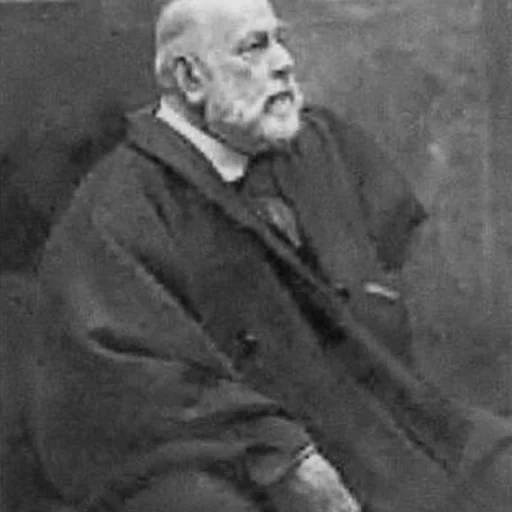
Artist
Paul-Albert Besnard (1849–1934) was a French artist, born in 7th arrondissement of Paris.