Artwork
Les deux rats, le renard et l'oeuf (Two Rats, the Fox, and the Egg)
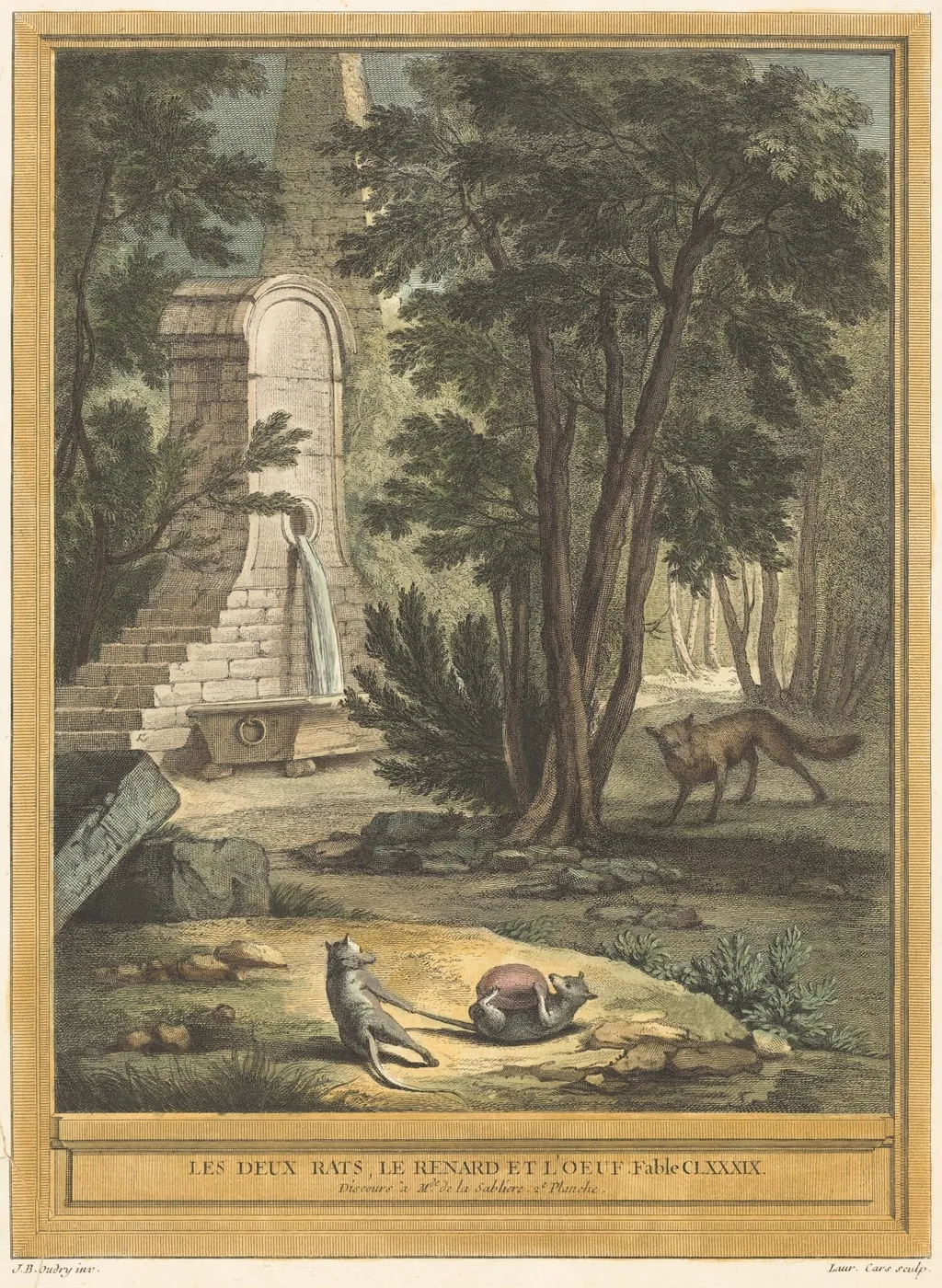
Les deux rats, le renard et l'oeuf (Two Rats, the Fox, and the Egg) is an ink print by the Romanticist artist Laurent Cars. It dates from 1759 and is held in the collection of the National Gallery of Art.
About this work
Overview
Laurent Cars created this hand-colored etching in 1759, depicting a tranquil woodland scene with three animals and a broken egg. The composition centers on a stone fountain and steps partially obscured by dense foliage, grounding the narrative in a naturalistic setting. The animals are arranged around the egg with quiet stillness, suggesting a moment suspended in time rather than action.
Subject & Meaning
The title references a fable-like encounter between two rats, a fox, and an egg, evoking traditional moral tales where animals embody human traits. The scene implies a pause after conflict or negotiation—no violence is shown, only the aftermath. The egg, fragile and central, may symbolize vulnerability, opportunity, or the consequences of greed, inviting interpretation without explicit narrative.
Technique & Style
Cars employed fine, controlled lines typical of etching to render texture in fur, bark, and stone. Subtle hand-coloring in muted greens and browns enhances the earthy atmosphere without overwhelming the inkwork. Shading is delicate, using cross-hatching to suggest depth and volume, while the overall tone remains restrained, emphasizing quiet observation over dramatic effect.
History & Provenance
The print was produced during the mid-18th century, a period when French artists frequently adapted fables for decorative prints. Though specific early ownership records are scarce, its survival in collections suggests it was circulated among collectors interested in allegorical imagery. It reflects the era’s appetite for refined, narrative-driven prints rooted in literary tradition.
Context
This work emerged in a cultural climate where fables, especially those of La Fontaine, were widely illustrated and admired. Artists like Cars translated literary themes into visual form for an educated public. The choice of animals and a natural setting aligns with contemporary tastes for pastoral allegory, blending moral instruction with aesthetic refinement.
Legacy
While not widely reproduced today, the print remains a quiet example of 18th-century French printmaking’s capacity for subtle storytelling. It contributes to the broader understanding of how fables were visually interpreted beyond major artists, revealing the reach of allegorical imagery in domestic and scholarly circles of the time.
Artist & collection


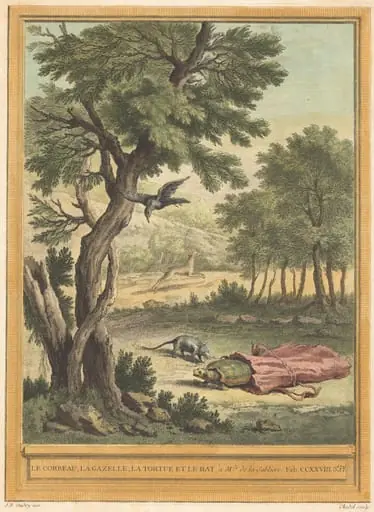 Le corbeau, la gazelle, la tortue et le rat (The Crow, the Gazelle, the Tortoise, and
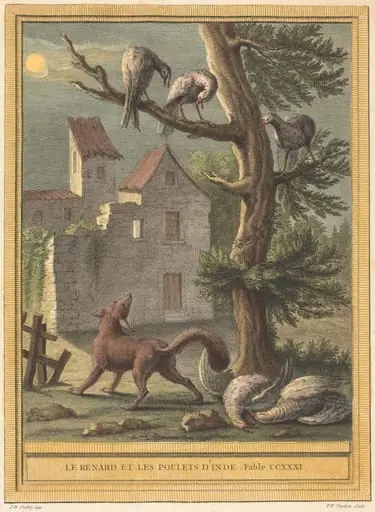 Le renard et les poulets d'Inde (The Fox and the Hens from India)
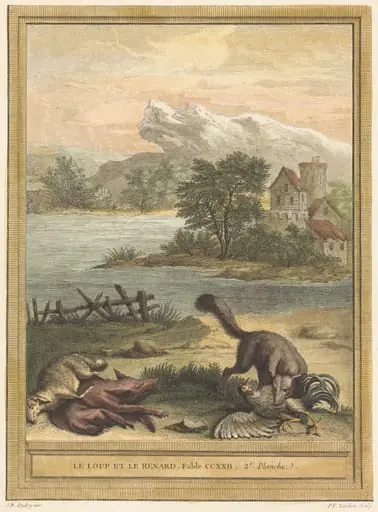 Le loup et le renard (The Wolf and the Fox)
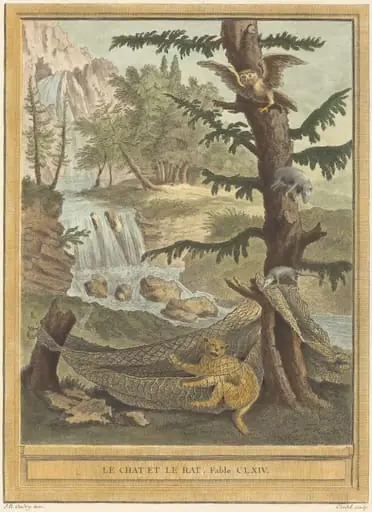 Le chat et le rat (The Cat and the Rat)
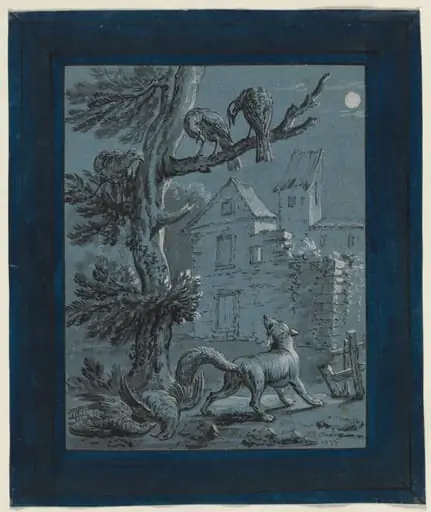 The Fox and the Turkey Hens
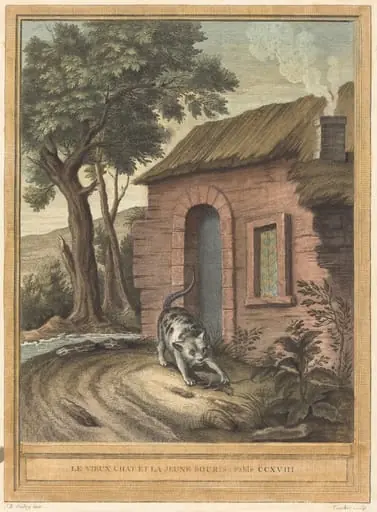 Le vieux chat et la jeune Souris (The Old Catand the Young Mouse)
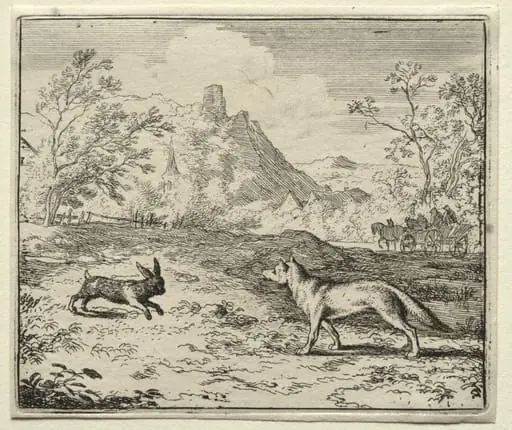 Reynard the Fox: Reynard and the Rabbit
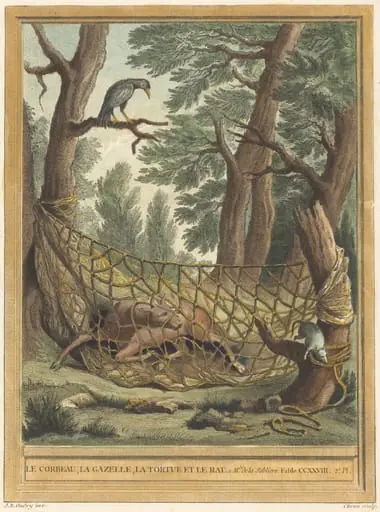 Le corbeau, la gazelle, la tortue et le rat (The Crow, the Gazelle, the Tortoise, andthe Rat)