Artwork
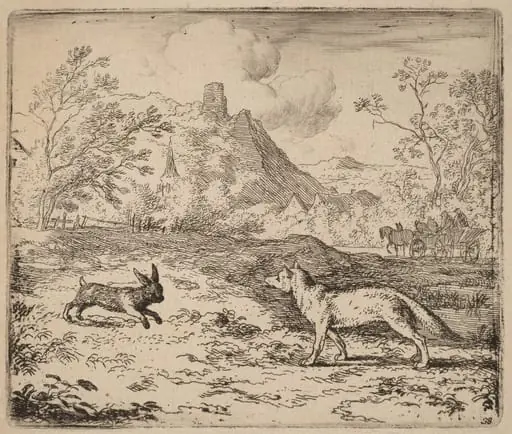
Reynard the Fox: Reynard and the Rabbit
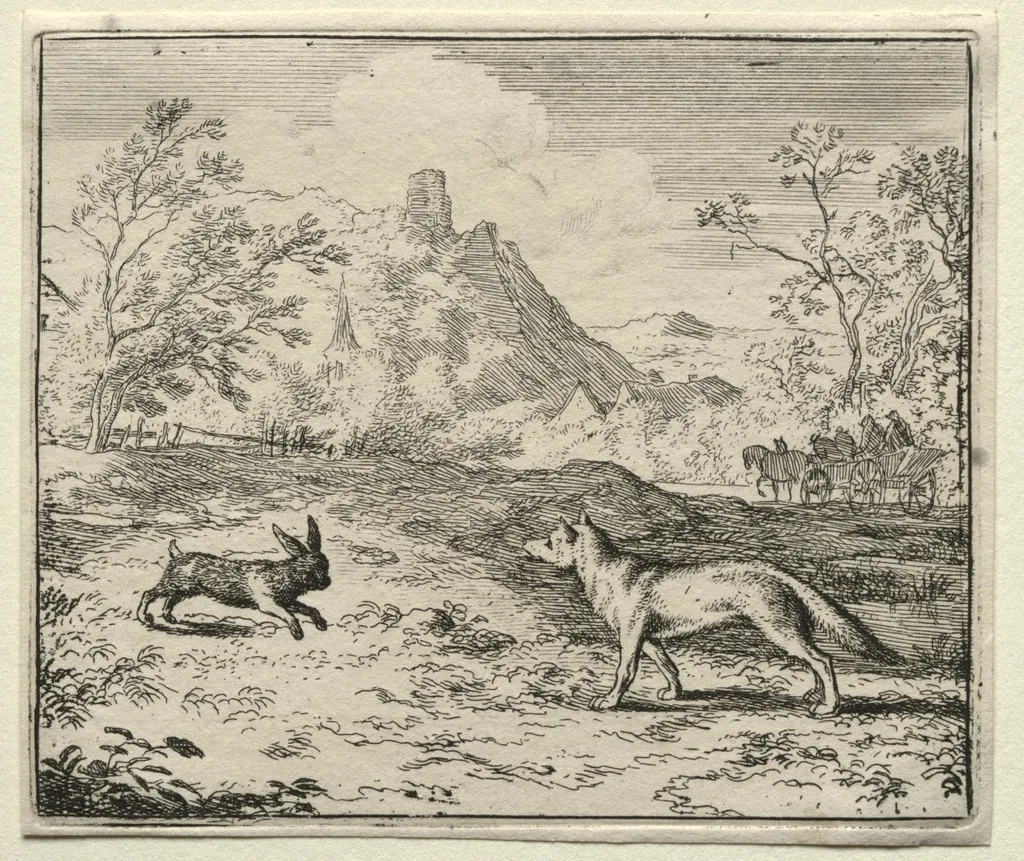
Reynard the Fox: Reynard and the Rabbit is a print by the Baroque artist Allart van Everdingen. It dates from 1662 and is held in the collection of the Cleveland Museum of Art.
About this work
Overview
Created in 1662 by Allart van Everdingen, this print illustrates a moment from the medieval Reynard the Fox tales, a widely circulated European allegory.
Created in 1662 by Allart van Everdingen, this print illustrates a moment from the medieval Reynard the Fox tales, a widely circulated European allegory. Van Everdingen, known for his etchings and mezzotints, captured the story with precise detail and atmospheric tone. The work is part of The Cleveland Museum of Art’s collection, reflecting the Dutch Golden Age’s interest in narrative illustration through print media.
Subject & Meaning
The scene portrays Reynard, the cunning fox, standing triumphantly over a defeated rabbit. He holds a letter in one paw, suggesting deception or legal manipulation, while a wooden club lies discarded nearby—evidence of violence. The fox’s proud posture and the rabbit’s stillness convey a moral tale of trickery and power, common in folk narratives that critiqued social hierarchy through animal allegory.
Technique & Style
Van Everdingen employed mezzotint to achieve rich tonal contrasts, rendering the fox’s fur with tactile realism and deep shadows that frame the scene. Small areas of light—on the letter, the rabbit’s ear—draw attention to key narrative elements. The composition is tightly focused, emphasizing gesture and expression over landscape, aligning with the Dutch tradition of intimate, story-driven printmaking.
History & Provenance
The print was made during the height of van Everdingen’s career, when he was actively producing illustrated narratives for a growing market of collectors. It entered The Cleveland Museum of Art’s collection in the 20th century, following the broader dispersal of Dutch graphic works after the 18th century. Its survival reflects continued scholarly interest in early modern allegorical imagery.
Context
The Reynard cycle, originating in medieval Europe, remained popular in the 17th century as a vehicle for satire and moral instruction. In the Dutch Republic, where literacy and print culture flourished, such tales were adapted into visual form for both entertainment and social commentary. Van Everdingen’s version aligns with a broader trend of using folklore to reflect contemporary power dynamics.
Legacy
Van Everdingen’s print contributes to a legacy of visual storytelling rooted in folk tradition and print innovation. While not widely reproduced today, it stands as a refined example of how Dutch artists translated oral narratives into intimate, emotionally charged images. Its preservation allows ongoing study of how allegory functioned in early modern visual culture.
Own this work as a print
Artist & collection
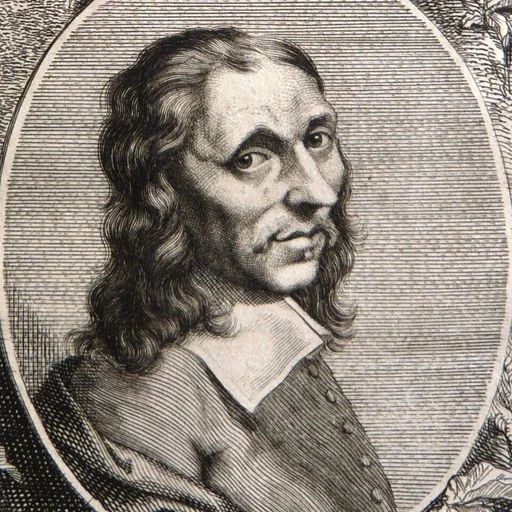
Artist
Allaert van Everdingen (Dutch pronunciation: ; bapt. 18 June 1621 – 8 November 1675 (buried)), was a Dutch Golden Age painter and printmaker in etching and mezzotint.

 Reynard and the Rabbit
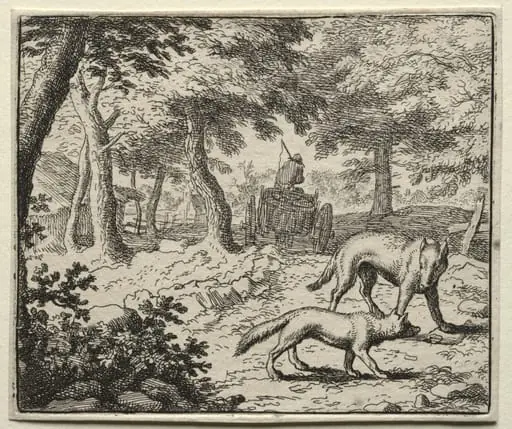 Reynard the Fox: The Badger's Defense of Reynard
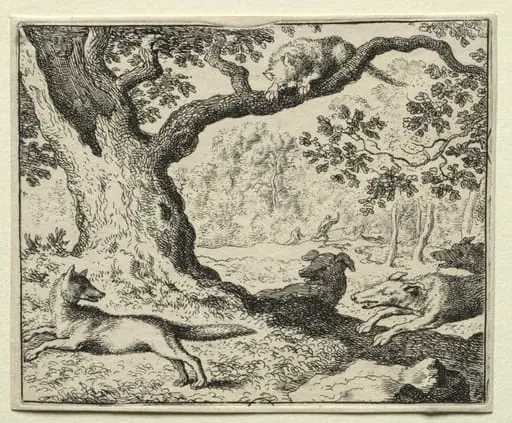 Reynard the Fox: The Disloyal Cat
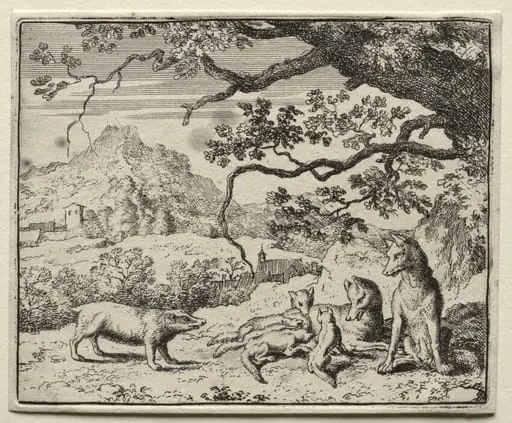 Reynard the Fox: The Badger Calls Reynard to Court
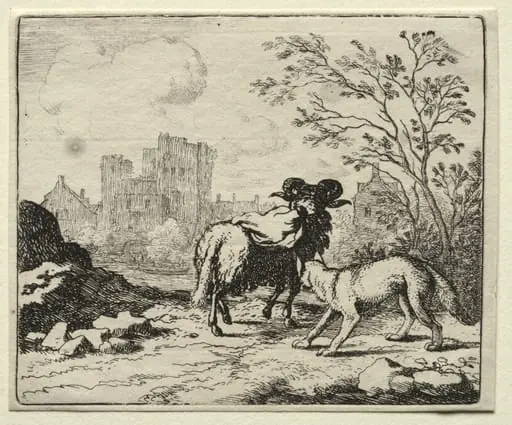 Reynard the Fox: Reynard Sends a Packet to the Lion
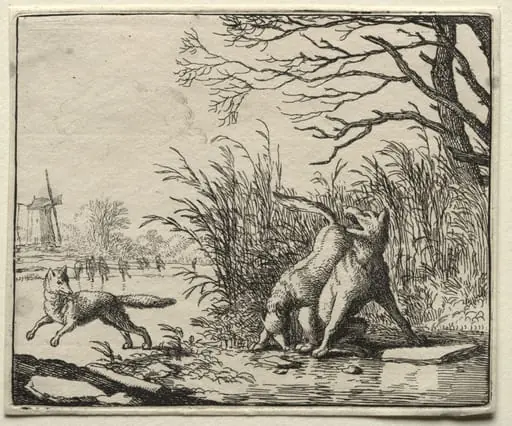 Reynard the Fox: A New Accusation by the Wolf
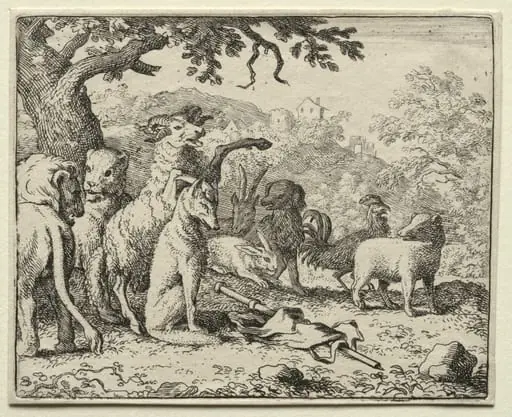 Reynard the Fox: The Benediction Given to Reynard
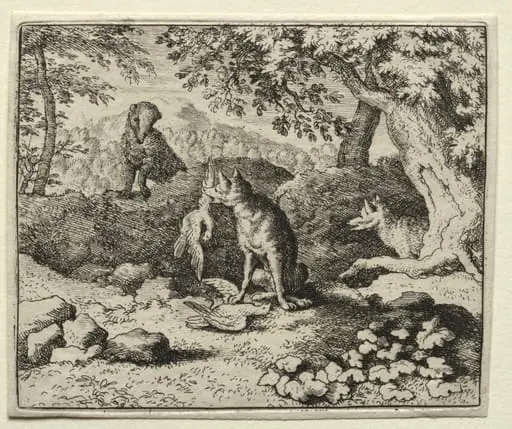 Reynard the Fox: Badger Comes to Warn Reynard
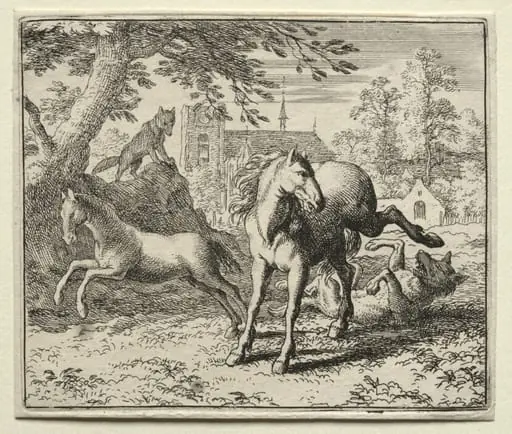 Reynard the Fox: Reynard Tricks the Wolf
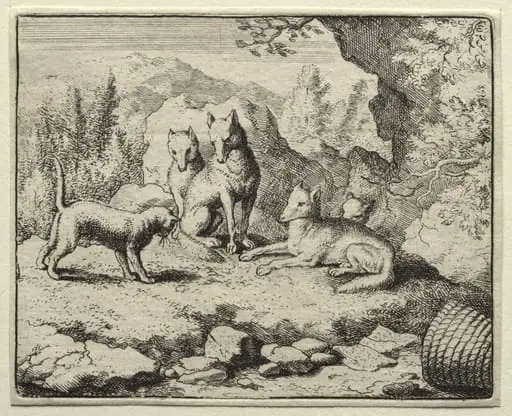 Reynard the Fox: The Cat Calls Reynard to Court
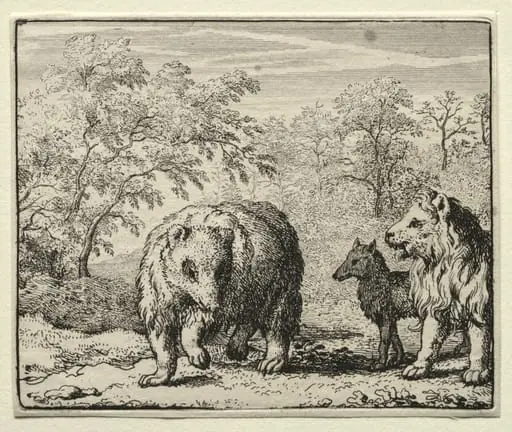 Reynard the Fox: The Freeing of the Wolf and the Bear
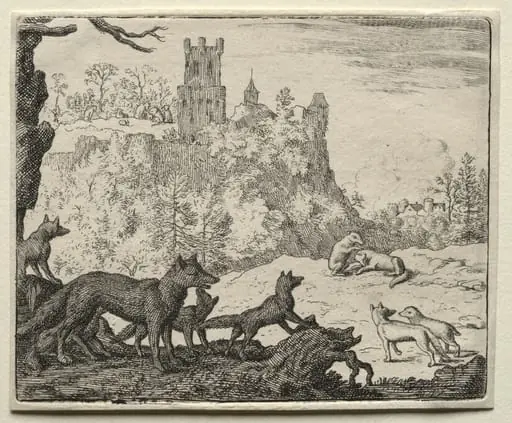 Reynard the Fox: Reynard and the Badger Depart for Court