Artwork
Le loup et le renard (The Wolf and the Fox)
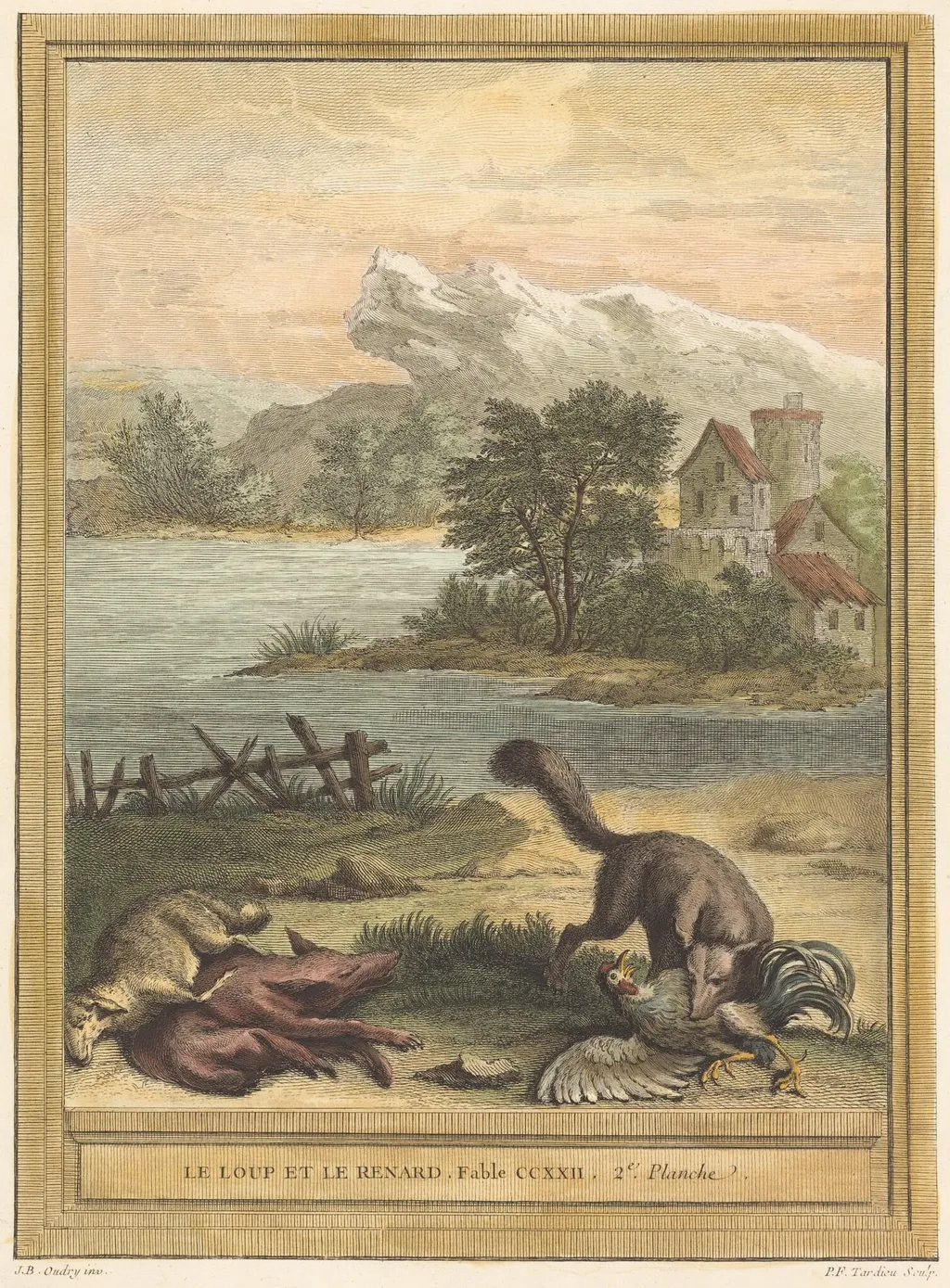
Le loup et le renard (The Wolf and the Fox) is an ink print by the Romanticist artist Pierre François Tardieu. It dates from 1759 and is held in the collection of the National Gallery of Art.
About this work
Overview
Created in 1759 by Pierre François Tardieu, this hand-colored etching depicts a scene from a traditional fable involving a wolf and a fox.
Created in 1759 by Pierre François Tardieu, this hand-colored etching depicts a scene from a traditional fable involving a wolf and a fox. The composition centers on the wolf’s aggression toward poultry, while the fox observes from a distance. Set against a rural landscape with a thatched farmhouse and distant snow-capped peaks, the image reflects the era’s interest in moral tales rendered through visual art.
Subject & Meaning
The scene illustrates a moment from a fable where the wolf’s violent act contrasts with the fox’s calculated stillness. The fox, often a symbol of cunning, does not intervene, suggesting themes of opportunism and moral indifference. The chickens and rooster represent vulnerability, reinforcing the narrative’s cautionary tone about power and observation in nature.
Technique & Style
Tardieu used etching to achieve fine linear detail, then applied hand-coloring to enhance naturalistic elements like the snow, feathers, and thatch. The ink lines define forms with precision, while subtle washes of color ground the scene in a tangible environment. The style balances narrative clarity with decorative refinement, typical of 18th-century printmaking aimed at educated audiences.
History & Provenance
The print was produced during a period when illustrated fables were widely circulated in Europe as both entertainment and moral instruction. Tardieu, known for reproductive prints and book illustrations, likely created this as part of a series. Its survival in collections today suggests it was valued for its craftsmanship and alignment with popular literary traditions of the time.
Context
In mid-18th-century France, fables were commonly adapted into visual media for domestic and educational use. Artists like Tardieu drew from Aesop and La Fontaine, translating textual morality into accessible imagery. This print reflects a broader cultural trend where printmaking democratized storytelling, making allegorical content available beyond elite literary circles.
Legacy
Though not widely exhibited today, the work exemplifies how printmakers preserved and transmitted folk narratives through accessible formats. Its technical execution and thematic clarity influenced later illustrators of animal fables. As a surviving artifact of Enlightenment-era visual culture, it offers insight into how moral lessons were visually encoded for public consumption.
Artist & collection


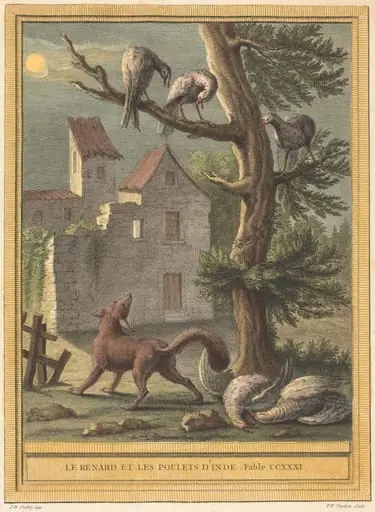 Le renard et les poulets d'Inde (The Fox and the Hens from India)
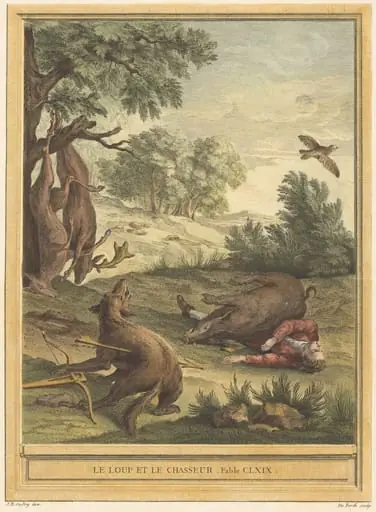 Le loup et le chasseur (The Wolf and the Hunter)
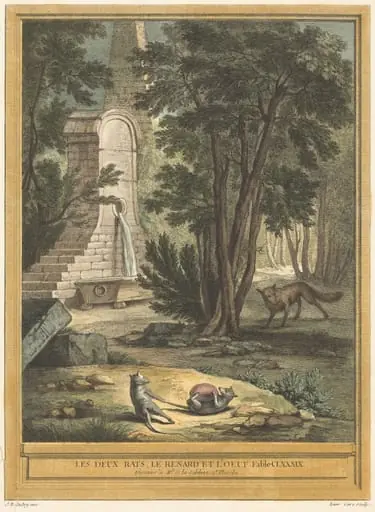 Les deux rats, le renard et l'oeuf (Two Rats, the Fox, and the Egg)
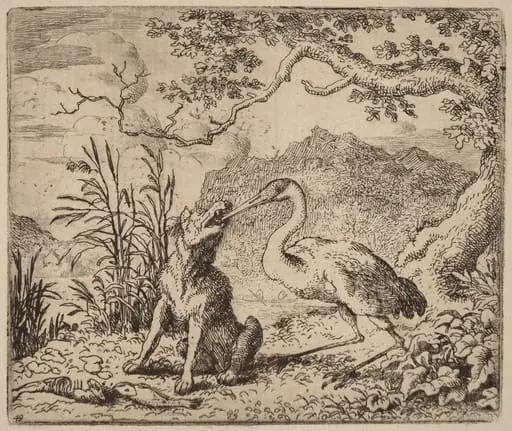 The Wolf and the Crane
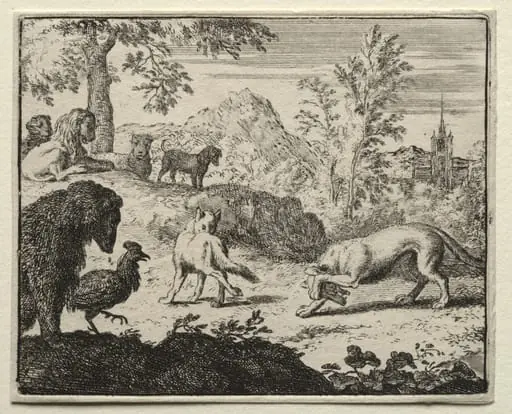 Reynard the Fox: The Combat Between Reynard and the Wolf
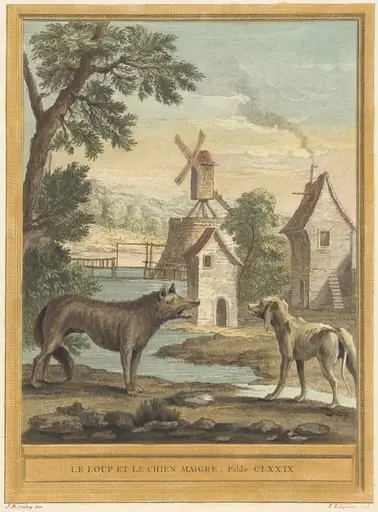 Le loup et le chien maigre (The Wolf and the Thin Dog)
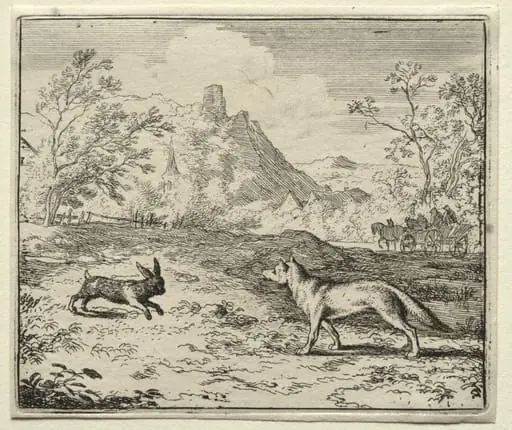 Reynard the Fox: Reynard and the Rabbit
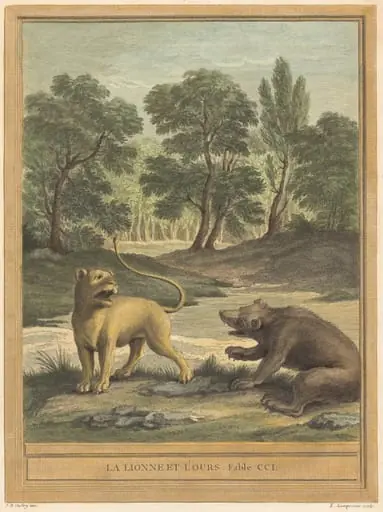 La lionne et l'ours (The Lion and the Bear)
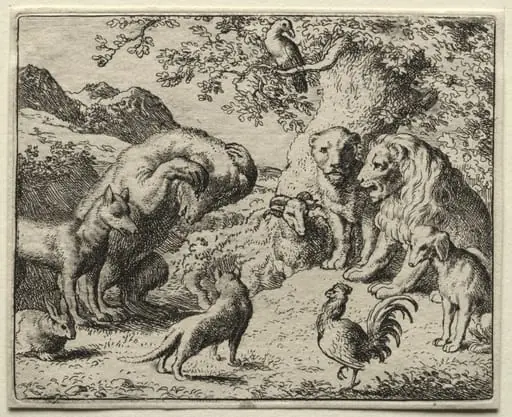 Reynard the Fox: The Complaint of the Bear
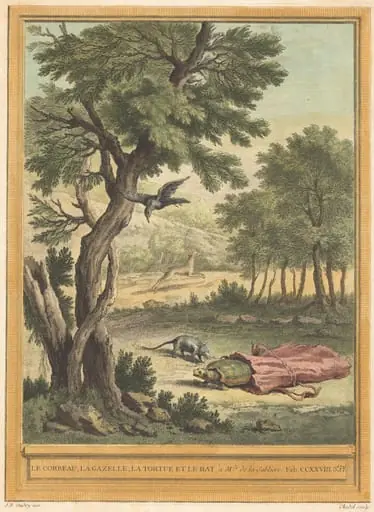 Le corbeau, la gazelle, la tortue et le rat (The Crow, the Gazelle, the Tortoise, and
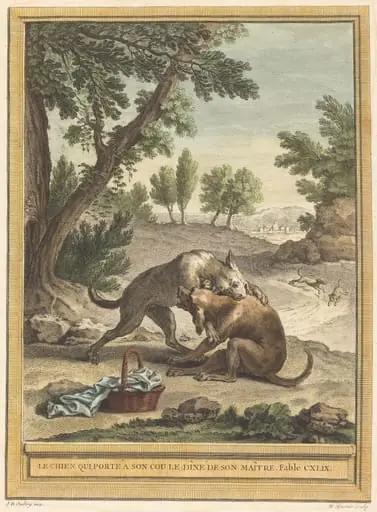 Le chien qui porte a son cou le diner de son maitre (The Dog Carrying His Master's Supper)
 Reynard the Fox: The Badger Calls Reynard to Court
 Rien de trop (Nothing in Excess)
 Les vautours et les pigeons (Vultures and Pigeons)
 Le lion (The Lion)
 Reynard Blinds the Wolf in One Eye
 Les deux chiens et l'ane mort (Two Dogs and the Dead Donkey)