Artwork
China, 1958
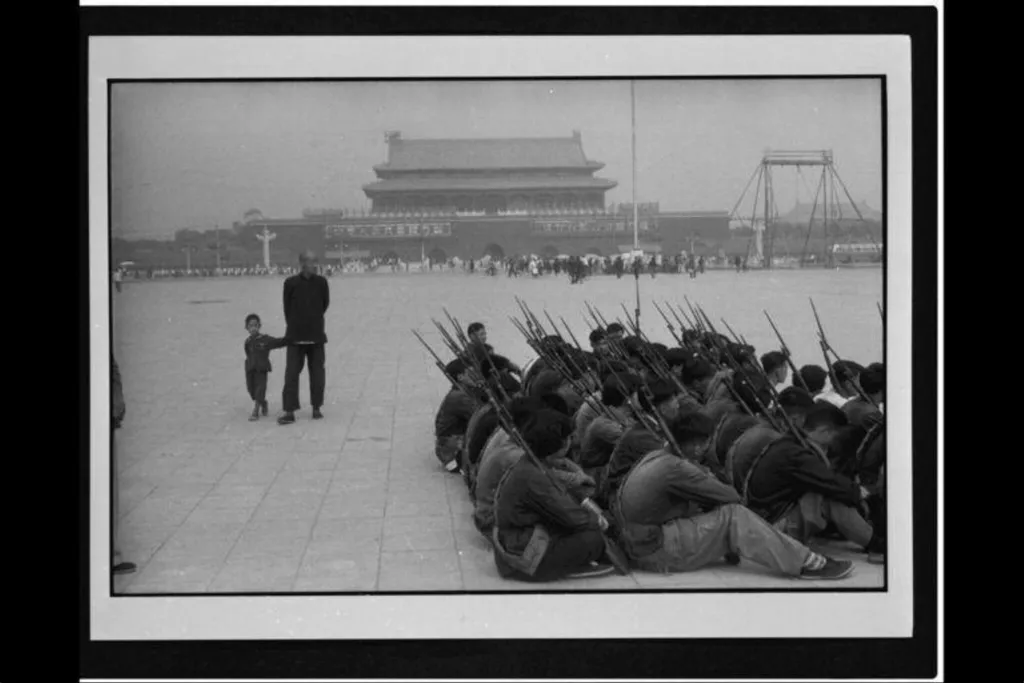
China, 1958 is a photographic photography by Henri Cartier-Bresson. It dates from 1958 and is held in the collection of the Victoria and Albert Museum.
About this work
Overview
The image presents a vast, nearly empty plaza dominated by a monumental building, with a group of individuals kneeling in formation, rifles raised vertically.
Taken in 1958, this black-and-white photograph by Henri Cartier-Bresson captures a public square in China during a period of intense political mobilization. The image presents a vast, nearly empty plaza dominated by a monumental building, with a group of individuals kneeling in formation, rifles raised vertically. A solitary man walks with a child near the left edge, introducing a quiet, human scale against the imposing architecture and disciplined ranks.
Subject & Meaning
The photograph depicts a military drill or ceremonial gathering, likely tied to state-organized paramilitary training common in early Maoist China. The rigid alignment of figures contrasts with the lone pair walking away, suggesting tension between collective discipline and individual presence. The upward-pointing rifles imply readiness or ritual, while the emptiness of the space amplifies the sense of controlled order and isolation.
Technique & Style
Cartier-Bresson employs his signature candid approach, capturing a moment of stillness within movement. The composition uses deep perspective to emphasize the scale of the plaza, with the figures reduced to geometric forms against the architecture. Sharp contrasts in tone define the rifles and uniforms, while the background remains softly blurred, directing attention to the foreground’s structured yet uneasy tableau.
History & Provenance
The photograph was taken during Cartier-Bresson’s brief visit to China in 1958, one of the few Western photographic records from that era. It entered the Victoria and Albert Museum’s collection as part of a broader acquisition of his work, reflecting the institution’s interest in 20th-century documentary photography and global visual history.
Context
In 1958, China was deep into the Great Leap Forward, a campaign promoting rapid industrialization and militarized social organization. Public displays of discipline and collective action were common, often staged for propaganda. Cartier-Bresson’s image, though not commissioned, inadvertently documents the atmosphere of enforced unity and surveillance characteristic of the period.
Legacy
The photograph remains a significant example of Cartier-Bresson’s ability to convey political tension through quiet observation. It is frequently referenced in studies of Cold War-era visual culture and documentary ethics, valued for its restraint and refusal to sensationalize. Its presence in the V&A underscores its role as a historical record shaped by a photographer’s eye rather than state imagery.
Artist & collection
Artist
This photographer captured fleeting moments in black and white. In "China, 1958," he framed a split second—an old man’s stride, a child’s reach—so precisely it still feels alive today. He worked in the mid-20th century,…

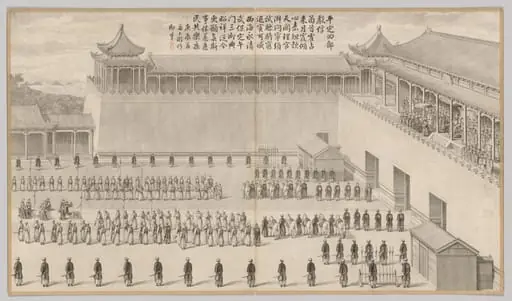 The Presentation of Uigur Captives: from Battle Scenes of the Quelling of Rebellions in the Western Regions, with Imperial Poems
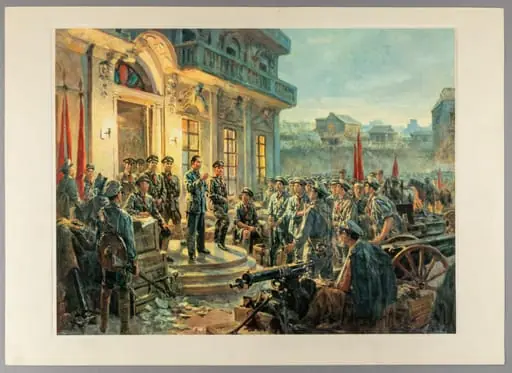 Reproducere după o pictură în ulei cu titlul „Insurecția din Nanchang” realizată de Li Ping-hong și datată în 1951. Pe 1 august 1927, la Nanchang, a avut loc o insurecție organizate de comuniști. Revolta din Nanchang, condusă de ofițeri pro-comunisti ai Kuomintangului coordonați de sovietici, a reușit să păstreze controlul asupra orașului doar câteva zile, dar a furnizat un nucleu de trupe și o metodă de organizare din care s-a dezvoltat ulterior Armata Populară de Eliberare (PLA). Exemplarul a fost oferit lui Nicolae Ceaușescu, secretar general al Partidului Comunist Român; șeful de stat al Republicii Socialiste România, ca parte a unui album ce conține un catalog quatrolingv (franceză, spaniolă, engleză, chineză) și alte 9 reproduceri după picturi cu semnificație istorică pentru mișcarea comunistă în RP China.
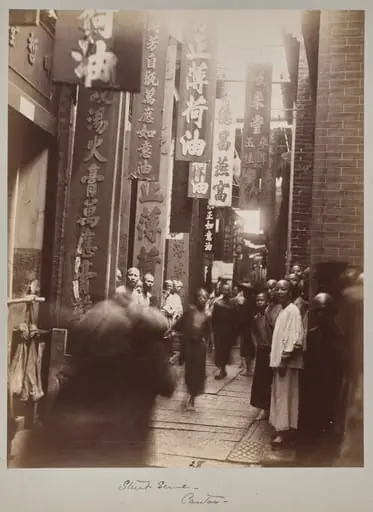 A Commercial Street in Guangzhou
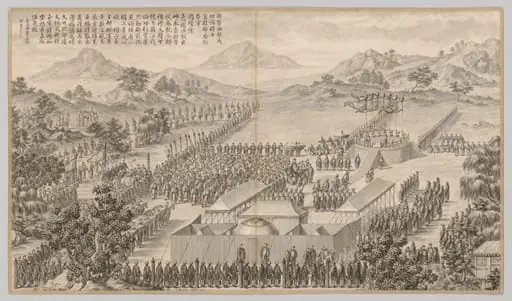 Rewards to Generals and Officers in Quelling the Uigurs: from Battle Scenes of the Quelling of Rebellions in the Western Regions, with Imperial Poems
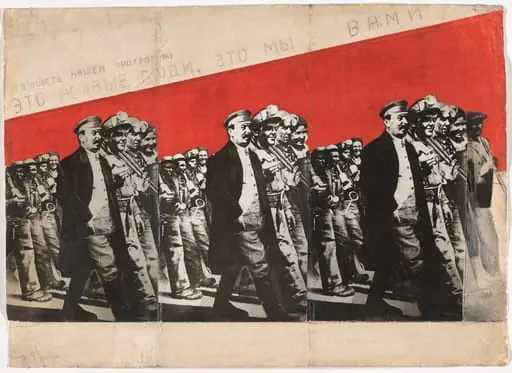 Untitled
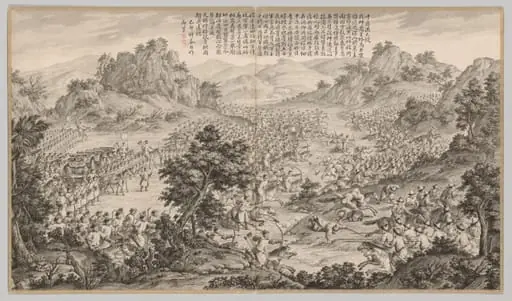 Great Victory at Hu'erman: from Battle Scenes of the Quelling of Rebellions in the Western Regions, with Imperial Poems
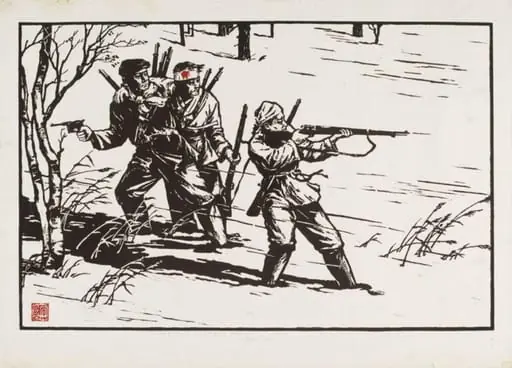 Ppal chi san dul, Partisans
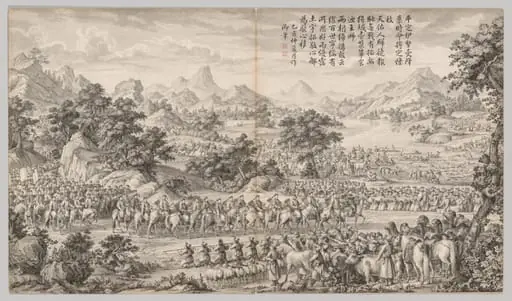 Receiving Surrender from the Eli: from Battle Scenes of the Quelling of Rebellions in the Western Regions, with Imperial Poems
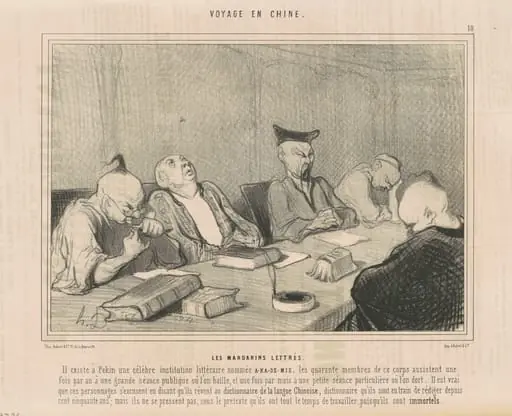 Les mandarins lettrés
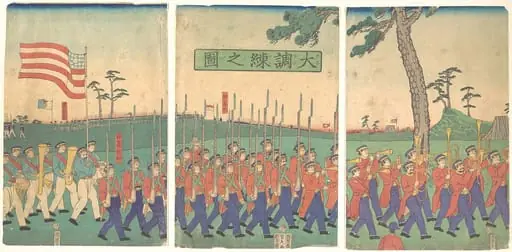 Uchoren no zu|Great Military Drill
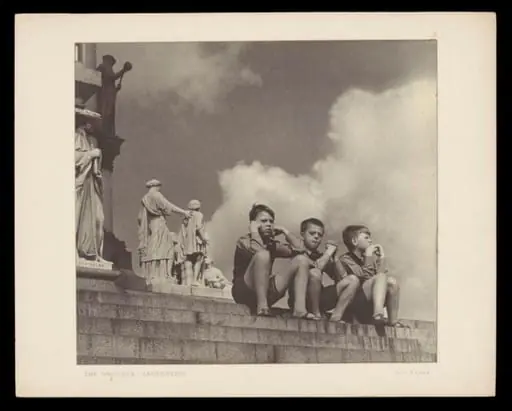 The Younger Generation
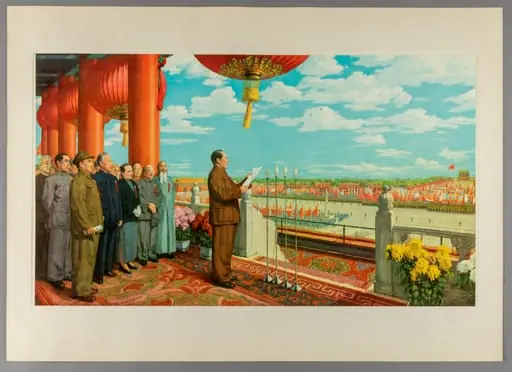 Reproducere după o pictură în ulei cu titlul „Ceremonia de proclamare a Republicii Populare China” realizată de Tong Hsi-wen și datată în 1951. Comemorează proclamarea Republicii Populare Chineze, de către liderul comunist Mao Zedong, pe 21 septembrie 1949. Exemplarul a fost oferit lui Nicolae Ceaușescu, secretar general al Partidului Comunist Român; șeful de stat al Republicii Socialiste România, ca parte a unui album ce conține un catalog quatrolingv (franceză, spaniolă, engleză, chineză) și alte 9 reproduceri după picturi cu semnificație istorică pentru mișcarea comunistă în RP China.