Artwork
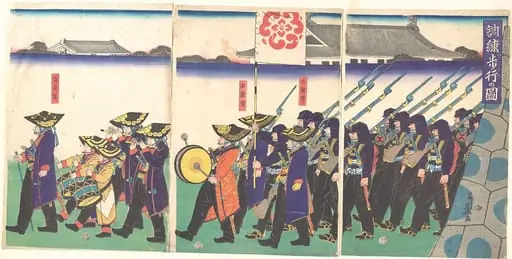
Uchoren no zu|Great Military Drill
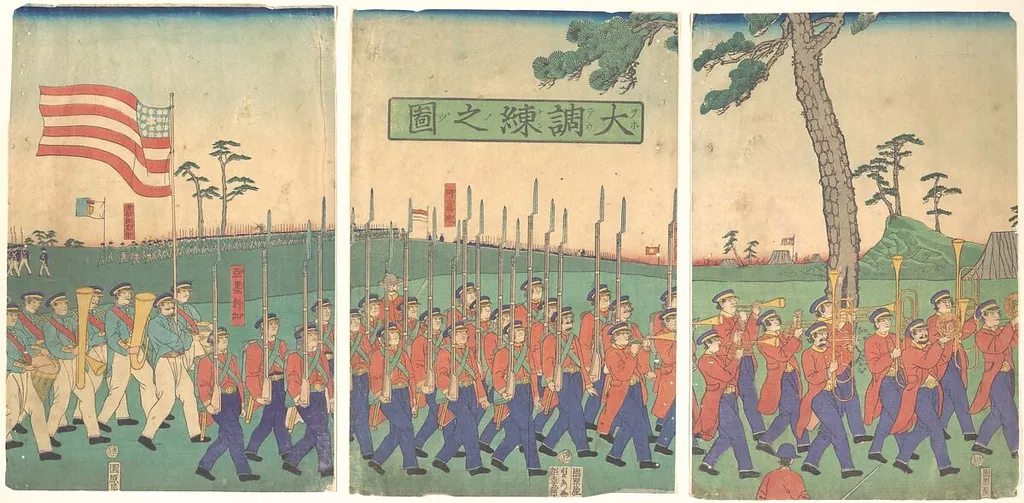
Uchoren no zu|Great Military Drill is an ink print by the Impressionist artist Utagawa (Gountei) Sadahide. It dates from 1866 and is held in the collection of the Metropolitan Museum of Art.
About this work
Overview
Uchoren no zu (Great Military Drill) is a triptych woodblock print created by Utagawa Sadahide in 1866, currently housed at The Metropolitan Museum of Art.
Subject & Meaning
The print depicts a military training scene with soldiers in distinctive red jackets and blue pants, engaged in marching, playing brass instruments, and drilling with rifles. The inclusion of an American flag and a Japanese banner highlights the blend of foreign influence and local tradition during this period.
Technique & Style
Executed in ink and color on paper, the triptych showcases Sadahide's use of woodblock printing techniques to capture dynamic scenes across three panels, incorporating elements of landscape (trees, tents, fence) to establish a training ground setting.
History & Provenance
Created in 1866, the work reflects the late Edo period's openness to Western influences. Its current location at The Metropolitan Museum of Art indicates its global recognition and preservation.
Artist & collection

Artist
Utagawa Sadahide , also known as Gountei Sadahide, was a Japanese artist best known for his prints in the ukiyo-e style as a member of the Utagawa school.

 Untitled
 Untitled
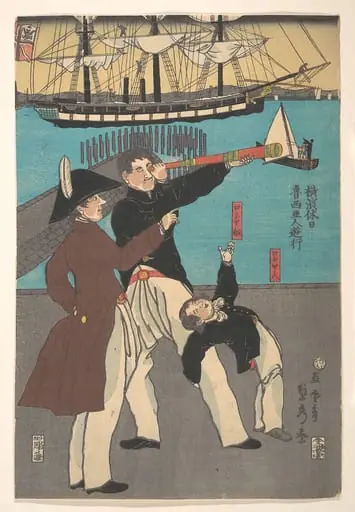 歌川五雲亭貞秀画 『横浜休日 魯西亜人遊行』|Russians Enjoying a Holiday in Yokohama (Yokohama kyūjitsu Roshiajin yūkō)
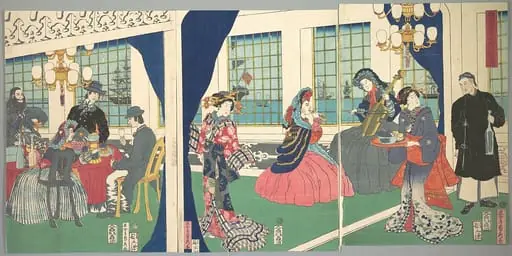
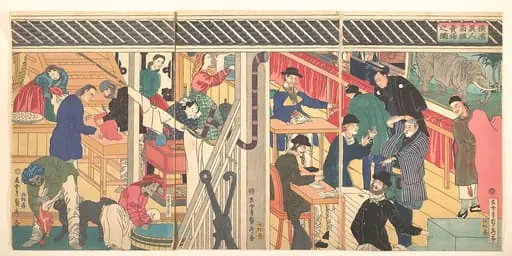 「横浜異人商館買場之圖」|Foreign Business Establishment in Yokohama (Yokohama ijin shōkan uriba no zu)
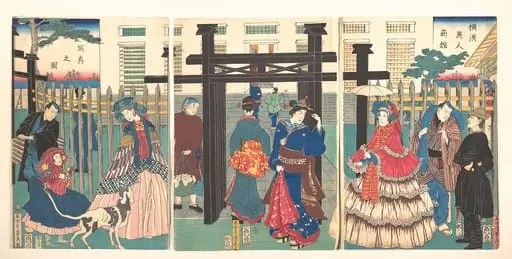 歌川五雲亭貞秀画 『横浜異人商館 写真之図』|Foreign Business Establishment in Yokohama (Yokohama ijin shōkan shashin no zu)
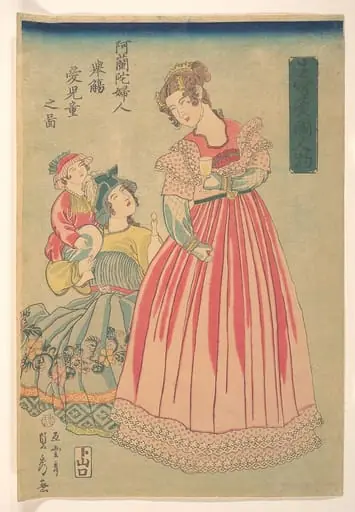 歌川五雲亭貞秀画 『生写異国人物 阿蘭陀婦人舉觴 愛児童之図』|Dutch Woman and Child (Seisha ikoku jinbutsu Oranda fujin aijidō no zu)
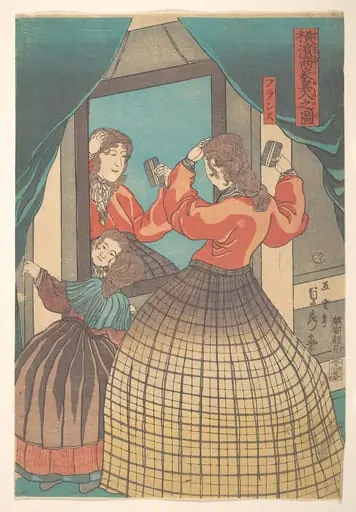 歌川五雲亭貞秀画 『横浜商家異人之図』|French Woman and Girl, from the series Foreign Merchants in Yokohama (Yokohama shōka ijin no zu)
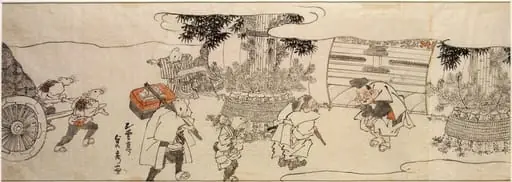 Daikoku and rats bringing rice bales to Ebisu
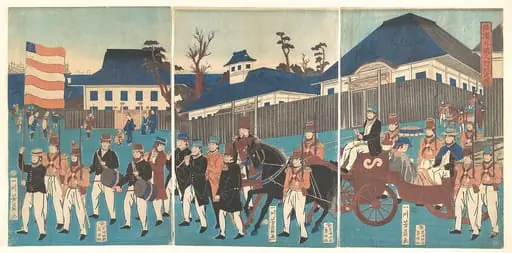 Yokohama Gankirō gaikokujin gyōretsu no zu|Picture of a Procession of Foreigners at Yokohama
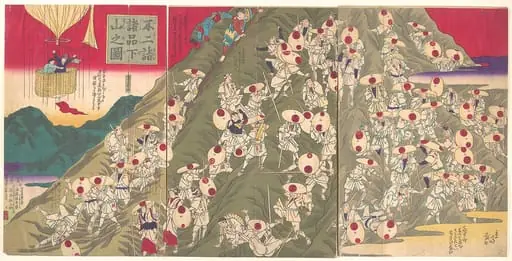 不二詣諸品下山之図|View of the Descent from a Mountain by Many from Pilgrimage to Mt. Fuji (Fuji mōde shoshina gesan no zu)
 Untitled
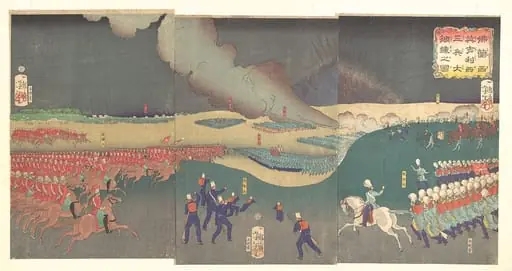 仏蘭西英吉利三兵大調錬之図|Maneuvers by Three Categories of French and English Soldiers (Furansu Igirisu sanhei ōchōren no zu)
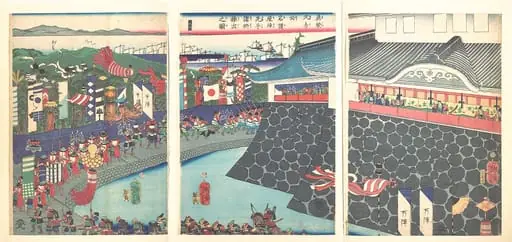 真柴秀吉公名護屋陣先手諸将繰出之図|Hideyoshi and His Troops Leaving Nagoya Camp (Mashiba Hideyoshi kō nagoya jin saki te no shoshō kuridashi no zu)
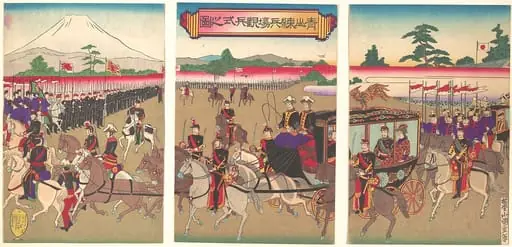 Untitled
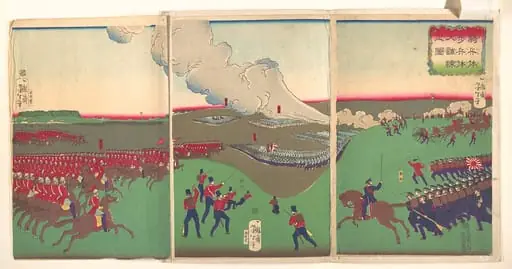 騎兵体歩兵体大調練之図|Illustration of Cavalry, Infantry and Soldiers Retreating (Kiheitai, hoheitai, daichōren no zu)
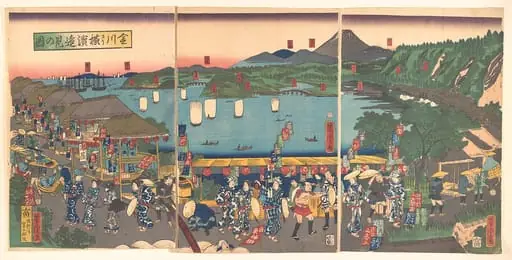 Kanagawa yōri Yokohama...ken no zu|A Distant View of Yokohama from Kanagawa
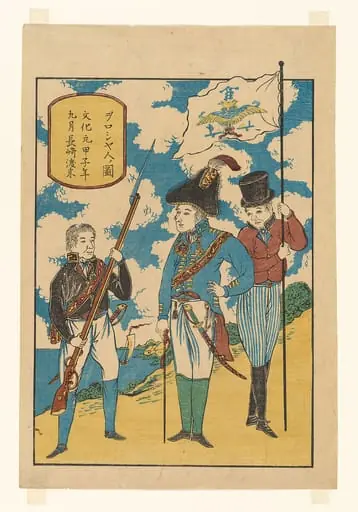 「ヲロシア人啚、文化元甲子年九月 長崎渡来」|Russians at Nagasaki
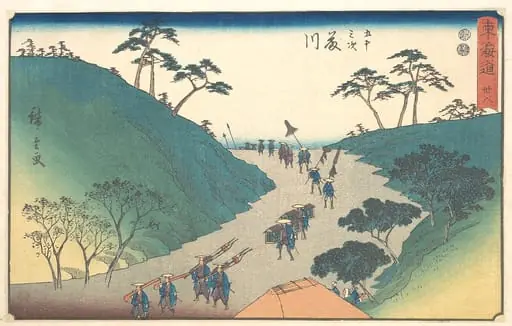 東海道五十三次 藤川|Fujikawa
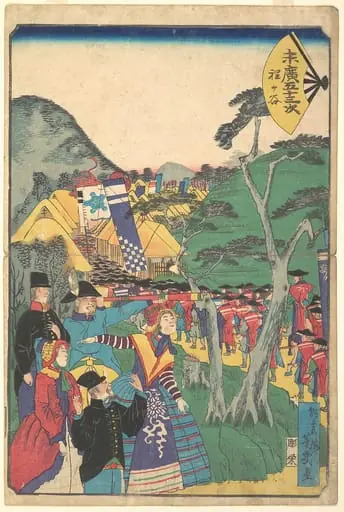 Untitled
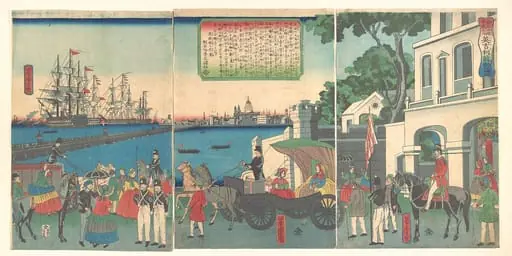 Igirisu Rondon no kaiko|The Port of London England