Artwork
Adonis
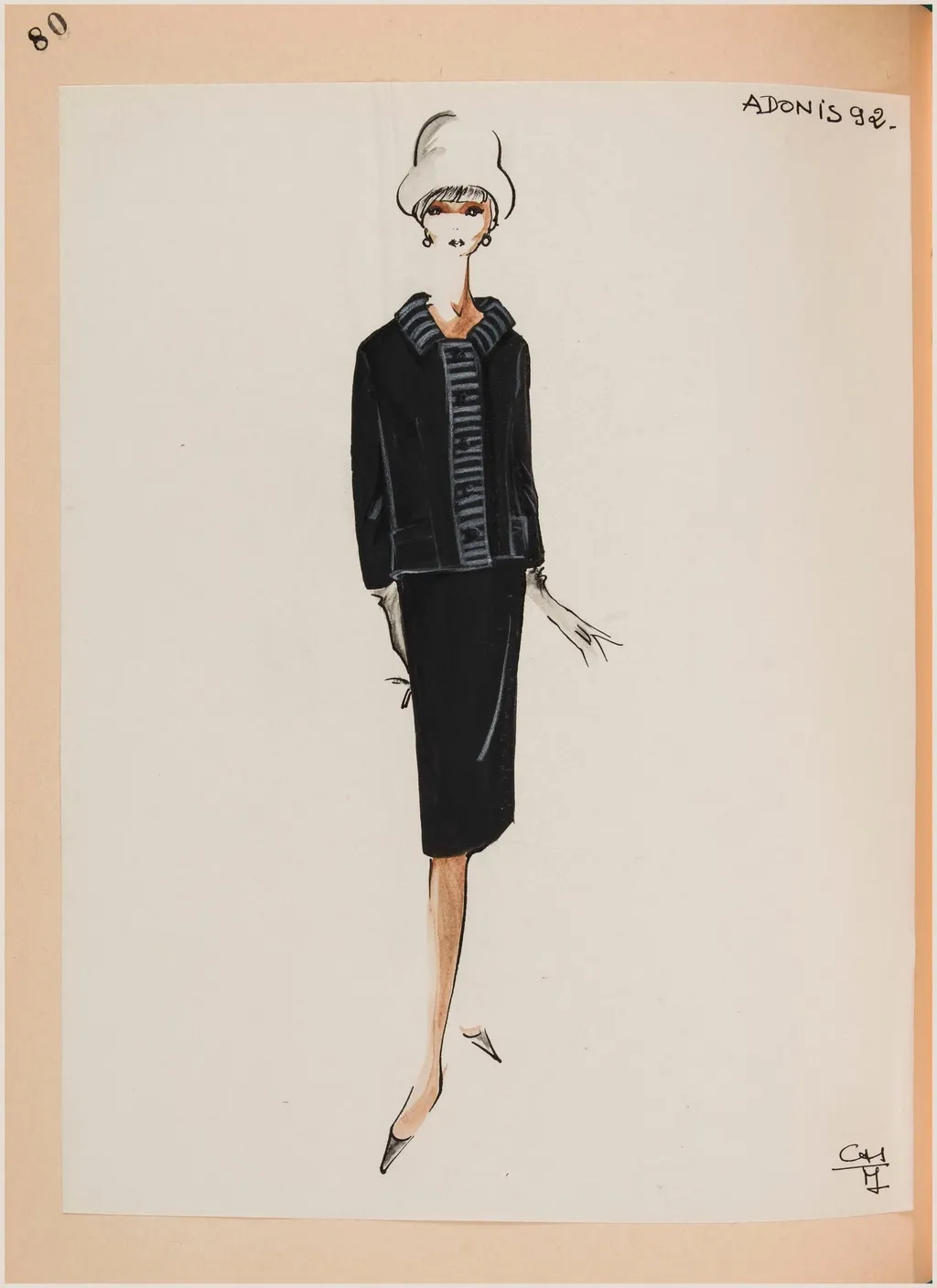
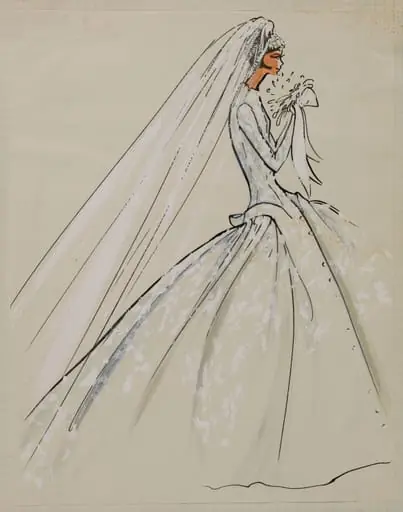
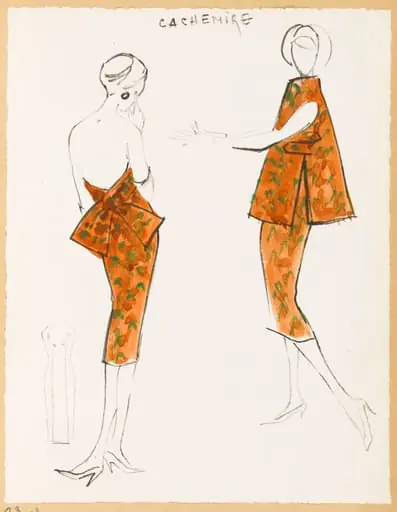
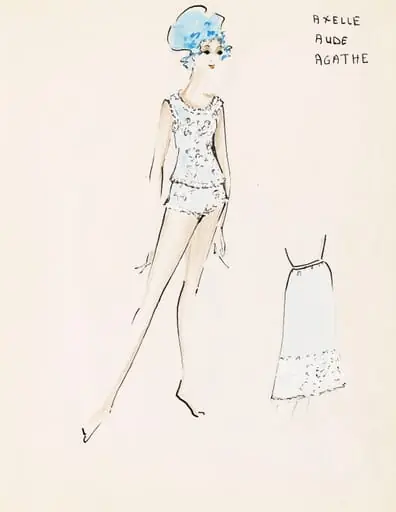
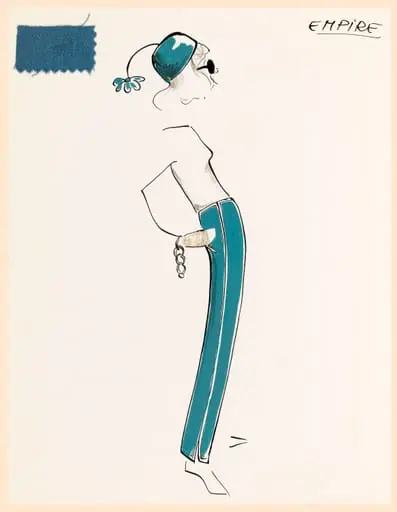
Adonis is a drawing by Carven. It dates from 1963 and is held in the collection of the Palais Galliera - Musée de la Mode de la Ville de Paris.
About this work
Overview
Though not a painting or sculpture, it functions as a fashion illustration, capturing a moment of mid-century style with clarity and restraint.
Created in 1963 by the French fashion designer Carven, this drawing depicts a woman in formal attire. Executed in ink or pencil on paper, the work is part of the Museum of Ethnography’s collection. Though not a painting or sculpture, it functions as a fashion illustration, capturing a moment of mid-century style with clarity and restraint. The simplicity of the line work emphasizes the precision of the garment’s silhouette.
Subject & Meaning
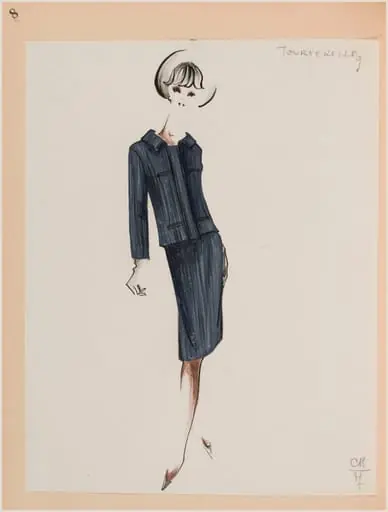
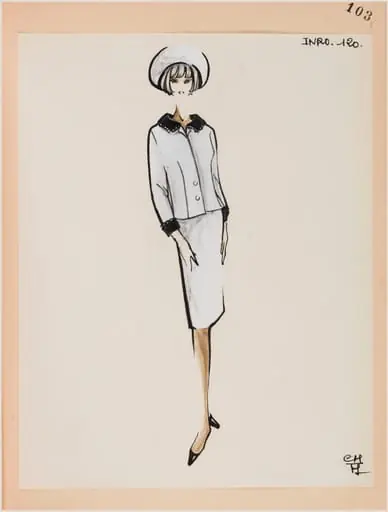
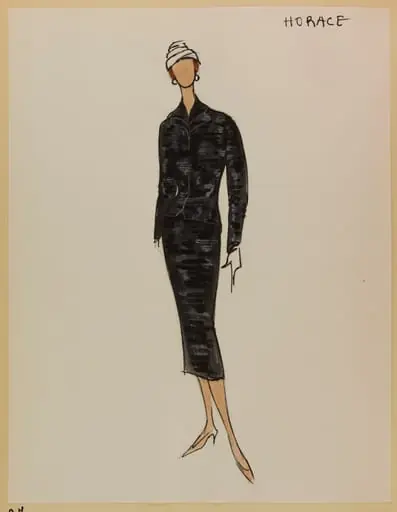
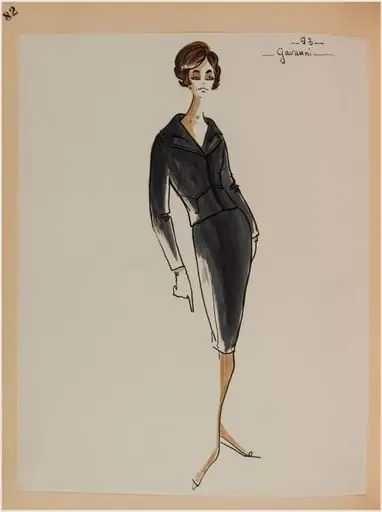
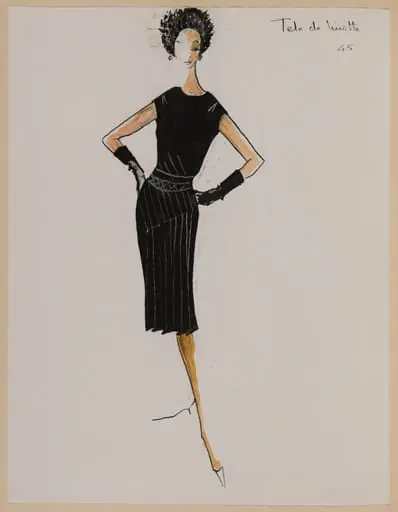
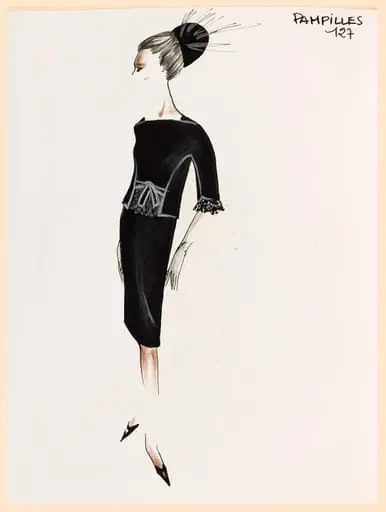
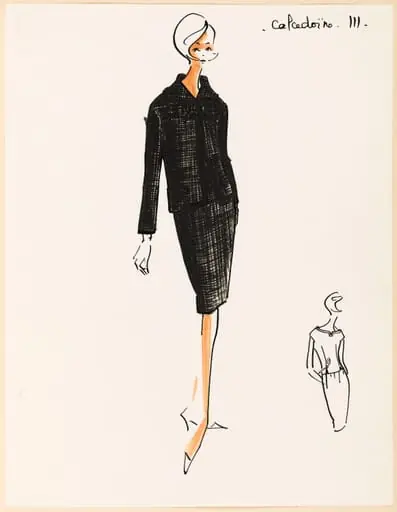
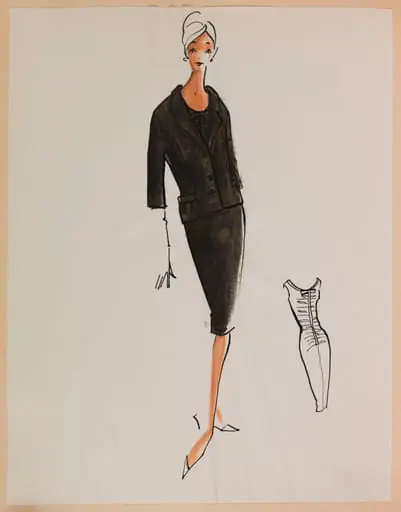
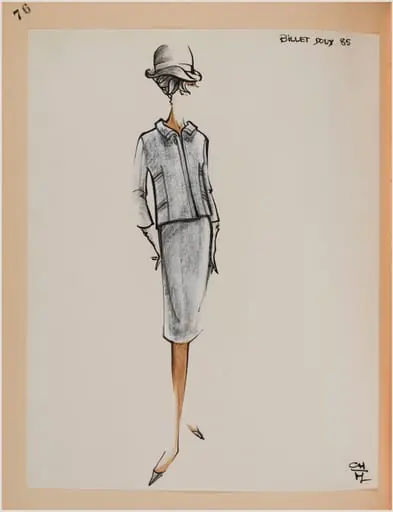
The figure is a woman dressed in a tailored black jacket with a striped collar, a matching skirt, and high heels. White gloves and a hat contrast sharply against the dark clothing, suggesting a refined, urban elegance. The pose is static, focusing attention on the clothing rather than narrative or emotion. The image reflects mid-century ideals of feminine poise and sartorial discipline, typical of fashion design at the time.
Technique & Style
The drawing employs clean, minimal lines to define form and detail. Shading is absent; structure is conveyed through contour and negative space. The white background isolates the figure, enhancing the graphic quality of the outfit. The bob haircut, gloves, and hat are rendered with subtle precision, indicating the illustrator’s familiarity with fashion conventions and an emphasis on wearable elegance over expressive flourish.
History & Provenance
The work originates from Carven’s design studio in the early 1960s, likely created as a presentation sketch for a collection. It entered the Museum of Ethnography’s holdings through acquisition or donation, possibly as part of a broader effort to document fashion as cultural artifact. Its preservation reflects institutional interest in mid-century design as a record of social norms and aesthetic values.
Context
In the early 1960s, Paris remained a center of haute couture, where fashion houses produced detailed illustrations to communicate designs to clients and press. Carven, founded by Geneviève Boucher, was known for its feminine, understated silhouettes. This drawing aligns with that ethos, contrasting with the more dramatic styles emerging elsewhere. It represents a quiet moment in postwar fashion, prioritizing elegance over spectacle.
Legacy
Though not widely exhibited, the drawing contributes to the archival record of French fashion design. It illustrates how clothing was conceptualized and presented before the rise of photographic editorials. As a preserved artifact, it offers insight into the craftsmanship behind everyday elegance, serving as a reference for scholars studying mid-century gender, style, and design practice.
Artist & collection
Artist
These delicate ink-on-paper drawings capture the quiet poetry of everyday things: pinecones, reeds, apples.
Museum
Palais Galliera - Musée de la Mode de la Ville de Paris
Continue through works from the same source collection.