Artwork
Inro
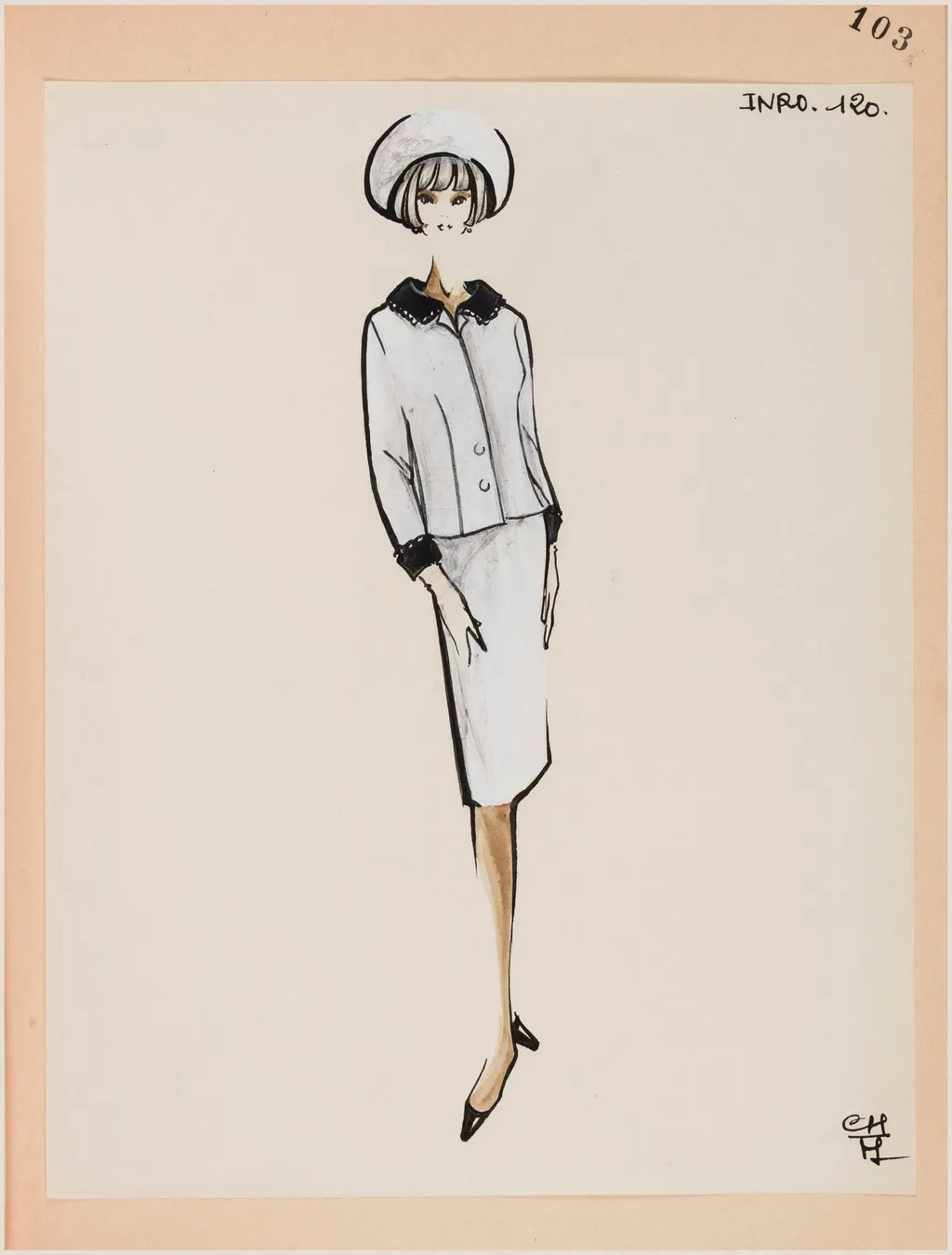
Inro is a drawing by Carven. It dates from 1963 and is held in the collection of the Palais Galliera - Musée de la Mode de la Ville de Paris.
About this work
Overview
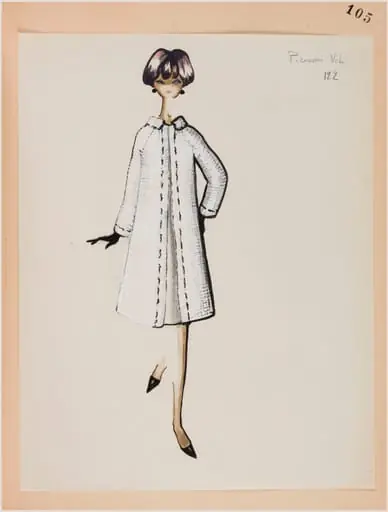
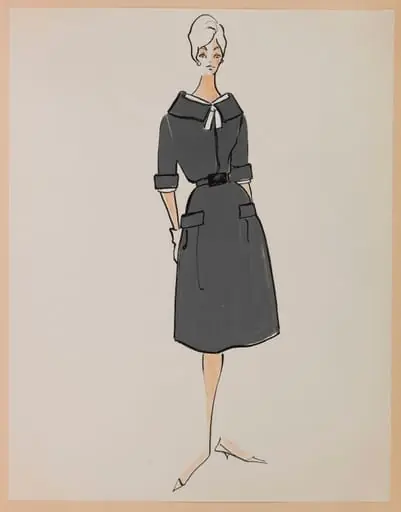
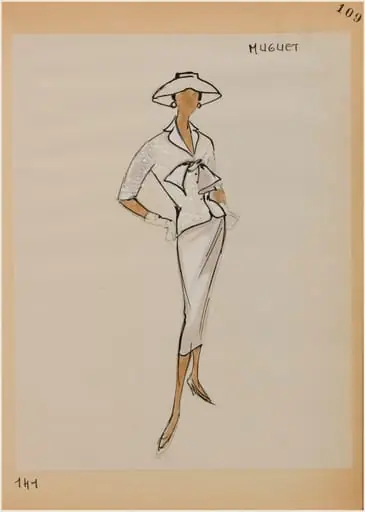
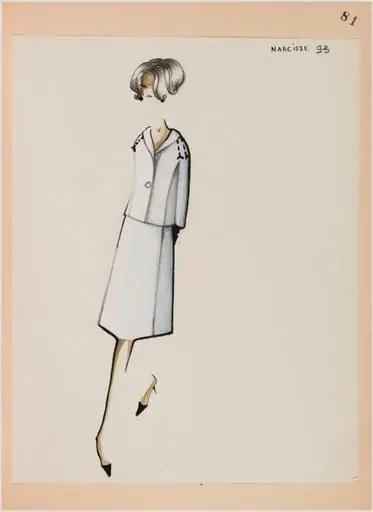
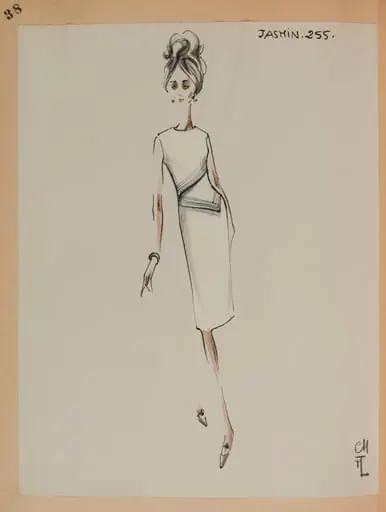
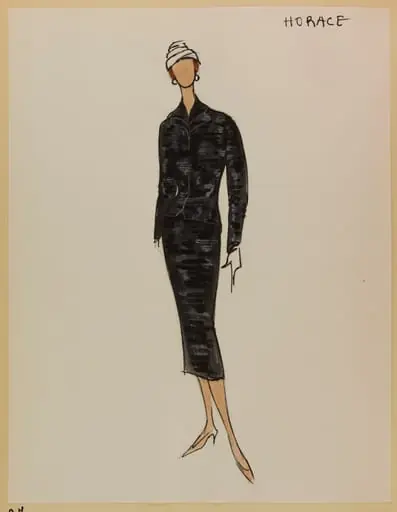
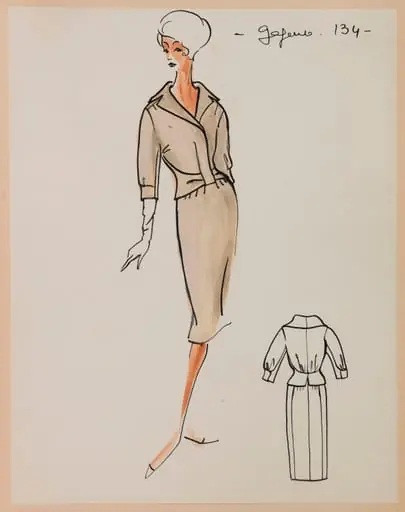
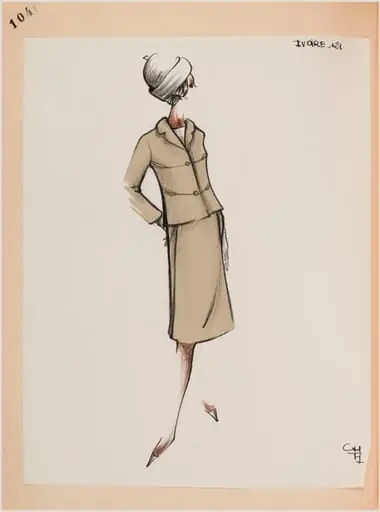
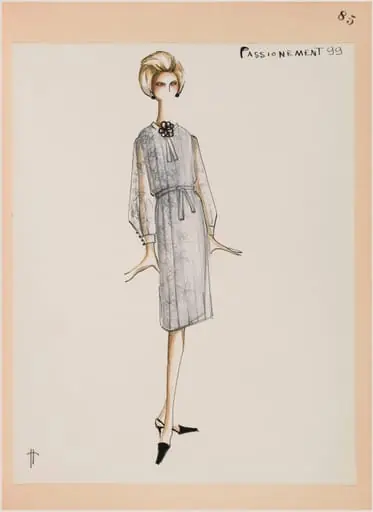
Rendered in pencil or ink, the image depicts a woman in a tailored white ensemble, suggesting its origin as a fashion study rather than a fine art piece.
This drawing, labeled 'INRO. 120' and '103' in the top-right corner, dates to 1963 and is attributed to the designer Carven. It is part of the Museum of Ethnography’s collection. Rendered in pencil or ink, the image depicts a woman in a tailored white ensemble, suggesting its origin as a fashion study rather than a fine art piece. The minimalist background and precise lines indicate its function within a design context.
Subject & Meaning
The figure is a stylized woman, standing with one hand on her hip, exuding quiet confidence. Her outfit—white jacket with black trim, matching skirt, and black heels—reflects mid-century Parisian elegance. The simplicity of the pose and attire emphasizes form and silhouette over narrative. The label 'INRO' may reference a collection or product line, though no explicit symbolic meaning is conveyed beyond the aesthetic presentation of fashion.
Technique & Style
The drawing employs clean, controlled lines with subtle shading to define volume and texture. Cross-hatching is used sparingly, primarily around the collar and cuffs to suggest depth and fabric weight. The light beige background enhances the contrast of the white garment, while the darker border frames the composition. The hand-lettered annotations suggest it was produced as a working sketch, not a finished illustration.
History & Provenance
Created in 1963, the drawing entered the Museum of Ethnography’s holdings as part of a broader collection documenting 20th-century fashion design. Its attribution to Carven aligns with the designer’s known output during this period, when the house emphasized refined, wearable silhouettes. The handwritten notations imply it was used internally, possibly for production or client presentation, before being archived.
Context
In the early 1960s, Parisian fashion houses like Carven focused on understated luxury, moving away from the extravagance of prior decades. This drawing reflects that shift: its clean lines and monochromatic palette align with contemporary trends favoring practicality and modernity. As a fashion study, it represents the industry’s transition toward documentation and standardization in design processes.
Legacy
Though not widely exhibited, the drawing contributes to the historical record of postwar French fashion design. It preserves the visual language of a specific moment when tailoring and restraint defined haute couture. Its preservation in an ethnographic museum underscores its value as a cultural artifact, illustrating how fashion functioned as both art and industry in mid-century Europe.
Artist & collection
Artist
These delicate ink-on-paper drawings capture the quiet poetry of everyday things: pinecones, reeds, apples.
Museum
Palais Galliera - Musée de la Mode de la Ville de Paris
Continue through works from the same source collection.