Artwork
Billet doux
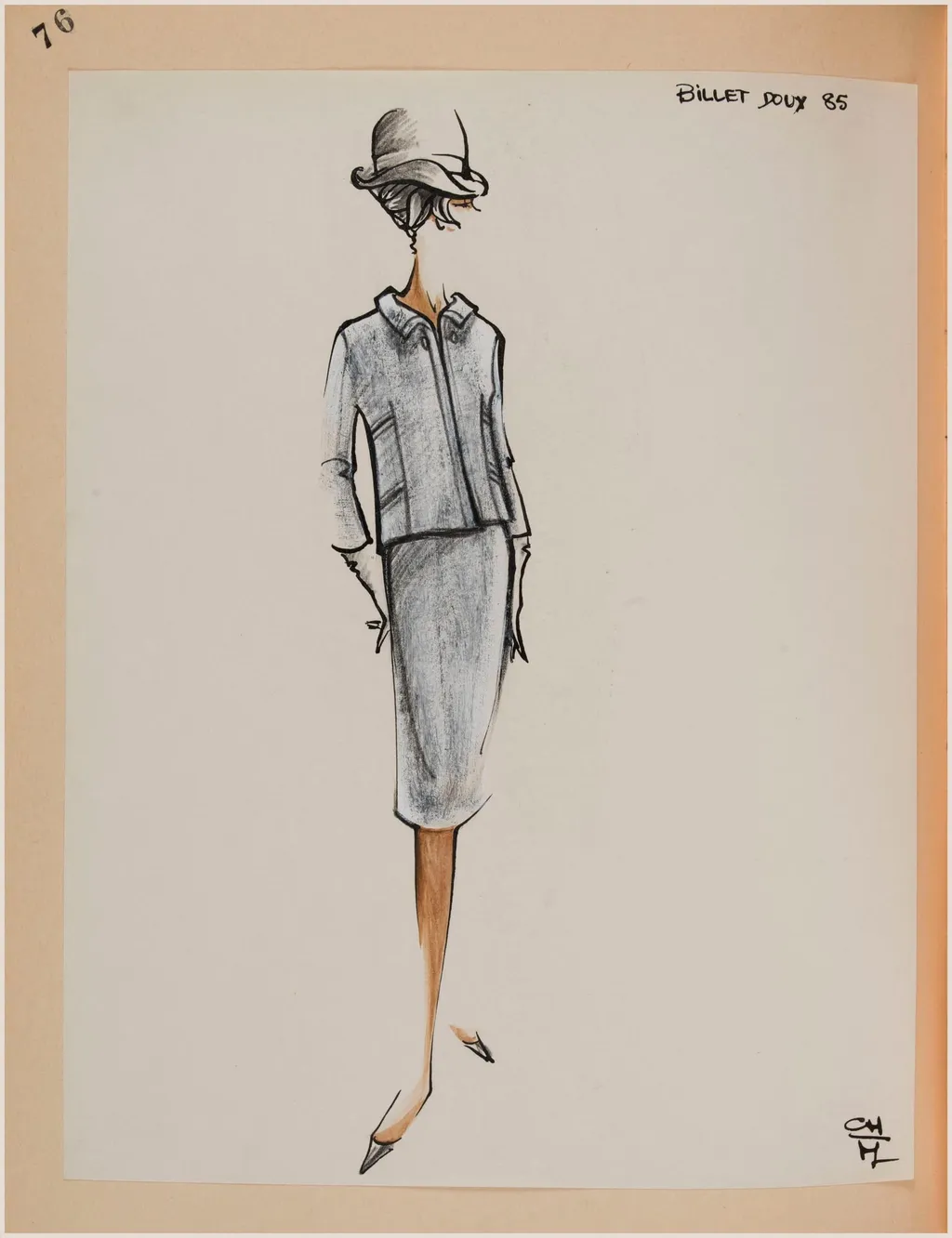
Billet doux is a drawing by Marie-Louise Carven. It dates from 1963 and is held in the collection of the Palais Galliera - Musée de la Mode de la Ville de Paris.
About this work
Overview
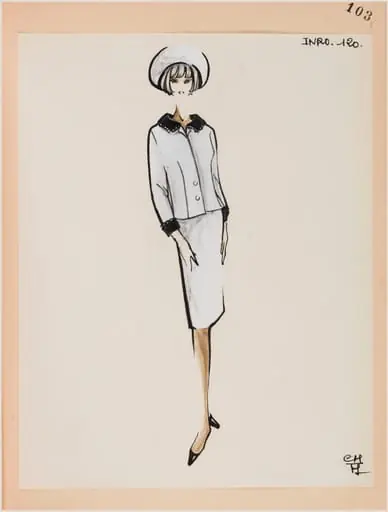
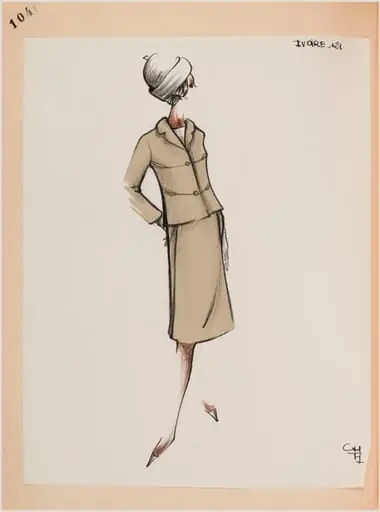
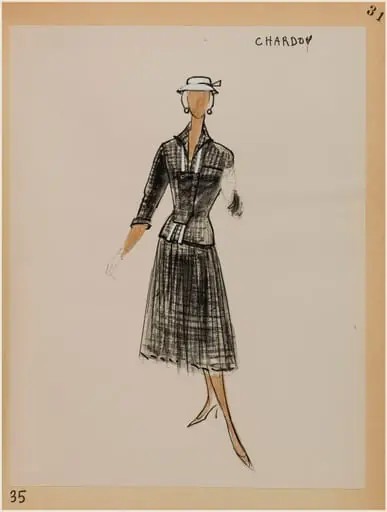
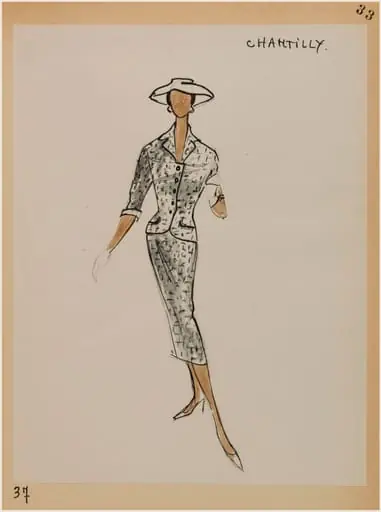
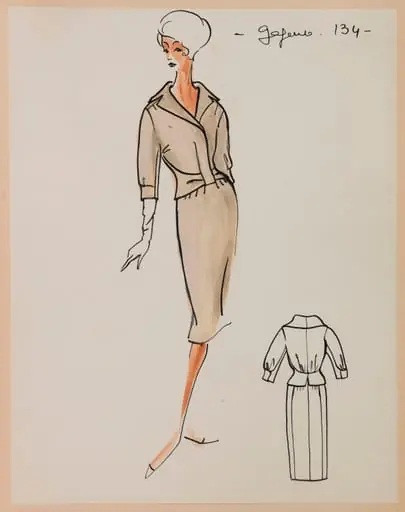
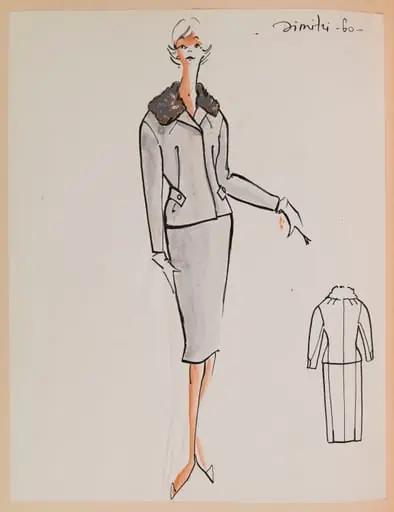
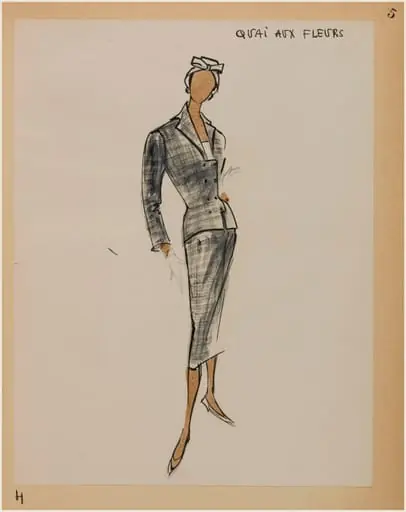
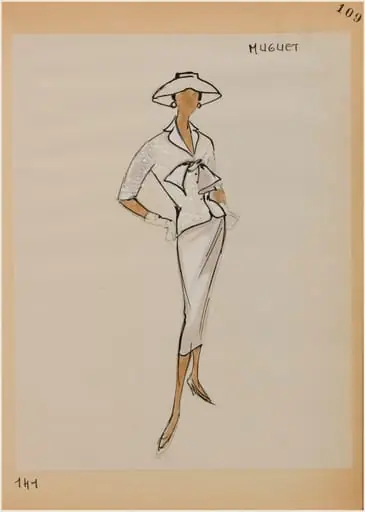
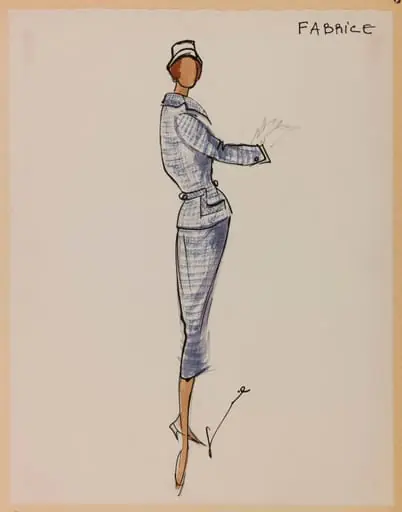
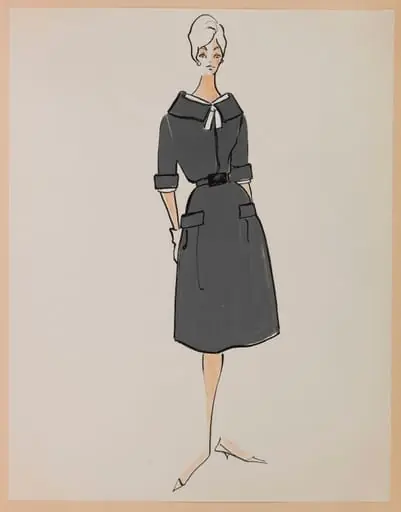
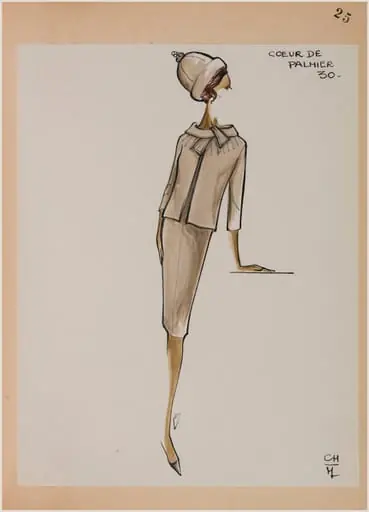
Created in 1963 by French designer Marie-Louise Carven, *Billet doux* is a line drawing that captures a woman in a tailored daytime ensemble.
Created in 1963 by French designer Marie-Louise Carven, *Billet doux* is a line drawing that captures a woman in a tailored daytime ensemble. The piece reflects Carven’s design sensibility—elegant yet restrained—emphasizing proportion and lightness. Though produced as a fashion illustration, it functions as a standalone graphic work, now held in the Museum of Ethnography’s collection as part of its documentation of 20th-century dress culture.
Subject & Meaning
The figure in *Billet doux* stands composed, dressed in a jacket and skirt with a hat and heels, suggesting a formal yet everyday occasion. The title, meaning 'love letter' in French, implies intimacy or personal expression, possibly referencing the quiet confidence of a woman navigating urban life. The absence of facial detail universalizes the figure, inviting viewers to project their own sense of poise and routine onto the image.
Technique & Style
Carven rendered the figure with clean, bold outlines and minimal shading, avoiding ornamental detail in favor of clarity. The simplicity of the line work echoes the aesthetic of mid-century fashion sketches, prioritizing silhouette over texture. The lack of color and the restrained composition reflect a design philosophy centered on structure and wearable form, consistent with her approach to clothing construction.
History & Provenance
Marie-Louise Carven established her fashion house in 1945 and was among the first Parisian couturiers to develop a ready-to-wear line, expanding access to her designs. *Billet doux* was produced during the height of her influence in the early 1960s. The drawing entered the Museum of Ethnography’s collection as part of a broader effort to preserve visual records of fashion as cultural artifact, rather than merely as high art.
Context
In the early 1960s, Parisian fashion was shifting toward accessibility and modernity. Carven’s focus on petite silhouettes and light fabrics like gingham and lace aligned with a growing demand for practical elegance. *Billet doux* emerges from this moment, bridging haute couture’s precision with the emerging language of prêt-à-porter, where design clarity became as important as luxury materials.
Legacy
Though Carven’s name is less prominent today, her contributions to democratizing fashion remain significant. *Billet doux* endures as a quiet testament to her belief in clothing as an extension of personal identity rather than spectacle. The drawing’s preservation in an ethnographic context underscores its value as a document of everyday style, not just designer innovation.
Artist & collection
Artist
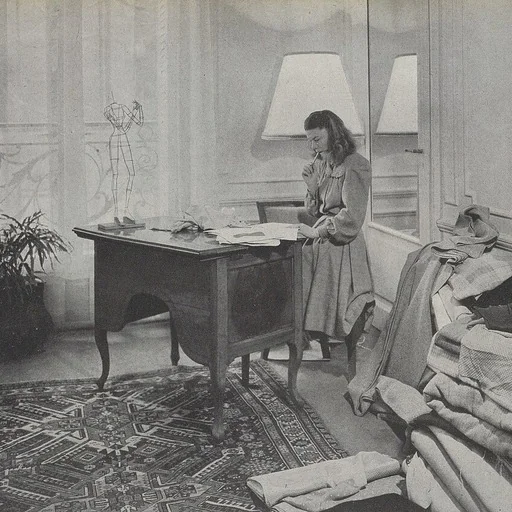
Marie-Louise Carven (31 August 1909 – 8 June 2015), born Carmen de Tommaso, was a French fashion designer who founded the house of Carven in 1945.

Museum
Palais Galliera - Musée de la Mode de la Ville de Paris
Continue through works from the same source collection.
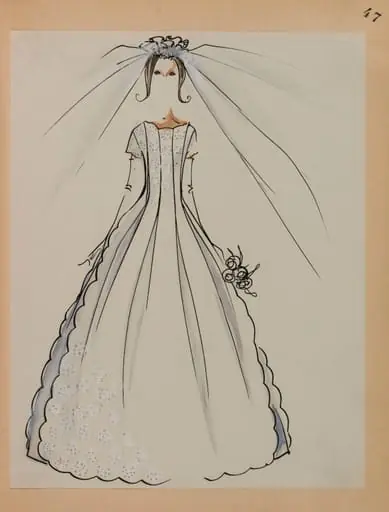 Robe de mariée festonnée et son voile
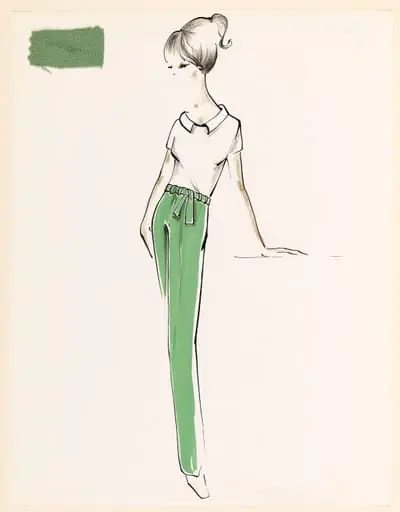 Haut blanc à manches courtes et pantalon vert à ceinture nouée
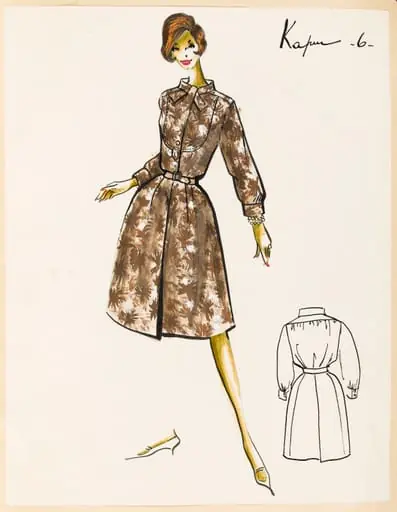 Kapur
Kapur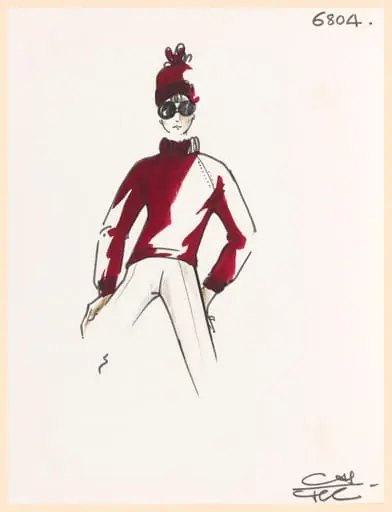 Pull-over à manches longues pourpre, bonnet assorti, pantalon et lunettes de soleil
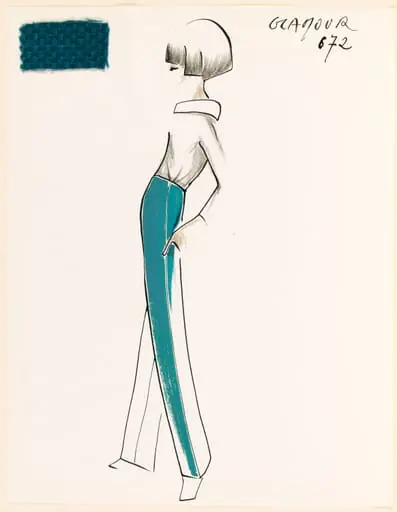 GLAMOUR
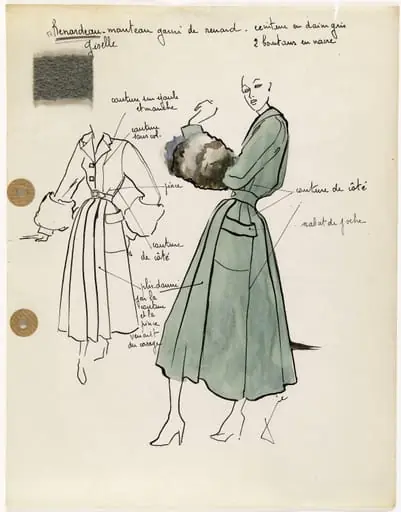 'Renardeau'
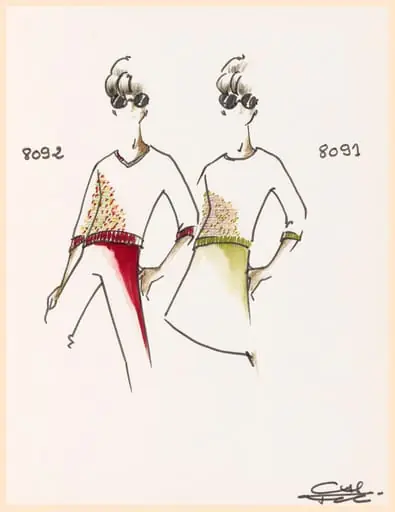 Pull-over à manches trois quarts et à encolure V à motifs multicolores, pantalon cerise et lunettes de soleil
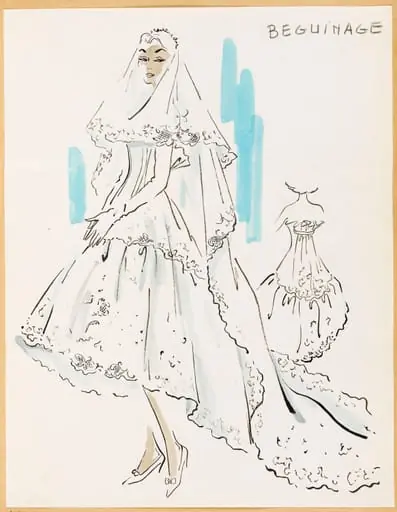 Béguinage