Artwork
Alpe d'Huez
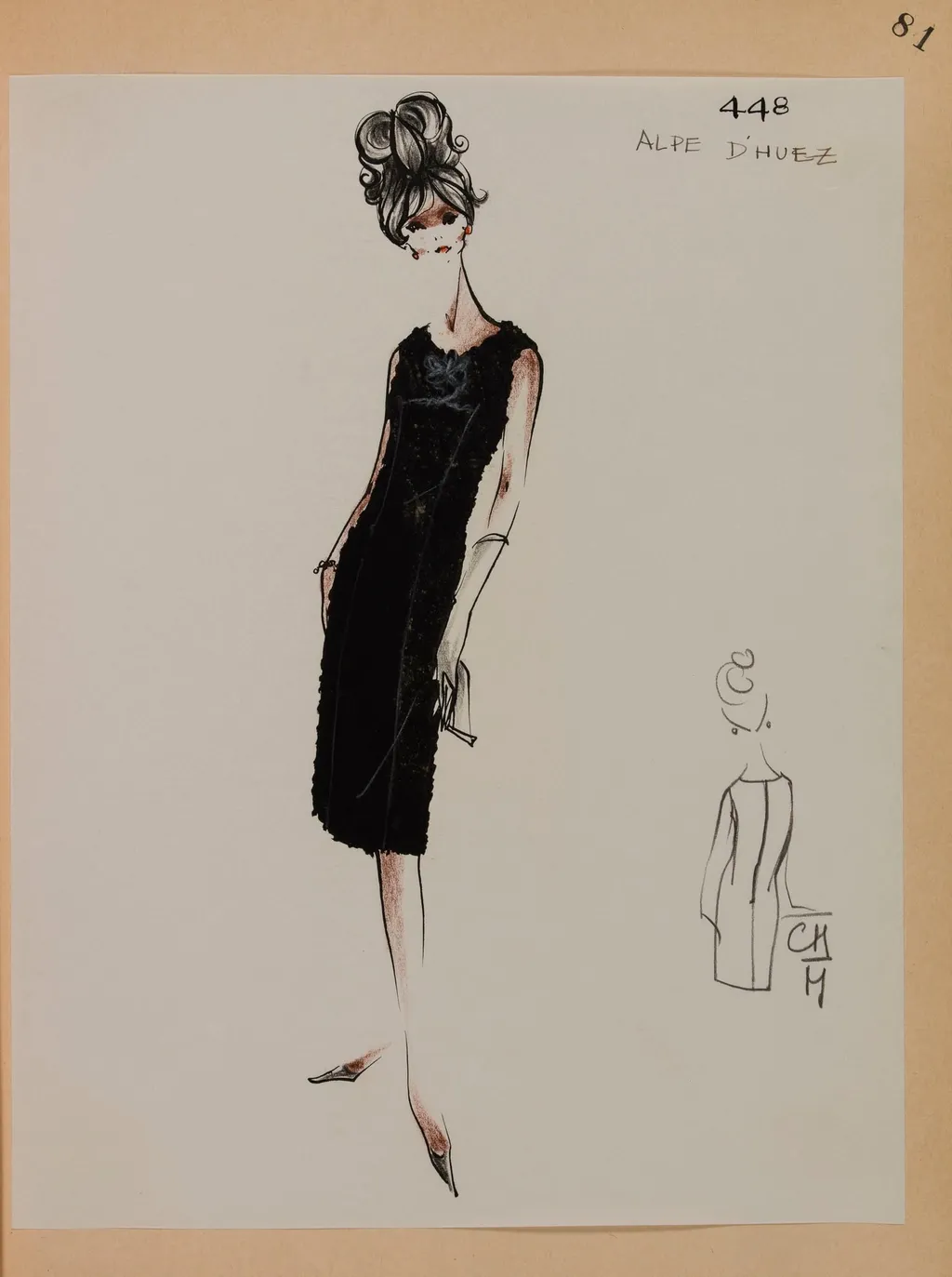
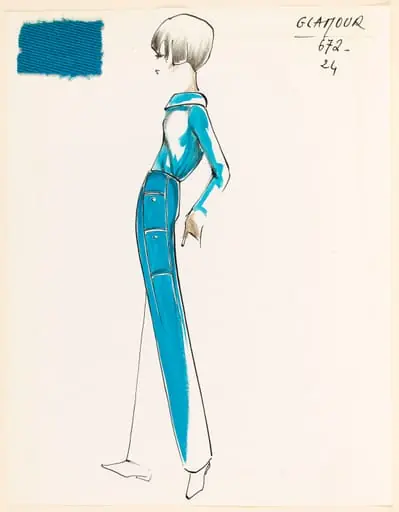
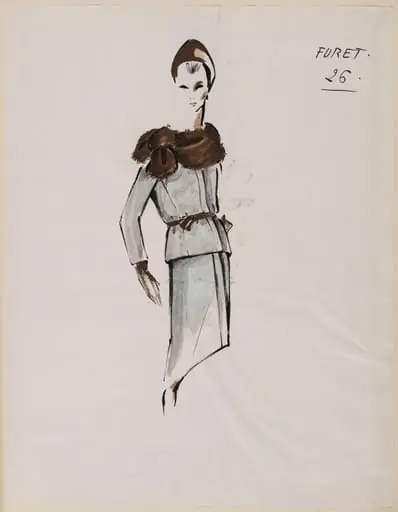
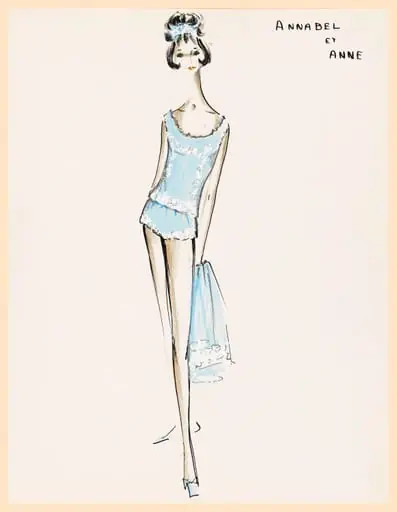
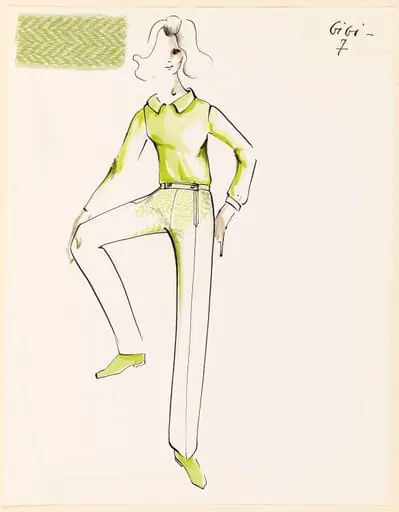
Alpe d'Huez is a drawing by Carven. It dates from 1963 and is held in the collection of the Palais Galliera - Musée de la Mode de la Ville de Paris.
About this work
Overview
Created around 1963, this ink sketch is attributed to the French fashion house Carven. Executed on paper, it functions as a design study rather than a finished illustration. The work is part of the collection at the Museum of Ethnography, where it is preserved as an artifact of mid-century fashion design practice, reflecting the studio’s approach to garment development.
Subject & Meaning
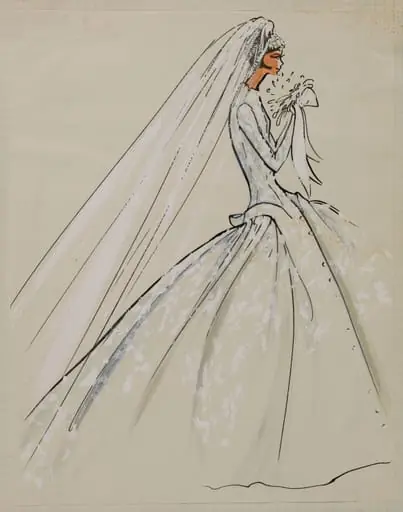
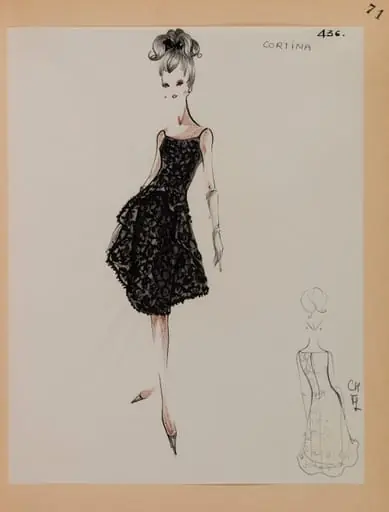
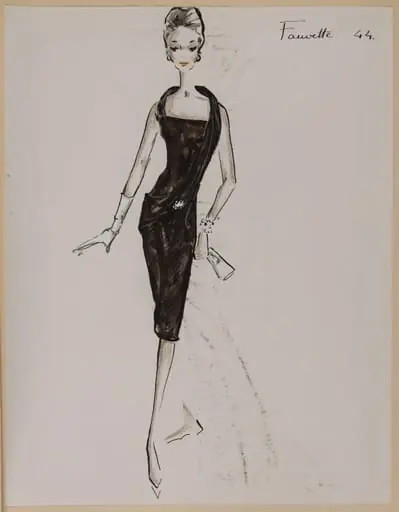
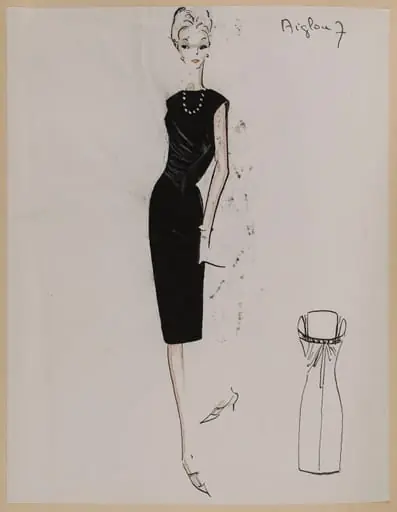
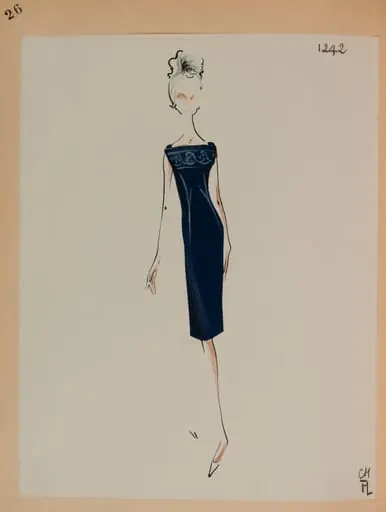
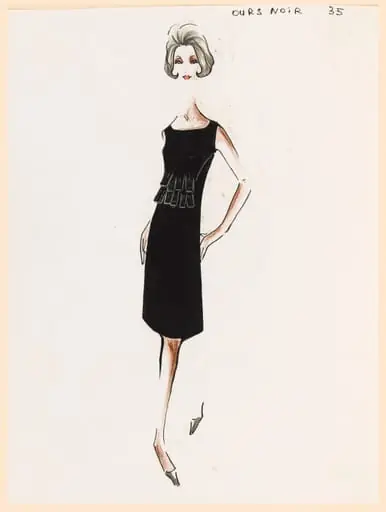
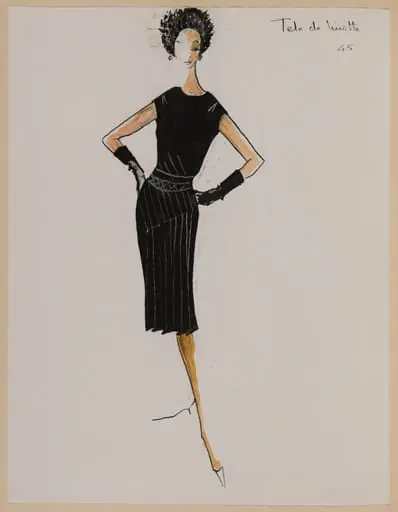
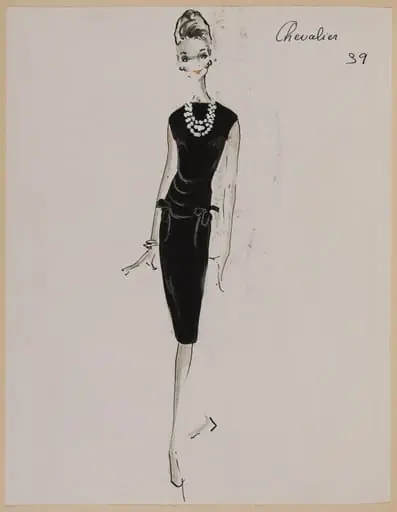
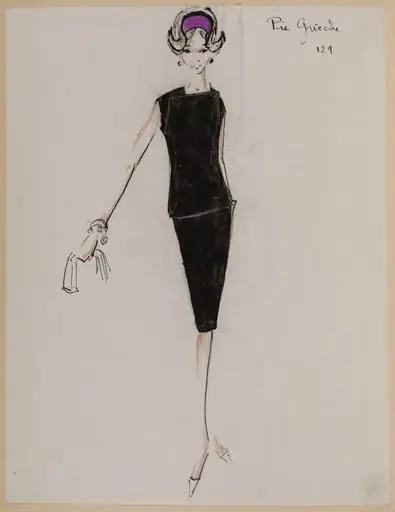
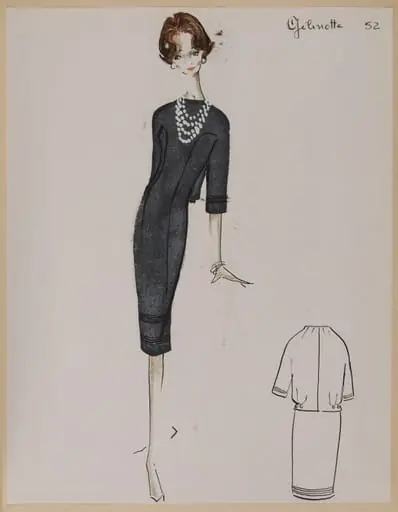
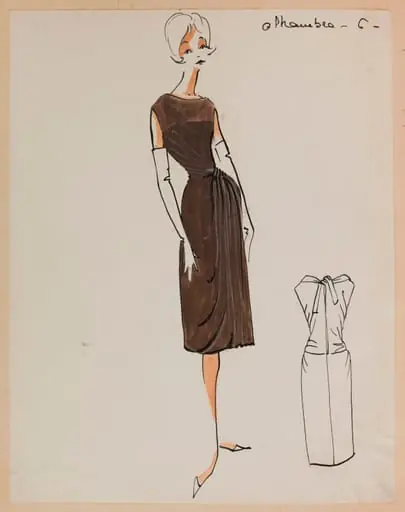
The drawing depicts a woman’s dress with a fitted waist, high collar, and modest silhouette, suggesting a formal or daytime ensemble from the early 1960s.
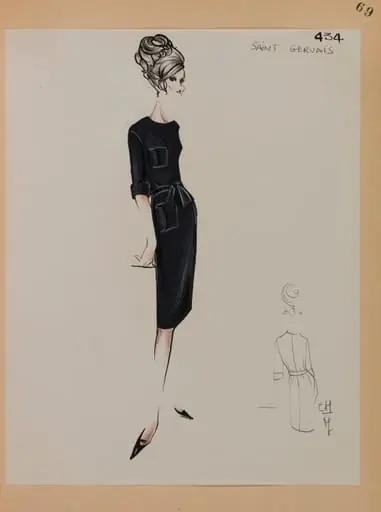
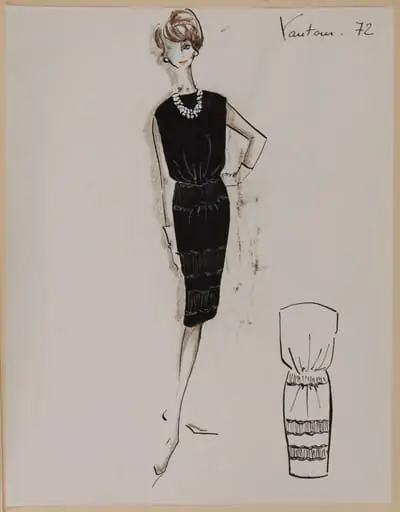
The drawing depicts a woman’s dress with a fitted waist, high collar, and modest silhouette, suggesting a formal or daytime ensemble from the early 1960s. The absence of a full figure focuses attention on the garment’s structure, indicating its purpose as a technical template. The inclusion of small earrings and low heels implies attention to coordinated accessories, reinforcing the design’s completeness as a wearable concept.
Technique & Style
The sketch employs loose, assured linework with minimal shading to suggest fabric drape and volume. The artist uses quick, fluid strokes to define the dress’s contours, avoiding excessive detail. A smaller, detached outline in the corner isolates the dress form, possibly for pattern-making reference. The hand is precise yet unpolished, characteristic of working drawings made during the design process.
History & Provenance
The drawing entered the Museum of Ethnography’s collection as part of a broader acquisition of fashion documentation from mid-century French ateliers. Its attribution to Carven is based on the signature on the page and stylistic alignment with the house’s known designs from the period. No earlier ownership records are documented, but its preservation suggests institutional recognition of its design significance.
Context
In the early 1960s, fashion houses like Carven produced numerous such sketches to guide tailors and patternmakers. These drawings were functional tools, not public-facing advertisements. The emphasis on silhouette over ornamentation reflects a post-war preference for clean lines and practical elegance. This sketch aligns with the era’s shift toward streamlined, wearable fashion for the modern woman.
Legacy
Though not widely exhibited, the sketch contributes to scholarly understanding of how French fashion studios operated behind the scenes. It illustrates the transition from hand-drawn concepts to mass production, preserving the quiet craftsmanship of a design process now largely digitized. As a surviving example of studio practice, it offers insight into the material culture of mid-century fashion.
Artist & collection
Artist
These delicate ink-on-paper drawings capture the quiet poetry of everyday things: pinecones, reeds, apples.
Museum
Palais Galliera - Musée de la Mode de la Ville de Paris
Continue through works from the same source collection.