Artwork
Ambrette
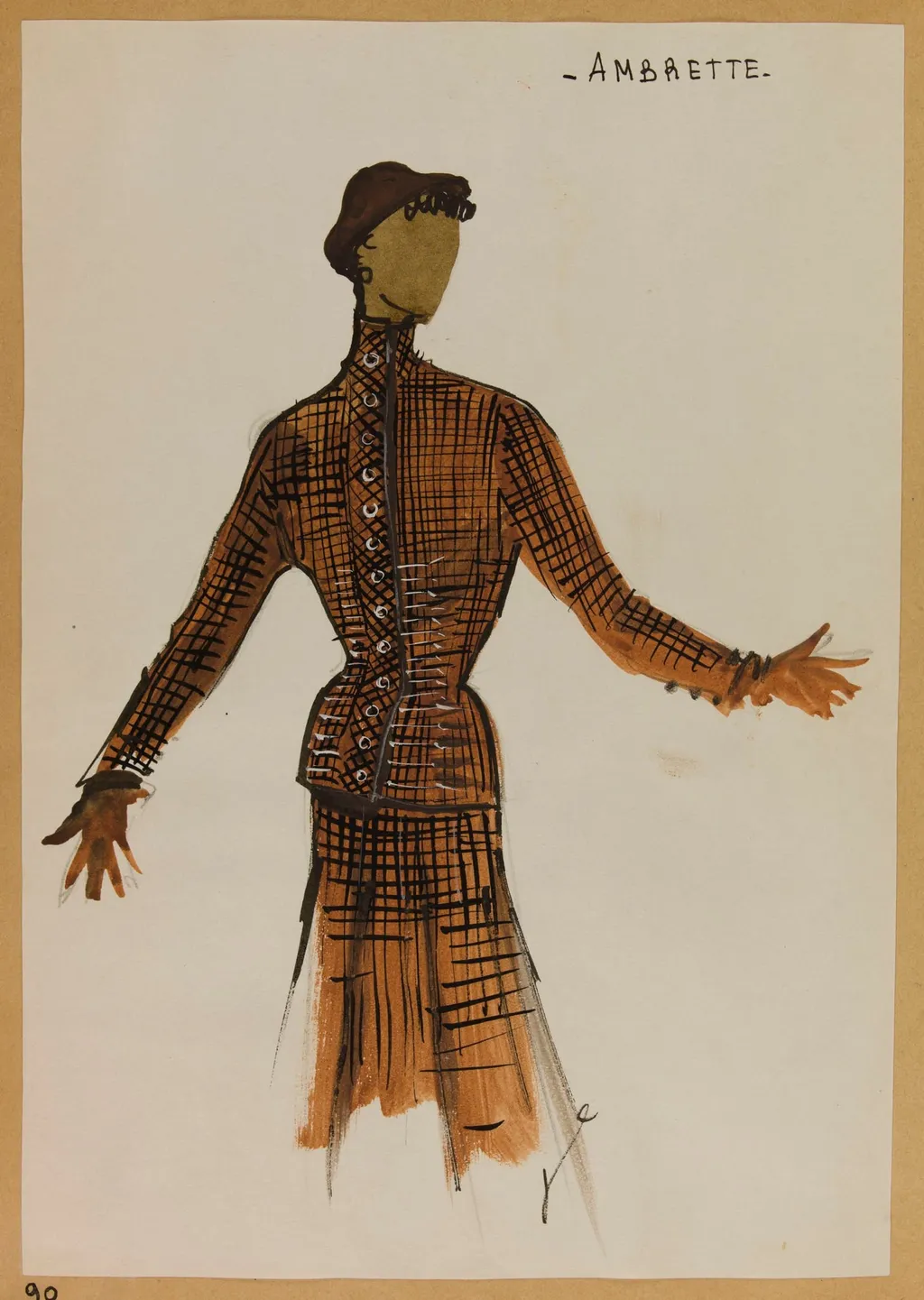
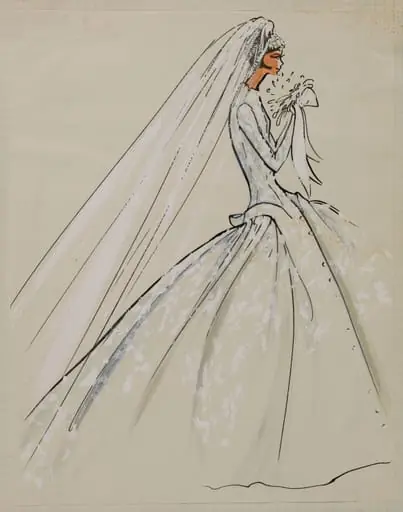
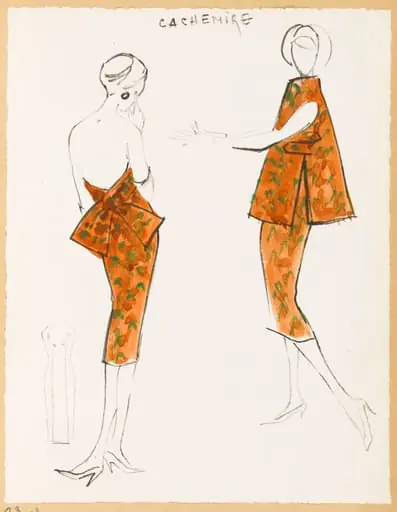
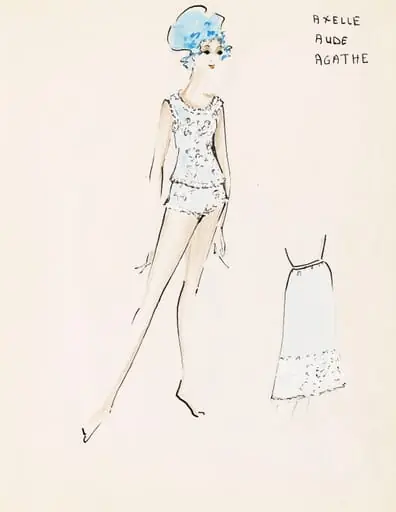
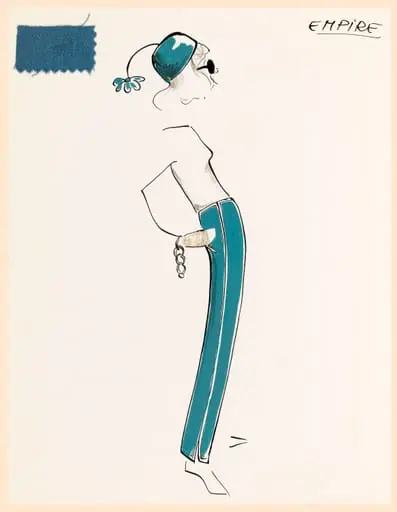
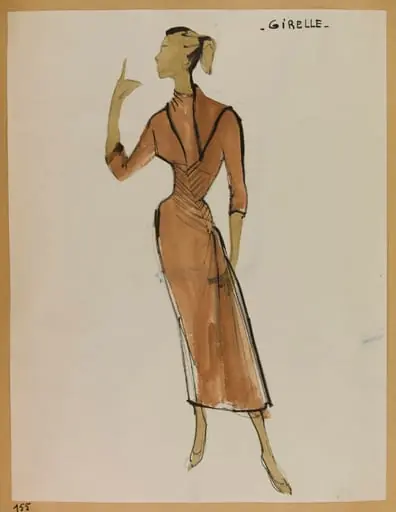
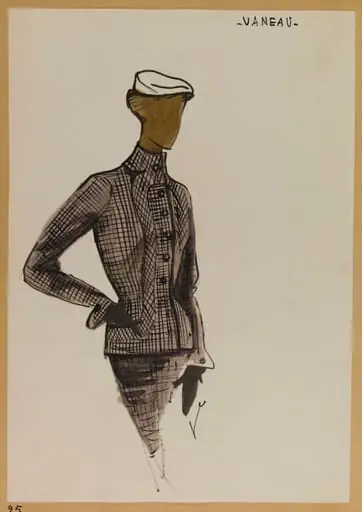
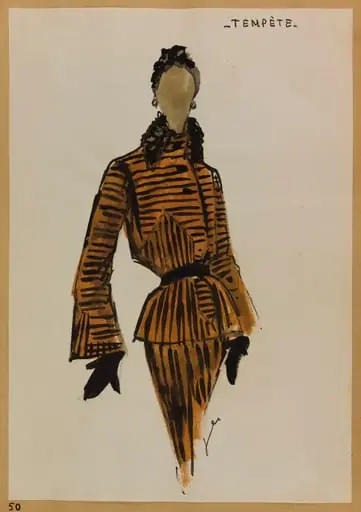
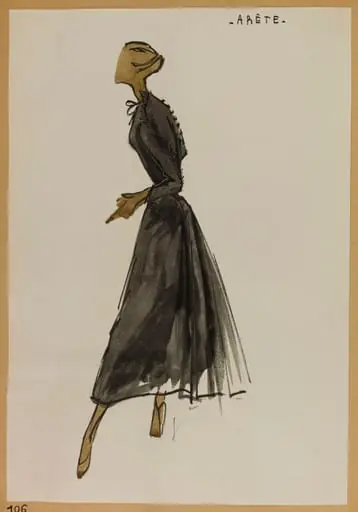
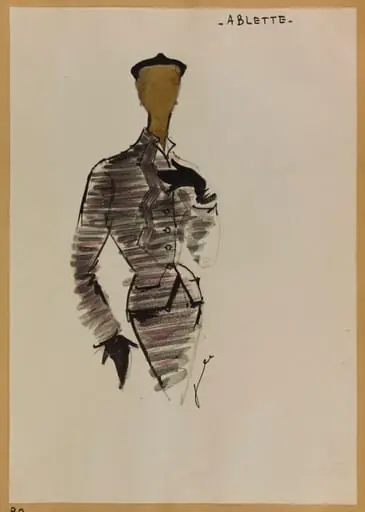
Ambrette is a drawing by Carven. It dates from 1952 and is held in the collection of the Palais Galliera - Musée de la Mode de la Ville de Paris.
About this work
Overview
It resides in the collection of the Museum of Ethnography, where it functions as a record of mid-century haute couture design.
Created in 1952 by the French fashion designer Carven, Ambrette is a fashion sketch rendered in ink or pencil on paper. It resides in the collection of the Museum of Ethnography, where it functions as a record of mid-century haute couture design. The work captures a single ensemble in loose, gestural lines, emphasizing movement and form over detailed finish, reflecting the rapid ideation common in fashion ateliers of the period.
Subject & Meaning
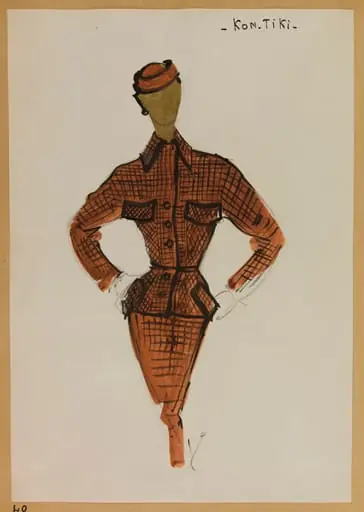
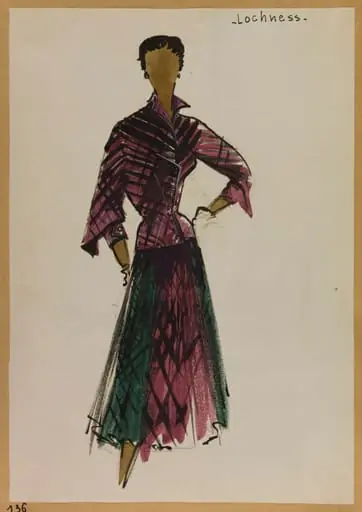
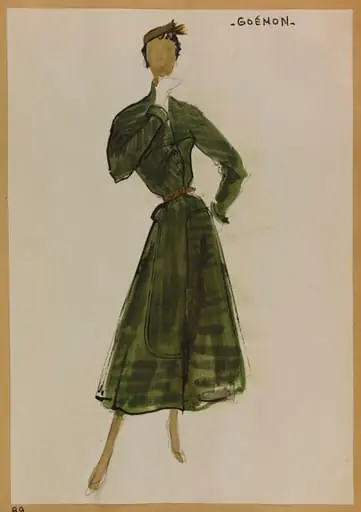
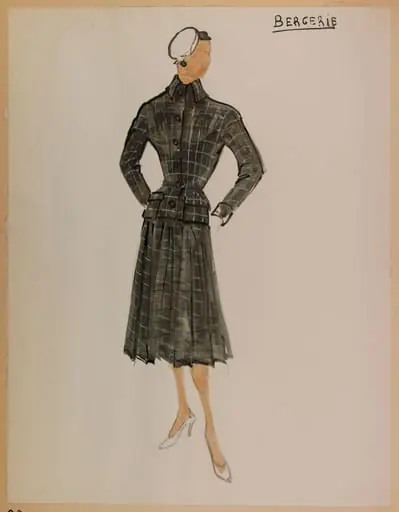
The sketch depicts a woman wearing a tailored checkered jacket with wide sleeves and a matching flared skirt. The outfit, named Ambrette at the top, suggests a playful yet structured aesthetic typical of Carven’s postwar designs. The figure’s outstretched arms imply a pose of display or rotation, common in fashion illustrations meant to showcase garment drape and silhouette. The dark, brimmed hat adds a touch of refined elegance, anchoring the look in contemporary feminine ideals of the time.
Technique & Style
Carven rendered Ambrette with swift, unrefined lines that prioritize rhythm over precision. The sketch’s spontaneity suggests it was made quickly, possibly as a preliminary design or client presentation. The checkered pattern is suggested with minimal strokes, relying on the viewer’s familiarity with textile motifs. The absence of shading or color emphasizes form and structure, aligning with the functional purpose of fashion drawings as tools for communication rather than finished art.
History & Provenance
The sketch entered the Museum of Ethnography’s collection as part of a broader effort to document 20th-century fashion as cultural artifact. While specific acquisition details are not widely documented, its inclusion reflects institutional recognition of fashion design as a legitimate subject of ethnographic study. Carven’s studio produced numerous such sketches during the 1950s, many of which survive in private and public archives across Europe.
Context
In early 1950s Paris, fashion houses like Carven emphasized tailored silhouettes with subtle flair, responding to postwar desires for both structure and lightness. Ambrette’s checkered fabric and flared skirt align with trends favoring youthful, wearable elegance over the exaggerated forms of the 1940s. The sketch’s informal quality contrasts with the precision of haute couture patterns, revealing the creative process behind garments later produced in limited quantities for elite clients.
Legacy
Ambrette remains a representative example of Carven’s design philosophy: refined simplicity with a touch of whimsy. Though not widely exhibited, the sketch contributes to scholarly understanding of how fashion ideas were visualized and communicated before digital tools. Its preservation in an ethnographic museum underscores the evolving perception of fashion as a cultural practice, not merely commercial product.
Artist & collection
Artist
These delicate ink-on-paper drawings capture the quiet poetry of everyday things: pinecones, reeds, apples.
Museum
Palais Galliera - Musée de la Mode de la Ville de Paris
Continue through works from the same source collection.