Artwork
Bleu de Chine
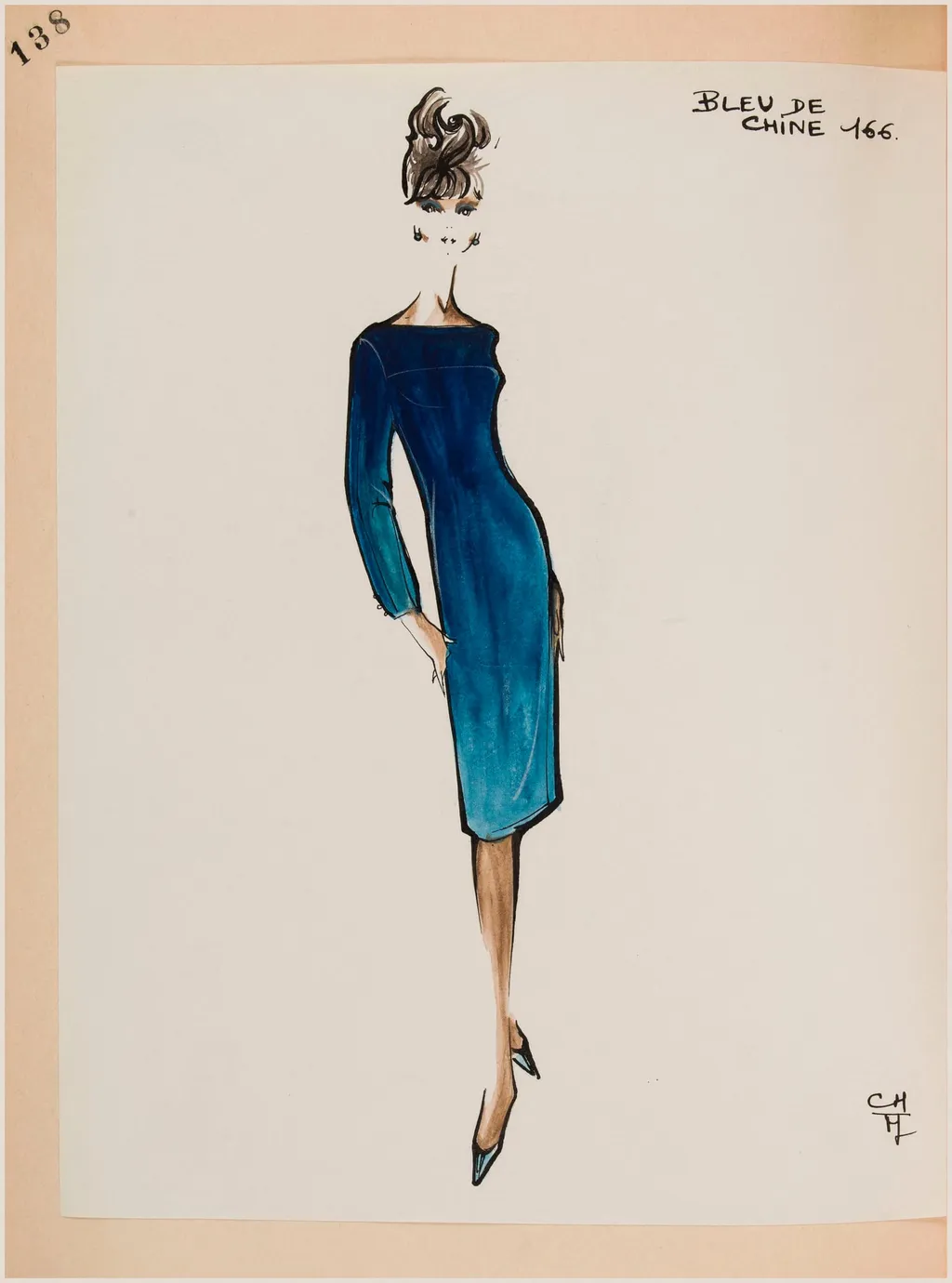
Bleu de Chine is a drawing by Carven. It dates from 1963 and is held in the collection of the Palais Galliera - Musée de la Mode de la Ville de Paris.
About this work
Overview
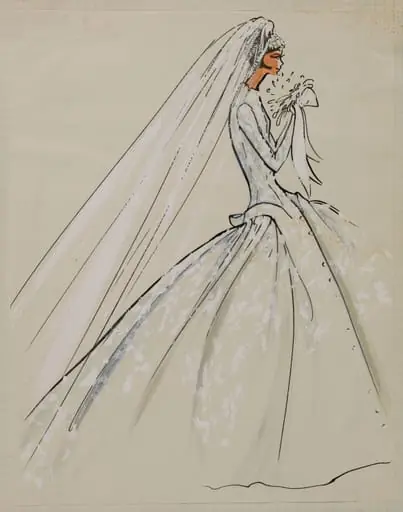
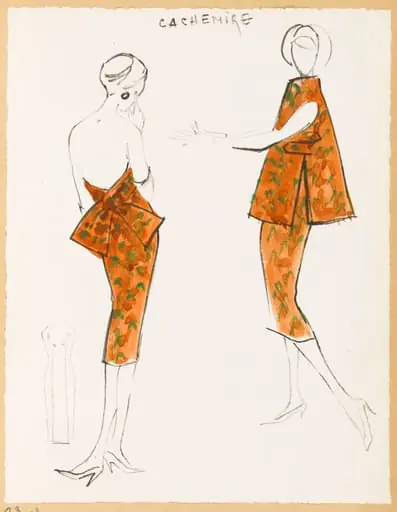
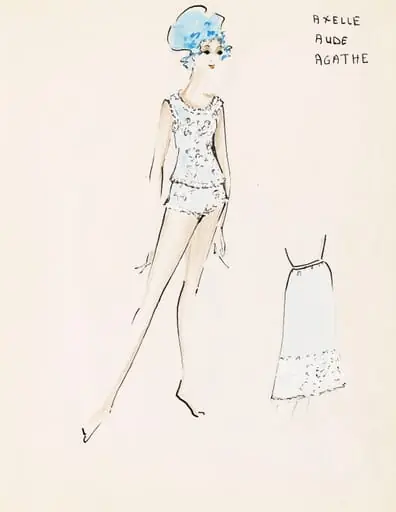
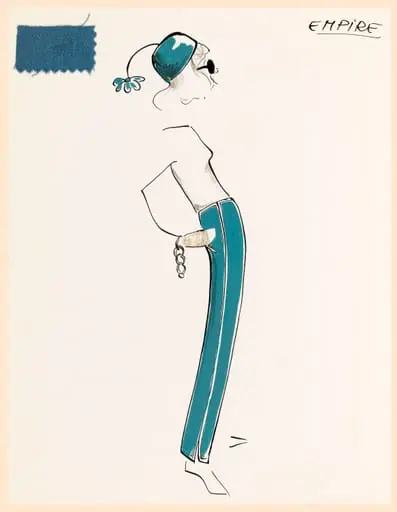
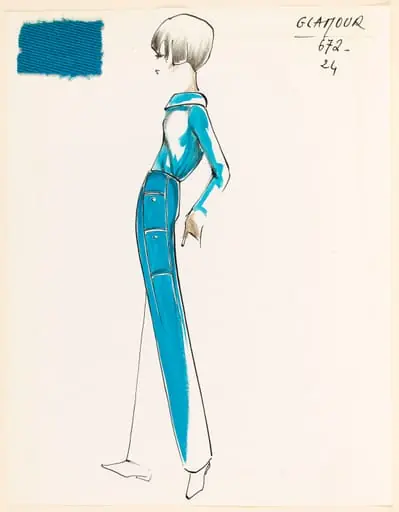
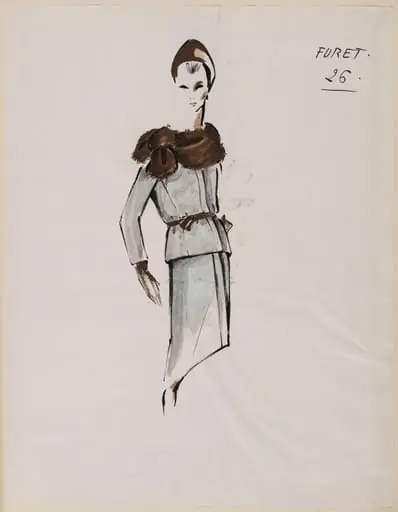
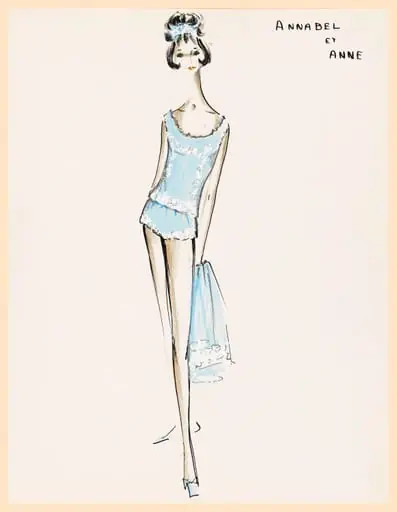
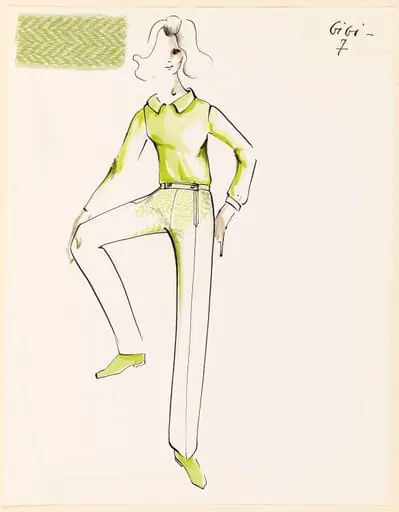
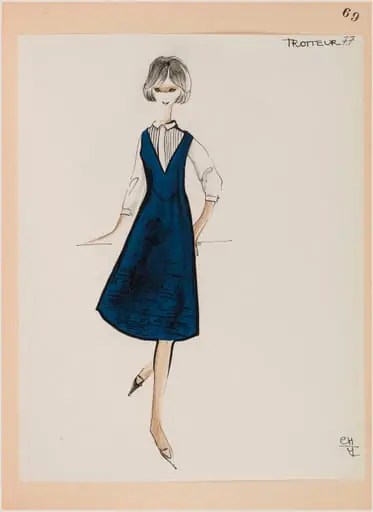
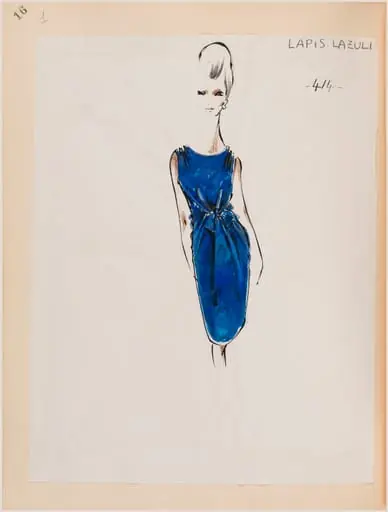
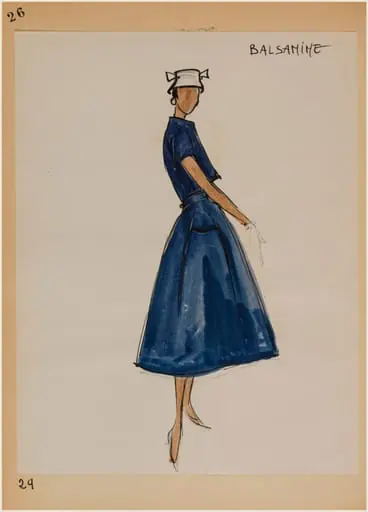
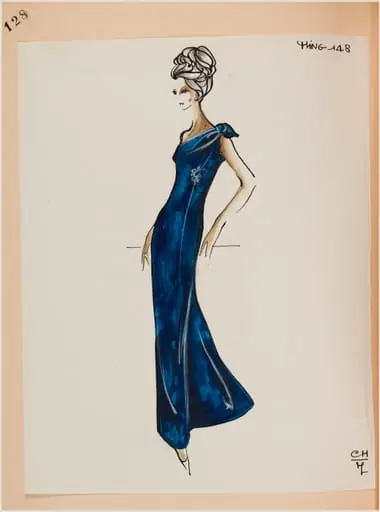
Created in 1963 by the French designer Carven, Bleu de Chine is a minimalist line drawing rendered in ink on paper. It depicts a woman in a simple, knee-length dress, rendered with precise, unadorned contours. The work is held in the collection of the Museum of Ethnography, where it is cataloged as a visual artifact tied to mid-century fashion design rather than fine art.
Subject & Meaning
The figure represents a stylized woman in everyday attire, her posture neutral and posture unembellished. The title, Bleu de Chine, references a historical pigment associated with Chinese porcelain, suggesting an aesthetic affinity with East Asian minimalism. The absence of facial features or contextual detail shifts focus to the garment’s form, implying an interest in silhouette over identity.
Technique & Style
Executed in clean, continuous lines, the drawing resembles a fashion sketch rather than a finished illustration. The dress is rendered in solid dark blue, contrasting with the untouched white paper. Hair is simplified into a loose bun, and footwear is indicated with minimal strokes. The style prioritizes clarity and functional elegance, typical of design documentation from the period.
History & Provenance
The work was produced during Carven’s active years as a fashion designer, likely as part of a design portfolio or internal reference. It entered the Museum of Ethnography’s collection through donation or acquisition focused on material culture related to dress. Its preservation reflects institutional interest in the intersection of fashion and ethnographic representation.
Context
In the early 1960s, fashion illustration increasingly emphasized streamlined forms, aligning with modernist sensibilities.
In the early 1960s, fashion illustration increasingly emphasized streamlined forms, aligning with modernist sensibilities. Bleu de Chine reflects this trend, distancing itself from ornate editorial styles in favor of functional clarity. The use of 'China blue' as a title nods to enduring Western fascination with Asian aesthetics, though the design itself remains rooted in European couture traditions.
Legacy
The drawing survives as a quiet example of how fashion designers documented their work outside commercial publications. It offers insight into the quiet, utilitarian side of design practice—where sketches served as tools rather than artworks. Its presence in an ethnographic museum underscores its value as a cultural artifact of mid-century dressmaking.
Artist & collection
Artist
These delicate ink-on-paper drawings capture the quiet poetry of everyday things: pinecones, reeds, apples.
Museum
Palais Galliera - Musée de la Mode de la Ville de Paris
Continue through works from the same source collection.