Artwork
Bougainvilliers
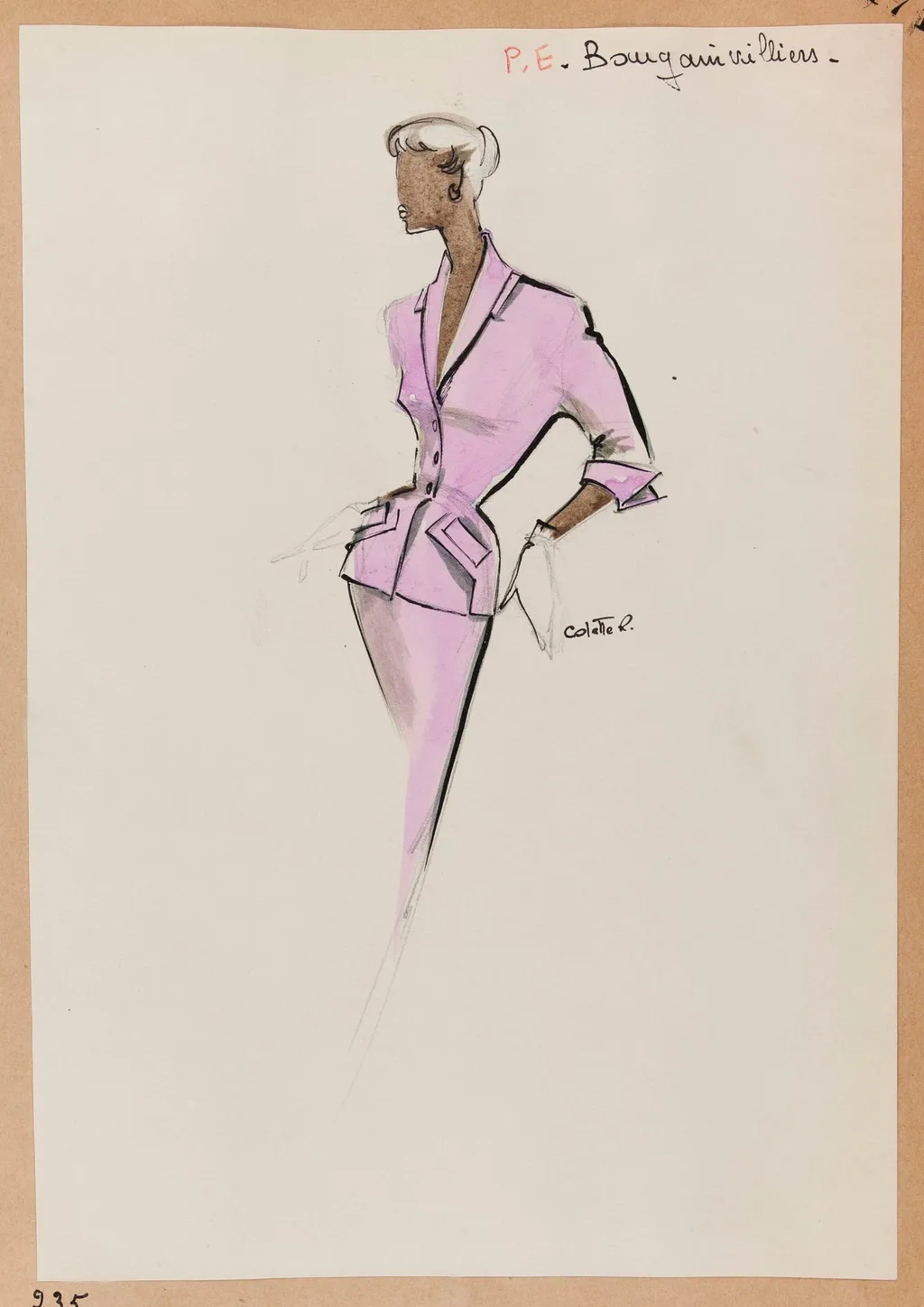
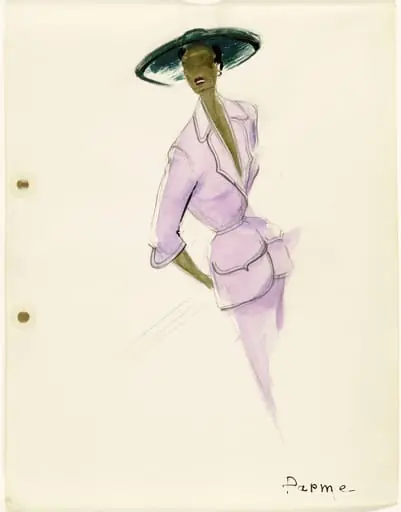
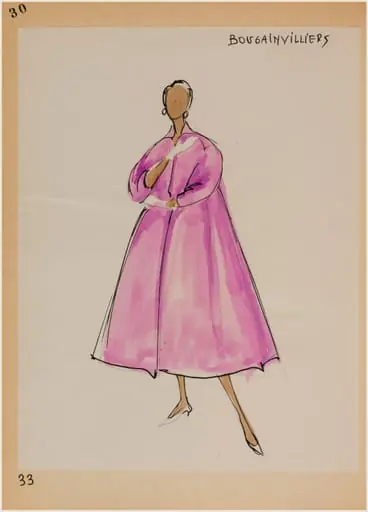
Bougainvilliers is a drawing by Carven. It dates from 1951 and is held in the collection of the Palais Galliera - Musée de la Mode de la Ville de Paris.
About this work
Overview
Created around 1951, Bougainvilliers is a pencil sketch attributed to the French designer Carven. It resides in the collection of the Museum of Ethnography. The work appears to be a preparatory study rather than a polished portrait, capturing a figure in motion with economical, assured lines. Its purpose seems tied to fashion design, reflecting the artist’s practice in garment development.
Subject & Meaning
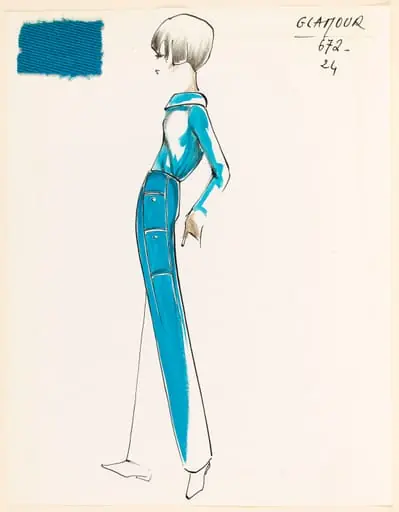
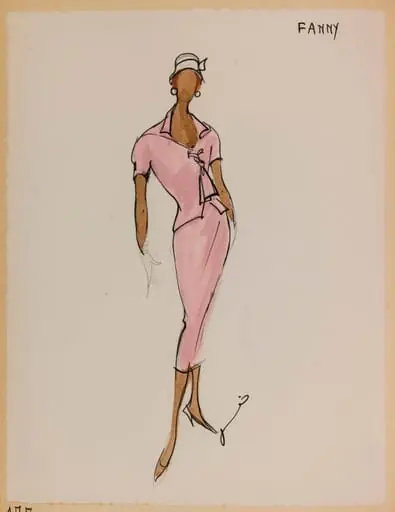
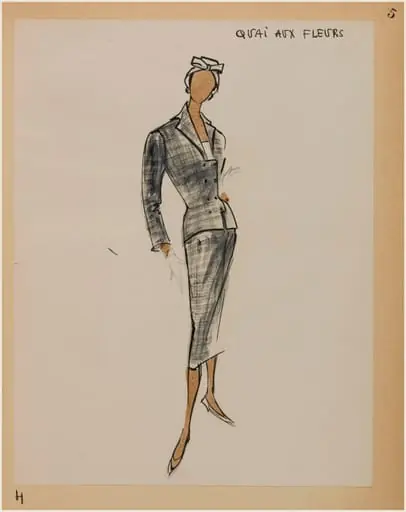
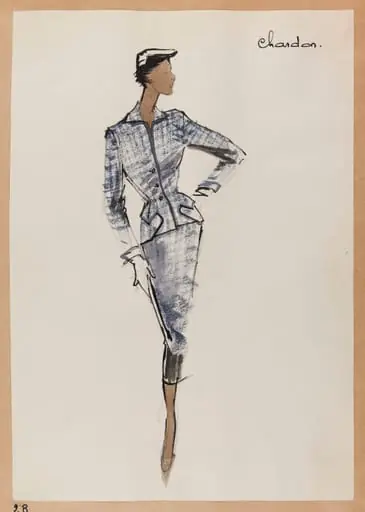
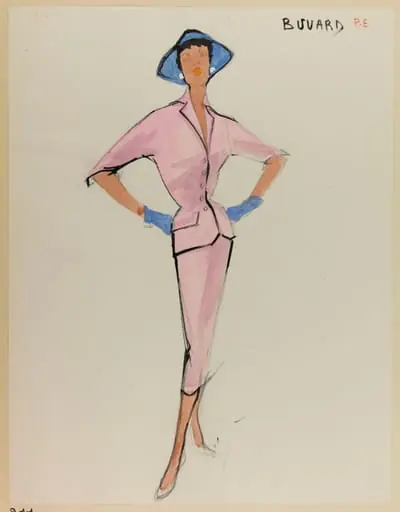
The subject is a woman dressed in a loose, purple suit with prominent pockets and rolled sleeves, her hair pulled back and one hand resting on her hip.
The subject is a woman dressed in a loose, purple suit with prominent pockets and rolled sleeves, her hair pulled back and one hand resting on her hip. The posture suggests casual authority, possibly modeling a garment for practicality or movement. The absence of facial detail shifts focus to the clothing’s structure, implying the sketch served as a functional record of design rather than a character study.
Technique & Style
The drawing employs swift, confident pencil strokes to define form and fabric folds. Lines are minimal yet deliberate, avoiding shading or detail in favor of rhythm and silhouette. The quickness of execution points to an on-the-spot study, typical of fashion designers capturing ideas during the creative process. The signature in the corner confirms authorship and situates the work within Carven’s personal archive.
History & Provenance
The sketch entered the Museum of Ethnography’s collection as part of a broader acquisition of fashion-related materials. Its origin traces to Carven’s design studio in the early 1950s, a period when the designer was actively developing ready-to-wear lines. The work’s survival as a study, rather than a finished illustration, offers insight into the private, iterative nature of fashion design at the time.
Context
In postwar France, fashion houses increasingly prioritized practical, wearable designs for a growing middle class. Carven’s sketches like this one reflect that shift—emphasizing comfort, functionality, and ease of movement. The loose suit and rolled sleeves align with contemporary trends favoring relaxed silhouettes over rigid tailoring, signaling a move toward modern, everyday elegance.
Legacy
Bougainvilliers remains a quiet testament to the unseen labor behind fashion design. As a working sketch, it reveals the process behind garments that reached the public, preserving the designer’s hand and decision-making. It contributes to scholarly understanding of mid-century French fashion as a practice rooted in experimentation and adaptation, not just finished products.
Artist & collection
Artist
These delicate ink-on-paper drawings capture the quiet poetry of everyday things: pinecones, reeds, apples.
Museum
Palais Galliera - Musée de la Mode de la Ville de Paris
Continue through works from the same source collection.