Artwork
'Parme'
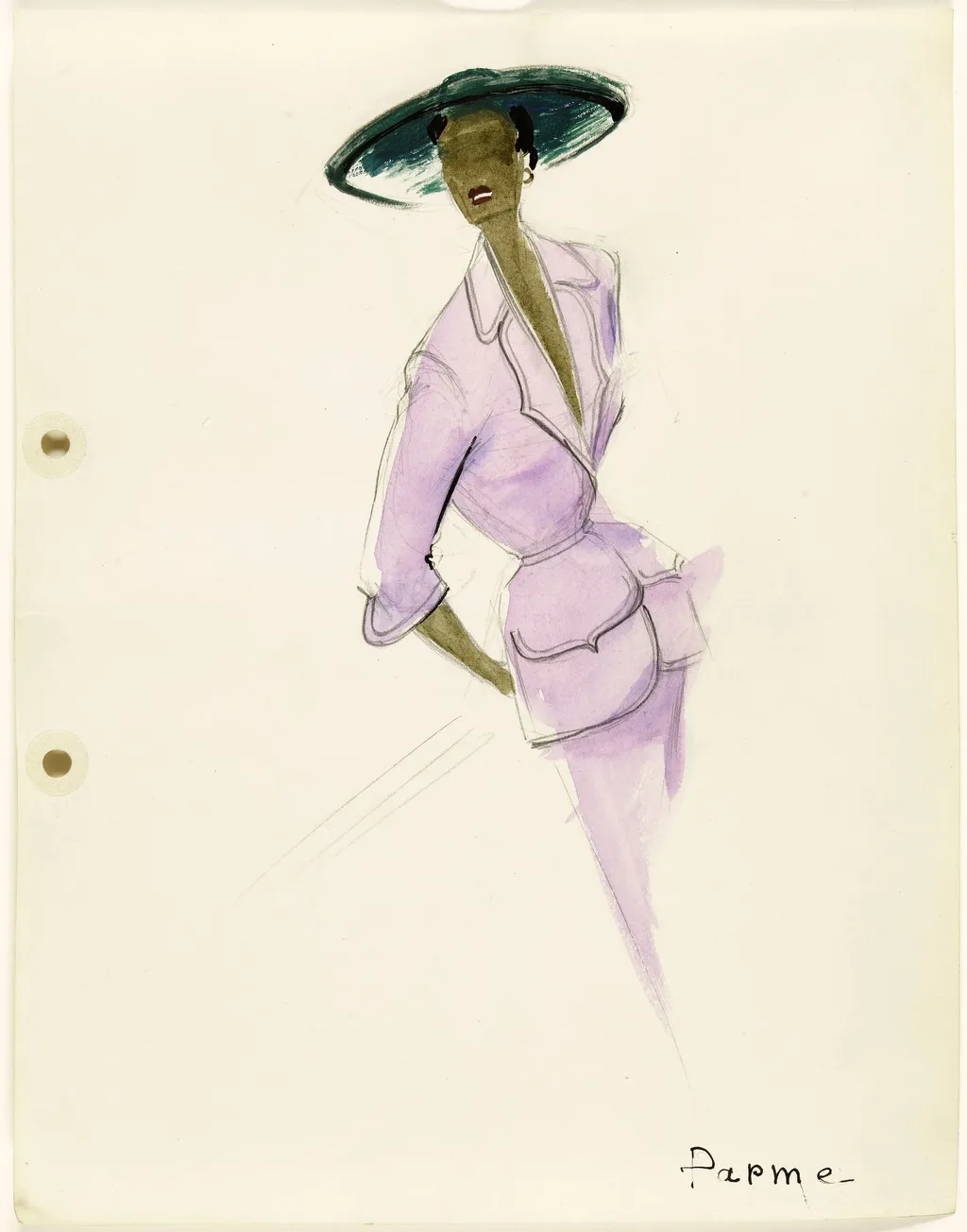
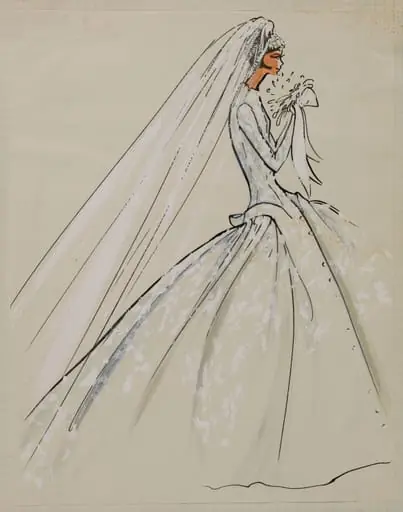
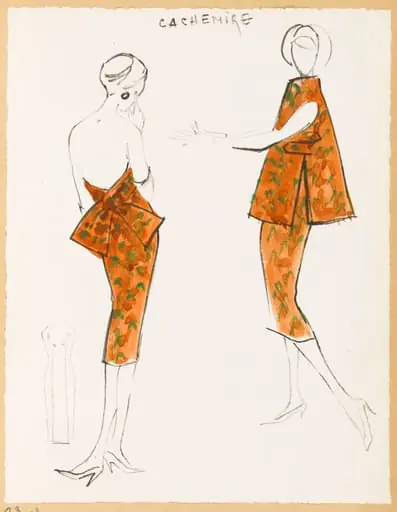
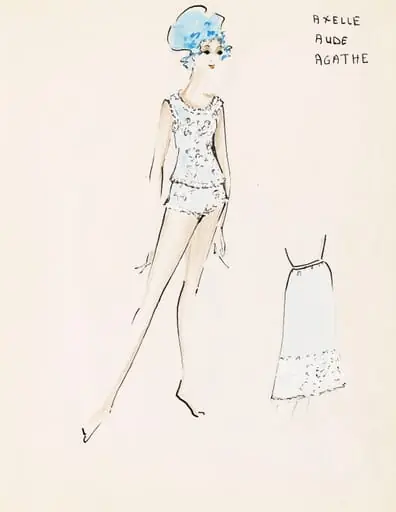
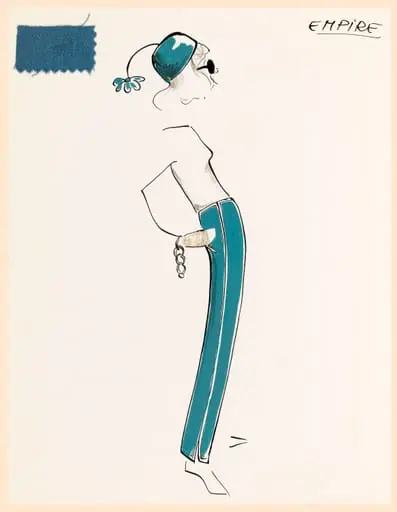
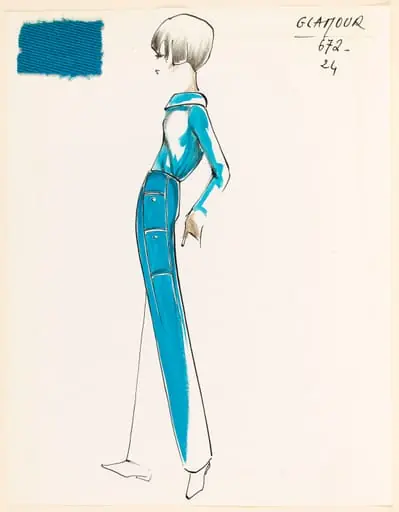
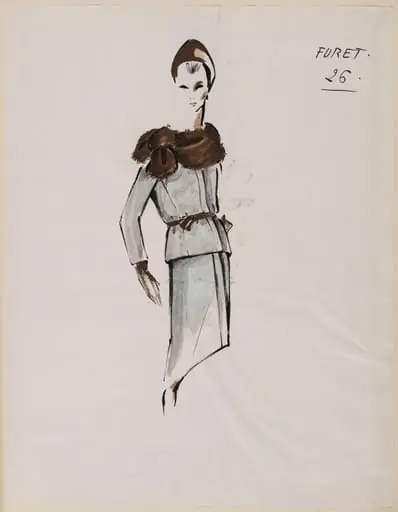
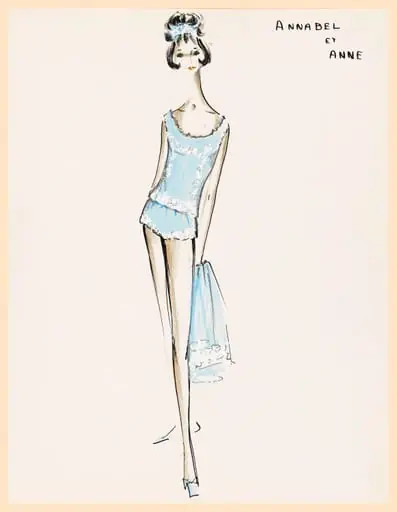
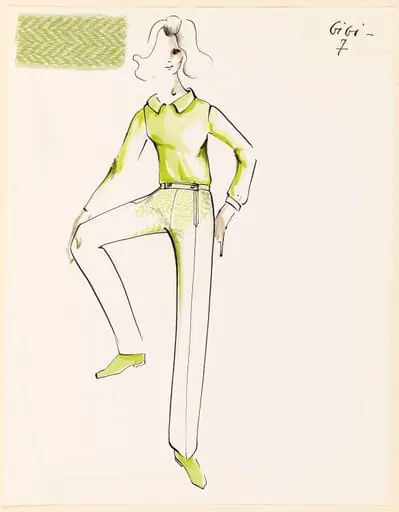
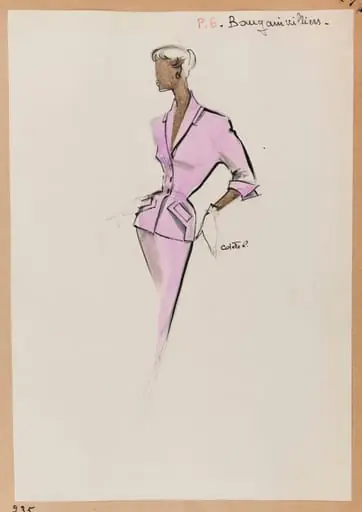
'Parme' is a drawing by Carven. It dates from 1951 and is held in the collection of the Palais Galliera - Musée de la Mode de la Ville de Paris.
About this work
Overview
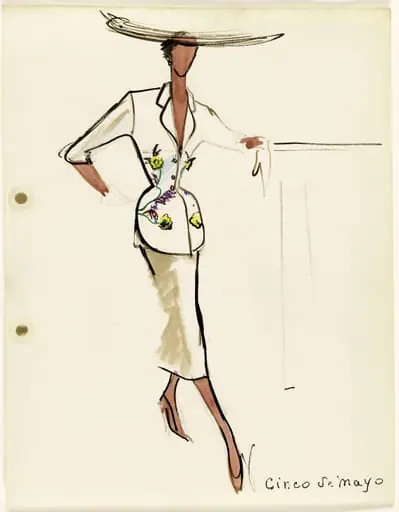
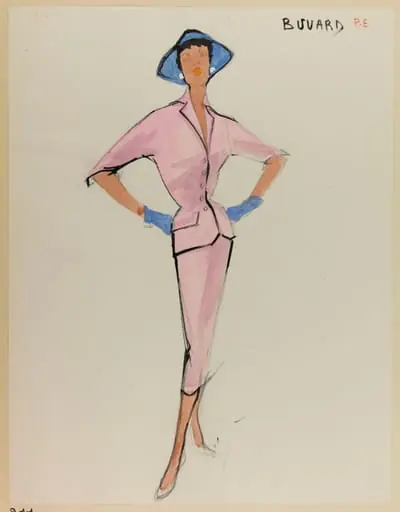
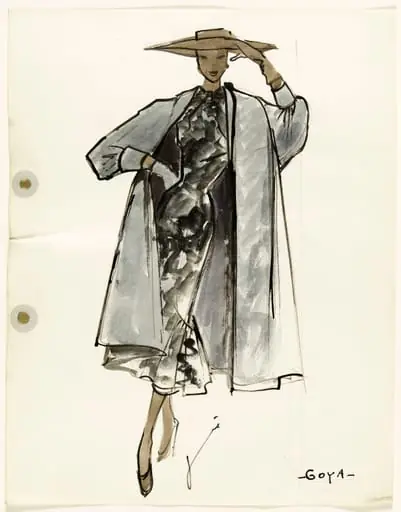
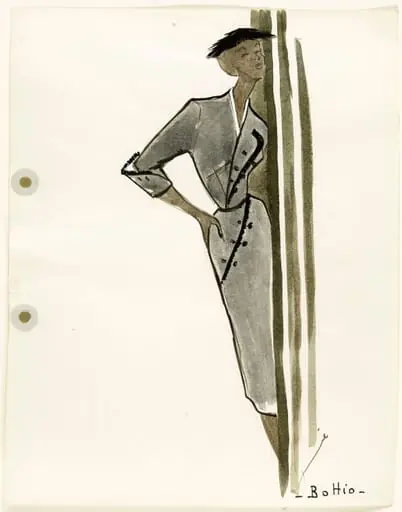
Created in 1951, 'Parme' is a watercolor sketch by the French fashion designer Carven. It resides in the collection of the Museum of Ethnography. The work captures a single figure in loose, fluid strokes, suggesting a moment of informal observation rather than a formal portrait. The artist’s signature, 'Parme,' appears in the corner, a pseudonym used in some of her early design studies.
Subject & Meaning
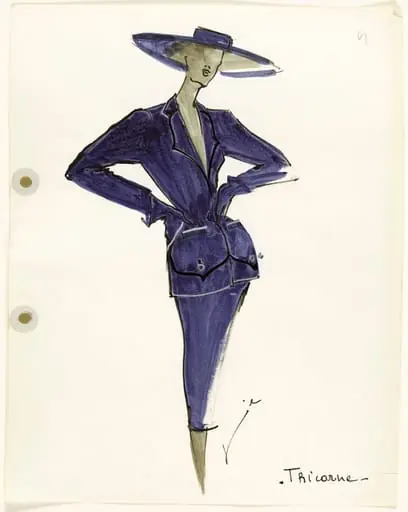
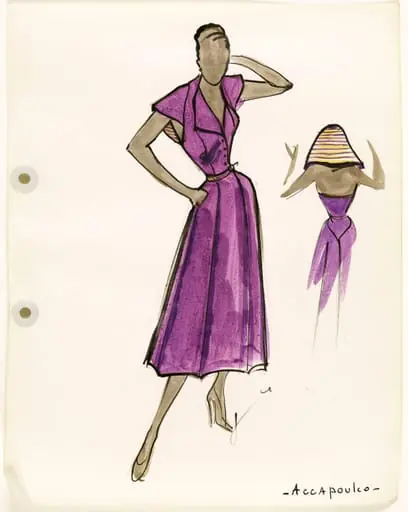
The figure depicts a woman dressed in a flowing purple ensemble with wide-legged trousers and a matching jacket, paired with a broad-brimmed hat that obscures her face. The anonymity of the subject emphasizes the garment’s form over individual identity, reflecting Carven’s interest in how clothing shapes presence. The sketch functions as a study of silhouette and movement, not narrative.
Technique & Style
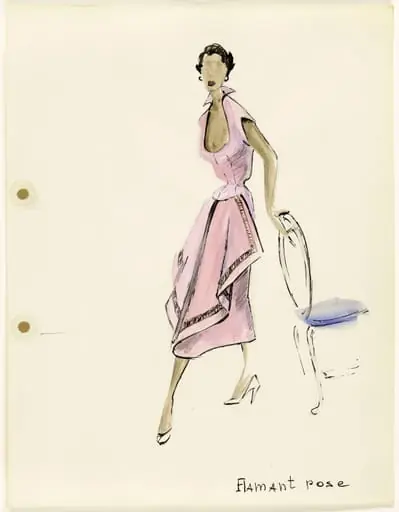
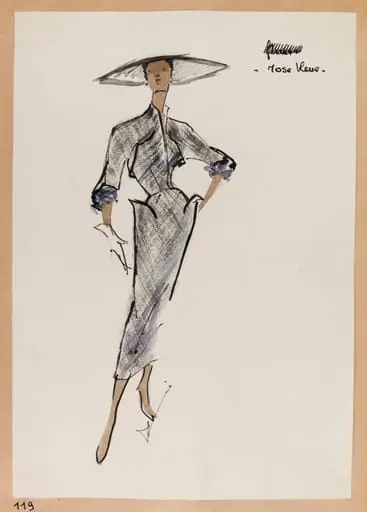
Executed in soft, rapid watercolor washes, the drawing conveys texture and volume with minimal detail. Lines are loose and suggestive, avoiding sharp definition to prioritize the garment’s drape and volume. The palette is restrained, relying on a single hue to unify the figure and its surroundings. This approach aligns with fashion sketching traditions that favor immediacy over finish.
History & Provenance
The sketch entered the Museum of Ethnography’s collection as part of a broader acquisition of mid-century fashion studies. Its origin traces to Carven’s personal archive, where it was likely used as a reference for textile and cut experimentation. The use of the pseudonym 'Parme' suggests it may have been created during a period of professional transition or private exploration.
Context
In postwar France, fashion designers often produced quick studies to explore new silhouettes before production. Carven, known for her relaxed yet refined aesthetic, used such sketches to refine her signature styles—light fabrics, fluid lines, and gender-neutral ease. 'Parme' reflects this era’s shift toward practical elegance in women’s wear, away from rigid postwar formality.
Legacy
Though not widely exhibited, 'Parme' remains a representative example of Carven’s design process. It illustrates how fashion innovation often begins in intimate, unpolished forms. The sketch contributes to scholarly understanding of mid-century French fashion as a practice rooted in observation and material experimentation, rather than spectacle.
Artist & collection
Artist
These delicate ink-on-paper drawings capture the quiet poetry of everyday things: pinecones, reeds, apples.
Museum
Palais Galliera - Musée de la Mode de la Ville de Paris
Continue through works from the same source collection.