Artwork
Vefour
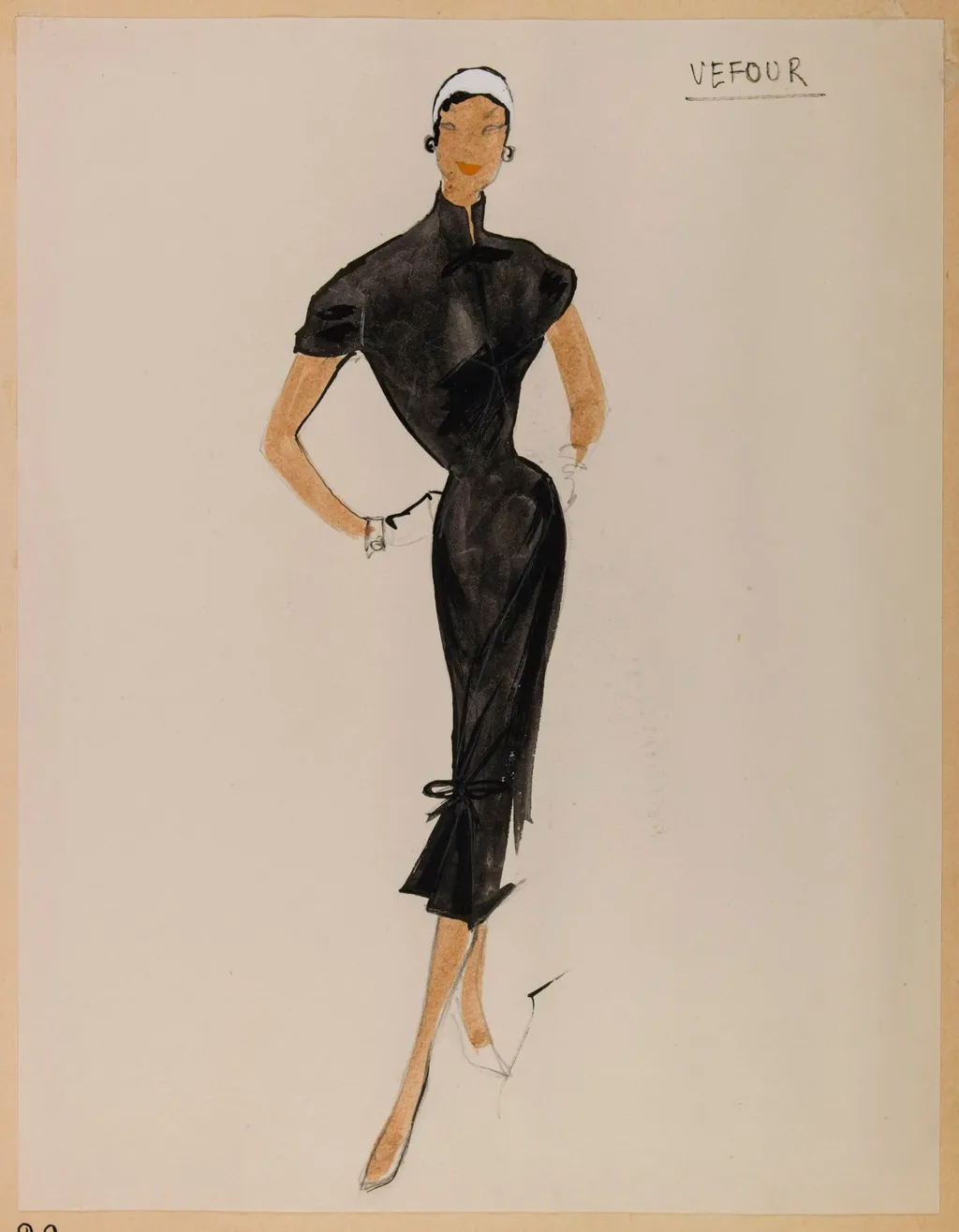
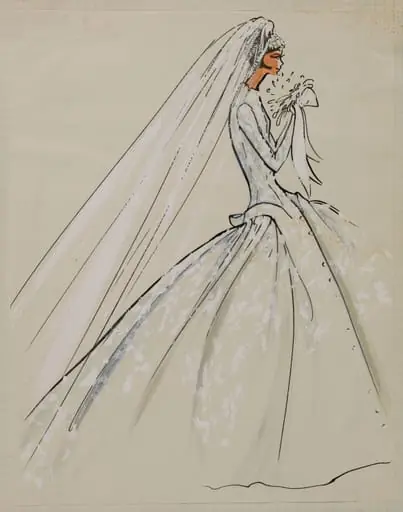
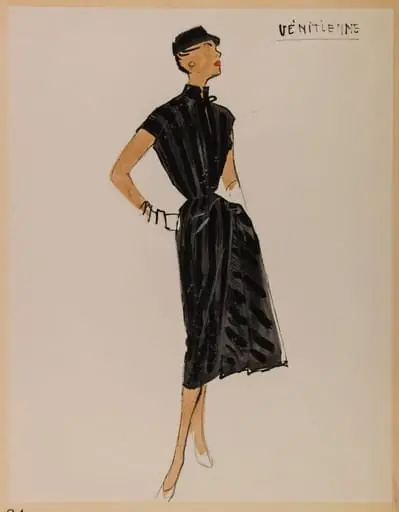
Vefour is a drawing by Carven. It dates from 1953 and is held in the collection of the Palais Galliera - Musée de la Mode de la Ville de Paris.
About this work
Overview
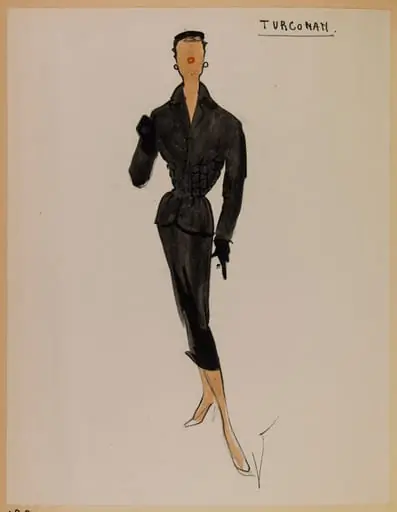
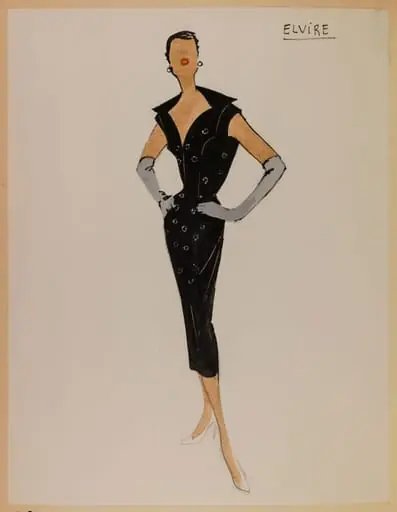
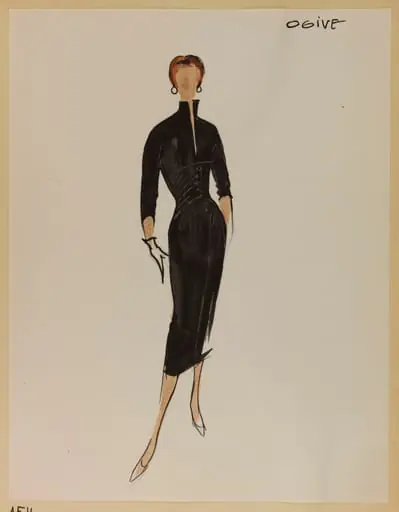
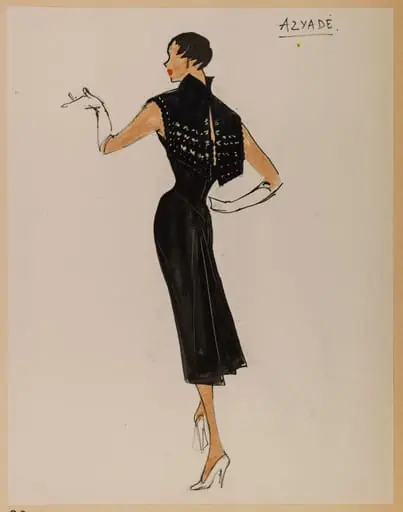
Created around 1953, Vefour is a pencil sketch by the French designer Carven, likely produced as a fashion study. It resides in the collection of the Museum of Ethnography. The drawing captures a female figure in minimal detail, emphasizing garment structure over individual identity. The work’s purpose appears functional, tied to textile design rather than fine art expression.
Subject & Meaning
The figure depicts a woman wearing a modest black dress with a high neckline, long sleeves, and a small bow at the skirt’s front. A white headband frames her face, suggesting a stylized, uniform aesthetic. The absence of facial features and the focus on clothing imply the drawing served as a technical template, documenting a specific garment design rather than portraying a person.
Technique & Style
Executed in loose, rapid pencil strokes, the sketch uses light shading to suggest volume on the face and arms without detailed rendering. Lines are economical, prioritizing silhouette and form over texture or depth. The absence of background and the clean, uncluttered composition reflect a design-oriented approach, typical of fashion illustrations intended for production reference.
History & Provenance
The drawing entered the Museum of Ethnography’s collection as part of a broader archive of mid-20th-century fashion materials. Its origin as a Carven design study is documented internally, though the meaning of the title 'Vefour' remains unverified. No exhibition history or prior ownership records are publicly available beyond its current institutional custody.
Context
In the early 1950s, Parisian fashion houses routinely produced such sketches to communicate garment details to ateliers. Carven, known for refined, wearable designs, used these studies to standardize production. Vefour aligns with this practice, reflecting a period when fashion design was increasingly systematized, with sketches serving as both creative and industrial tools.
Legacy
Vefour survives as a quiet artifact of postwar French fashion production. It contributes to scholarly understanding of how design concepts were translated into garments before digital tools. Though not widely exhibited, it remains a representative example of the unseen labor behind mid-century couture, preserved for its historical rather than aesthetic value.
Artist & collection
Artist
These delicate ink-on-paper drawings capture the quiet poetry of everyday things: pinecones, reeds, apples.
Museum
Palais Galliera - Musée de la Mode de la Ville de Paris
Continue through works from the same source collection.