Artwork
Soliman
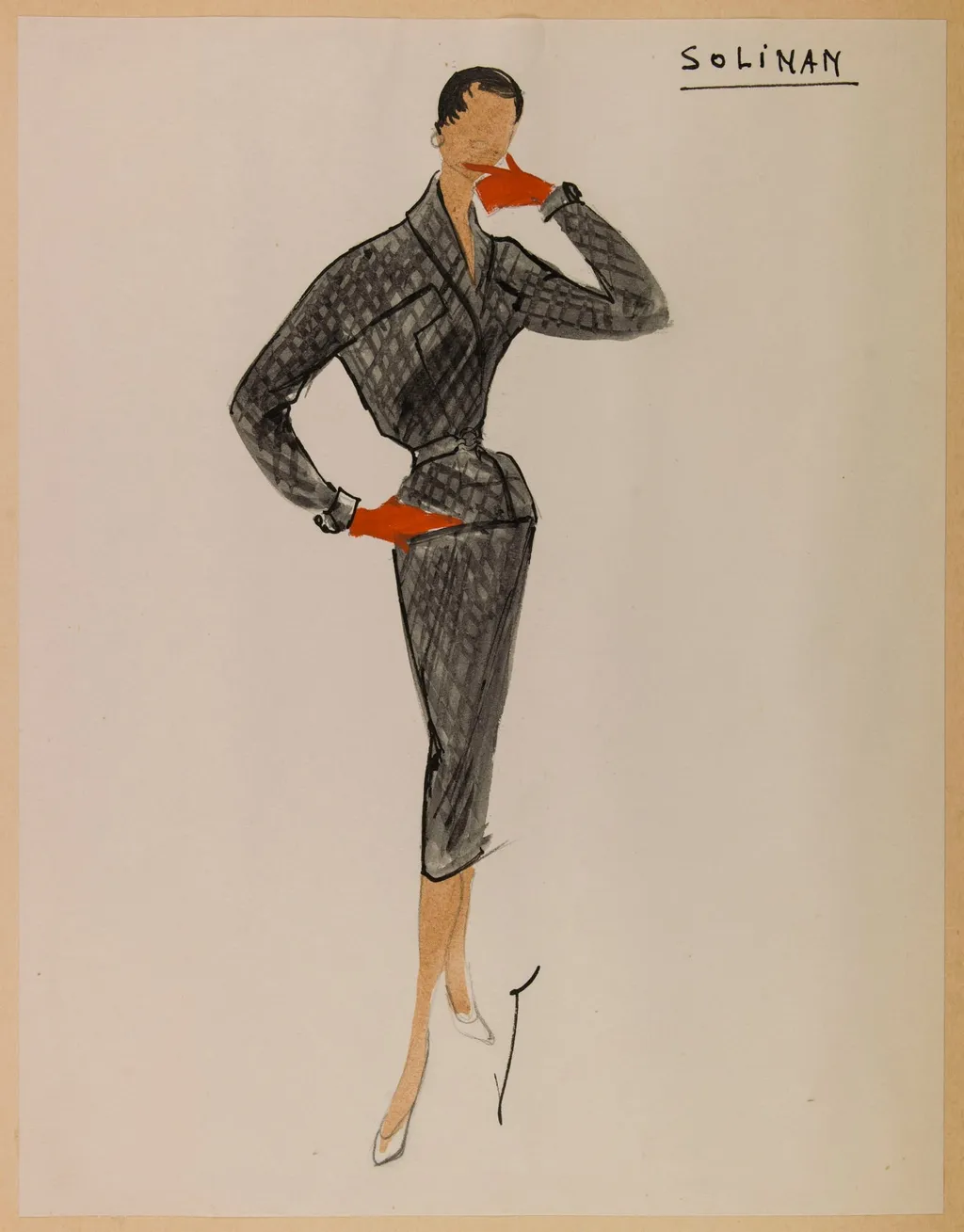
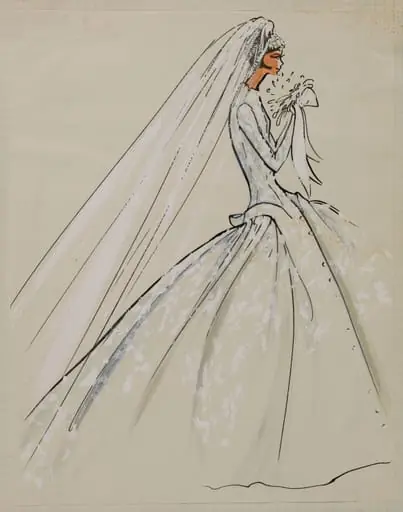
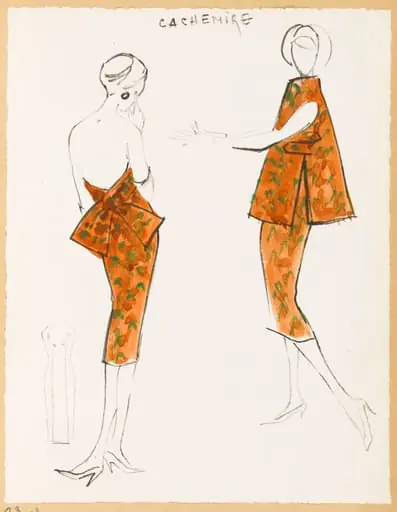
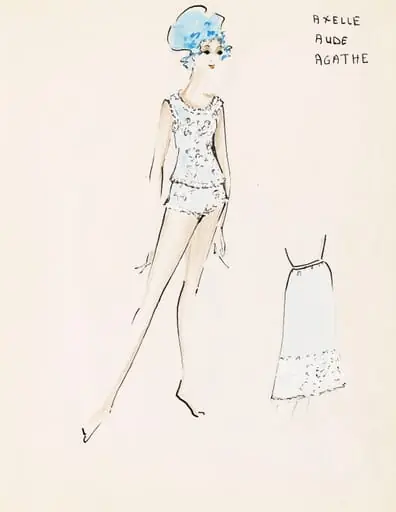
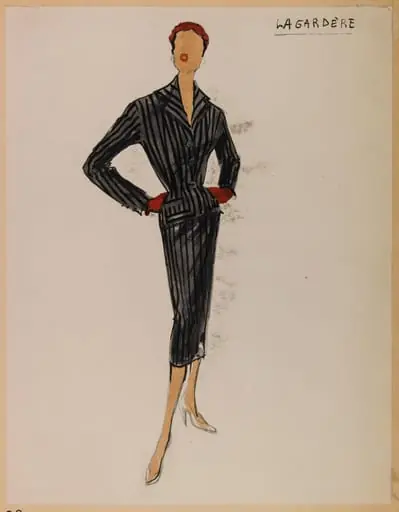
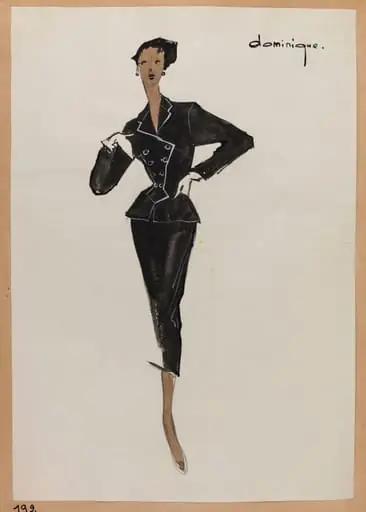
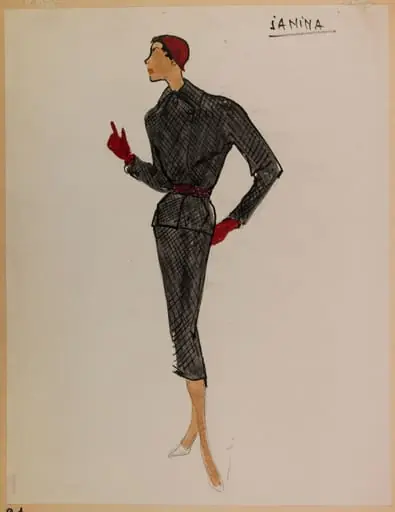
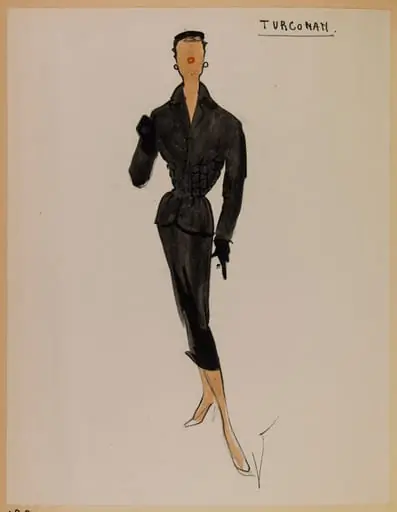
Soliman is a drawing by Carven. It dates from 1953 and is held in the collection of the Palais Galliera - Musée de la Mode de la Ville de Paris.
About this work
Overview
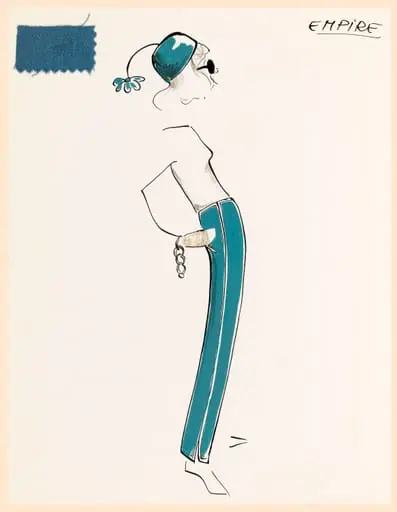
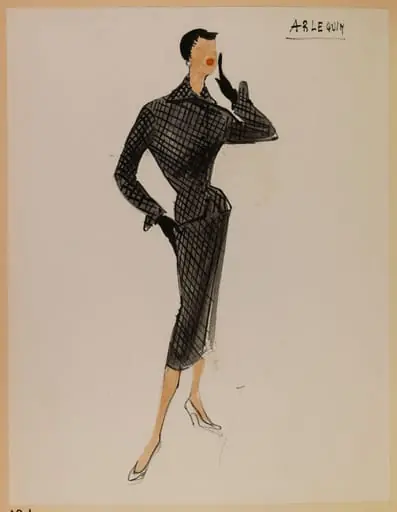
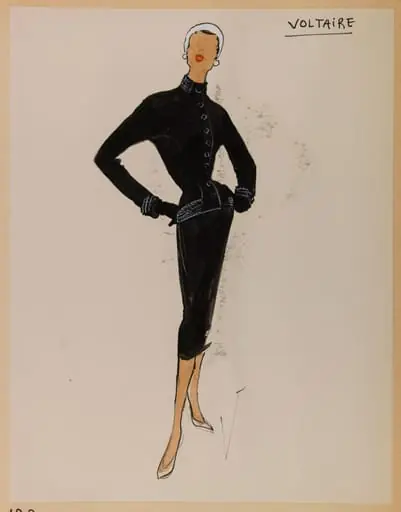
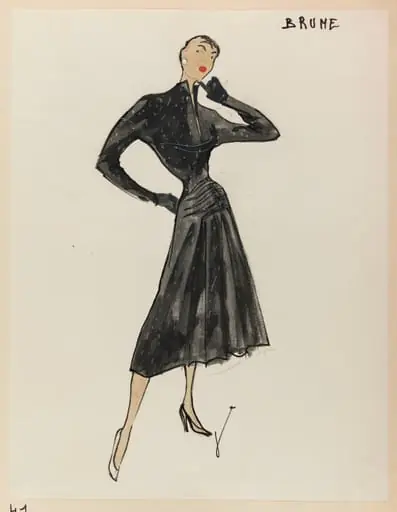
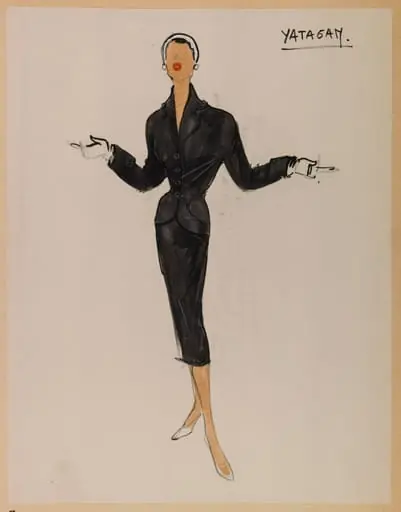
Created around 1953 by the French designer Carven, this ink sketch captures a woman in motion, likely as a fashion study. Executed with swift, assured lines, it reflects the immediacy of design documentation rather than a finished illustration. The work resides in the Museum of Ethnography, where it is preserved as part of a broader collection of mid-century fashion ephemera.
Subject & Meaning
The figure is depicted in a tailored dark ensemble—jacket and pants—with subtle pattern details. Her posture, one hand on the hip and the other holding a vivid red object to her face, suggests a moment of self-adornment or theatrical gesture. The red accents—lips, belt, and object—draw attention to expression and personal style, hinting at the performative nature of fashion in daily life.
Technique & Style
The drawing employs minimal, rapid strokes to define form, with loose lines suggesting hair and footwear. The absence of shading emphasizes contour and movement. Red ink is used selectively to highlight key elements, creating visual rhythm against the muted gray and black tones. The sketch’s spontaneity aligns with the tradition of fashion illustrators capturing ideas in real time.
History & Provenance
The sketch entered the Museum of Ethnography’s collection as part of a donation of Carven’s personal design materials. Its origin as a working drawing, not a public advertisement, underscores its role in the private creative process. No record of prior ownership exists beyond the designer’s studio, suggesting it was retained for reference or archival purposes.
Context
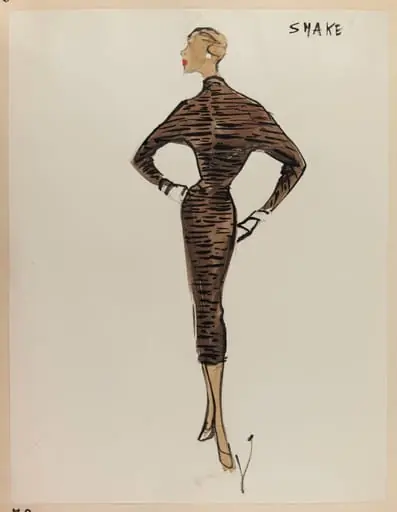
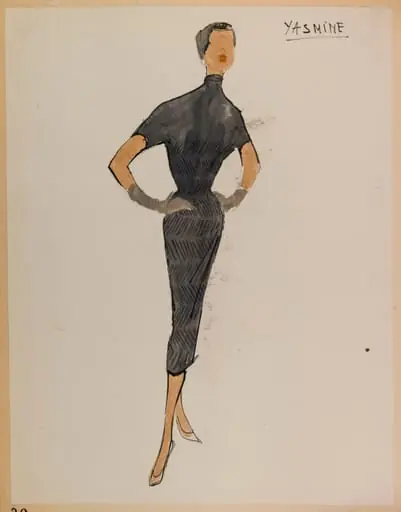
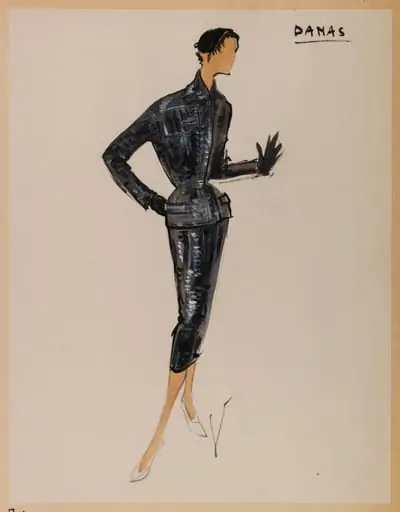
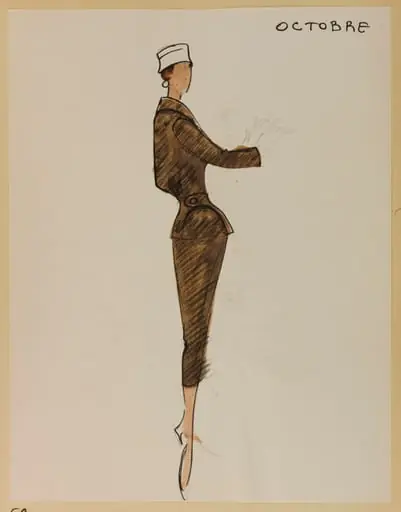
In the early 1950s, Parisian fashion houses relied on quick sketches to communicate designs to ateliers. Carven, known for her wearable yet distinctive silhouettes, used such drawings to explore proportions and details. This piece reflects the industry’s shift toward more relaxed, modern femininity, moving away from rigid postwar forms toward fluid, everyday elegance.
Legacy
Though not widely exhibited, the sketch contributes to understanding how fashion designers translated ideas from mind to fabric. Its preservation in an ethnographic context highlights fashion as cultural practice, not merely art. It remains a quiet testament to the daily rituals of design that shaped mid-century style.
Artist & collection
Artist
These delicate ink-on-paper drawings capture the quiet poetry of everyday things: pinecones, reeds, apples.
Museum
Palais Galliera - Musée de la Mode de la Ville de Paris
Continue through works from the same source collection.