Artwork
Pavane
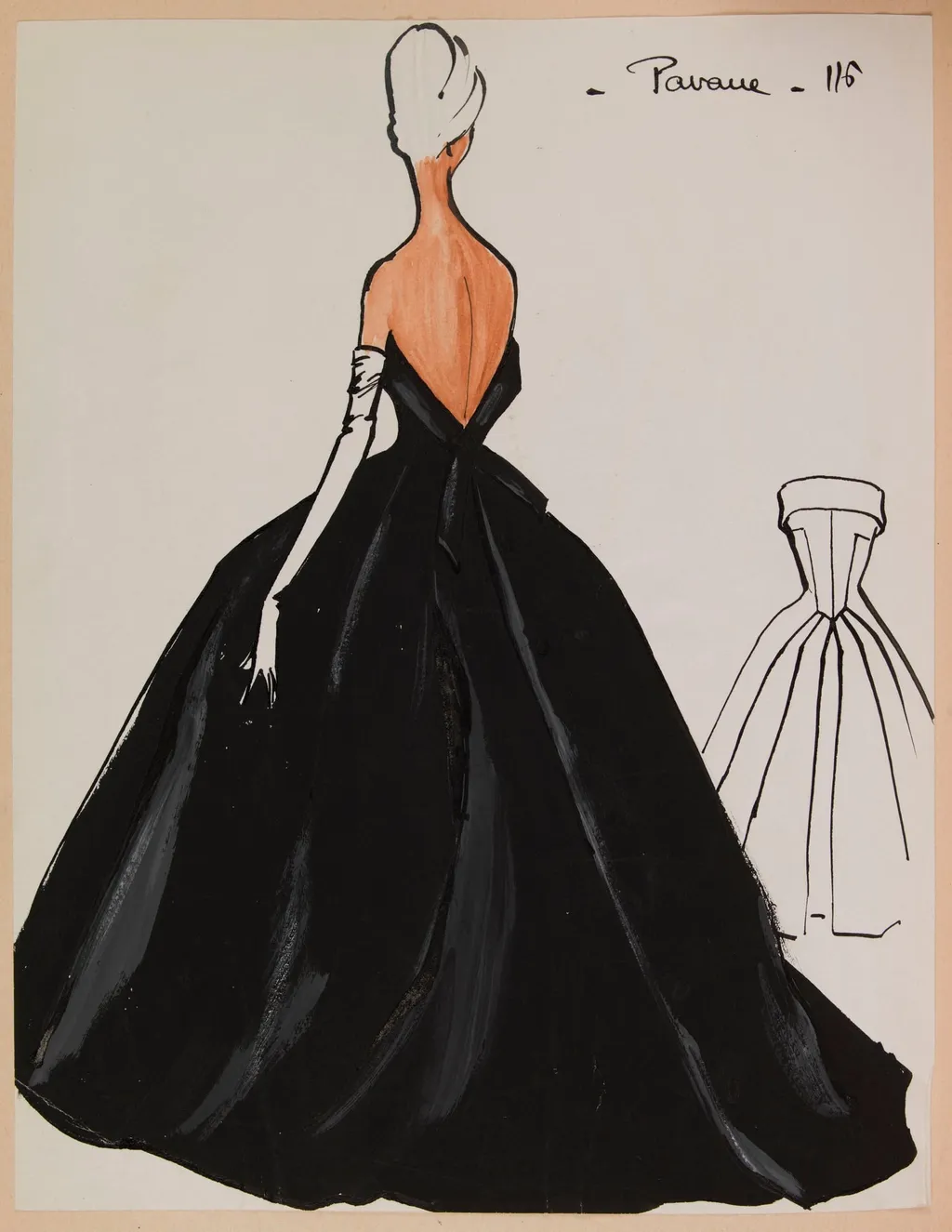
Pavane is a drawing by Marie-Louise Carven. It dates from 1958 and is held in the collection of the Palais Galliera - Musée de la Mode de la Ville de Paris.
About this work
Overview
Signed by the designer, the work is part of the Museum of Ethnography’s collection, where it serves as a record of mid-century French design practice.
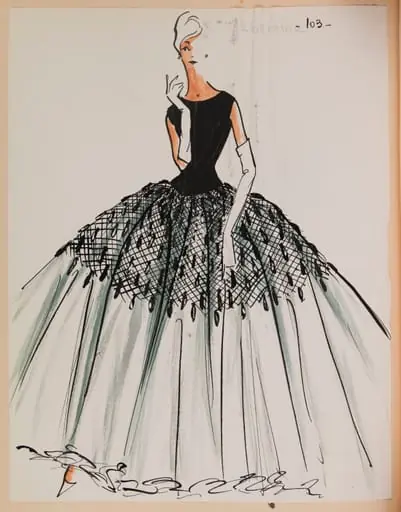
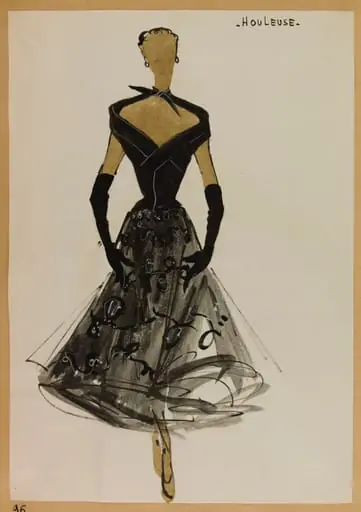
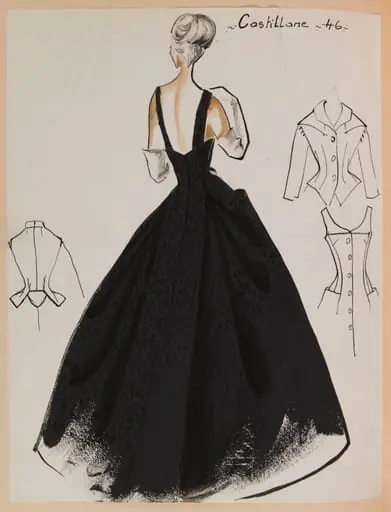
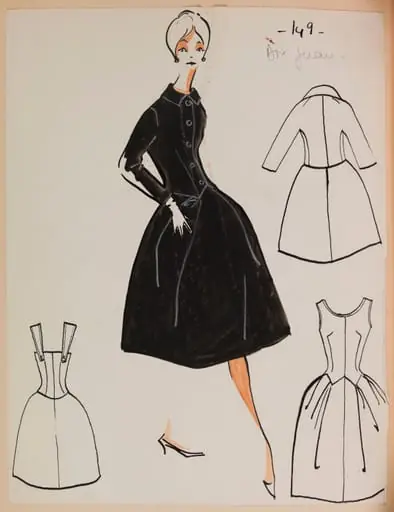
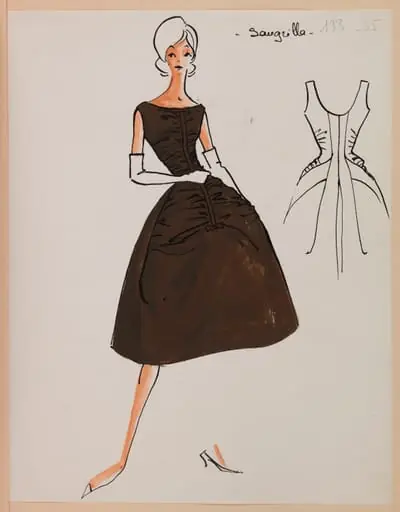
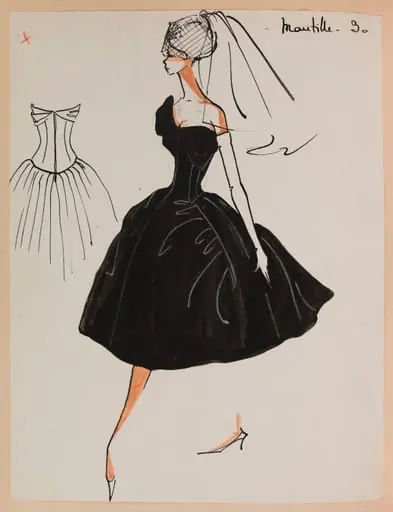
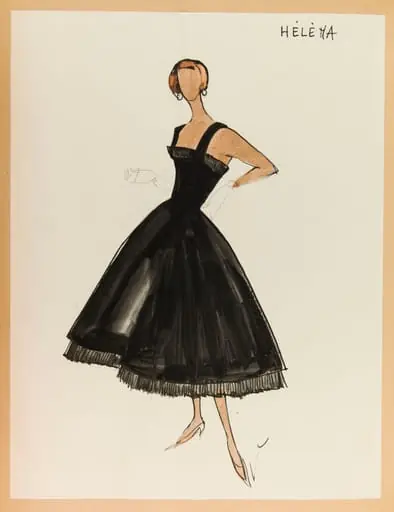
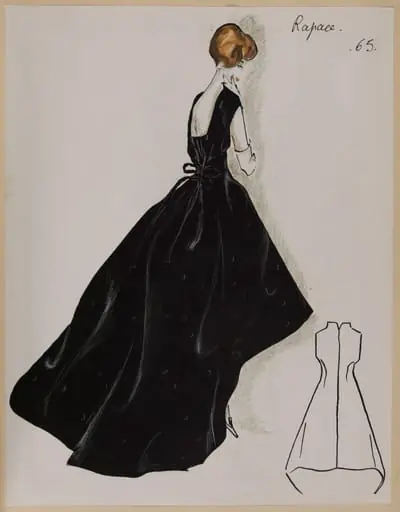
Created around 1958 by French designer Marie-Louise Carven, *Pavane* is a fashion sketch executed in ink and flat color. It captures a long, black evening gown with a dramatic backless neckline, full skirt, and fitted sleeves ending in gloves. The drawing’s bold lines and minimal palette reflect Carven’s precision and sensitivity to silhouette. Signed by the designer, the work is part of the Museum of Ethnography’s collection, where it serves as a record of mid-century French design practice.
Subject & Meaning
The gown depicted in *Pavane* evokes the slow, formal movements of a pavane, a Renaissance court dance. Its flowing lines and structured silhouette suggest grace and restraint, aligning with Carven’s aesthetic of elegant simplicity. The inclusion of a dress form sketch beside the figure reinforces the garment’s construction as a central concern, positioning the design as both artistic expression and technical blueprint.
Technique & Style
Carven rendered the gown with confident, unbroken contours and flat areas of black, brown, and white, avoiding shading or texture. The absence of detail in the figure’s face and hands directs focus entirely to the dress’s form. The sketch’s clarity and economy of line reflect a designer’s eye for structure over ornament, prioritizing proportion and movement in two dimensions.
History & Provenance
Marie-Louise Carven founded her fashion house in 1945 and was among the earliest French couturiers to develop a ready-to-wear line, bridging haute couture and accessible fashion. *Pavane* was likely produced as a design study during her peak creative years. Its acquisition by the Museum of Ethnography underscores its value as a cultural artifact, documenting the evolution of 20th-century dressmaking beyond the runway.
Context
In the late 1950s, Parisian fashion was shifting toward lighter silhouettes and more practical garments, even in eveningwear. Carven’s focus on petite figures and lightweight fabrics distinguished her from contemporaries. *Pavane* reflects this trend, balancing theatricality with wearability, and aligning with broader postwar desires for refined, functional elegance in women’s clothing.
Legacy
Though not a finished garment, *Pavane* exemplifies Carven’s influence on modern fashion design through its emphasis on clean lines and body-conscious proportion. The sketch remains a testament to her role in democratizing couture aesthetics. Its preservation in a museum context highlights how fashion drawings, once private tools, now serve as historical records of design innovation.
Artist & collection
Artist
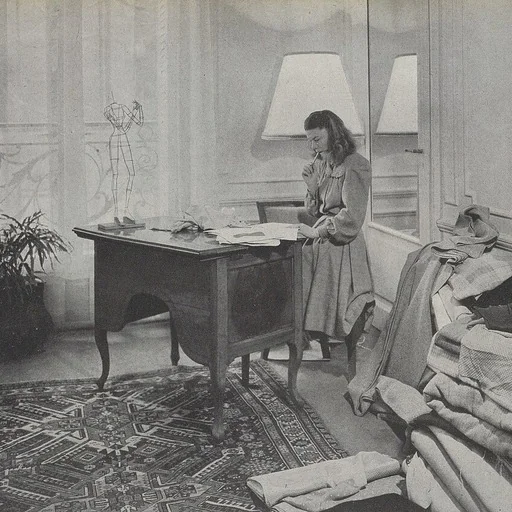
Marie-Louise Carven (31 August 1909 – 8 June 2015), born Carmen de Tommaso, was a French fashion designer who founded the house of Carven in 1945.
Museum
Palais Galliera - Musée de la Mode de la Ville de Paris
Continue through works from the same source collection.
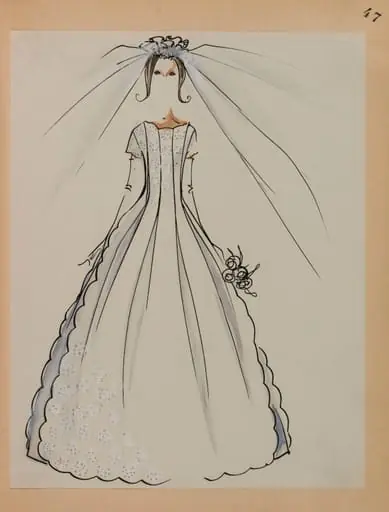 Robe de mariée festonnée et son voile
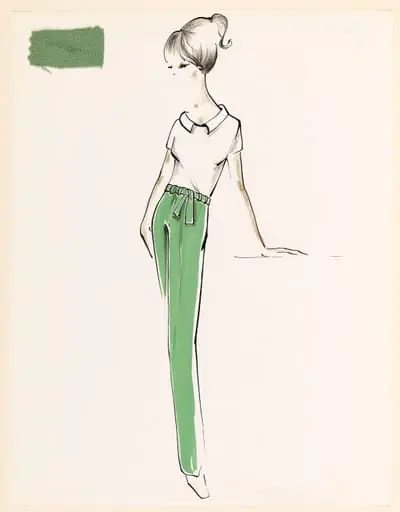 Haut blanc à manches courtes et pantalon vert à ceinture nouée
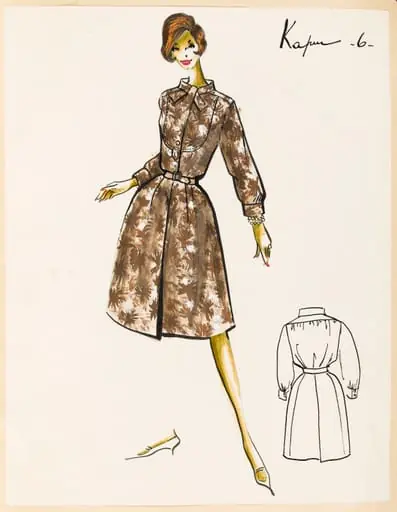 Kapur
Kapur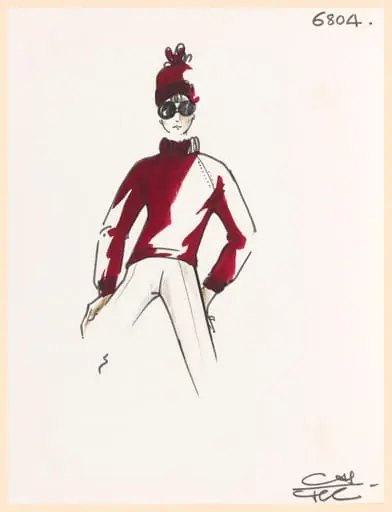 Pull-over à manches longues pourpre, bonnet assorti, pantalon et lunettes de soleil
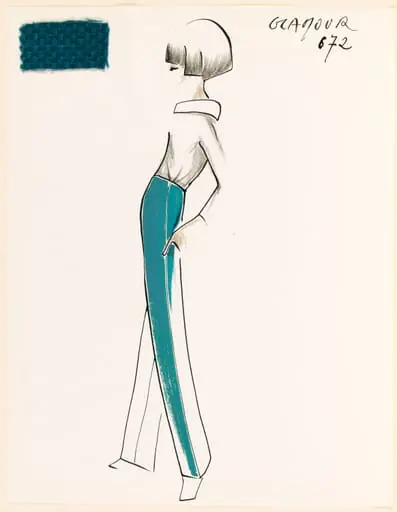 GLAMOUR
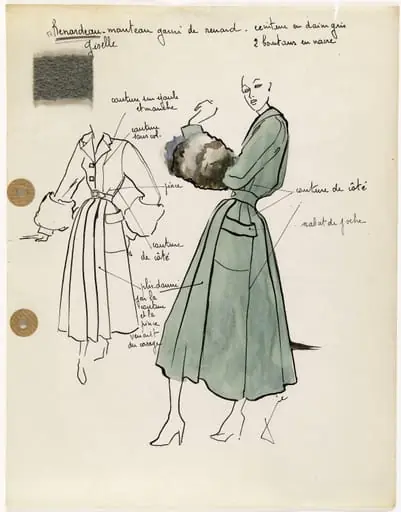 'Renardeau'
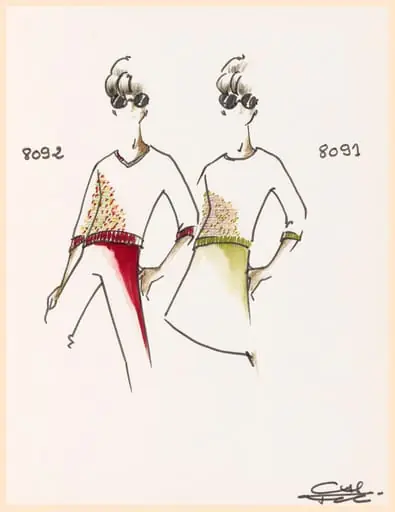 Pull-over à manches trois quarts et à encolure V à motifs multicolores, pantalon cerise et lunettes de soleil
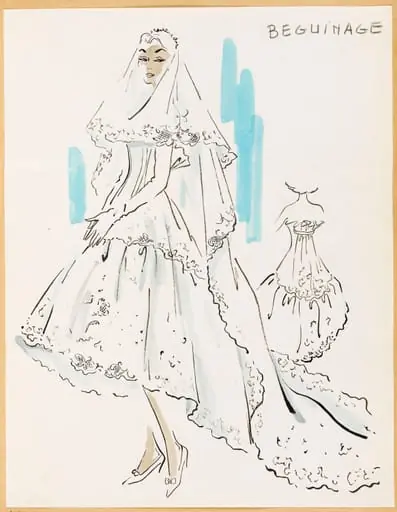 Béguinage