Artwork
Castor
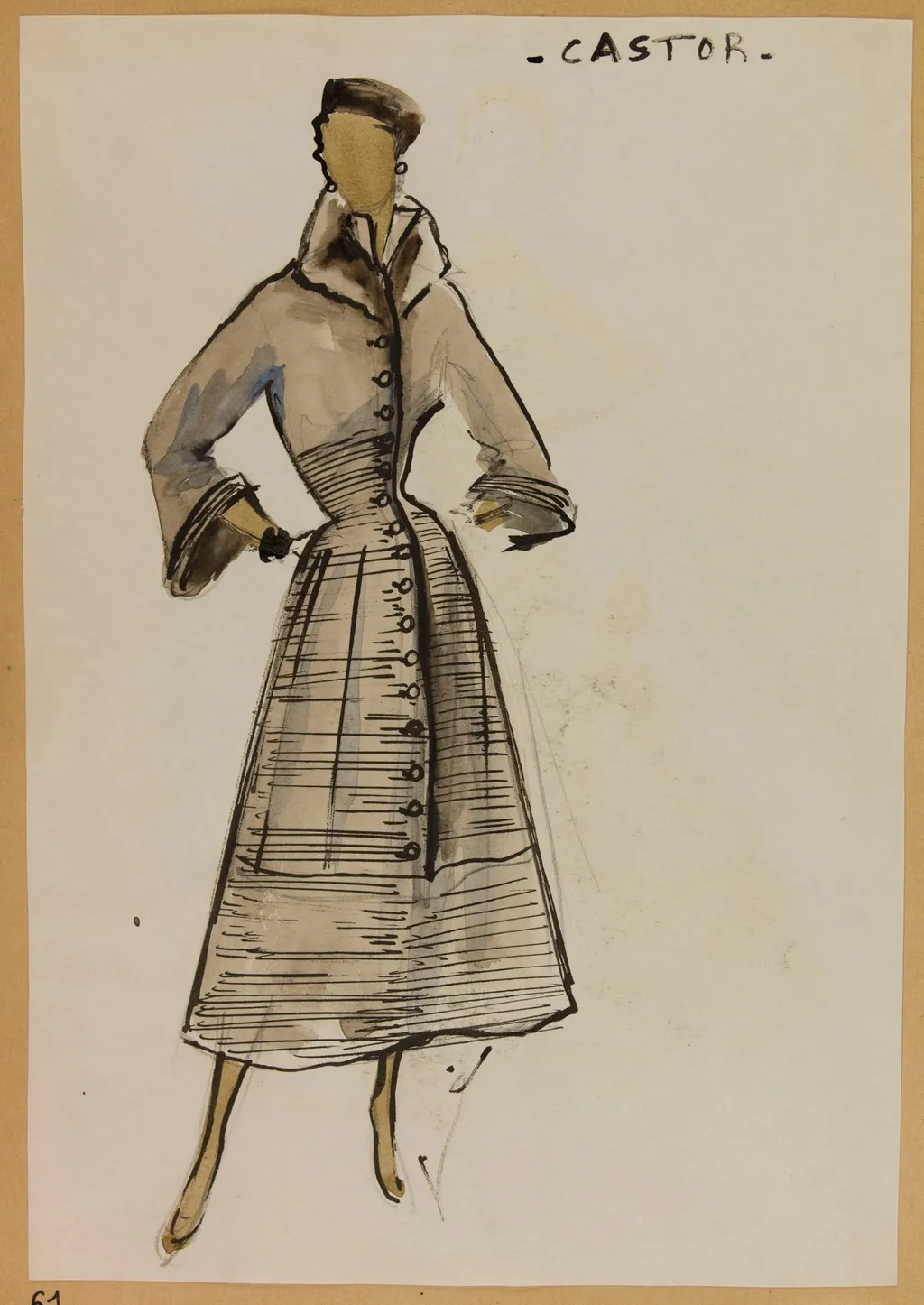
Castor is a drawing by Marie-Louise Carven. It dates from 1952 and is held in the collection of the Palais Galliera - Musée de la Mode de la Ville de Paris.
About this work
Overview
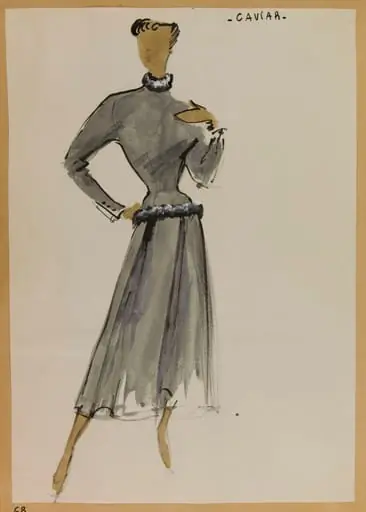
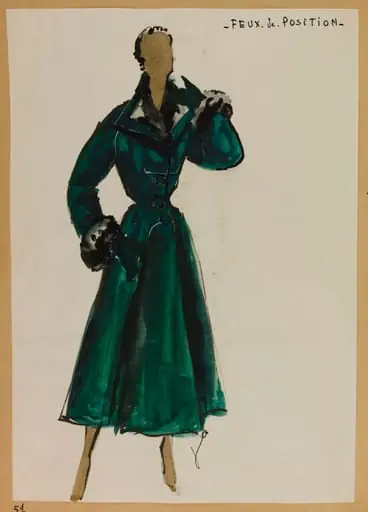
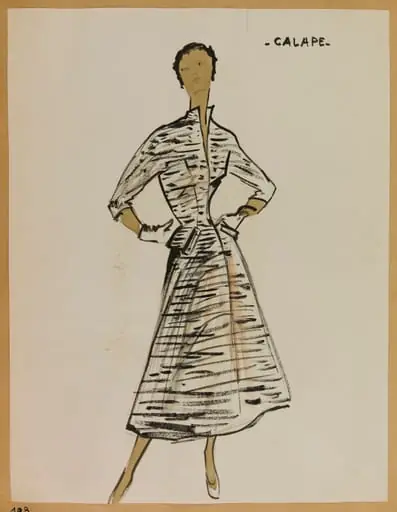
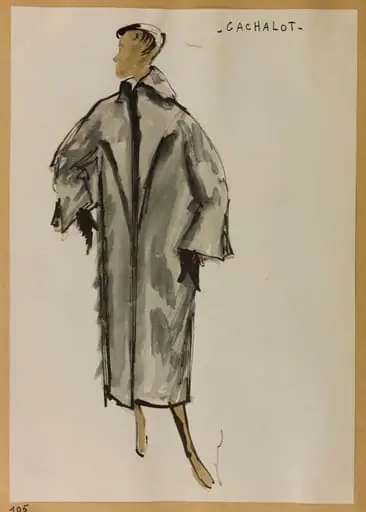
Created in 1952 by French designer Marie-Louise Carven, *Castor* is a fashion illustration depicting a woman in a tailored daytime dress.
Created in 1952 by French designer Marie-Louise Carven, *Castor* is a fashion illustration depicting a woman in a tailored daytime dress. Carven, who founded her eponymous house in 1945, was notable for pioneering ready-to-wear fashion in postwar France. The drawing, rendered in a loose, linear style, reflects the aesthetic of her brand: understated, feminine, and accessible. It resides in the collection of the Museum of Ethnography as an artifact of mid-century design culture.
Subject & Meaning
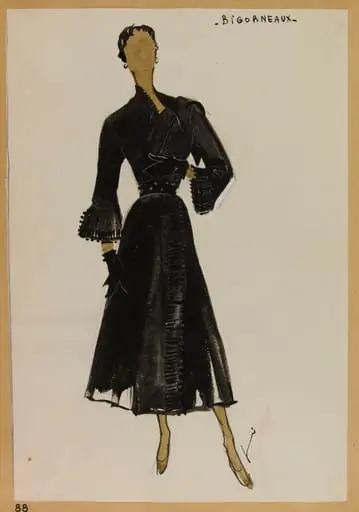
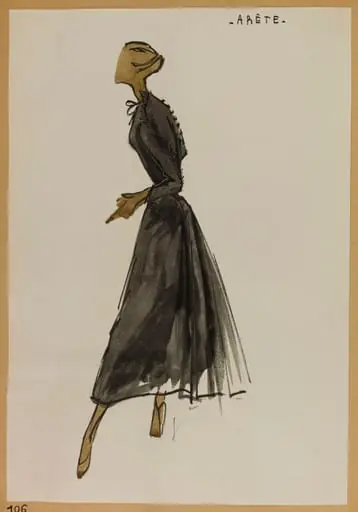
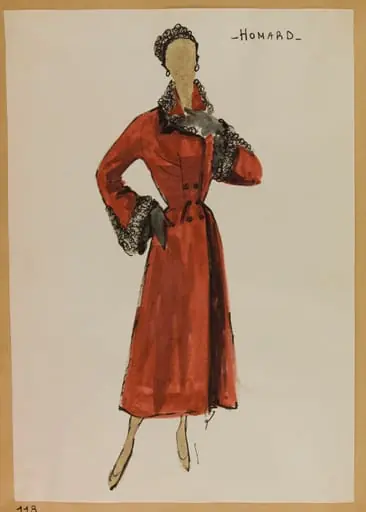
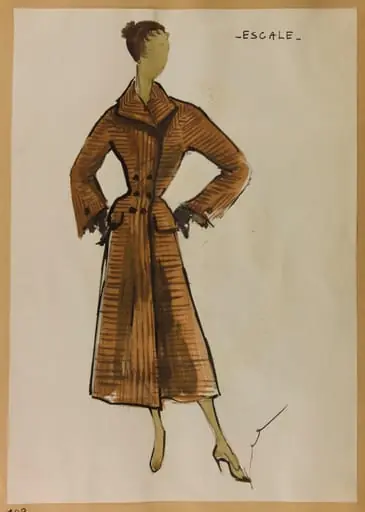
The figure in *Castor* wears a high-necked, long-sleeved dress with a full skirt and front buttons, paired with a hat and heels. Her posture—relaxed yet poised, one hand on the hip—conveys quiet confidence. The outfit suggests a practical elegance suited to urban life in the early 1950s. Carven’s focus on petite silhouettes and wearable forms is evident, emphasizing dignity and ease over ornamentation, aligning with her philosophy of dressing women for everyday activity.
Technique & Style
The illustration employs minimal shading and bold, fluid lines, creating a sense of movement without heavy detail. The sketchy quality suggests spontaneity, possibly a design study or promotional sketch rather than a finished rendering. The absence of background or context directs attention to the garment’s structure and the figure’s bearing. This restrained visual language mirrors Carven’s design ethos: clarity, proportion, and quiet refinement.
History & Provenance
Marie-Louise Carven launched her label in 1945, quickly gaining recognition for democratizing couture through ready-to-wear collections. *Castor* dates from the peak of her influence in the early 1950s, a period when her designs were widely published and worn. The drawing entered the Museum of Ethnography’s holdings as part of a broader effort to document fashion as cultural expression, reflecting the shift from elite tailoring to mass-produced style.
Context
In postwar France, fashion was redefining itself amid economic recovery and changing gender roles. Carven’s work stood apart by prioritizing comfort and practicality without sacrificing grace. *Castor* embodies this moment: a time when women sought clothing that allowed mobility and self-possession. The illustration’s simplicity contrasts with the more elaborate styles of Parisian haute couture, signaling a broader cultural turn toward accessible modernity.
Legacy
Carven’s emphasis on ready-to-wear helped reshape the fashion industry, influencing later designers who valued wearability alongside aesthetics. *Castor* remains a quiet testament to her vision: clothing designed not for spectacle, but for lived experience. Its preservation in an ethnographic collection underscores its significance as a cultural document, capturing how fashion articulated new ideals of femininity in mid-century Europe.
Artist & collection
Artist
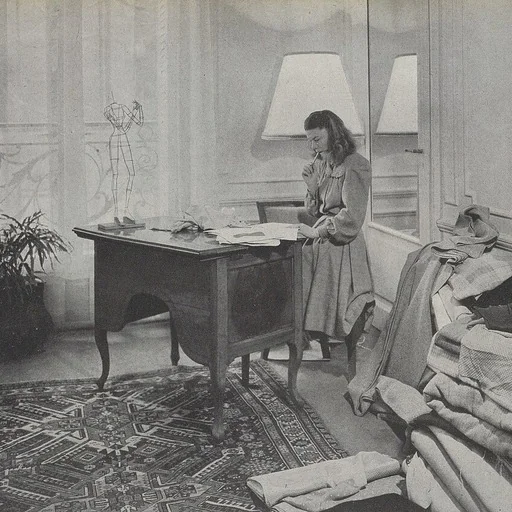
Marie-Louise Carven (31 August 1909 – 8 June 2015), born Carmen de Tommaso, was a French fashion designer who founded the house of Carven in 1945.
Museum
Palais Galliera - Musée de la Mode de la Ville de Paris
Continue through works from the same source collection.
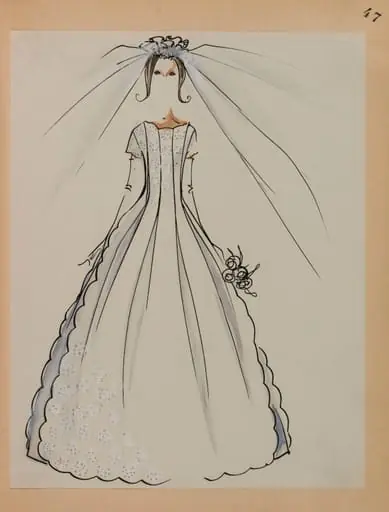 Robe de mariée festonnée et son voile
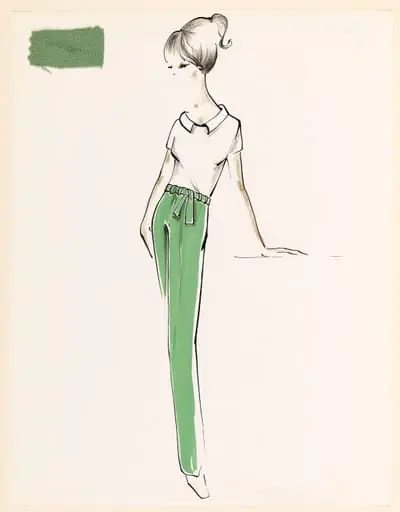 Haut blanc à manches courtes et pantalon vert à ceinture nouée
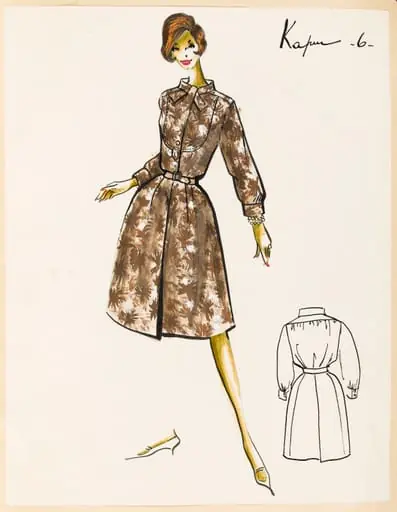 Kapur
Kapur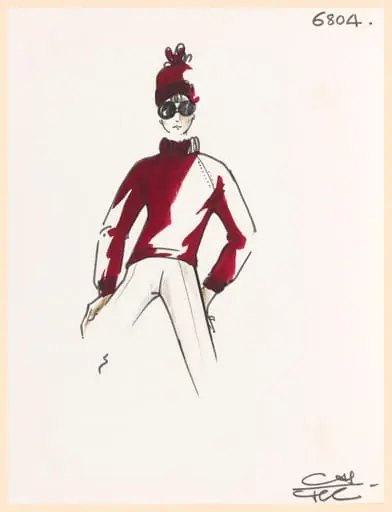 Pull-over à manches longues pourpre, bonnet assorti, pantalon et lunettes de soleil
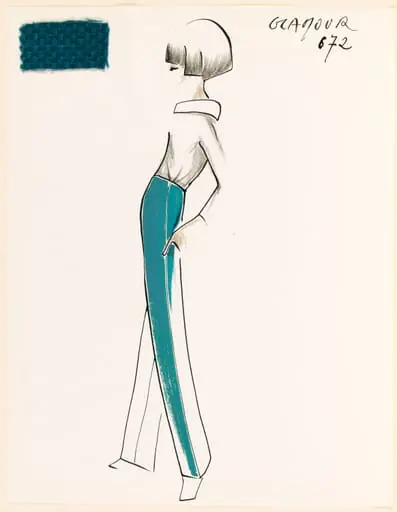 GLAMOUR
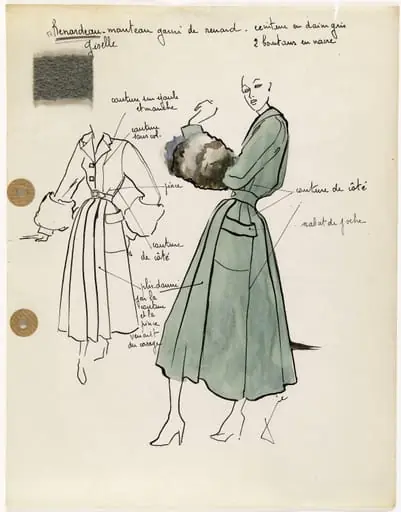 'Renardeau'
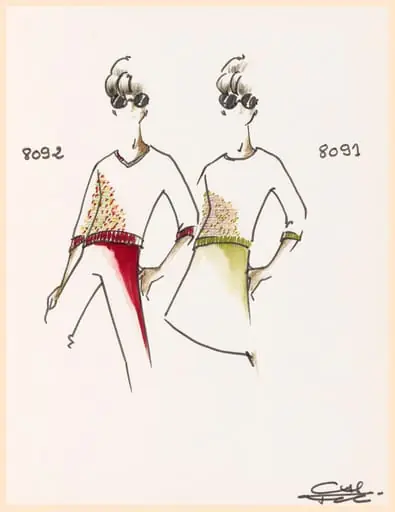 Pull-over à manches trois quarts et à encolure V à motifs multicolores, pantalon cerise et lunettes de soleil
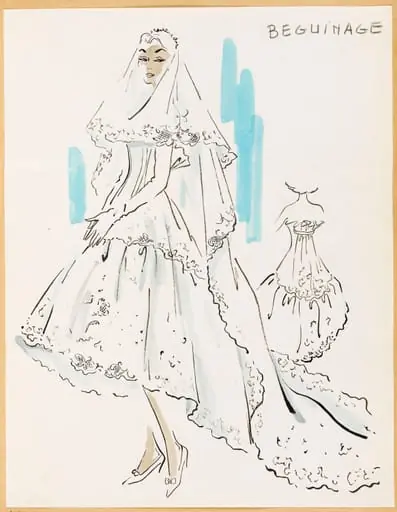 Béguinage