Artwork
Cendrillon
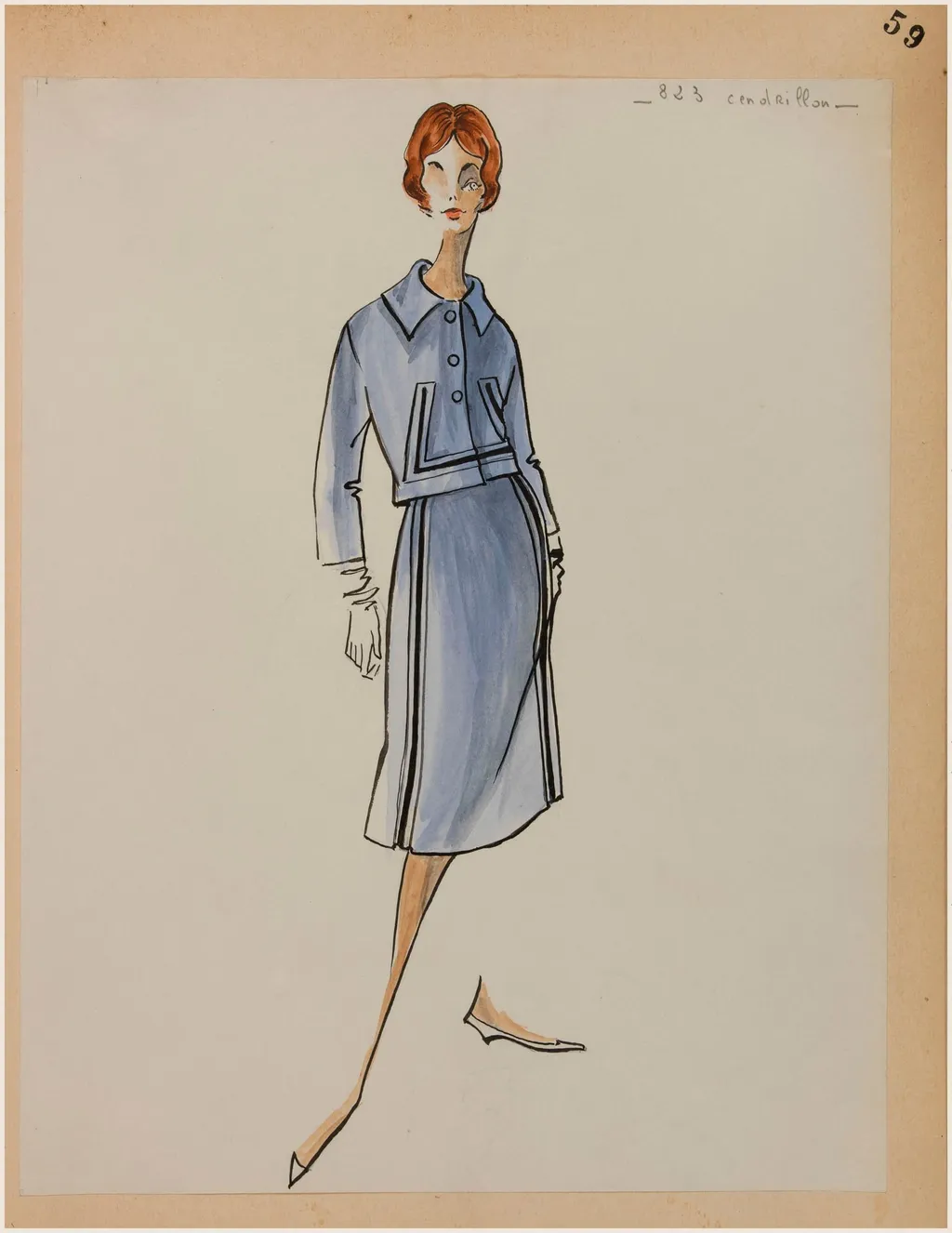
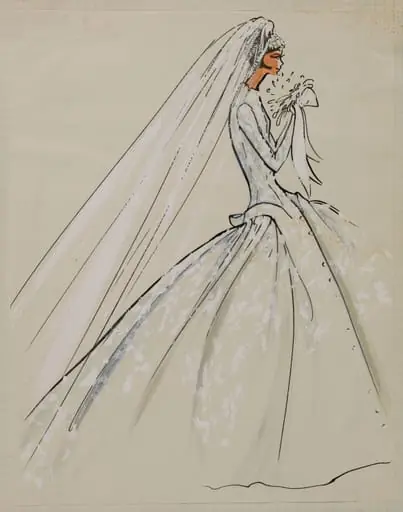
Cendrillon is a drawing by Carven. It dates from 1958 and is held in the collection of the Palais Galliera - Musée de la Mode de la Ville de Paris.
About this work
Overview
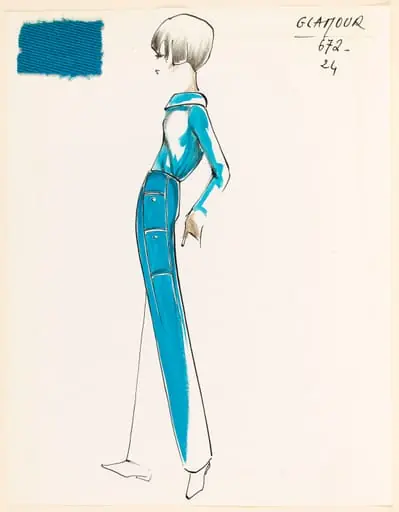
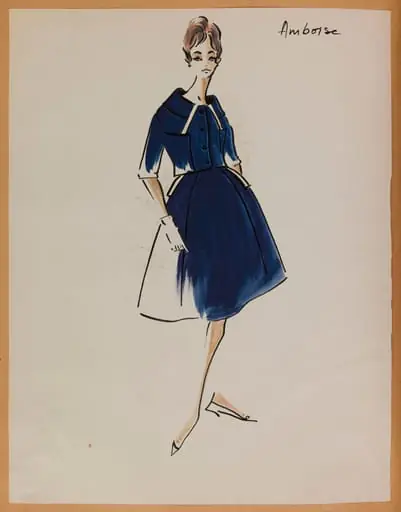
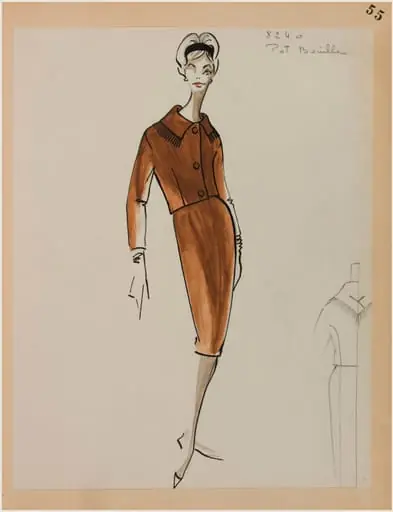
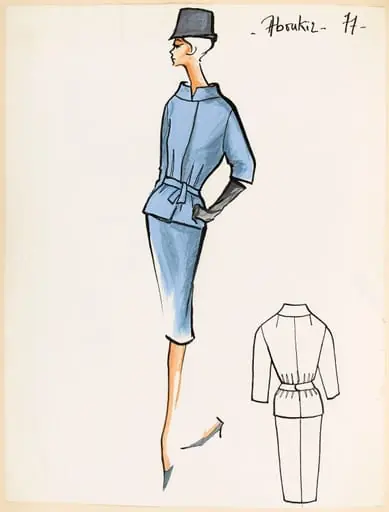
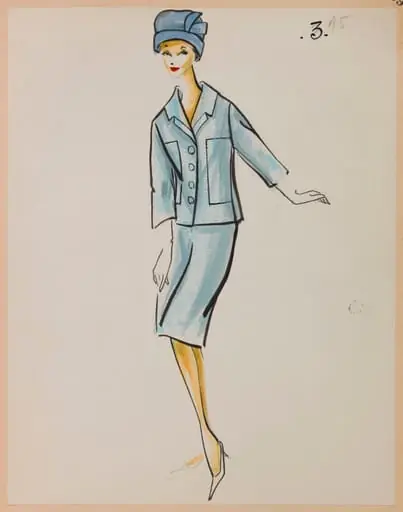
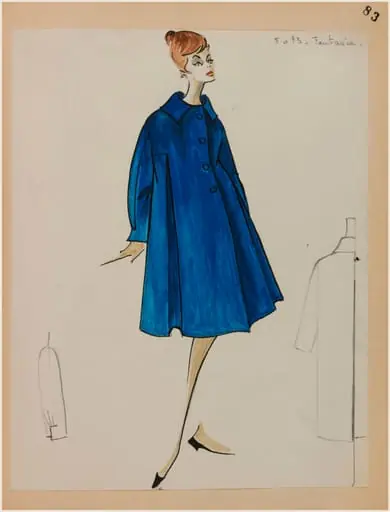
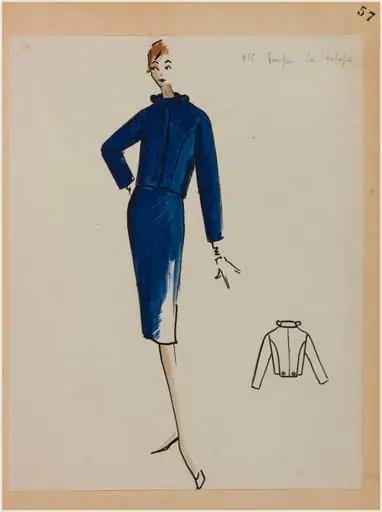
Cendrillon, dated around 1958, is a figurative drawing by the French fashion designer Carven. Executed in ink and watercolor, it portrays a woman in a modern, tailored ensemble. The work resides in the collection of the Museum of Ethnography, where it is presented as an example of mid-century fashion illustration that bridges haute couture and graphic art.
Subject & Meaning
The figure evokes the fairy-tale heroine Cendrillon, reimagined as a contemporary Parisian woman. Her poised stance and refined attire suggest a quiet confidence, transforming the myth into a secular portrait of feminine elegance. The absence of overt fantasy elements grounds the image in everyday modernity, reflecting postwar ideals of sophistication and independence.
Technique & Style
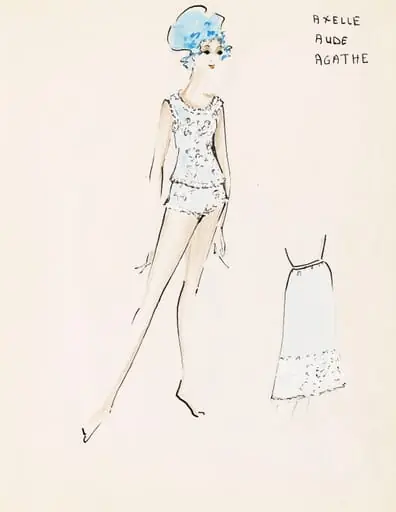
The drawing employs bold, fluid lines and expressive brushwork to define form and movement. A restrained palette of blue tones—ranging from pale to deep—unifies the composition, while subtle gradations suggest volume and texture. The short bob and heeled shoes are rendered with precision, emphasizing the artist’s attention to fashion detail and rhythmic silhouette.
History & Provenance
Created during Carven’s active years in fashion design, the work likely originated as a study or promotional sketch. It entered the Museum of Ethnography’s collection in the late 20th century, where it was recognized for its cultural documentation of mid-century French style. Its preservation reflects institutional interest in fashion as a social artifact.
Context
In the late 1950s, Parisian fashion houses increasingly collaborated with illustrators to translate designs into visual narratives. Carven, known for her tailored silhouettes, contributed to this trend by blending artistic expression with commercial intent. Cendrillon exemplifies how couture was visually coded for a public audience, merging myth with modernity.
Legacy
The drawing remains a quiet testament to the role of illustration in shaping perceptions of fashion. While Carven’s name is primarily associated with clothing, this work illustrates how her aesthetic extended beyond textiles into graphic form. It continues to inform scholarly discussions on the intersection of fashion, gender, and visual culture in postwar Europe.
Artist & collection
Artist
These delicate ink-on-paper drawings capture the quiet poetry of everyday things: pinecones, reeds, apples.
Museum
Palais Galliera - Musée de la Mode de la Ville de Paris
Continue through works from the same source collection.