Artwork
Chérubin
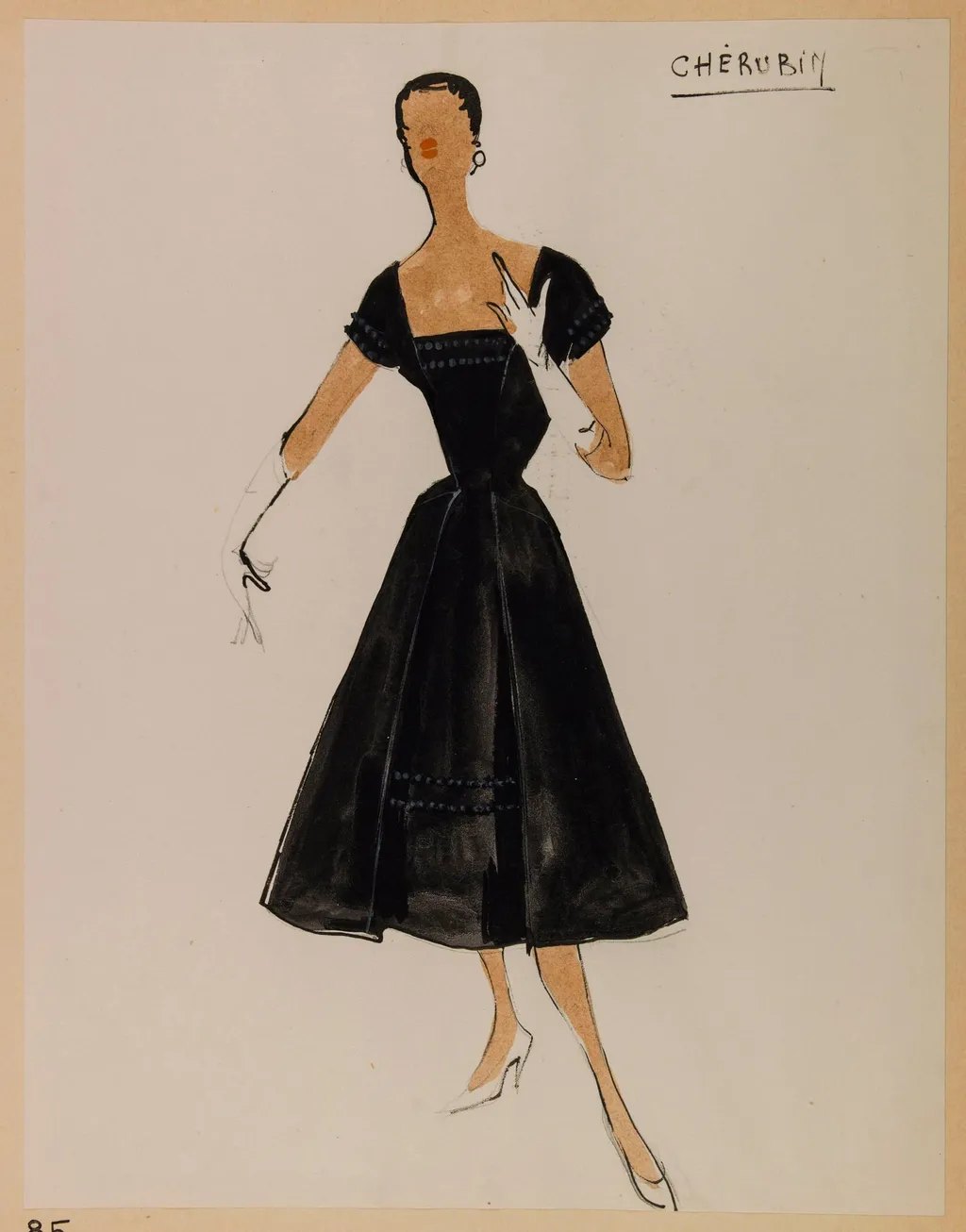
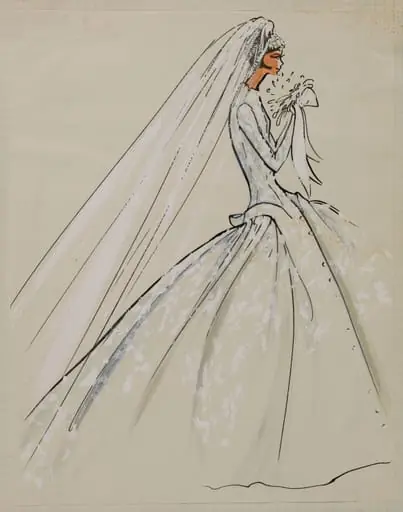
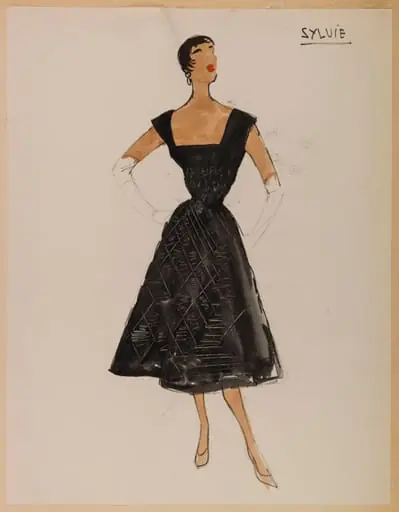
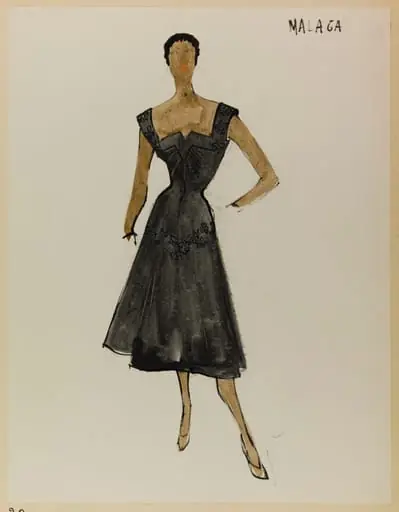
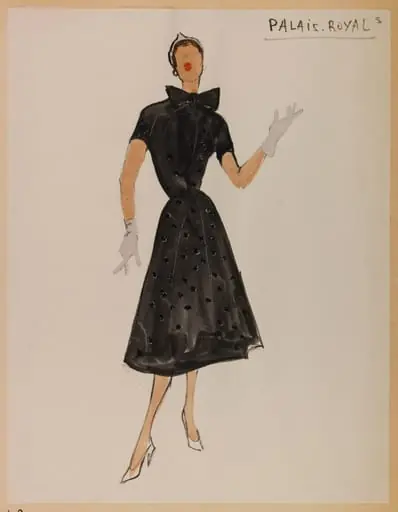
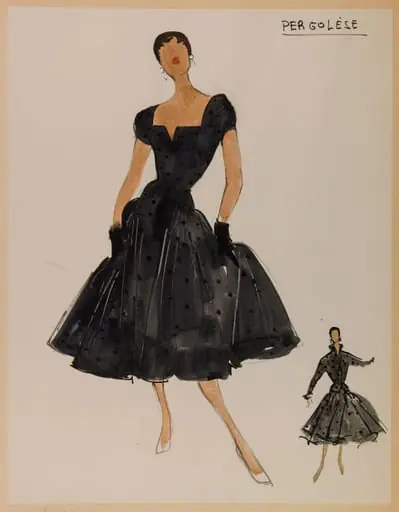
Chérubin is a drawing by Carven. It dates from 1953 and is held in the collection of the Palais Galliera - Musée de la Mode de la Ville de Paris.
About this work
Overview
Chérubin, created around 1953 by the French designer Jean Carven, is a painted portrait that blends fashion illustration with portraiture.
Chérubin, created around 1953 by the French designer Jean Carven, is a painted portrait that blends fashion illustration with portraiture. It depicts a woman in a formal black dress, rendered with restrained detail against a pale beige background. The work is part of the collection at the Museum of Ethnography, where it is presented as an artifact of mid-century French design sensibility rather than fine art.
Subject & Meaning
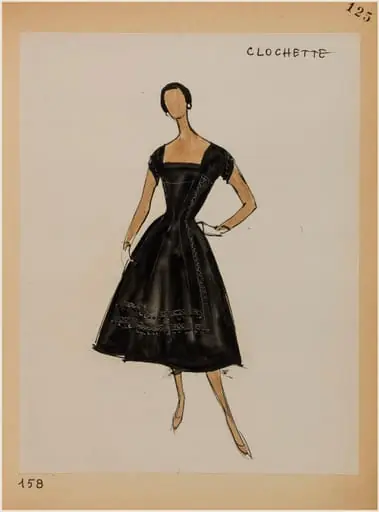
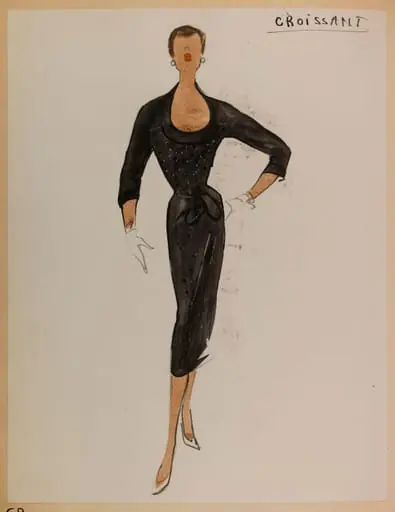
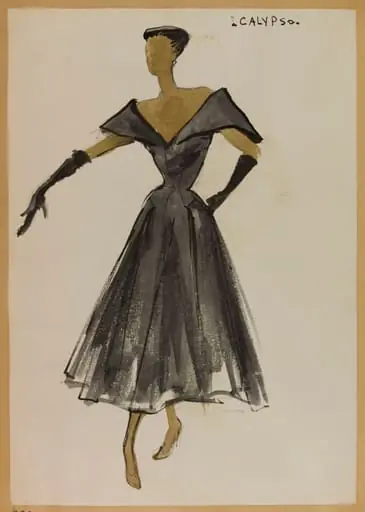
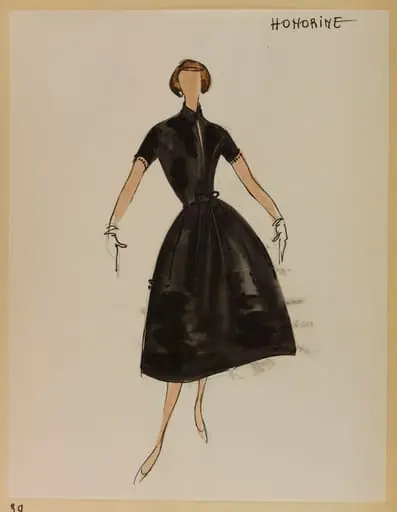
The figure, dressed in a tailored black gown with dotted trim, wears white gloves and heels, suggesting a formal or theatrical setting. Her pose—one arm extended, the other resting on the chest—conveys poised restraint. The turned head and direct gaze imply introspection or quiet address, evoking an aura of composed elegance without narrative clarity. The subject’s identity remains unnamed, emphasizing the garment and demeanor over individual biography.
Technique & Style
The painting employs flat, even brushwork with minimal modeling, focusing on silhouette and pattern. The dress’s dotted borders and smooth fabric suggest stylized textile rendering, characteristic of fashion design sketches. The background is untextured, directing attention to the figure’s form and attire. Color is subdued—black, white, and beige—reinforcing a sense of refined minimalism typical of Carven’s aesthetic.
History & Provenance
Created in the early 1950s, Chérubin emerged during Carven’s peak influence in Parisian fashion. It was likely produced as a conceptual study or promotional image tied to a collection. The work entered the Museum of Ethnography’s holdings through acquisition or donation, reflecting the institution’s interest in fashion as cultural expression rather than fine art tradition.
Context
In postwar France, fashion designers like Carven increasingly blurred lines between clothing and visual art. Chérubin reflects this trend, capturing the era’s emphasis on streamlined femininity and controlled elegance. Its presentation in an ethnographic museum signals a broader institutional shift toward recognizing fashion as a material culture worthy of preservation and study.
Legacy
Chérubin remains a quiet example of how mid-century fashion design intersected with visual representation. While not widely exhibited, it contributes to scholarly understanding of Carven’s visual language and the role of illustration in fashion branding. Its presence in an ethnographic context underscores evolving attitudes toward the cultural significance of dress in the 20th century.
Artist & collection
Artist
These delicate ink-on-paper drawings capture the quiet poetry of everyday things: pinecones, reeds, apples.
Museum
Palais Galliera - Musée de la Mode de la Ville de Paris
Continue through works from the same source collection.