Artwork
Pergolèse
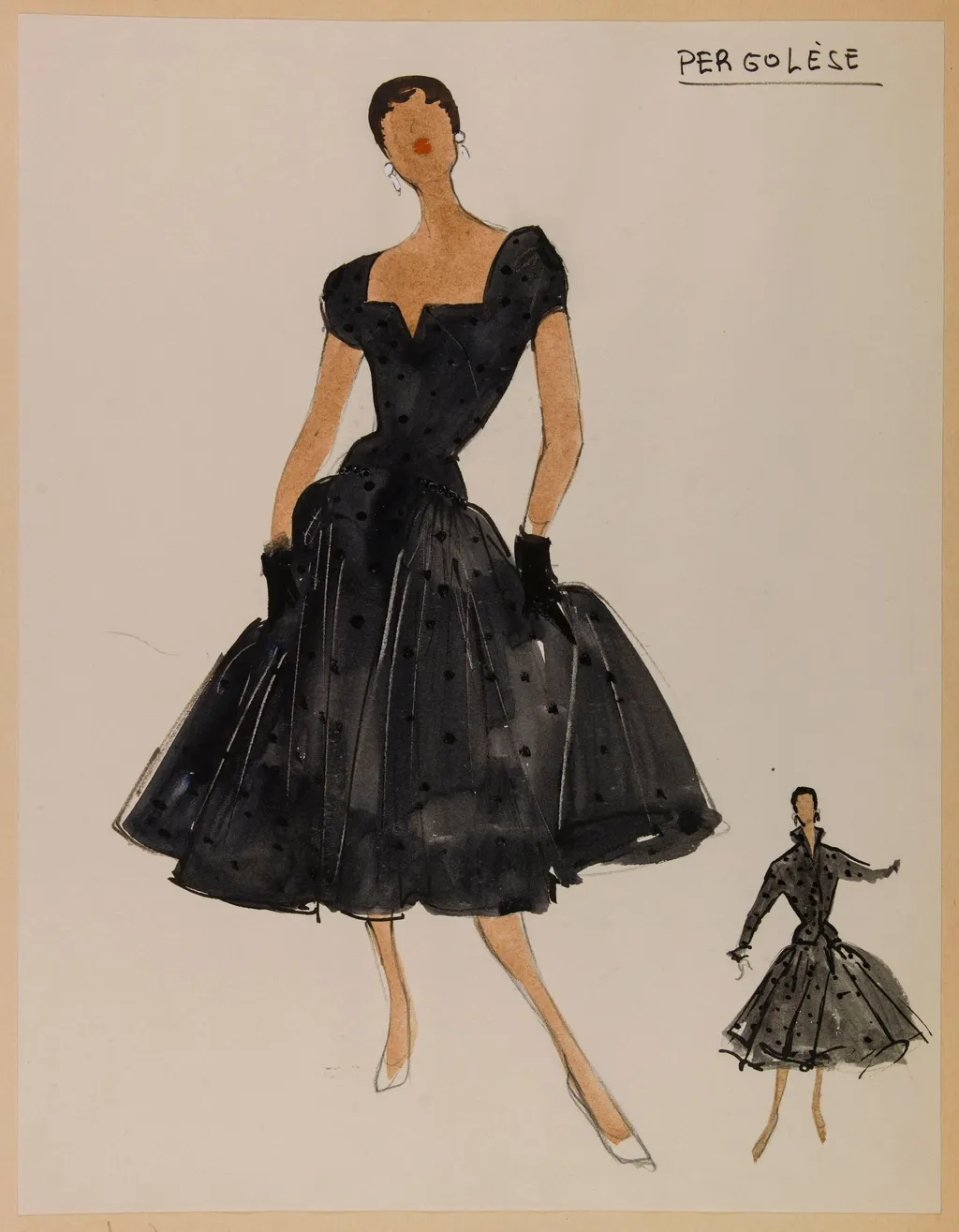
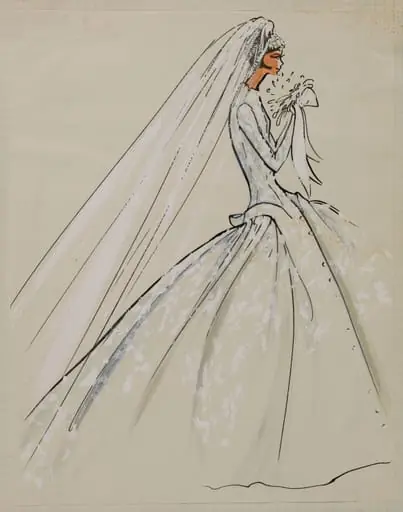
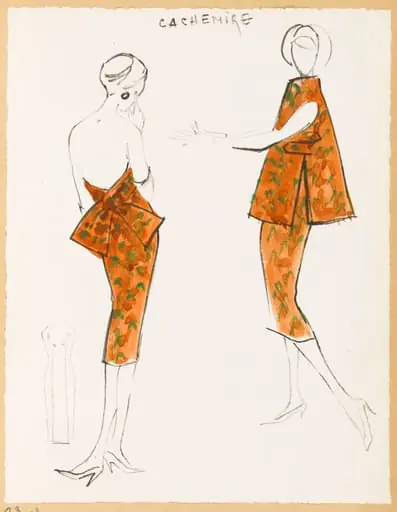
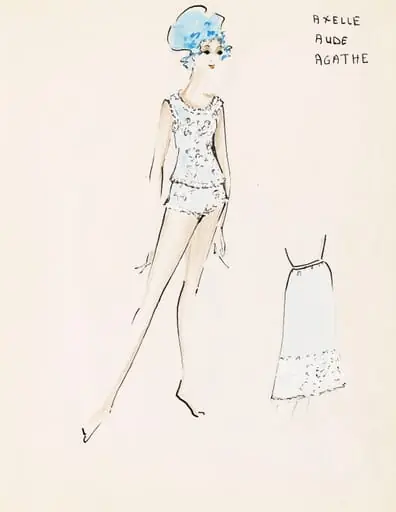
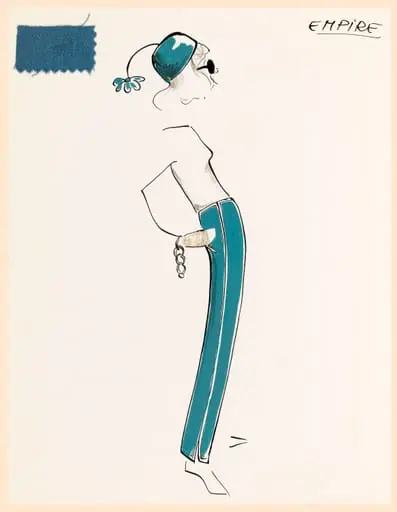
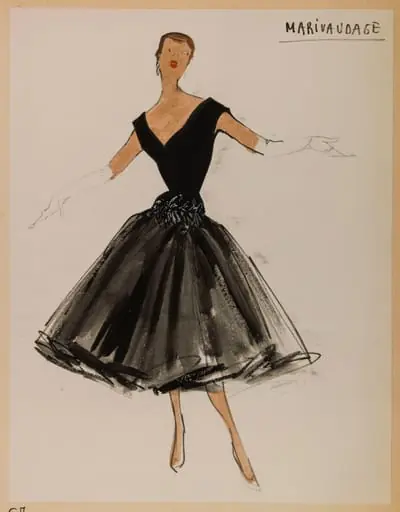
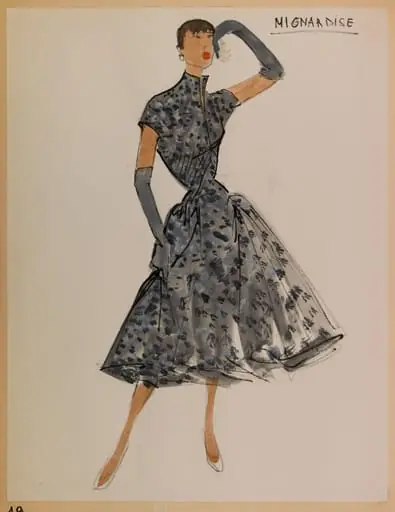
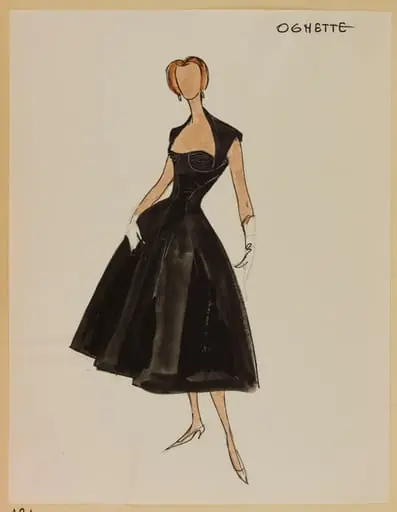
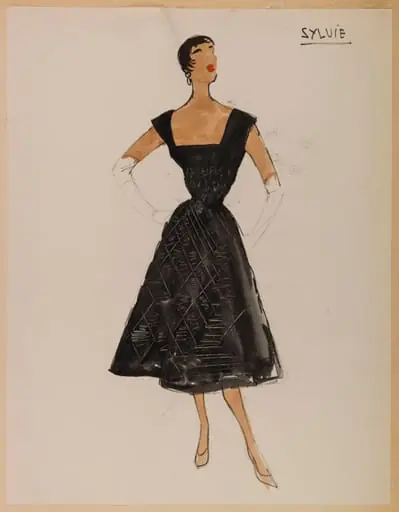
Pergolèse is a drawing by Carven. It dates from 1953 and is held in the collection of the Palais Galliera - Musée de la Mode de la Ville de Paris.
About this work
Overview
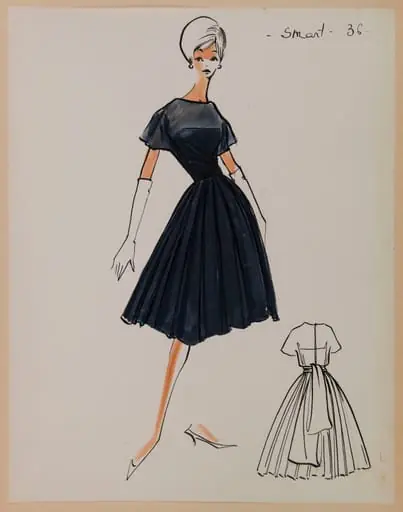
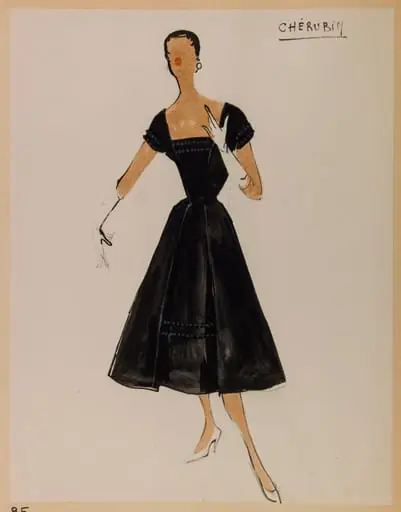
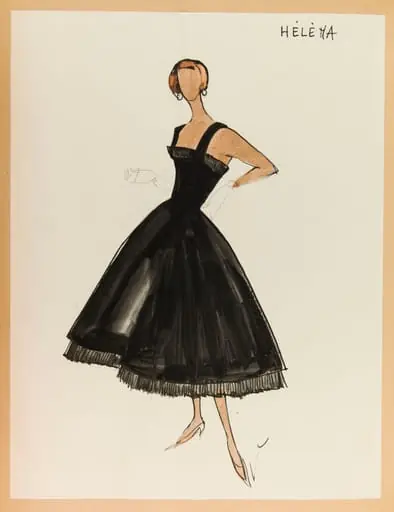
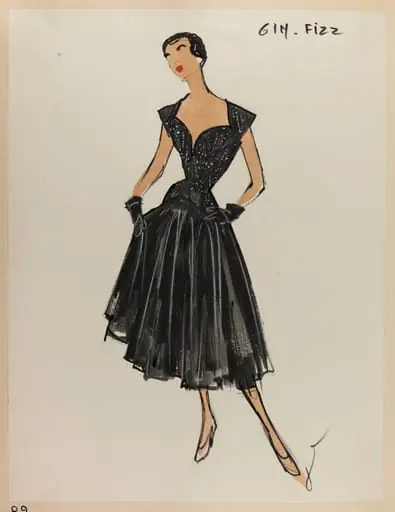
Created around 1953 by French designer Carven, this ink sketch depicts two female figures in minimalist evening wear. Rendered with fluid, spontaneous lines, the work captures movement and silhouette rather than detailed anatomy. It resides in the collection of the Museum of Ethnography, where it is preserved as a record of mid-century fashion illustration rather than a finished garment.
Subject & Meaning
The two figures represent contrasting poses and perspectives: one faces forward, confidently displaying a tailored bodice and flared skirt, while the other is viewed from behind, her shorter dress suggesting a more intimate or casual stance. The pairing implies a dialogue between public presentation and private posture, reflecting how fashion mediates identity in social settings during the postwar era.
Technique & Style
The artist employed rapid, unrefined ink strokes to define the contours of the dresses, emphasizing form over precision. Delicate polka dots, scattered with rhythmic irregularity, introduce texture and whimsy against the monochrome backdrop. The looseness of the line work suggests a working sketch—intended to convey silhouette and mood rather than serve as a technical pattern.
History & Provenance
The sketch entered the Museum of Ethnography’s collection in the latter half of the 20th century, likely as part of a broader acquisition of fashion-related materials documenting European design practices. Its origin as a personal or studio drawing by Carven is unconfirmed, but its preservation indicates recognition of its value as a cultural artifact of mid-century fashion.
Context
In the early 1950s, Parisian fashion emphasized refined silhouettes and subtle embellishments. Carven’s designs often balanced elegance with playfulness, a sensibility echoed here in the contrast between the structured dresses and the light-hearted polka dots. This sketch reflects a moment when haute couture was increasingly documented through informal drawings, bridging design and daily life.
Legacy
Though not widely published during Carven’s lifetime, this sketch contributes to the archival record of her design language. It illustrates how fashion illustrators captured the essence of garments beyond technical drawings, preserving the energy and attitude of postwar style. Today, it remains a quiet testament to the artistry embedded in fashion’s preparatory stages.
Artist & collection
Artist
These delicate ink-on-paper drawings capture the quiet poetry of everyday things: pinecones, reeds, apples.
Museum
Palais Galliera - Musée de la Mode de la Ville de Paris
Continue through works from the same source collection.