Artwork
Honorine
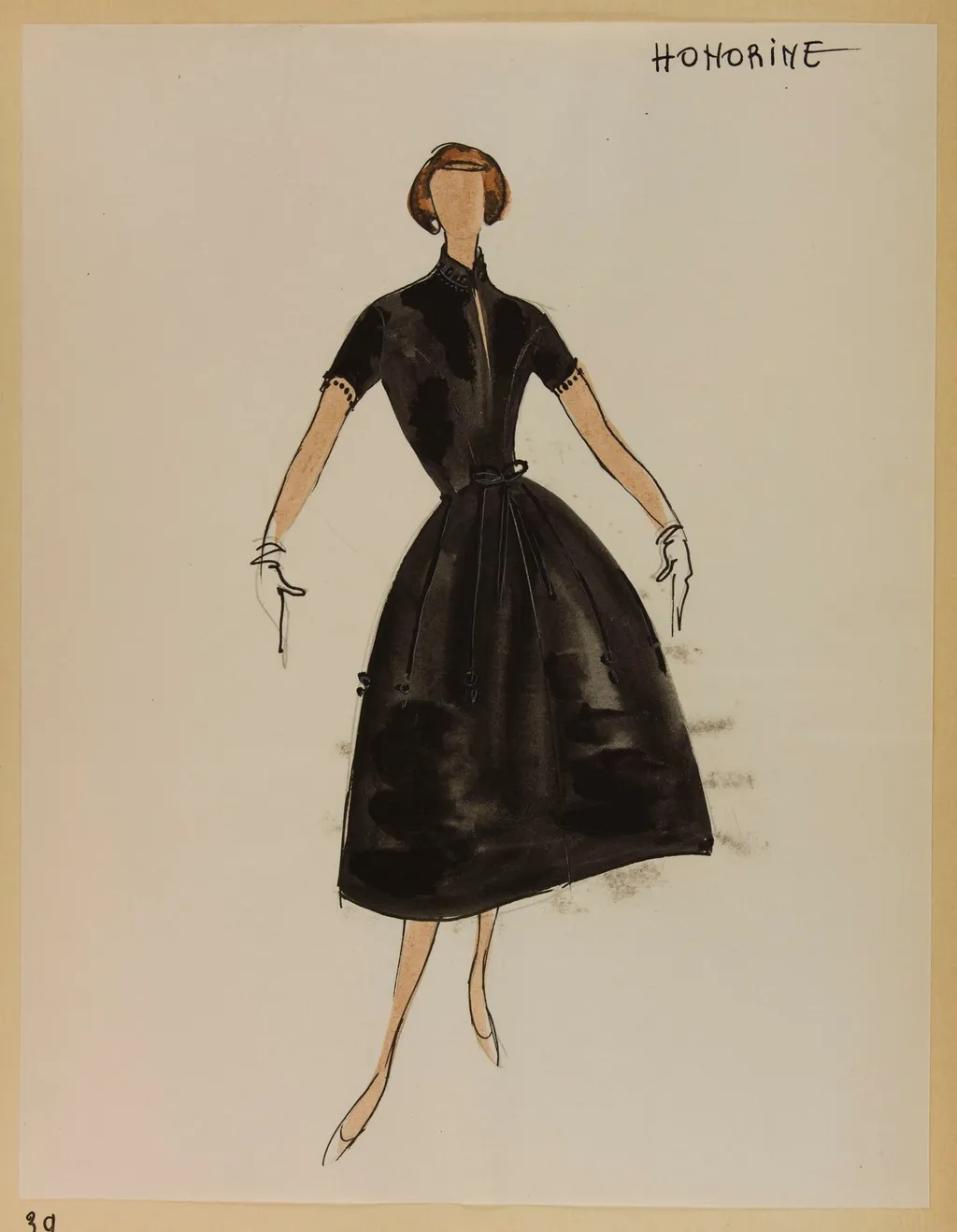
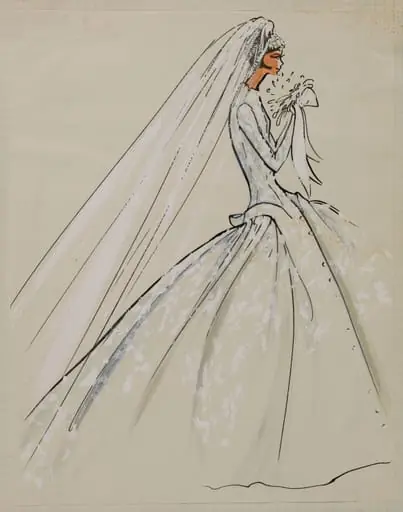
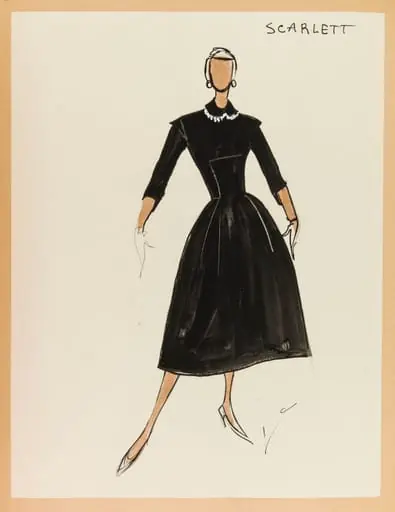
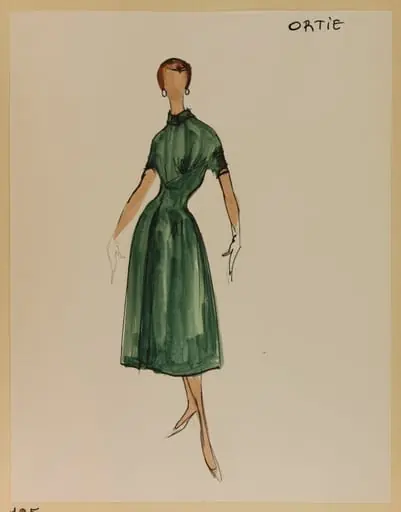
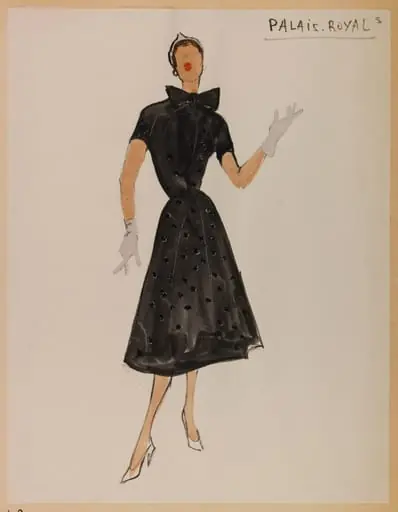
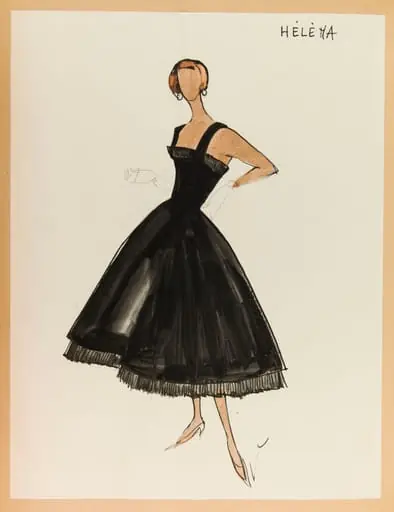
Honorine is a drawing by Carven. It dates from 1955 and is held in the collection of the Palais Galliera - Musée de la Mode de la Ville de Paris.
About this work
Overview
The work is part of the Museum of Ethnography’s collection, where it is preserved as a study in form and garment construction.
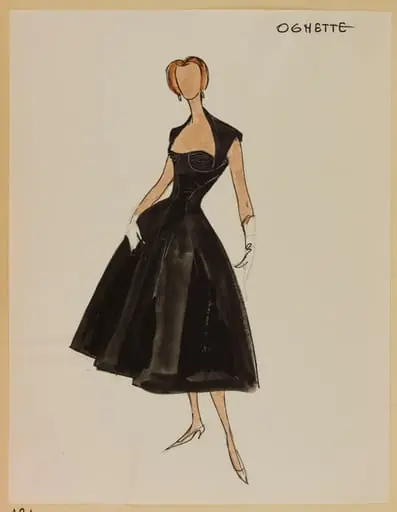
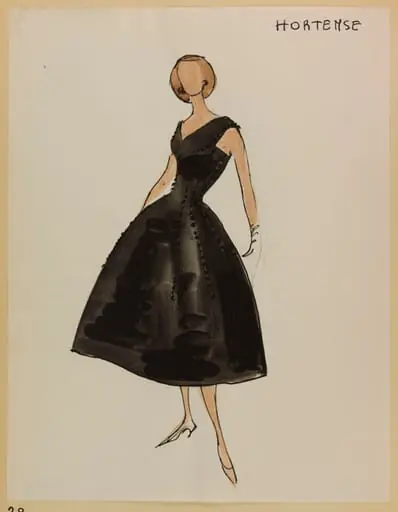
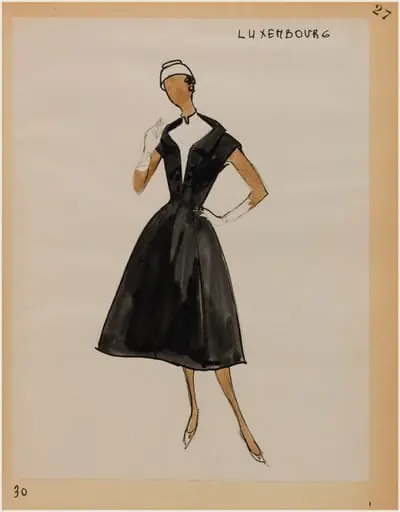
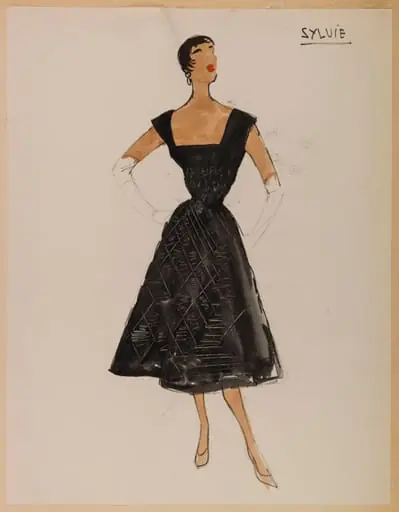
Honorine is a pencil drawing from around 1955 by the designer Carven. It depicts a standing female figure in a fitted black dress with a high neckline and flared hem. Rendered with restrained linework, the image focuses on posture and fabric flow rather than facial detail. The work is part of the Museum of Ethnography’s collection, where it is preserved as a study in form and garment construction.
Subject & Meaning
The figure, identified as Honorine, stands with arms extended horizontally, suggesting a pose of balance or display. The absence of facial features shifts focus to the silhouette and attire, emphasizing the dress as the central subject. The white gloves and smooth fabric imply formality, possibly reflecting mid-century fashion ideals or a model’s pose for design evaluation rather than portraiture.
Technique & Style
The drawing employs clean, precise lines with minimal shading, avoiding heavy cross-hatching or texture. The dress is rendered with subtle contouring to suggest the fall of silk or satin, while the figure’s posture is simplified to highlight structural elegance. This restrained approach reflects a designer’s observational method, prioritizing garment dynamics over emotional expression.
History & Provenance
Created circa 1955, Honorine entered the Museum of Ethnography’s holdings as part of a collection documenting fashion as cultural artifact. Its origin as a design study suggests it was produced during Carven’s active years in Parisian couture. The work’s preservation in an ethnographic context indicates its value as a record of mid-century dressmaking practices rather than fine art.
Context
In the mid-1950s, fashion houses like Carven produced detailed sketches to communicate garment construction to ateliers. Honorine reflects this functional tradition, where drawings served as technical guides. The figure’s stylized stillness and emphasis on silhouette align with contemporary fashion illustration, which prioritized clarity and proportion over narrative or individuality.
Legacy
Honorine remains a quiet example of how fashion design was documented before digital tools. Its preservation in an ethnographic museum underscores its role in understanding the material culture of mid-century dressmaking. Though not widely exhibited, it contributes to scholarly study of how garments were conceptualized and translated from sketch to garment.
Artist & collection
Artist
These delicate ink-on-paper drawings capture the quiet poetry of everyday things: pinecones, reeds, apples.
Museum
Palais Galliera - Musée de la Mode de la Ville de Paris
Continue through works from the same source collection.