Artwork
Don Quichotte
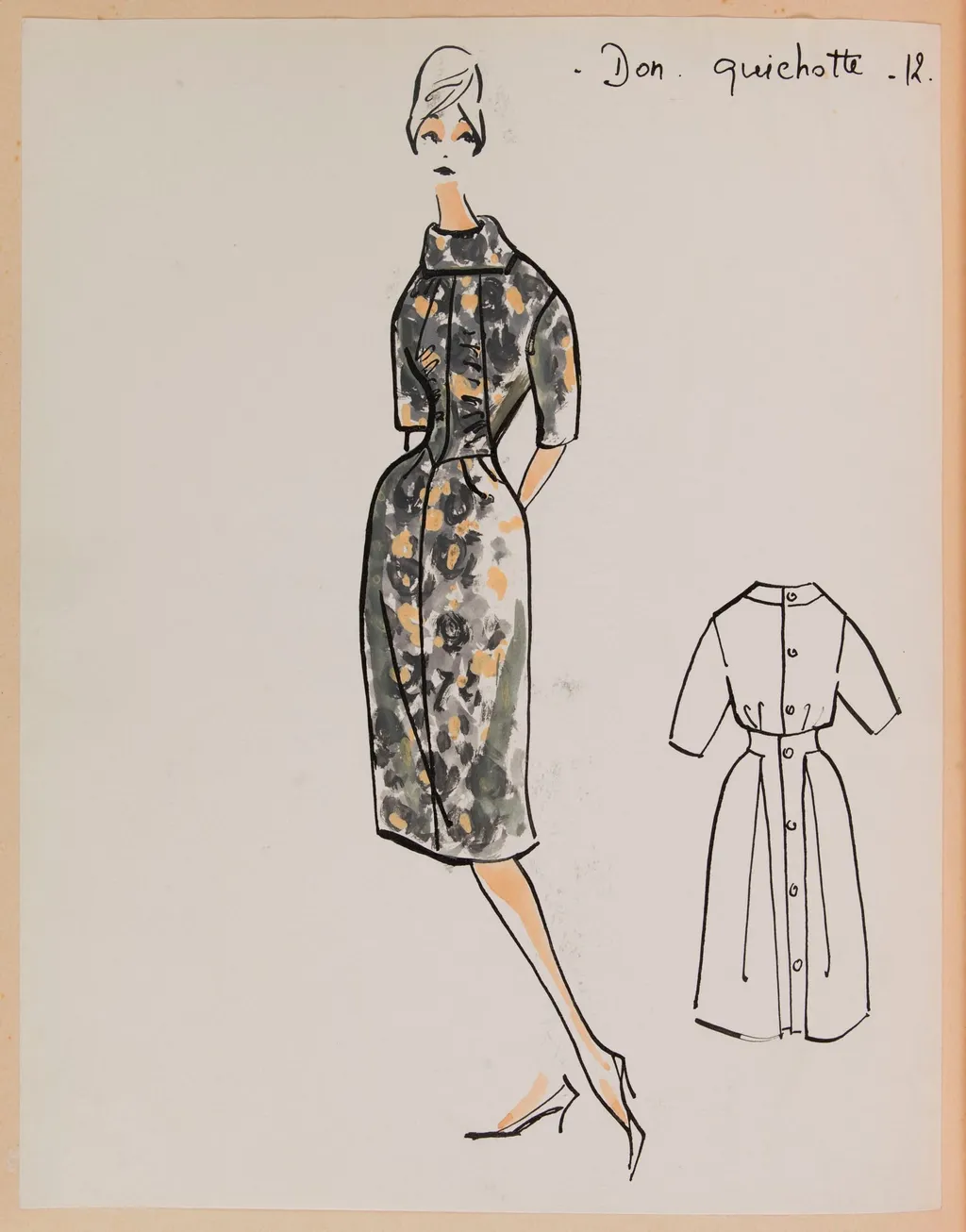
Don Quichotte is a drawing by Carven. It dates from 1958 and is held in the collection of the Palais Galliera - Musée de la Mode de la Ville de Paris.
About this work
Overview
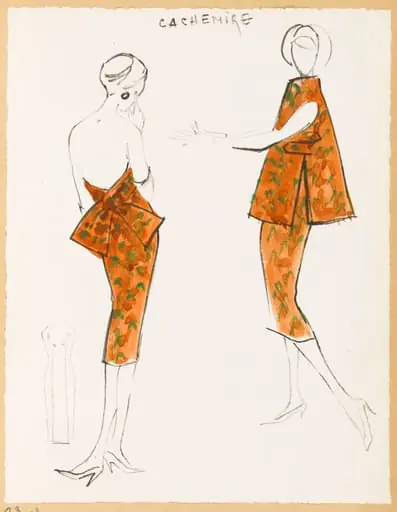
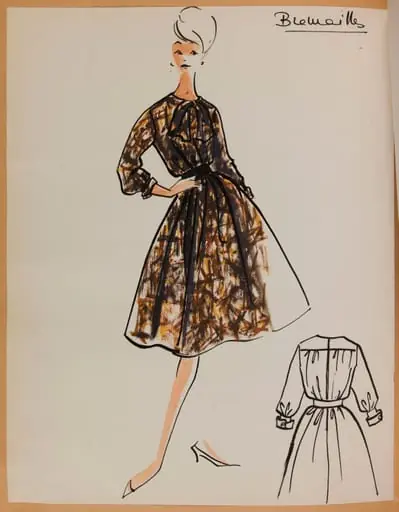
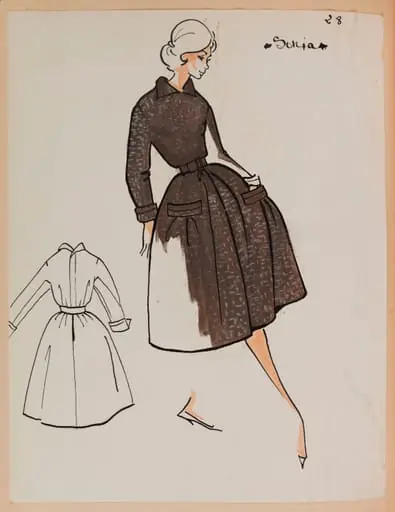
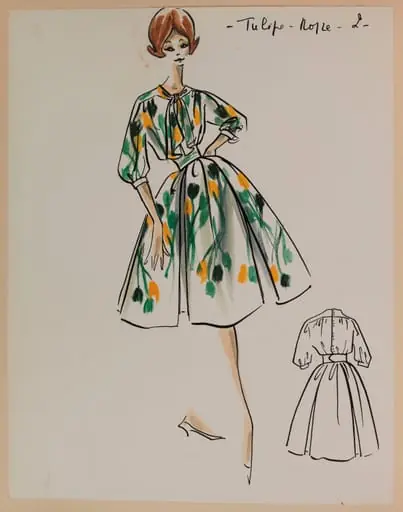
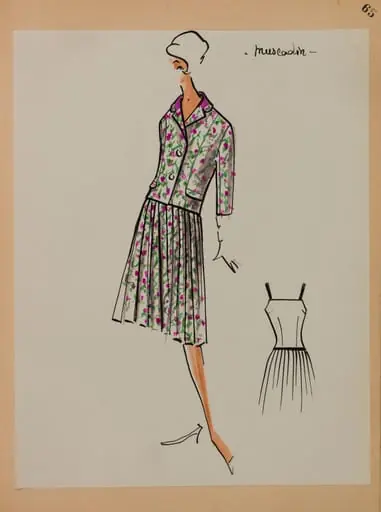
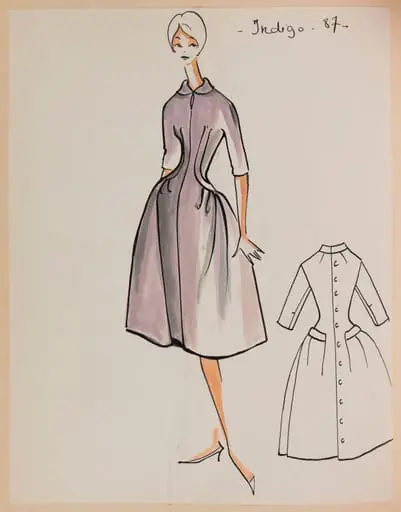
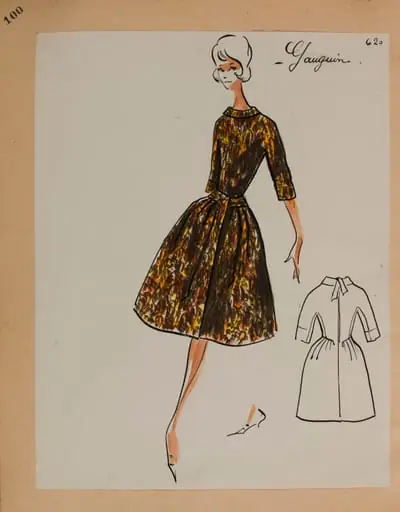
A secondary outline of the garment, viewed from behind, appears beside the figure, emphasizing construction details like collar buttons and waist shaping.
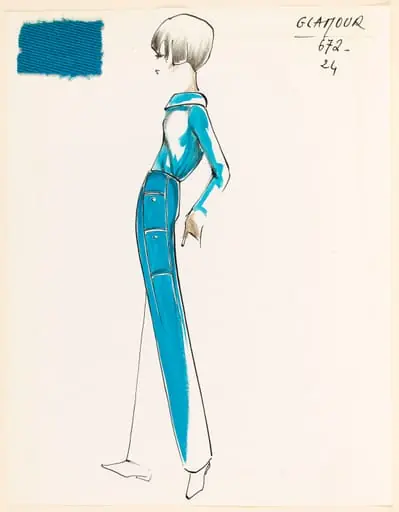
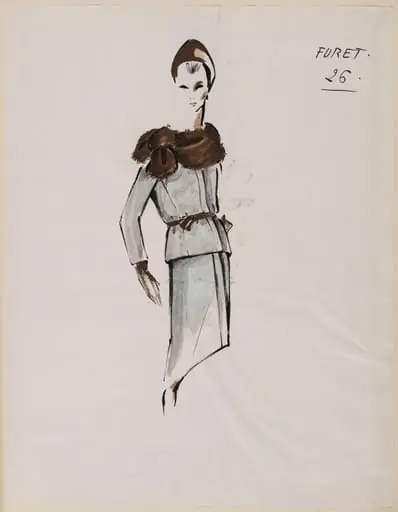
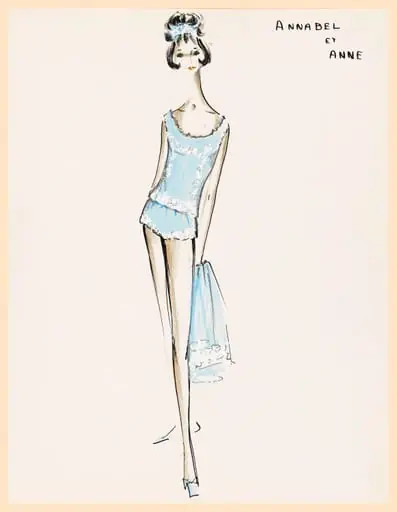
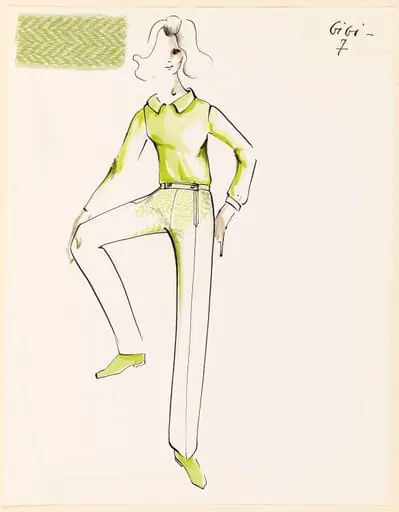
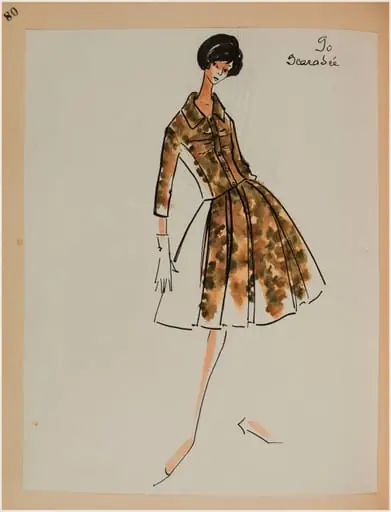
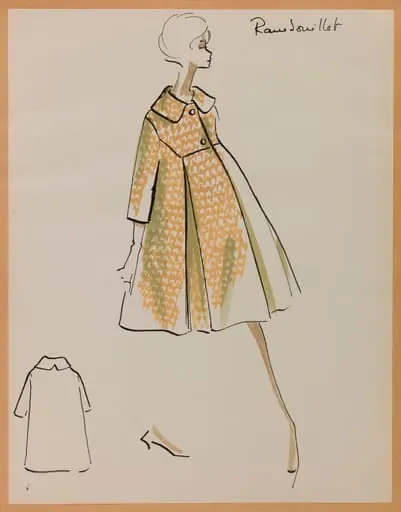
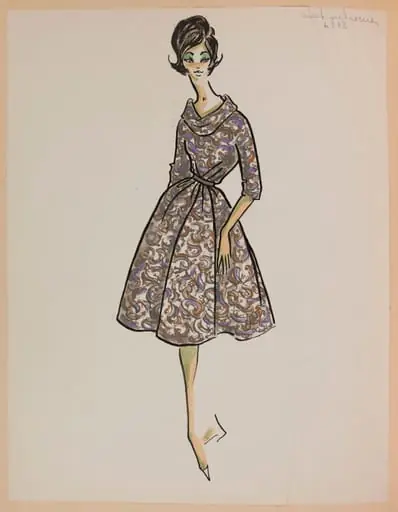
Created around 1958 by the French fashion house Carven, this ink sketch depicts a woman in a tailored knee-length dress. Rendered with swift, assured lines, the drawing captures both movement and structure. A secondary outline of the garment, viewed from behind, appears beside the figure, emphasizing construction details like collar buttons and waist shaping. The work resides in the Museum of Ethnography, where it functions as a record of mid-century fashion design rather than fine art.
Subject & Meaning
The figure represents an idealized modern woman of the late 1950s—elegant yet unpretentious. Her poised stance and neatly pinned hair suggest composure, while the dress’s simplicity implies practicality. The dual views of the garment serve a functional purpose: one shows the garment in use, the other its technical form. Together, they communicate design intent, bridging aesthetics and utility in postwar fashion.
Technique & Style
The artist employed loose, fluid ink lines to convey texture and form without heavy shading. Bold black strokes define the dress’s floral pattern, while subtle peach washes add warmth and dimension. The back view is rendered in flat, minimalist outlines, contrasting with the three-dimensionality of the front figure. This interplay of detail and abstraction reflects a designer’s method: capturing essence over realism.
History & Provenance
The sketch entered the Museum of Ethnography’s collection as part of a broader archive of mid-century fashion documentation. Its origin traces to Carven’s design studio, where such drawings were used internally to communicate garment structure to tailors and clients. Unlike finished garments, these preparatory sketches were not intended for public display, making its institutional preservation notable.
Context
In the late 1950s, Parisian fashion houses emphasized clean lines and wearable elegance amid postwar reconstruction. Carven, known for its feminine yet understated silhouettes, aligned with this trend. This sketch reflects a design philosophy prioritizing ease and refinement over ornamentation, mirroring broader societal shifts toward practical, modern dressing for everyday life.
Legacy
Though not widely exhibited, the sketch remains a quiet testament to Carven’s design process. It illustrates how fashion houses documented their work before mass production, preserving the transition from idea to garment. Today, it contributes to scholarly understanding of mid-century French fashion as a discipline rooted in both artistry and function.
Artist & collection
Artist
These delicate ink-on-paper drawings capture the quiet poetry of everyday things: pinecones, reeds, apples.
Museum
Palais Galliera - Musée de la Mode de la Ville de Paris
Continue through works from the same source collection.