Artwork
Gauguin
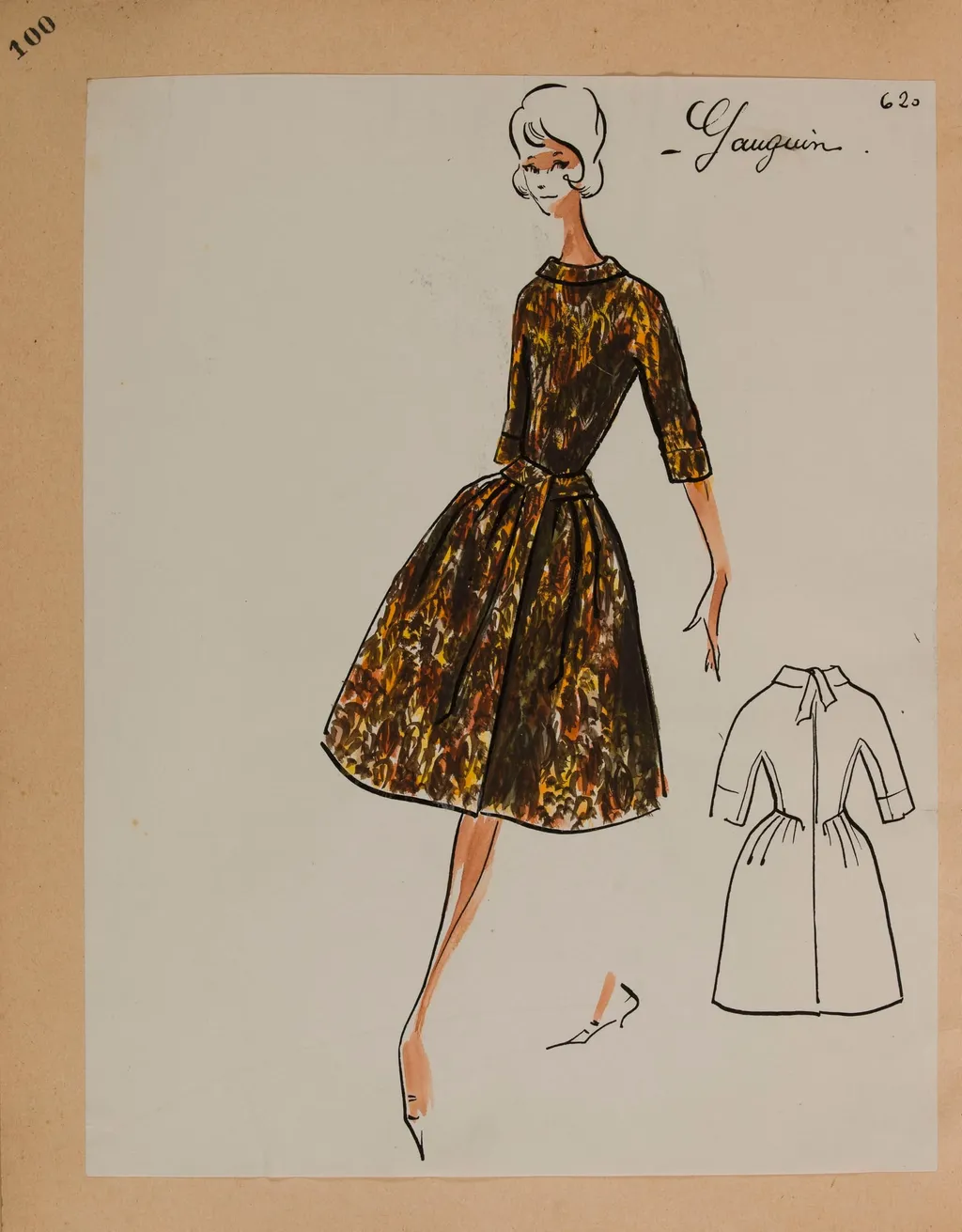
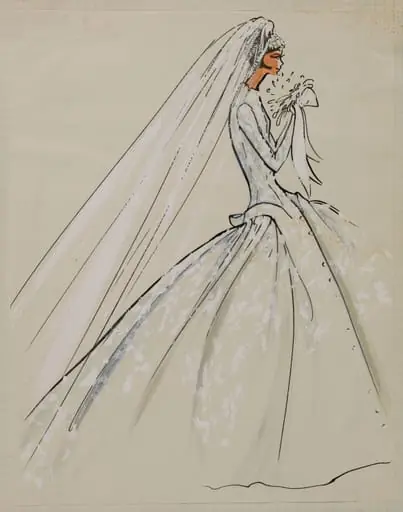
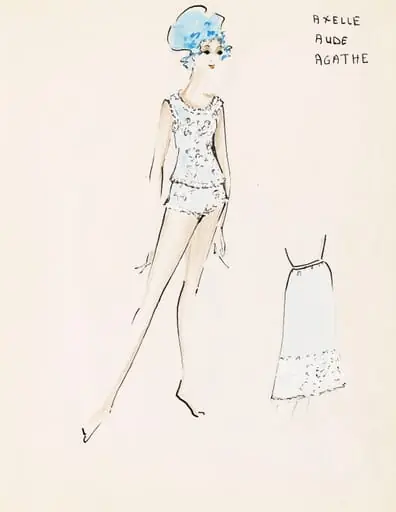
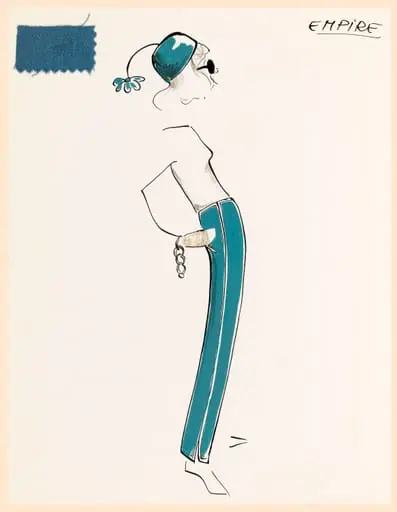
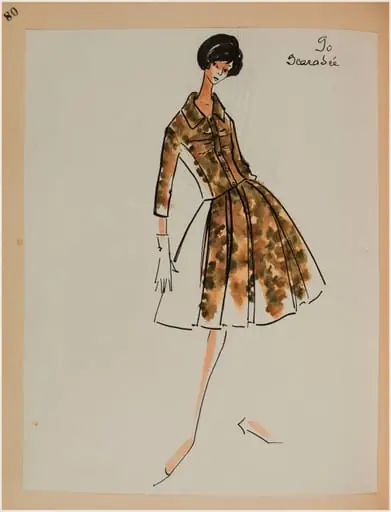
Gauguin is a drawing by Carven. It dates from 1958 and is held in the collection of the Palais Galliera - Musée de la Mode de la Ville de Paris.
About this work
Overview
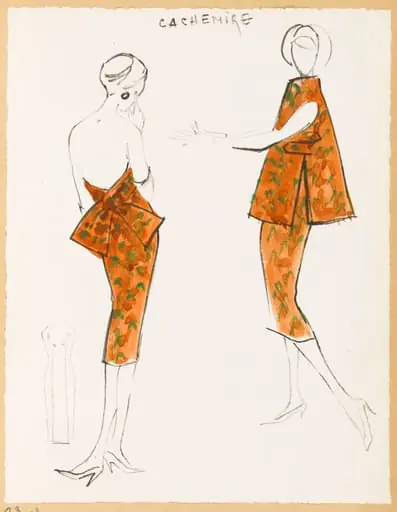
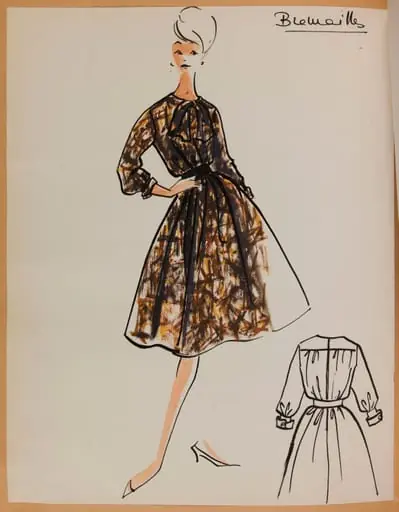
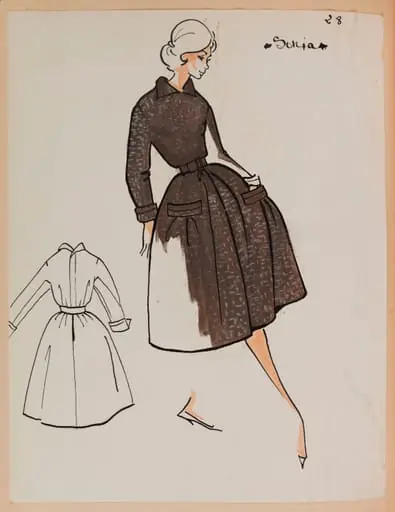
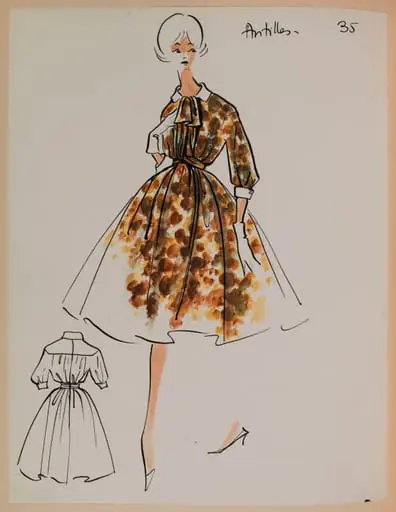
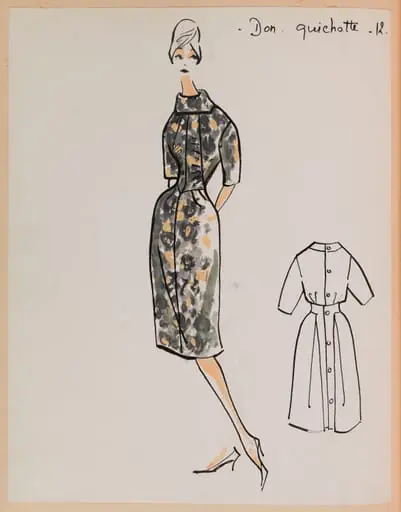
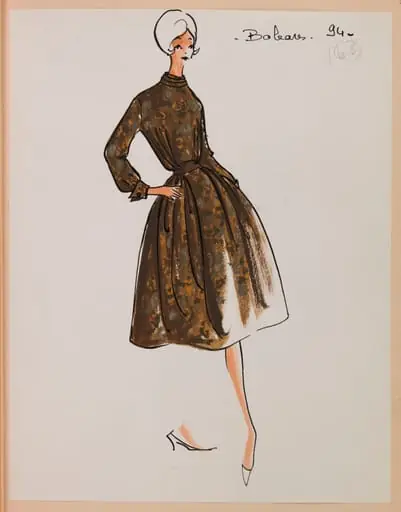
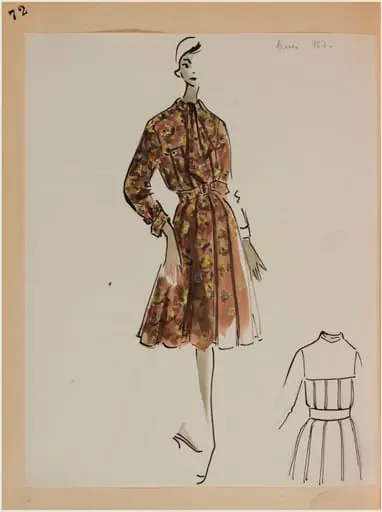
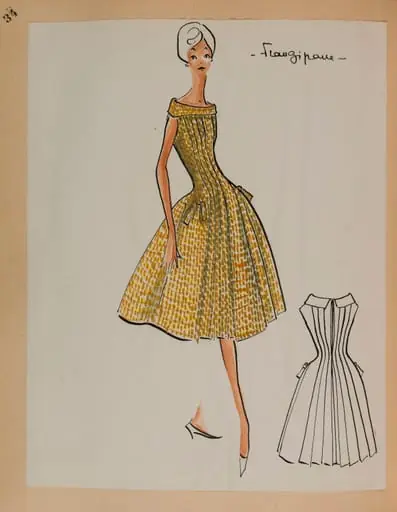
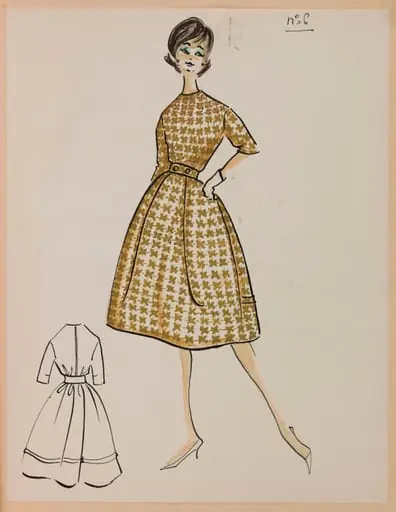
It depicts a woman in a modest ensemble featuring a short-sleeved top and a flared skirt adorned with a bold, abstract pattern in dark brown, yellow, and white.
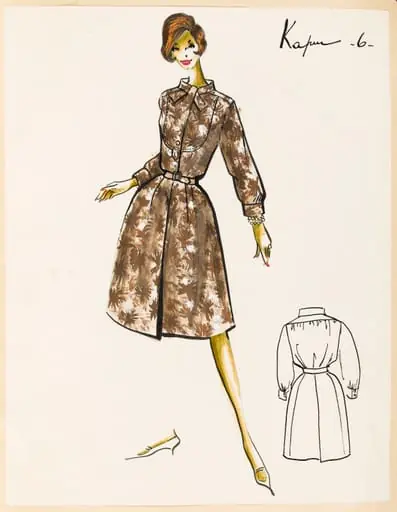
This pencil sketch, dated around 1958, is attributed to the fashion house Carven. It depicts a woman in a modest ensemble featuring a short-sleeved top and a flared skirt adorned with a bold, abstract pattern in dark brown, yellow, and white. A secondary outline of the same garment appears at the back, indicating an interest in construction and fit. The artist’s signature, "Carven," is lightly inscribed in the corner.
Subject & Meaning
The figure is rendered without facial features or contextual details, focusing attention on the silhouette and textile design. The pose—hand on hip—suggests quiet confidence, while the absence of identity emphasizes the garment itself as the subject. This approach reflects a design ethos centered on form and fabric rather than narrative or individuality.
Technique & Style
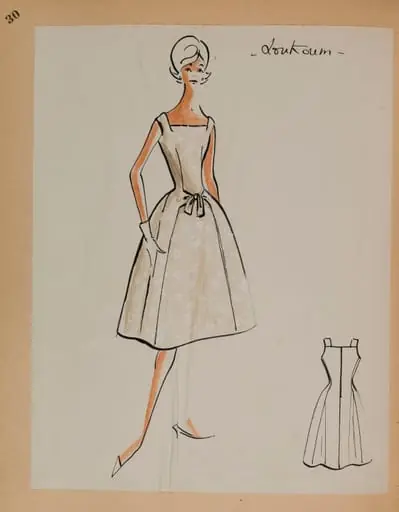
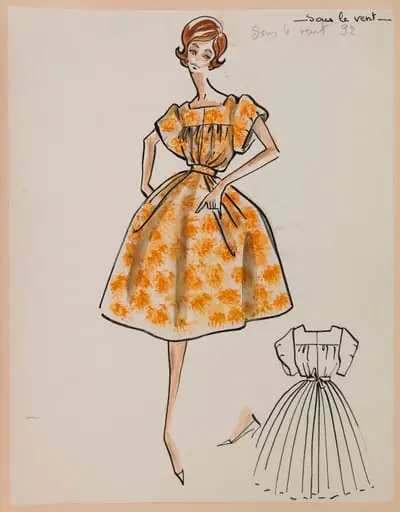
The drawing employs light, fluid pencil lines to define the figure and garment contours. The swirling pattern on the skirt is suggested through rhythmic, repetitive strokes, conveying movement and texture without shading. The inclusion of a rear view demonstrates a technical concern for three-dimensional structure, typical of fashion drafting practices of the period.
History & Provenance
The sketch is held in the collection of the Museum of Ethnography, suggesting its classification as a cultural artifact rather than a fine art piece. Its presence there implies recognition of Carven’s work as representative of mid-century French fashion design, valued for its contribution to textile and garment evolution during the postwar era.
Context
Created in the late 1950s, this sketch aligns with a period when Parisian fashion houses emphasized tailored yet playful silhouettes for a growing middle-class clientele. Carven, known for refined simplicity, often integrated subtle graphic elements into clothing, reflecting broader trends in textile design influenced by modernist abstraction and postwar optimism.
Legacy
Though not widely exhibited, this sketch remains a quiet testament to Carven’s design process—prioritizing clarity, proportion, and textile expression. It contributes to the archival record of mid-century fashion, illustrating how couture houses documented their creations not as spectacle, but as functional, thoughtful objects of daily wear.
Artist & collection
Artist
These delicate ink-on-paper drawings capture the quiet poetry of everyday things: pinecones, reeds, apples.
Museum
Palais Galliera - Musée de la Mode de la Ville de Paris
Continue through works from the same source collection.