Artwork
'Duc de Chartres'
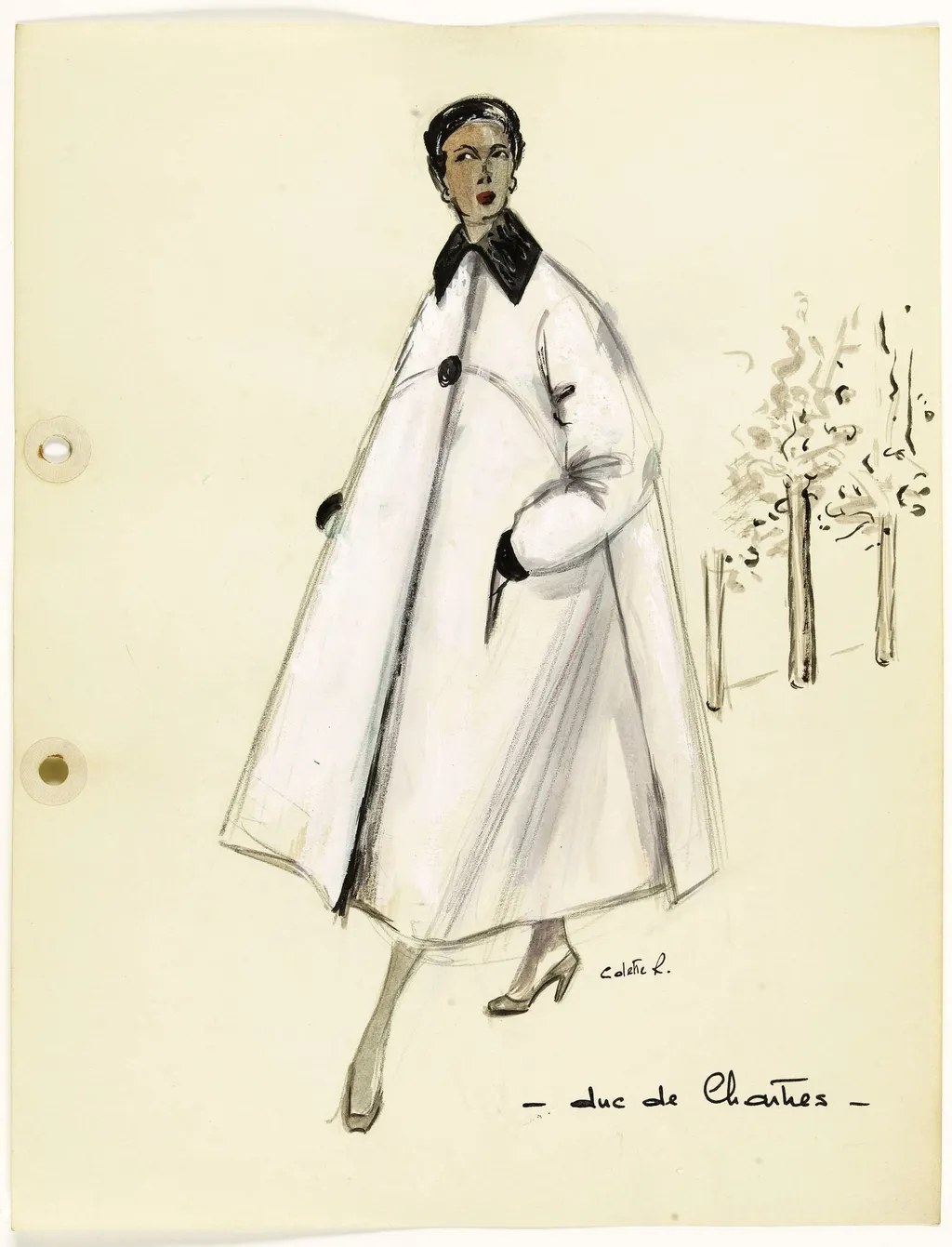
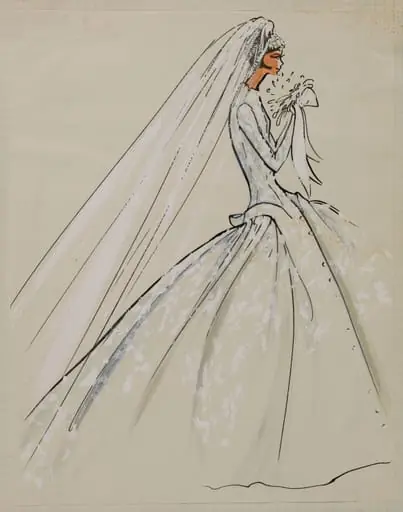
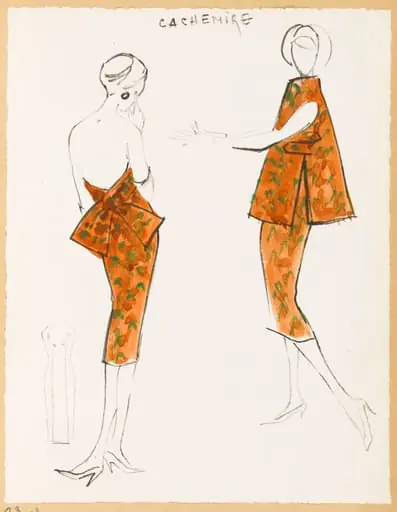
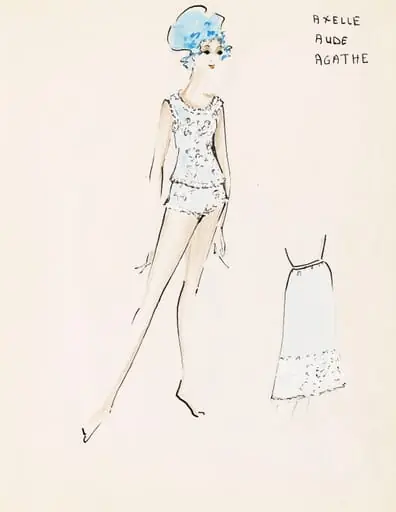
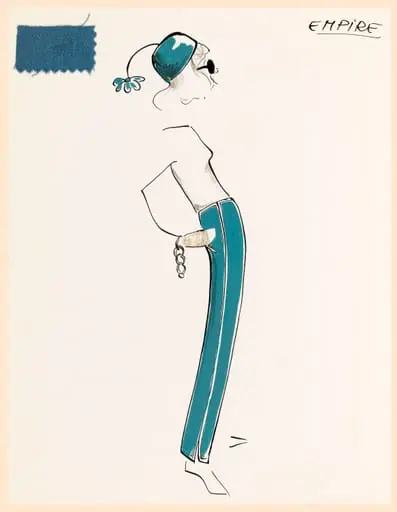
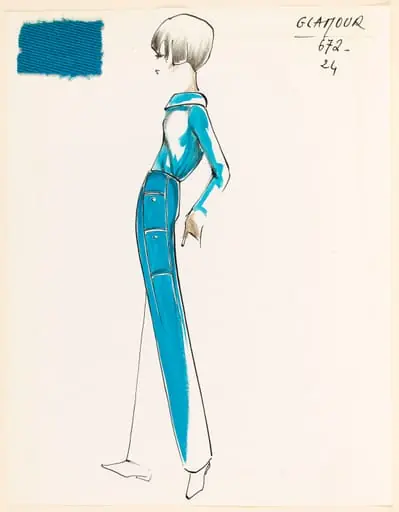
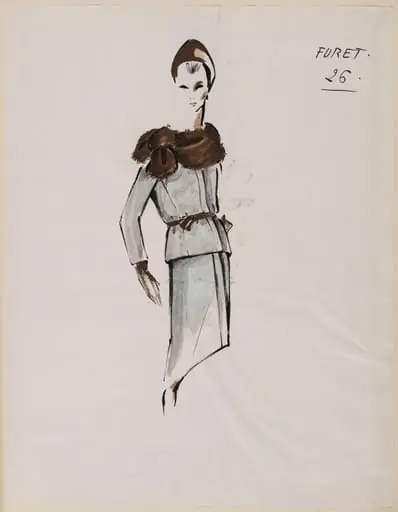
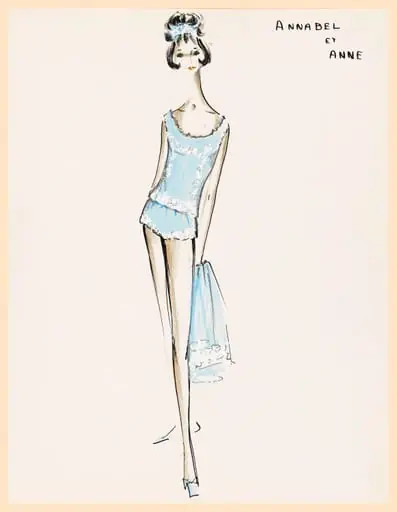
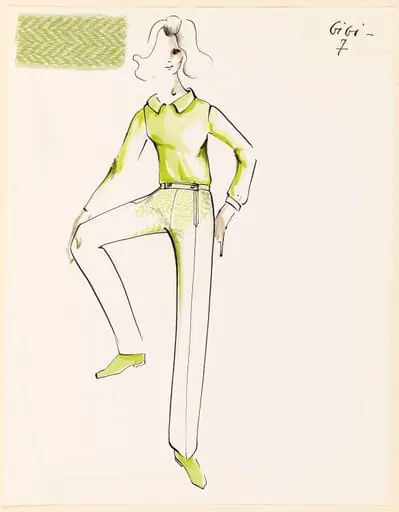
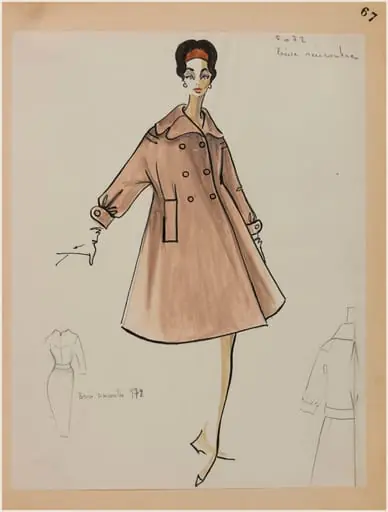
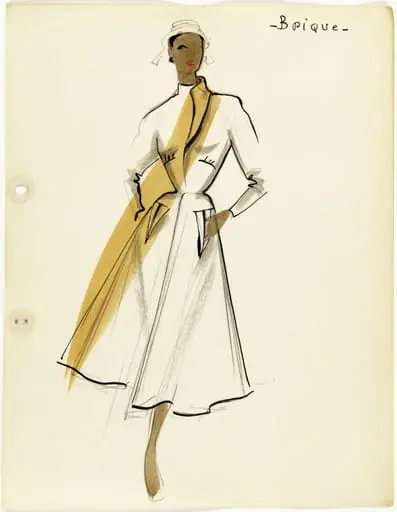
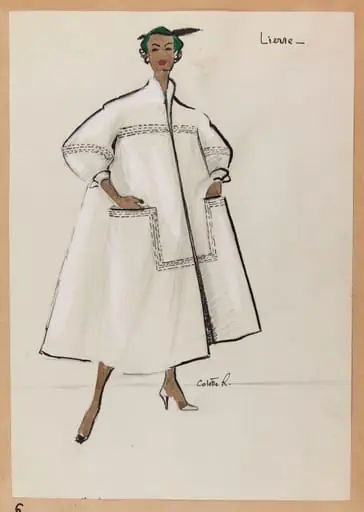
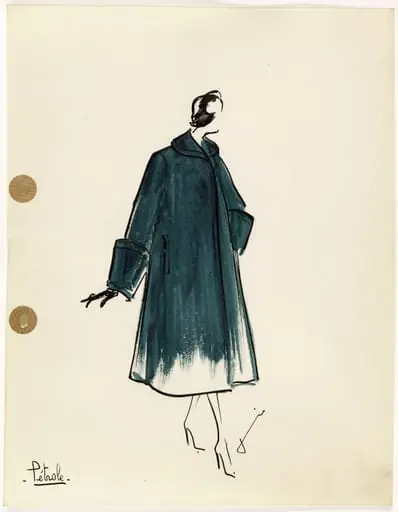
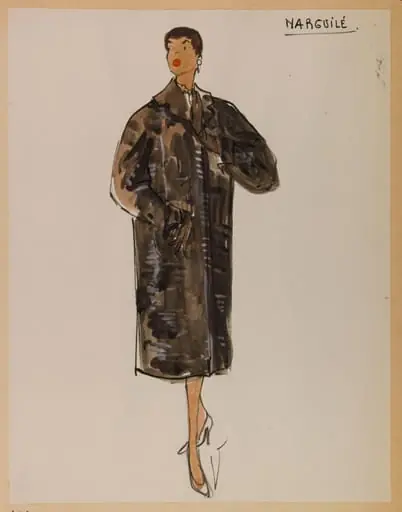
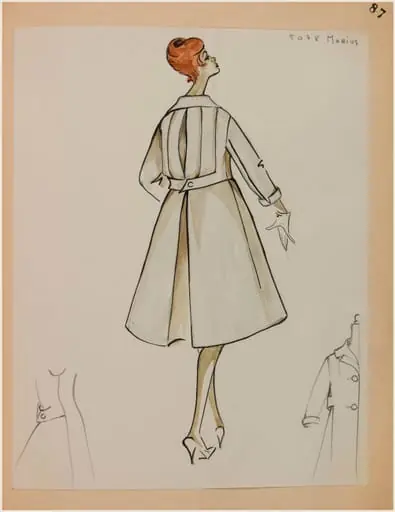
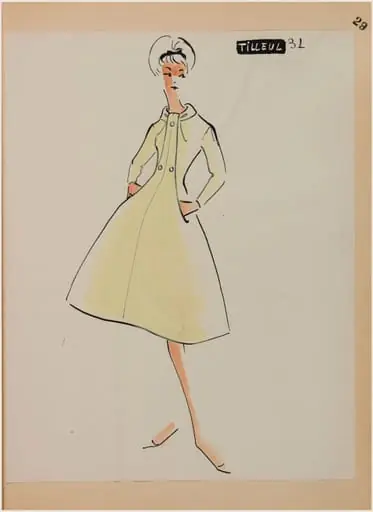
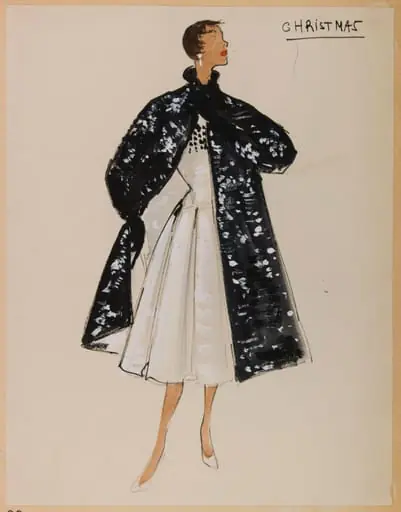
'Duc de Chartres' is a drawing by Carven. It dates from 1951 and is held in the collection of the Palais Galliera - Musée de la Mode de la Ville de Paris.
About this work
Overview
Though labeled as an image, its function appears to be both artistic and documentary, capturing a moment of everyday elegance with minimal detail.
Created around 1951 by the French designer Carven, this ink sketch depicts a woman in motion, rendered with economical yet assured lines. The work is cataloged at the Museum of Ethnography, where it is preserved as part of a collection documenting mid-century fashion illustration. Though labeled as an image, its function appears to be both artistic and documentary, capturing a moment of everyday elegance with minimal detail.
Subject & Meaning
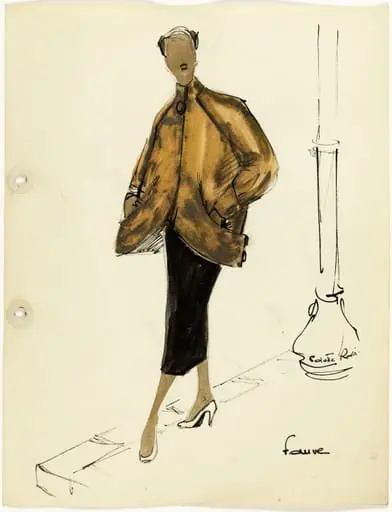
The figure is identified by the title 'duc de Chartres,' possibly referencing a noble title or a private designation for the model. She walks with casual poise—one hand in her pocket, the other gently swinging—suggesting a private, unposed moment. The clothing, though stylized, reflects contemporary women’s wear of the era: structured yet fluid, emphasizing movement over ornament. The title adds a layer of ambiguity, blurring the line between real person and symbolic figure.
Technique & Style
The drawing employs clean, confident ink lines to define form, with subtle shading to suggest volume and light. The coat’s high collar and large buttons are rendered with precision, while the background elements—trees or poles—are sketched loosely, creating depth without distraction. The narrow heels and loose silhouette convey both fashion detail and kinetic energy. The signature 'Carven' in the corner confirms authorship, reinforcing the work’s role as a designer’s personal study.
History & Provenance
The sketch entered the Museum of Ethnography’s collection as part of a broader acquisition of fashion-related materials from mid-20th century Parisian designers. Its origin as a preparatory study or personal sketch is unconfirmed, but its preservation suggests recognition of its value in illustrating the intersection of haute couture and everyday life. No earlier ownership records are publicly documented.
Context
In the early 1950s, Paris remained a center for fashion innovation, with designers like Carven blending artistic expression with commercial tailoring. This sketch reflects a moment when fashion illustration moved beyond catalogues into more intimate, observational forms. The figure’s relaxed posture and urban setting align with postwar ideals of modern femininity—graceful, autonomous, and grounded in daily rhythm.
Legacy
Though not widely exhibited, the sketch contributes to scholarly understanding of how fashion designers documented movement and silhouette outside of commercial contexts. It stands as a quiet example of the designer’s eye for detail and rhythm, offering insight into the transition from haute couture to ready-to-wear aesthetics. Its preservation underscores the growing institutional interest in fashion as cultural artifact.
Artist & collection
Artist
These delicate ink-on-paper drawings capture the quiet poetry of everyday things: pinecones, reeds, apples.
Museum
Palais Galliera - Musée de la Mode de la Ville de Paris
Continue through works from the same source collection.