Artwork
Banane
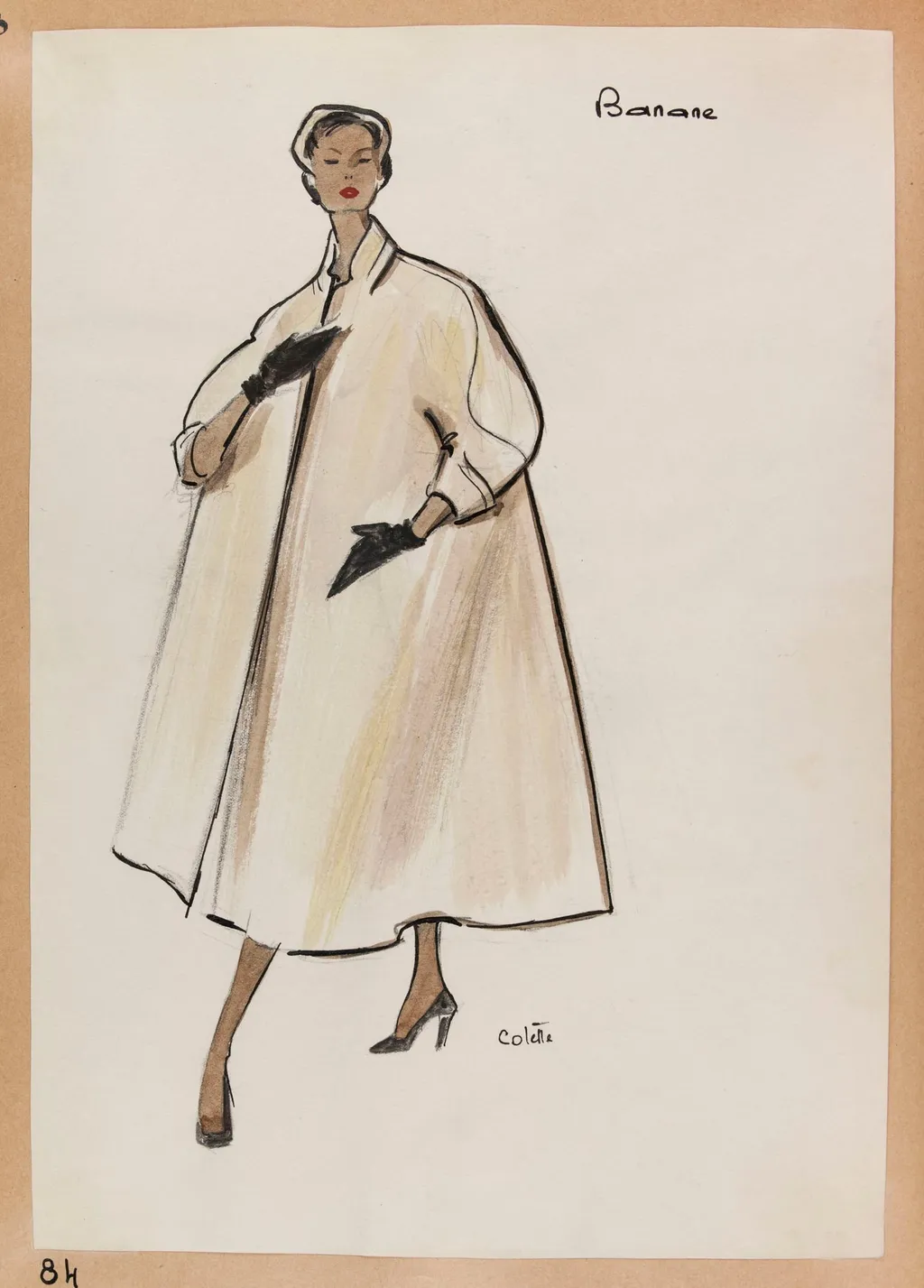
Banane is a drawing by Carven. It dates from 1951 and is held in the collection of the Palais Galliera - Musée de la Mode de la Ville de Paris.
About this work
Overview
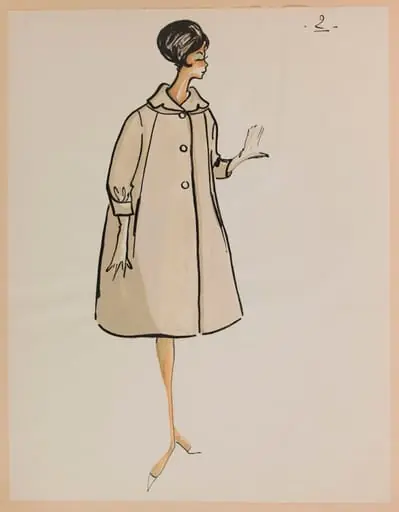
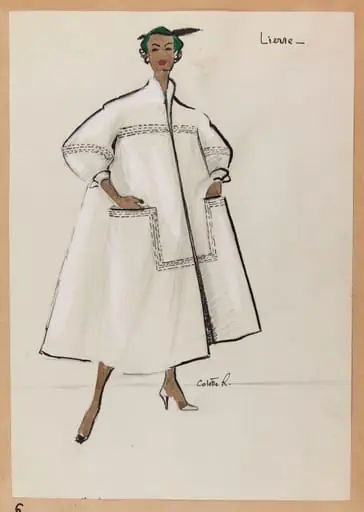
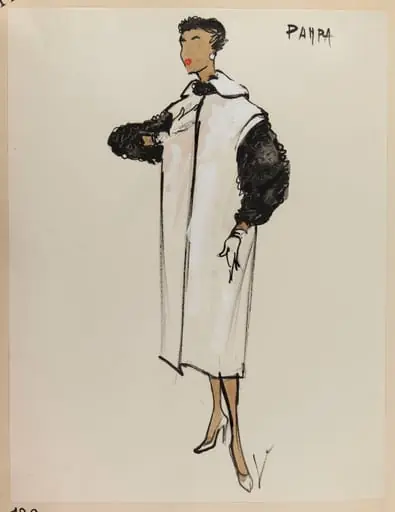
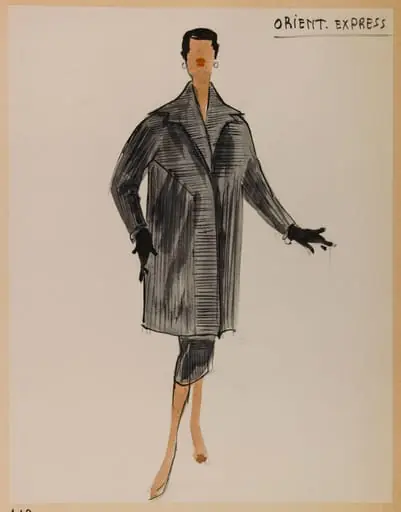
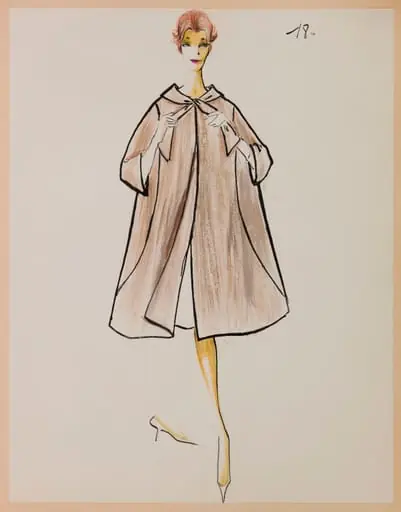
The work depicts a female figure dressed in a distinctive long coat, rendered with delicate, fluid lines.
Created around 1951, Banane is a pencil drawing by the French fashion designer Carven. It resides in the collection of the Museum of Ethnography. The work depicts a female figure dressed in a distinctive long coat, rendered with delicate, fluid lines. Though executed with the spontaneity of a sketch, the composition reveals careful attention to silhouette and detail, suggesting its function as a design study rather than a finished illustration.
Subject & Meaning
The figure wears a tailored, A-line coat with exaggerated pockets and a high collar, paired with black gloves, dark stockings, and pointed shoes. The coat’s nickname, 'Banane,' written in casual script at the top, hints at its curvilinear form or perhaps a playful reference to its shape. The attire suggests a blend of practicality and elegance, reflecting mid-century Parisian fashion’s emphasis on structured yet wearable design.
Technique & Style
Carven employed light, continuous pencil strokes to define the coat’s folds and the figure’s contours, creating a sense of movement without heavy shading. The lines are precise yet uncluttered, emphasizing form over texture. The absence of background or contextual elements focuses attention entirely on the garment’s architecture, reinforcing the drawing’s purpose as a technical record of design intent.
History & Provenance
The drawing entered the Museum of Ethnography’s collection as part of a broader acquisition of fashion-related materials from Carven’s studio. Its date, circa 1951, aligns with the designer’s peak creative period in postwar Paris. The presence of Carven’s handwritten signature at the bottom confirms authorship and suggests the work was retained as part of her professional archive before being donated.
Context
In the early 1950s, Parisian fashion houses emphasized tailored silhouettes that balanced femininity with modern utility. Carven, known for her accessible designs, often explored practical yet stylish garments for everyday wear. Banane reflects this ethos—its pockets and structured lines suggest functionality, while its elegant lines align with contemporary ideals of refined simplicity.
Legacy
Banane remains a quiet testament to Carven’s design process, illustrating how garments were conceived through direct observation and minimalistic rendering. As a preserved study, it offers insight into the transition from sketch to garment in mid-century fashion. Its inclusion in an ethnographic museum underscores its value as a cultural artifact of daily life and aesthetic practice.
Artist & collection
Artist
These delicate ink-on-paper drawings capture the quiet poetry of everyday things: pinecones, reeds, apples.
Museum
Palais Galliera - Musée de la Mode de la Ville de Paris
Continue through works from the same source collection.