Artwork
Duchesse d'Albe
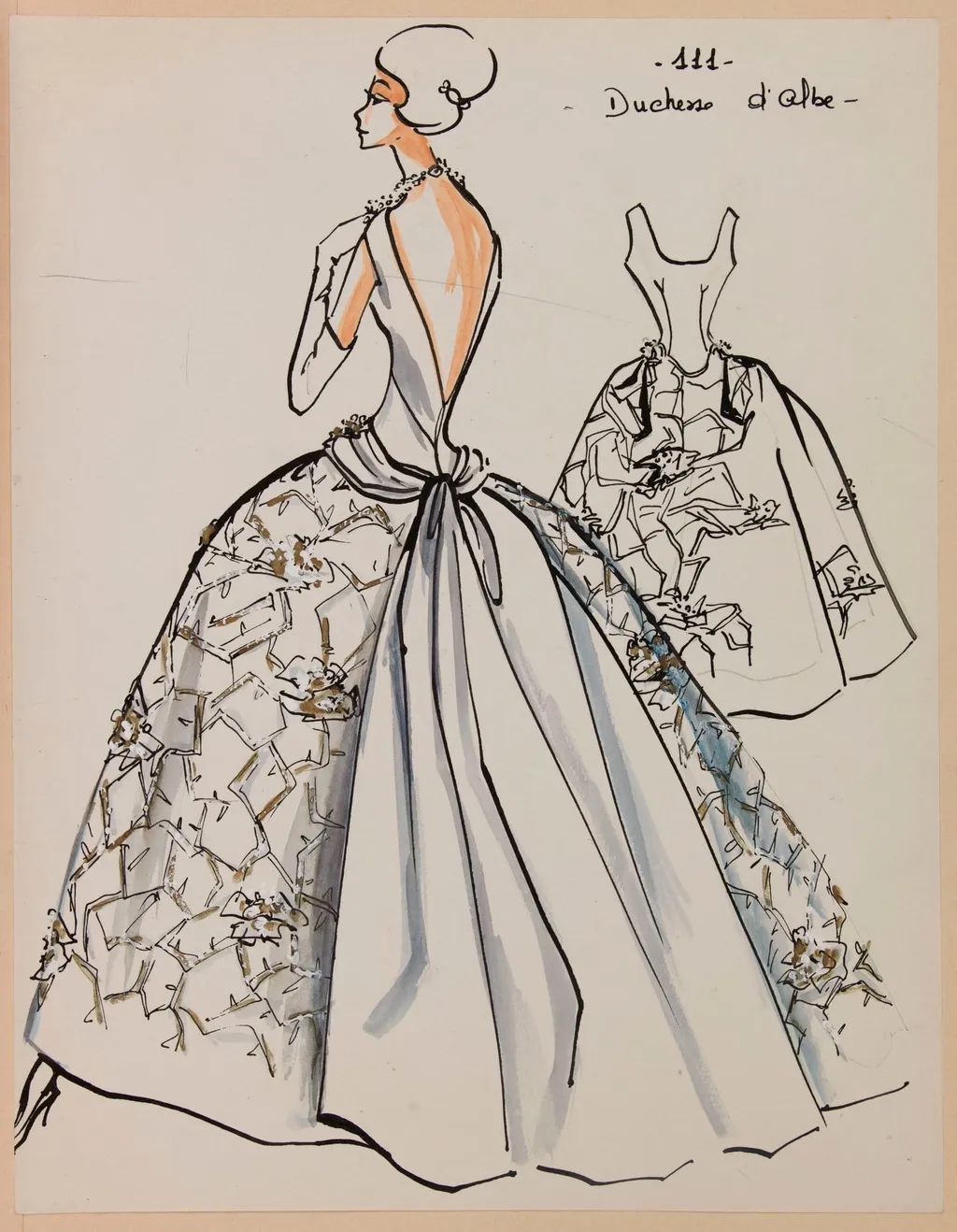
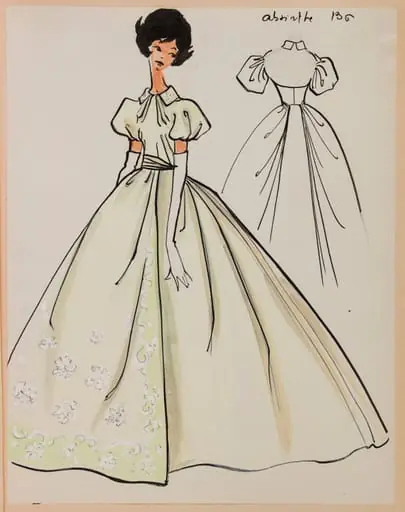
Duchesse d'Albe is a drawing by Carven. It dates from 1958 and is held in the collection of the Palais Galliera - Musée de la Mode de la Ville de Paris.
About this work
Overview
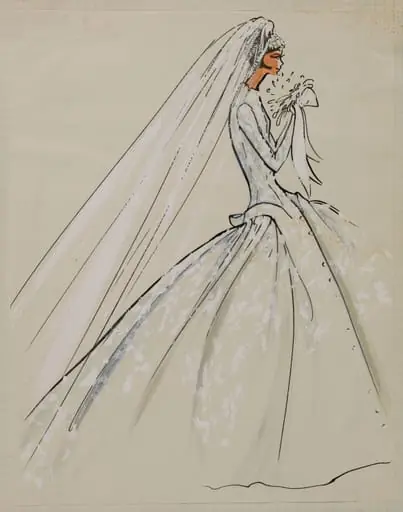
Created around 1958 by the designer Carven, this drawing depicts the Duchesse d'Albe, a figure associated with aristocratic Spanish dress.
Created around 1958 by the designer Carven, this drawing depicts the Duchesse d'Albe, a figure associated with aristocratic Spanish dress. Rendered in ink on paper, the work is part of the Museum of Ethnography's collection. It captures a moment of stillness, emphasizing the elegance of historical costume through minimal yet precise draftsmanship. The piece functions as a study in textile representation rather than a formal portrait.
Subject & Meaning
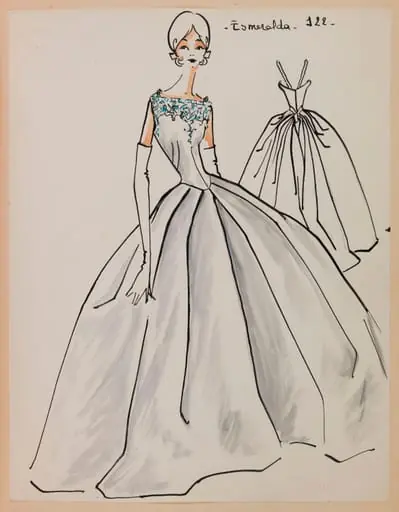
The subject is a woman dressed in an imagined historical Spanish gown, likely inspired by 18th-century aristocratic attire. Her posture—hand resting gently on the chest—suggests composure and restraint. The floral embroidery on the skirt may reference traditional Spanish textile motifs, though the sketch’s stylization leans toward romanticized interpretation rather than strict historical accuracy. The image evokes a sense of refined, almost theatrical femininity.
Technique & Style
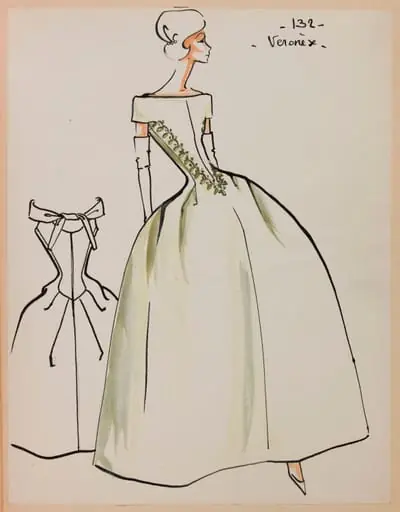
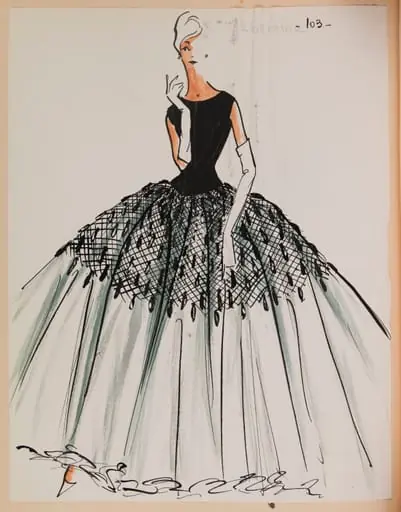
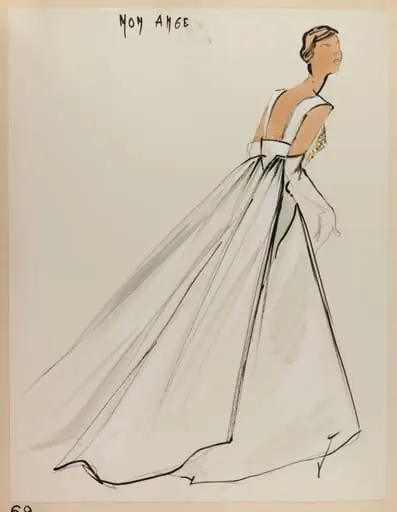
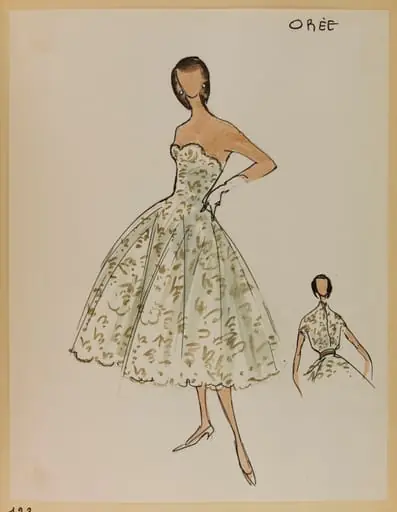
Carven employed loose, rapid ink lines to suggest the movement and volume of fabric. Cross-hatching defines the folds and texture of the skirt, while delicate, sketch-like floral patterns are scattered across the wide hem. The high neckline and short sleeves are rendered with minimal detail, allowing the patterned fabric to dominate the composition. The overall effect is light and atmospheric, prioritizing impression over precision.
History & Provenance
The drawing entered the Museum of Ethnography’s holdings in the mid-20th century, likely acquired as part of a broader collection of fashion studies. Its origin as a design sketch for a couture collection remains undocumented, but its presence in an ethnographic context suggests an interest in cultural dress as artistic expression. No earlier provenance has been established beyond its creation date of circa 1958.
Context
In the late 1950s, European fashion designers frequently drew inspiration from historical garments to create modern silhouettes. Carven, known for her refined aesthetic, used such studies to explore volume and ornamentation. This sketch reflects a broader trend in postwar fashion of revisiting aristocratic forms, filtered through contemporary sensibilities of simplicity and fluidity.
Legacy
Though not widely exhibited, the drawing remains a quiet example of how fashion designers engaged with historical dress as a source of formal innovation. Its inclusion in an ethnographic museum underscores a shift in how fashion was perceived—not merely as clothing, but as cultural artifact. The work continues to inform studies on mid-century design processes and the interplay between tradition and modernity.
Artist & collection
Artist
These delicate ink-on-paper drawings capture the quiet poetry of everyday things: pinecones, reeds, apples.
Museum
Palais Galliera - Musée de la Mode de la Ville de Paris
Continue through works from the same source collection.