Artwork
Framboisine
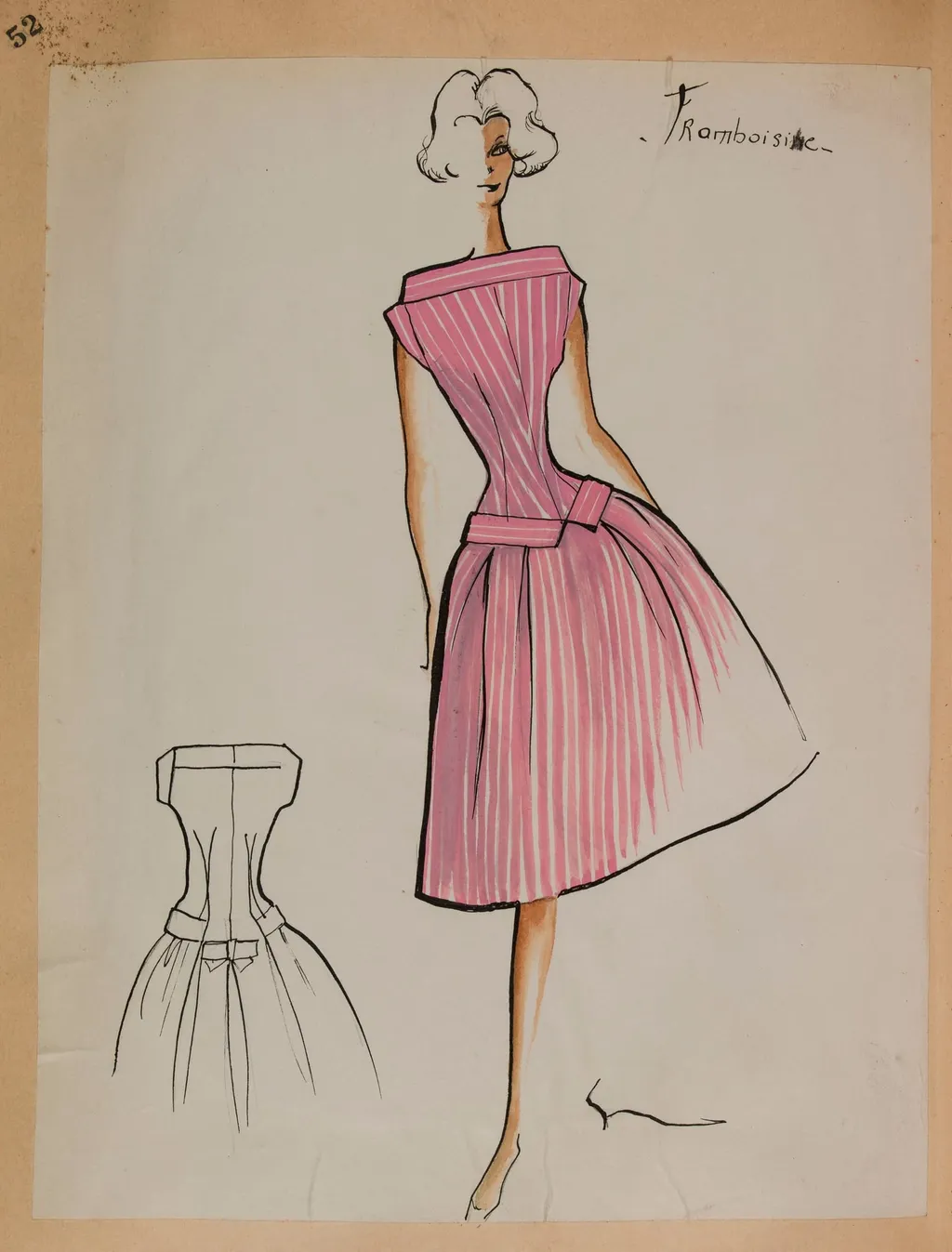
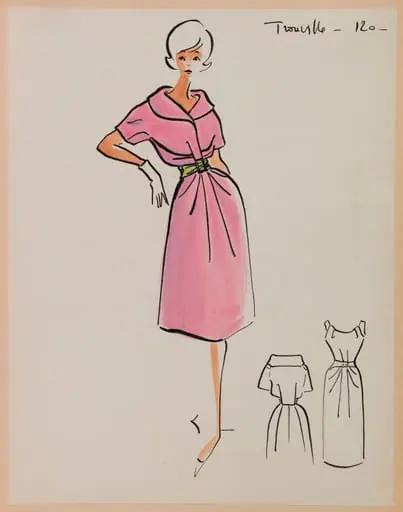
Framboisine is a drawing by Carven. It dates from 1958 and is held in the collection of the Palais Galliera - Musée de la Mode de la Ville de Paris.
About this work
Overview
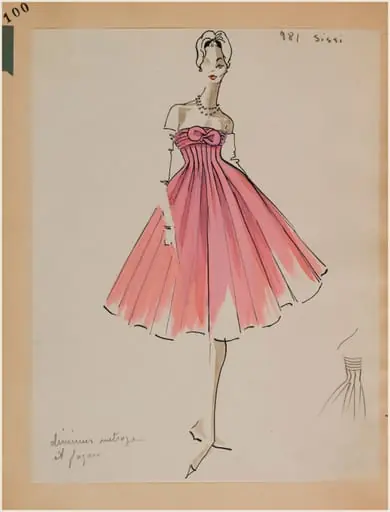
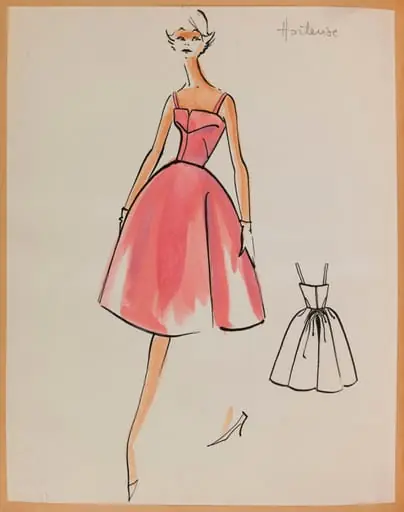
Framboisine is a pencil sketch from around 1958 by the designer Carven, depicting a woman wearing a sleeveless pink dress with vertical stripes and a waist bow.
Framboisine is a pencil sketch from around 1958 by the designer Carven, depicting a woman wearing a sleeveless pink dress with vertical stripes and a waist bow. The drawing includes a secondary, smaller view of the dress from behind, emphasizing its construction. Executed with swift, fluid lines, the work functions as a design study rather than a finished illustration. It resides in the collection of the Museum of Ethnography, where it is preserved as part of mid-century fashion documentation.
Subject & Meaning
The figure in Framboisine embodies a casual, feminine silhouette typical of late 1950s ready-to-wear fashion. The dress, named after the French word for raspberry, suggests a playful, light aesthetic. The inclusion of a rear view indicates the designer’s attention to structural detail, not just appearance. The nickname implies personal or commercial branding, possibly reflecting the dress’s intended market or the designer’s affection for its form.
Technique & Style
Carven employed loose, rapid pencil strokes to convey the movement and drape of fabric, avoiding rigid outlines in favor of suggestive lines. The sketch’s energy comes from its spontaneity: folds are implied rather than meticulously rendered, and the bow is simplified yet distinct. The dual perspectives—front and back—reveal a designer’s method of testing proportions and balance, prioritizing functional clarity over decorative finish.
History & Provenance
Created circa 1958 during Carven’s active design years, Framboisine was likely produced as a working sketch for a garment in her seasonal collection. It entered the Museum of Ethnography’s holdings as part of a broader acquisition of fashion ephemera documenting postwar European design practices. Its preservation reflects institutional interest in the material culture of everyday clothing rather than haute couture.
Context
In the late 1950s, sleeveless dresses gained popularity as summer wear, reflecting shifting social norms around modesty and comfort. Carven’s designs often balanced elegance with practicality, catering to a middle-class clientele. Framboisine aligns with this trend, offering a streamlined, wearable form that contrasts with the more structured silhouettes of earlier decades, signaling a move toward relaxed, modern femininity.
Legacy
Framboisine remains a quiet testament to the iterative nature of fashion design. Though not a widely recognized garment, its survival in a museum collection underscores the value placed on preparatory work in fashion history. It offers insight into how designers translated ideas into wearable forms, preserving the process behind mass-produced clothing that defined mid-century style.
Artist & collection
Artist
These delicate ink-on-paper drawings capture the quiet poetry of everyday things: pinecones, reeds, apples.
Museum
Palais Galliera - Musée de la Mode de la Ville de Paris
Continue through works from the same source collection.