Artwork
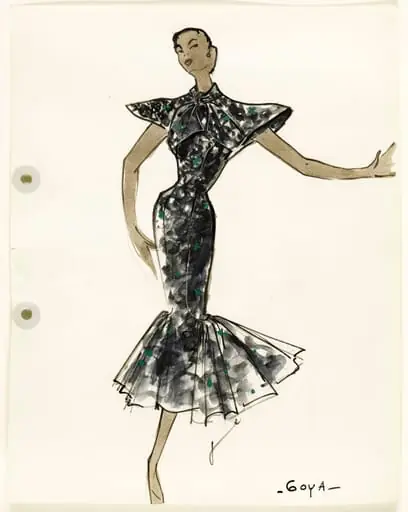
'Goya'
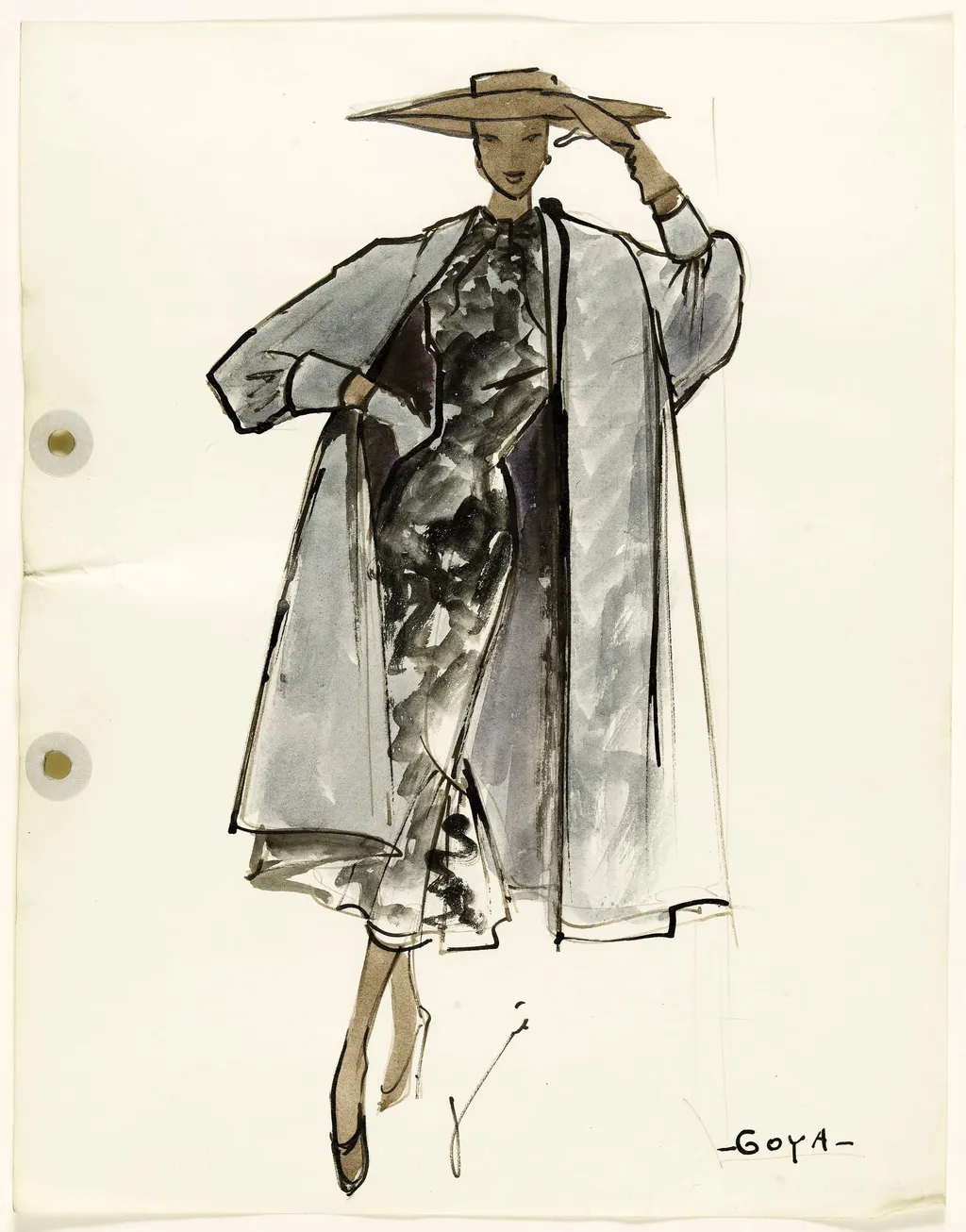
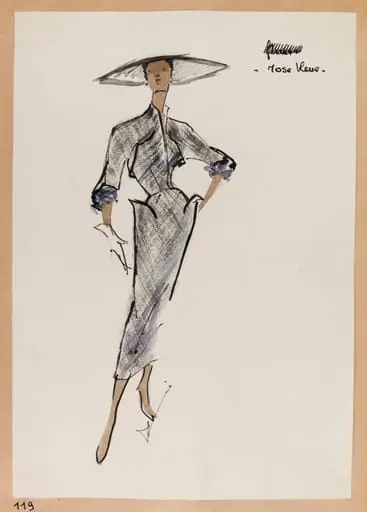
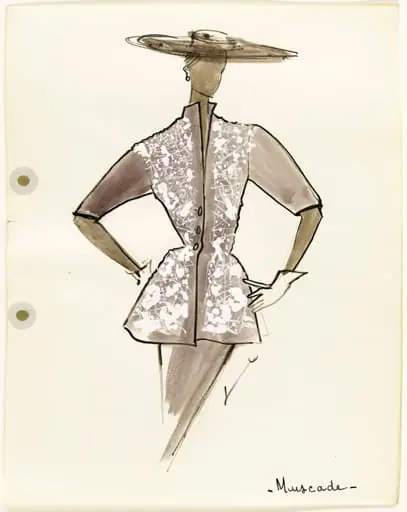
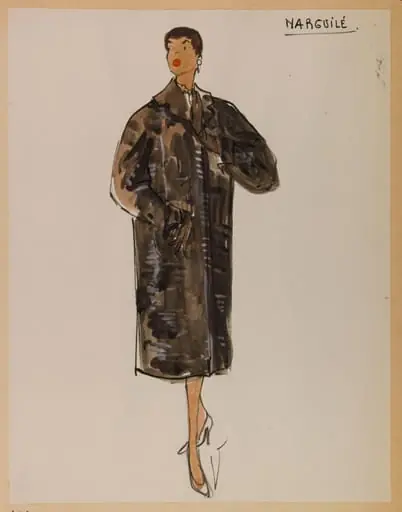
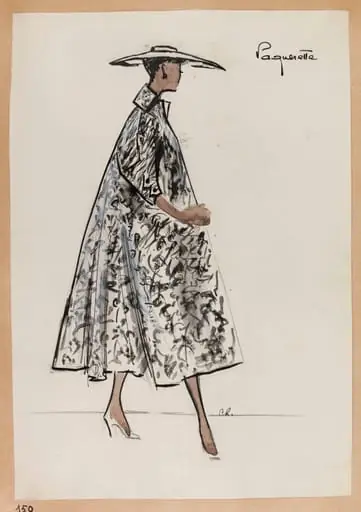
'Goya' is a drawing by Carven. It dates from 1951 and is held in the collection of the Palais Galliera - Musée de la Mode de la Ville de Paris.
About this work
Overview
Though the title references the Spanish painter Francisco Goya, the work is not a portrait of him but rather a stylized depiction of a contemporary woman.
This drawing, titled 'Goya', was produced in 1951 by the French fashion designer Carven. It is part of the collection at the Museum of Ethnography. Though the title references the Spanish painter Francisco Goya, the work is not a portrait of him but rather a stylized depiction of a contemporary woman. The piece is executed in ink or graphite, emphasizing line and form over detail, reflecting mid-20th century graphic sensibilities.
Subject & Meaning
The subject is a woman dressed in an elegant, fashionable ensemble: a light coat over a darker dress, a wide-brimmed hat, and heels. Her posture—hand on hip, the other securing her hat—conveys poise and self-possession. The title's reference to Goya may suggest a nod to his portrayals of Spanish society, but the image itself is a modern, secular figure, embodying postwar femininity and urban sophistication rather than historical narrative.
Technique & Style
The drawing employs clean, precise lines with minimal shading, relying on contour and negative space to define form. The absence of detailed texture or background focuses attention on the figure’s silhouette and gesture. This restrained approach aligns with mid-century graphic design principles, where elegance is achieved through simplicity. The composition feels deliberate, balancing weight and openness to evoke refinement without ornamentation.
History & Provenance
Created in 1951, the work originated from Carven’s personal sketchbook or design archive, likely produced during her tenure as a leading Parisian couturier. It entered the Museum of Ethnography’s collection through donation or acquisition, possibly as an example of fashion as cultural artifact. Its classification within an ethnographic context suggests an interest in fashion as a marker of social identity rather than fine art.
Context
In the early 1950s, Parisian fashion designers like Carven were redefining postwar femininity through tailored, wearable elegance. This drawing reflects that ethos, capturing the refined yet accessible aesthetic of the era. While Goya’s 18th-century portraits often depicted class and power, Carven’s figure embodies a modern, autonomous woman—her attire signaling taste and independence rather than inherited status.
Legacy
The drawing remains a quiet testament to the intersection of fashion and graphic art in mid-century Europe. Though not widely exhibited, it contributes to scholarly understanding of how designers documented their visions beyond garments. Its presence in an ethnographic museum underscores the growing recognition of fashion as a cultural practice worthy of preservation and study.
Artist & collection
Artist
These delicate ink-on-paper drawings capture the quiet poetry of everyday things: pinecones, reeds, apples.
Museum
Palais Galliera - Musée de la Mode de la Ville de Paris
Continue through works from the same source collection.