Artwork
'Habanera'
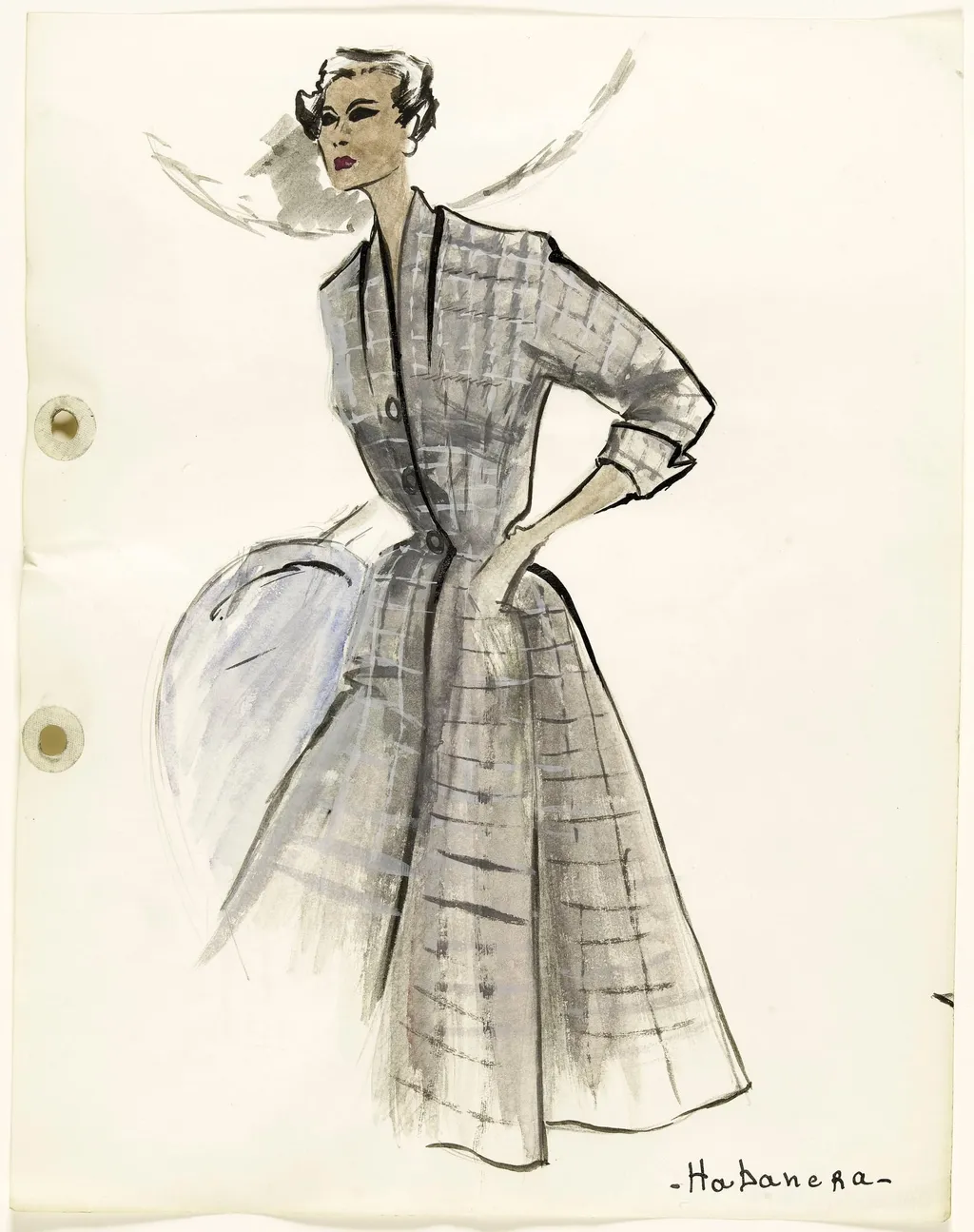
'Habanera' is a drawing by Marie-Louise Carven. It dates from 1951 and is held in the collection of the Palais Galliera - Musée de la Mode de la Ville de Paris.
About this work
Overview
Created in 1951 by French designer Marie-Louise Carven, 'Habanera' is a fashion drawing that reflects her approach to accessible, well-tailored clothing.
Created in 1951 by French designer Marie-Louise Carven, 'Habanera' is a fashion drawing that reflects her approach to accessible, well-tailored clothing. Carven, who established her label in 1945, focused on garments suited to smaller frames and emphasized practical elegance. This piece, held in the Museum of Ethnography’s collection, exemplifies her transition from haute couture to ready-to-wear, a pioneering move in postwar Parisian fashion.
Subject & Meaning
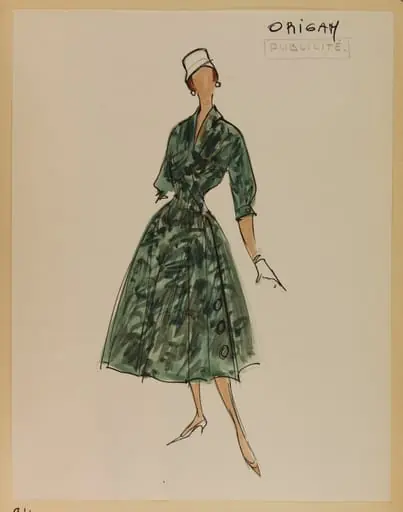
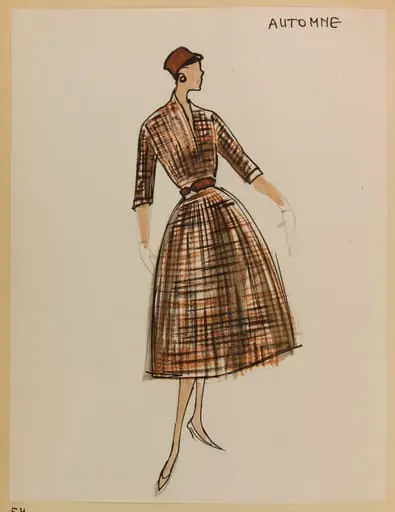
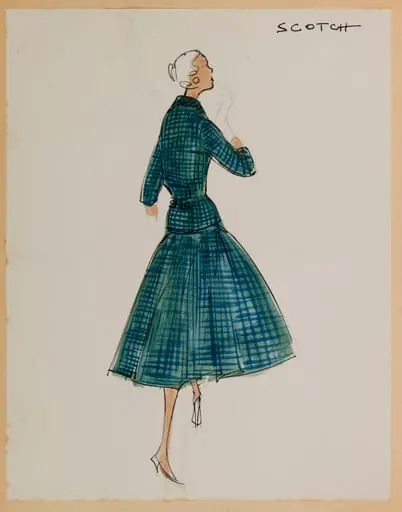
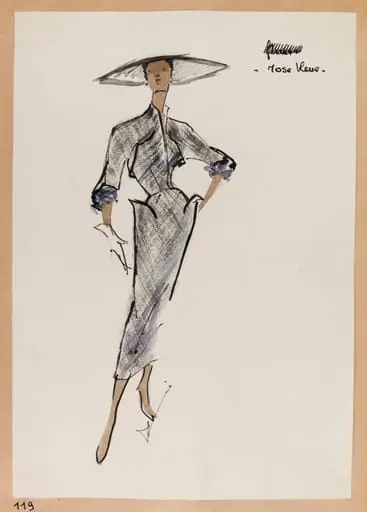
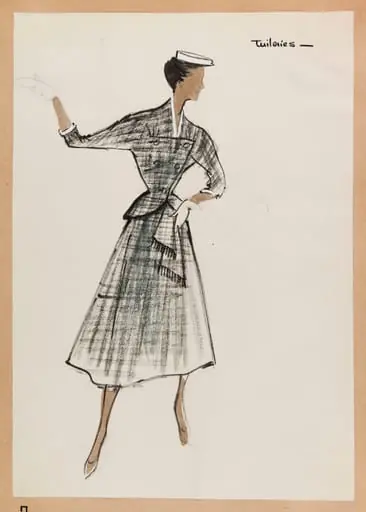
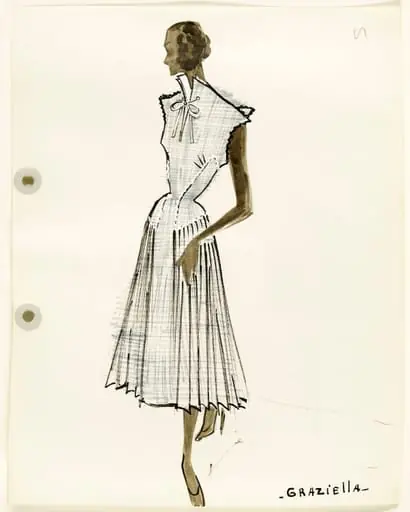
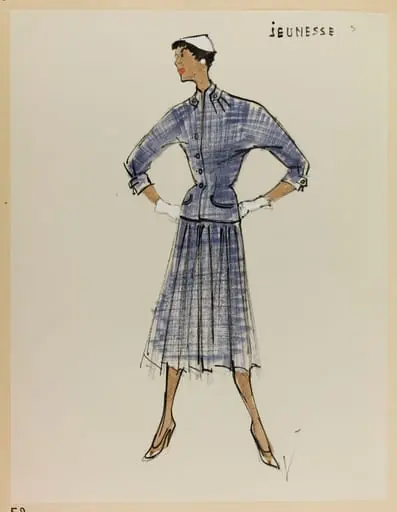
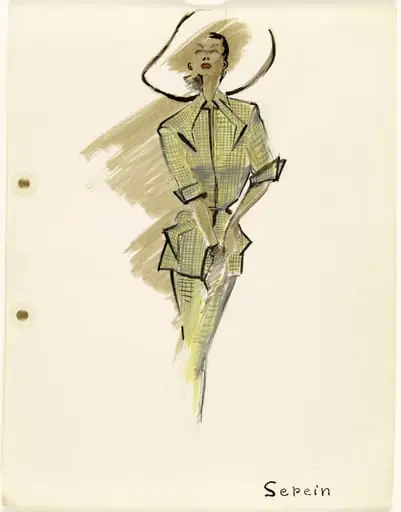
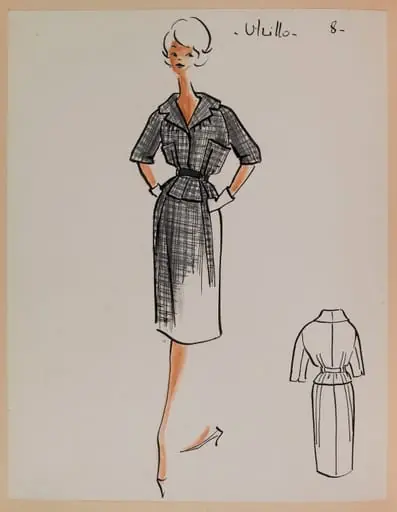
The drawing depicts a woman in a coordinated plaid dress and jacket, styled with a fitted waist and full skirt, suggesting movement and ease. The neat, curly bob and refined posture convey a sense of modern femininity grounded in daily life. Rather than theatricality, 'Habanera' communicates quiet confidence, aligning with Carven’s philosophy of clothing designed for real women, not idealized silhouettes.
Technique & Style
Rendered in ink with bold outlines and restrained shading, the drawing uses cross-hatching and subtle stippling to suggest texture and volume without excess detail. The simplicity of line emphasizes form over ornamentation, echoing Carven’s aesthetic of clean structure. The plaid pattern is suggested through rhythmic lines, avoiding literal replication in favor of evocative suggestion.
History & Provenance
The drawing entered the Museum of Ethnography’s collection as part of a broader effort to document mid-century fashion as cultural artifact. While Carven’s designs were worn widely in France and beyond, this particular sketch likely served as a design prototype or promotional piece. Its preservation underscores the institutional recognition of ready-to-wear as worthy of archival status.
Context
In early 1950s Paris, fashion was shifting from exclusive ateliers to more democratic production. Carven’s work responded to this change, offering stylish, affordable garments for working women. 'Habanera' reflects this moment: its practical cut, durable fabric suggestion, and unpretentious elegance mirror societal moves toward functionality without sacrificing grace.
Legacy
Carven’s emphasis on petite sizing and accessible design influenced later generations of designers who prioritized inclusivity in fit and price. 'Habanera' stands as a quiet testament to her role in redefining fashion’s audience. Though not widely exhibited, the drawing remains a key example of how technical precision and restrained aesthetics shaped modern prêt-à-porter.
Artist & collection
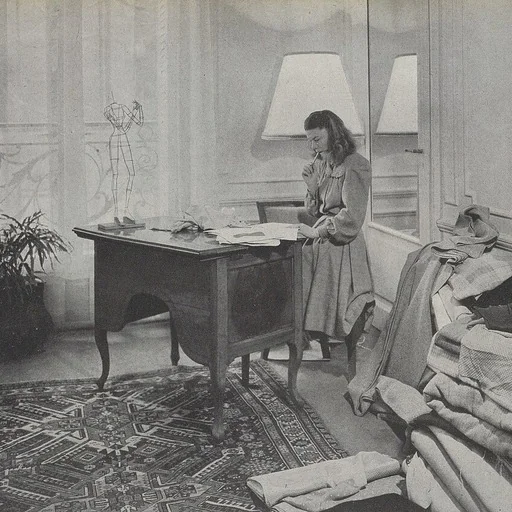
Artist
Marie-Louise Carven (31 August 1909 – 8 June 2015), born Carmen de Tommaso, was a French fashion designer who founded the house of Carven in 1945.
Museum
Palais Galliera - Musée de la Mode de la Ville de Paris
Continue through works from the same source collection.
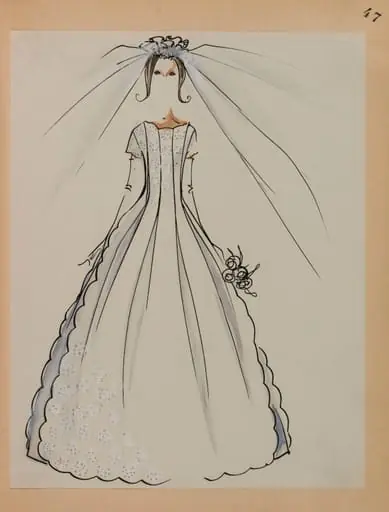 Robe de mariée festonnée et son voile
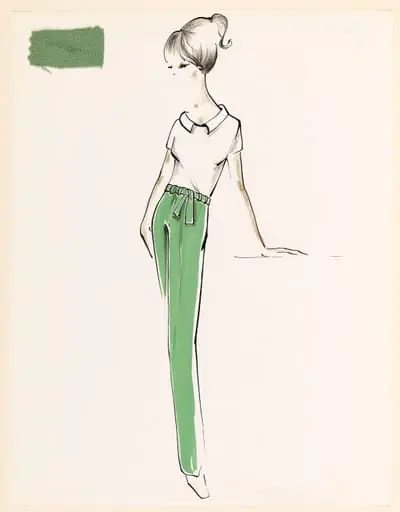 Haut blanc à manches courtes et pantalon vert à ceinture nouée
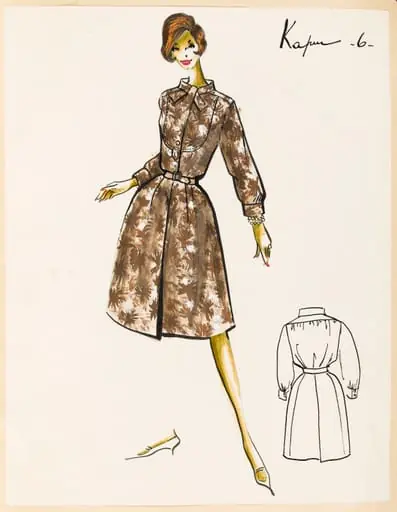 Kapur
Kapur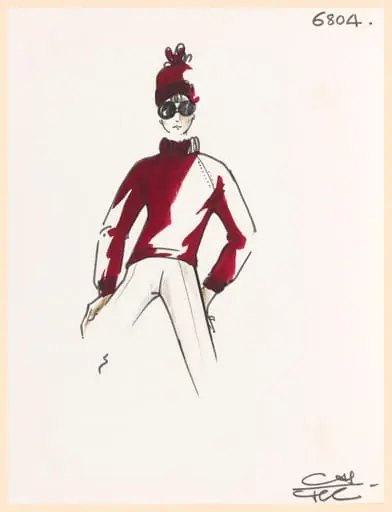 Pull-over à manches longues pourpre, bonnet assorti, pantalon et lunettes de soleil
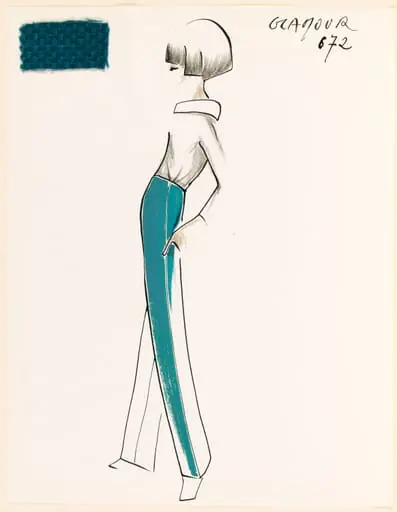 GLAMOUR
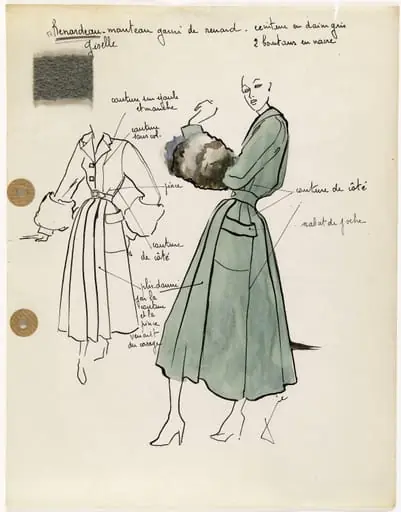 'Renardeau'
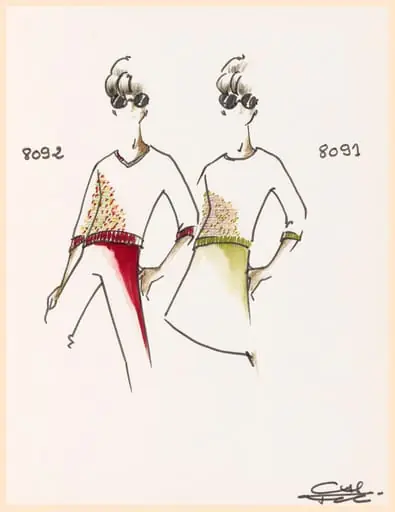 Pull-over à manches trois quarts et à encolure V à motifs multicolores, pantalon cerise et lunettes de soleil
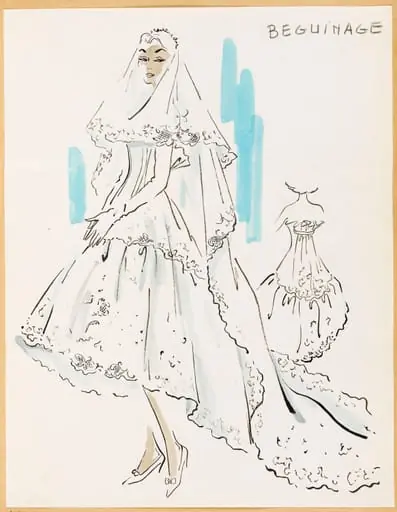 Béguinage