Artwork
Janina
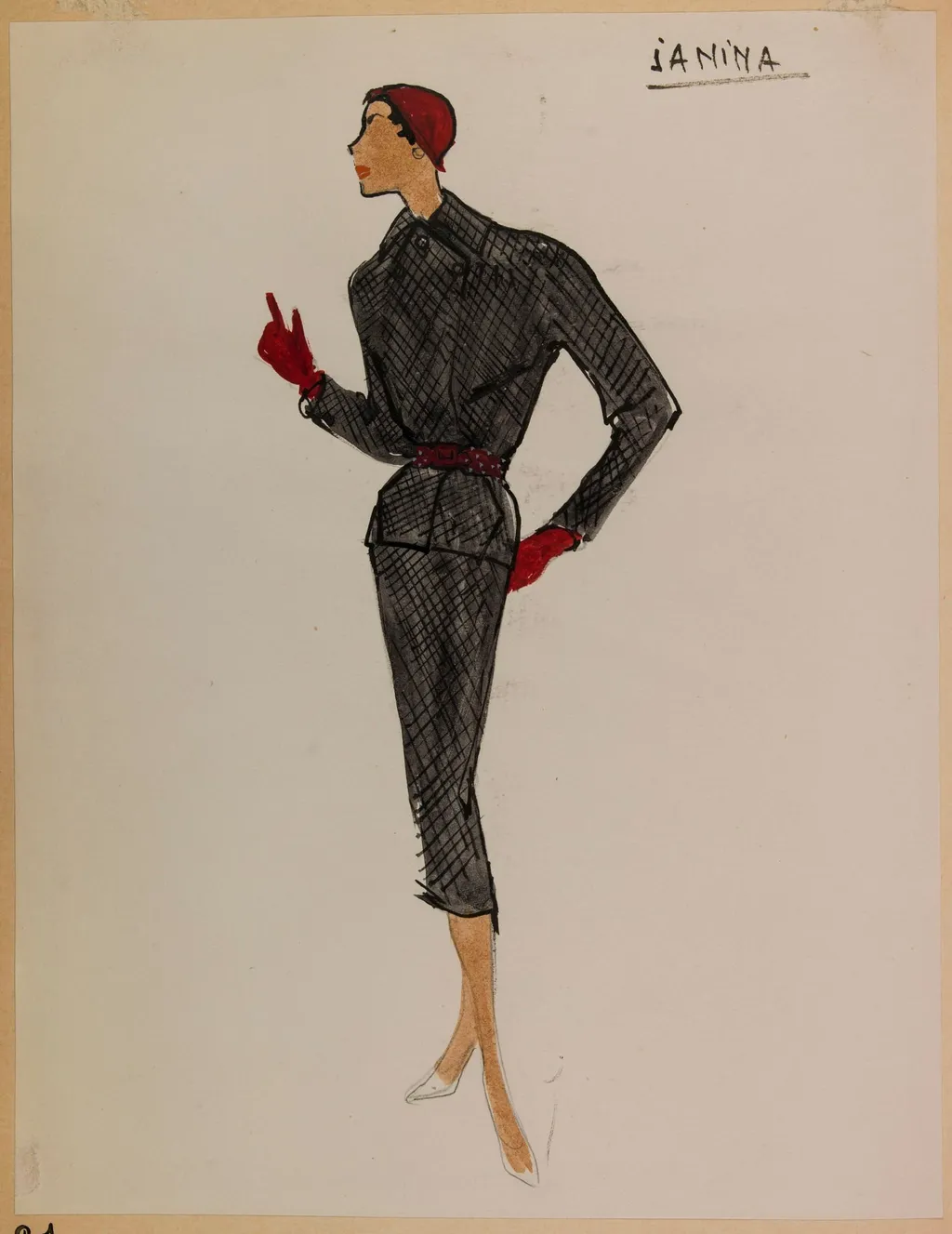
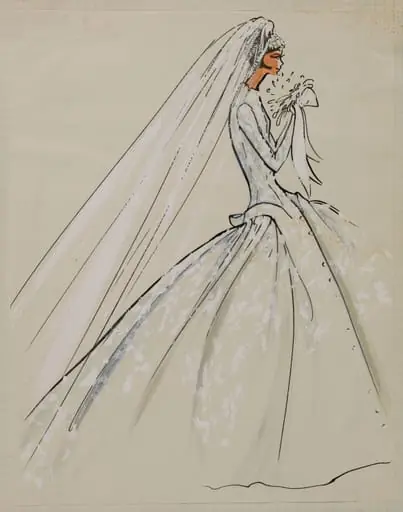
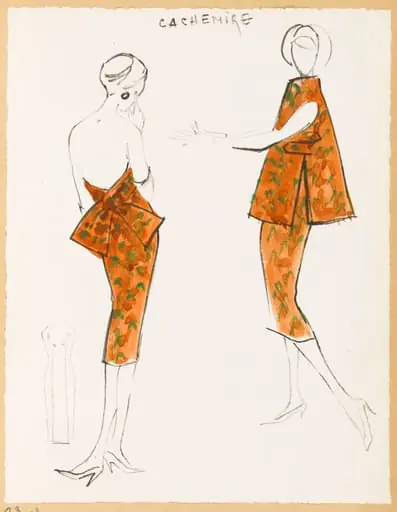
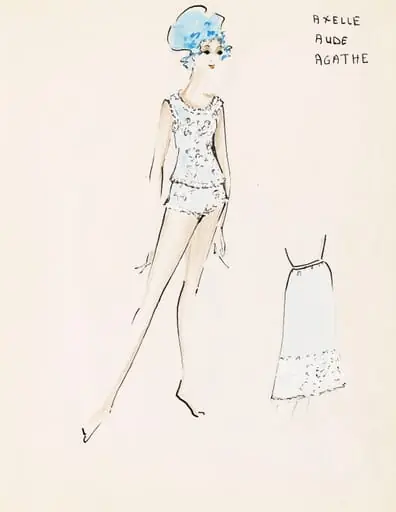
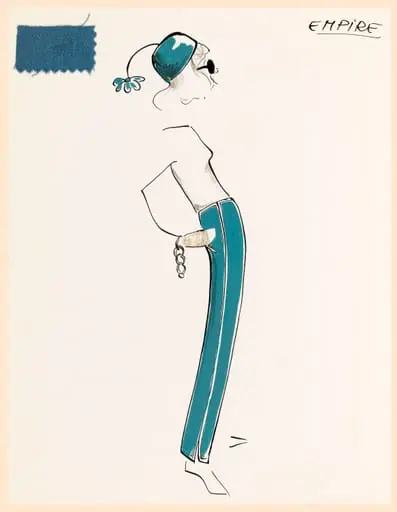
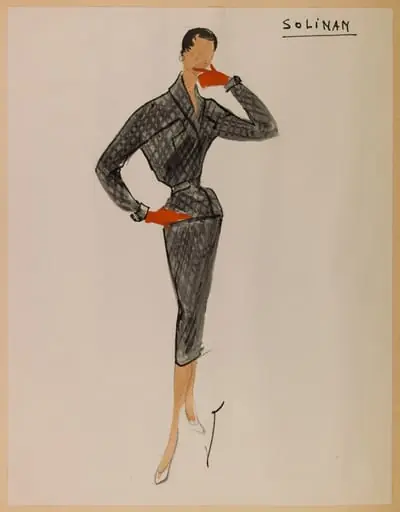
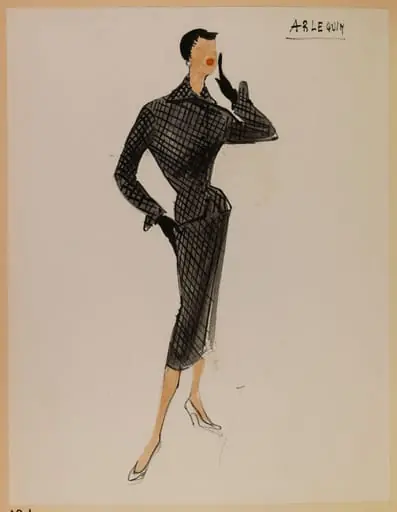
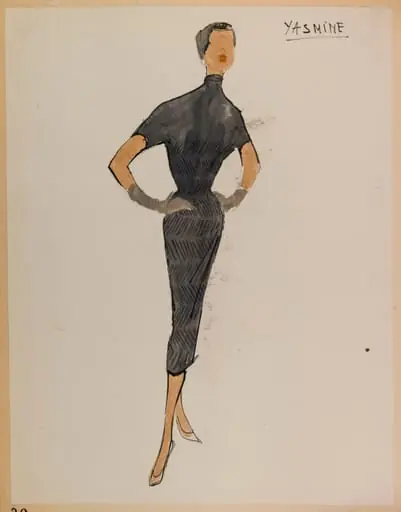
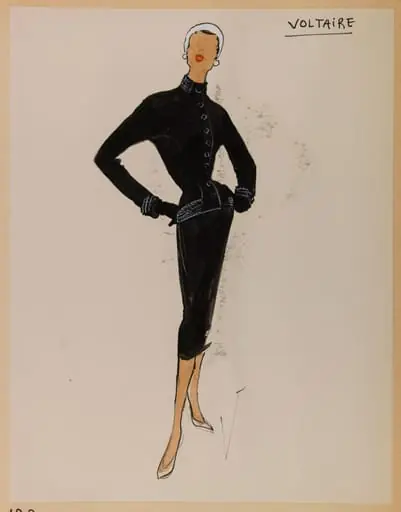
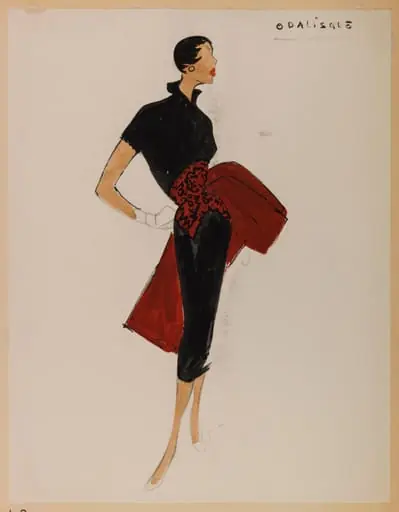
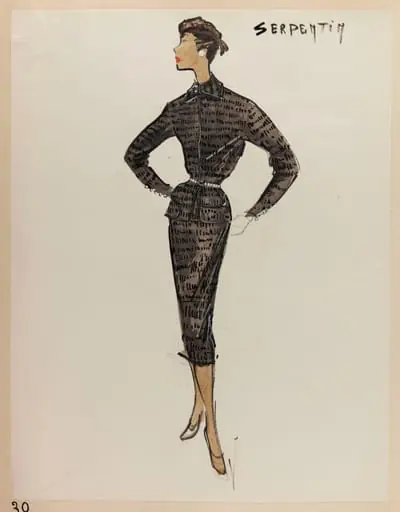
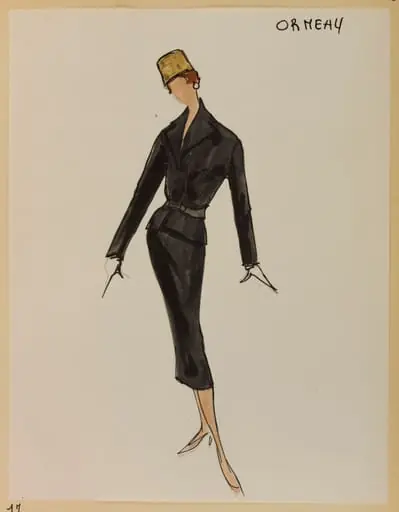
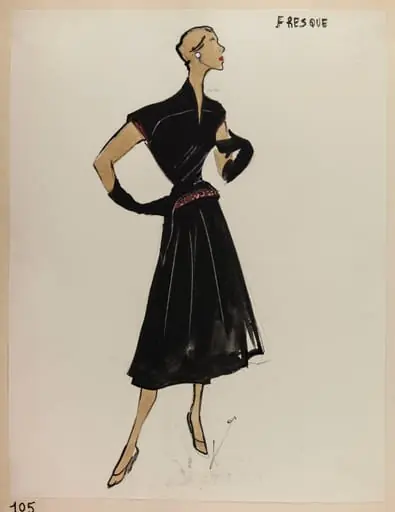
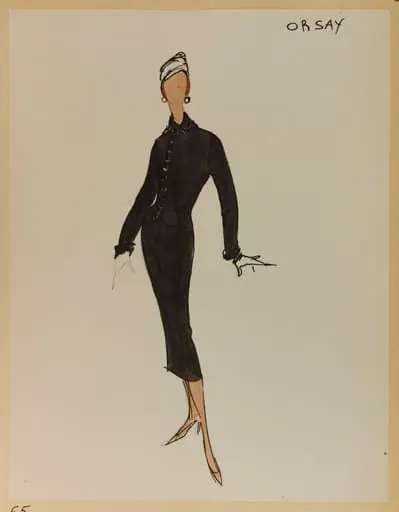
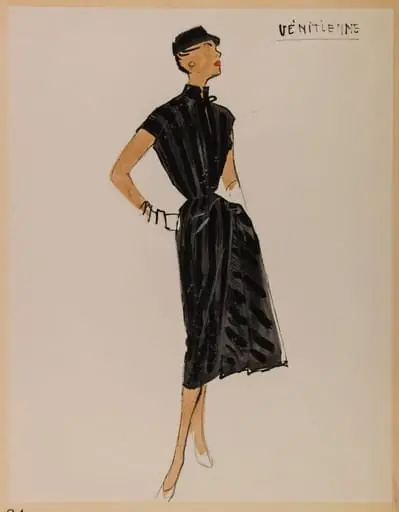
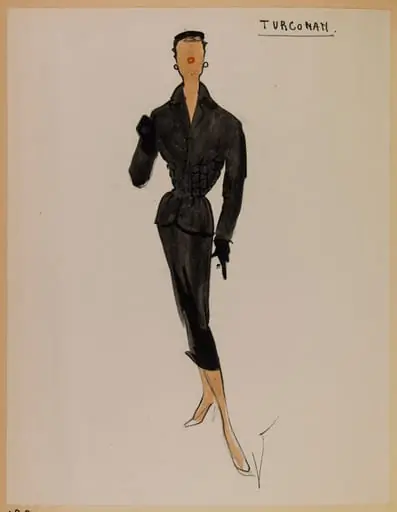
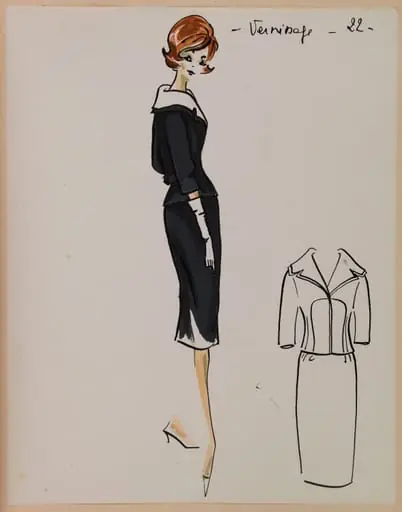
Janina is a drawing by Carven. It dates from 1953 and is held in the collection of the Palais Galliera - Musée de la Mode de la Ville de Paris.
About this work
Overview
“Janina,” a drawing attributed to the French fashion house Carven and dated to around 1953, is part of the collection of the Museum of Ethnography. The work portrays a single female figure rendered in line and wash, emphasizing the silhouette and accessories that define her appearance.
Subject & Meaning
The figure is a woman dressed in a black, grid‑patterned dress, accented with a red headband, red gloves, a red belt, and white high‑heeled shoes. Her pose—left hand on the hip, right arm extended upward—conveys confidence and a poised elegance that reflects mid‑century fashion ideals.
Technique & Style
Carven’s drawing employs a restrained line drawing combined with selective washes of color, allowing the red accessories to stand out against the monochrome dress. The stylised rendering focuses on silhouette and form rather than detailed anatomy, a common approach in fashion illustration of the period.
History & Provenance
Created circa 1953, the piece entered the Museum of Ethnography’s holdings at an unspecified date, where it is displayed as an example of post‑war French fashion illustration. Its attribution to Carven aligns with the house’s reputation for elegant, modern designs during the early 1950s.
Context
The drawing reflects the post‑World War II resurgence of haute couture in Paris, when designers like Carven emphasized sleek lines, bold color accents, and a sense of liberated femininity. Such illustrations were often used for internal design studies or promotional material, linking art and commercial fashion practice.
Artist & collection
Artist
These delicate ink-on-paper drawings capture the quiet poetry of everyday things: pinecones, reeds, apples.
Museum
Palais Galliera - Musée de la Mode de la Ville de Paris
Continue through works from the same source collection.