Artwork
Jonque
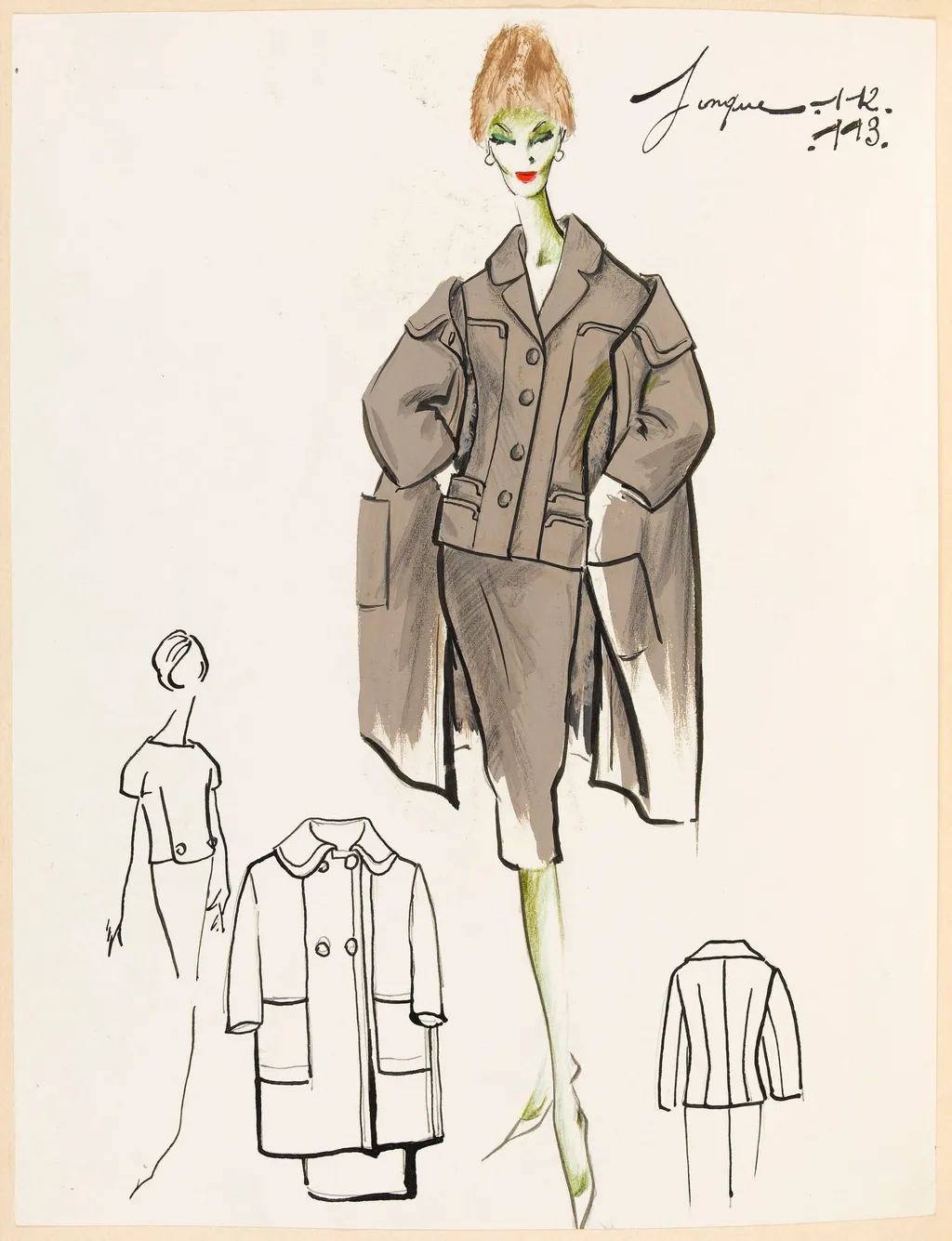
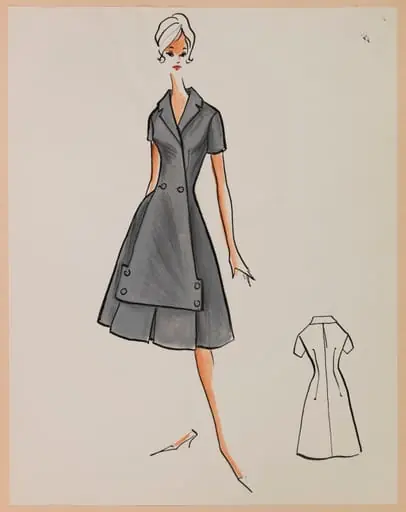
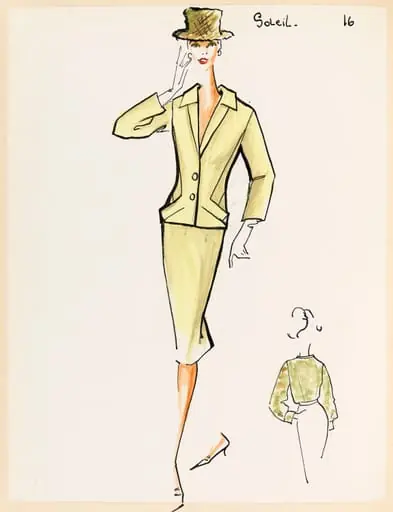
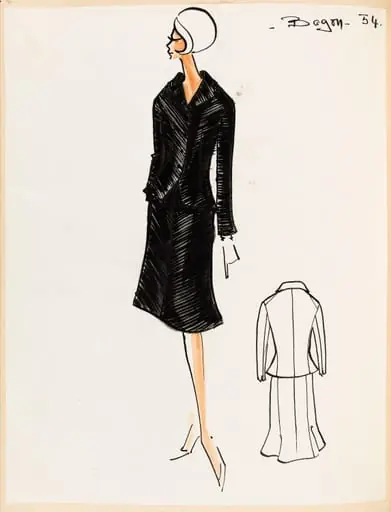
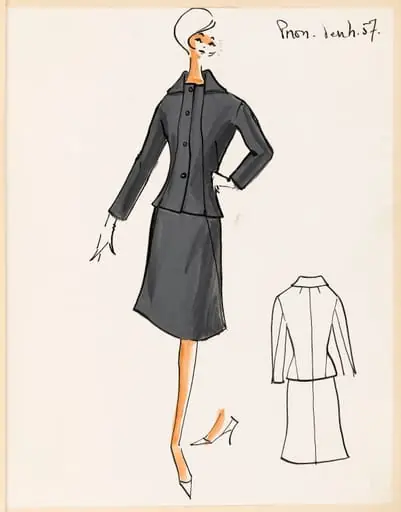
Jonque is a drawing by Carven. It dates from 1959 and is held in the collection of the Palais Galliera - Musée de la Mode de la Ville de Paris.
About this work
Overview
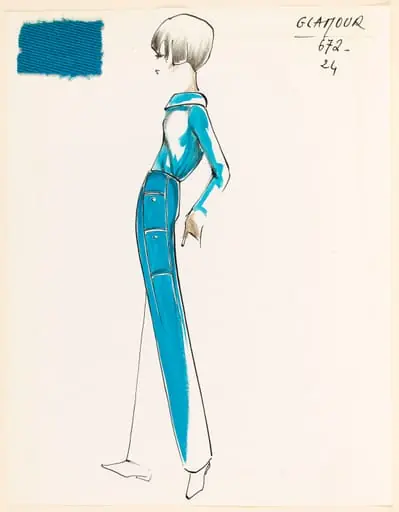
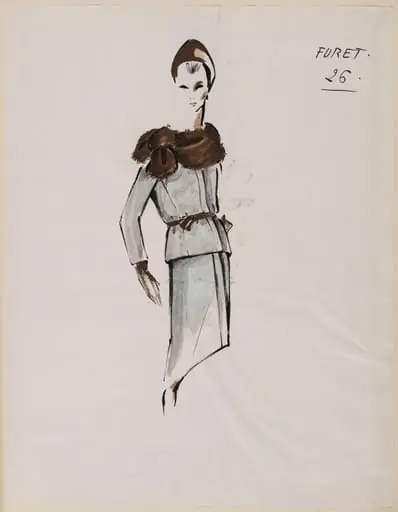
Jonque is a pencil drawing created around 1959 by the French fashion designer Carven. It is part of the collection at the Museum of Ethnography. The work presents a portrait of a woman alongside three schematic sketches of garments, blending portraiture with fashion documentation in a single composition. The image is rendered in clean, unshaded lines, emphasizing form over detail.
Subject & Meaning
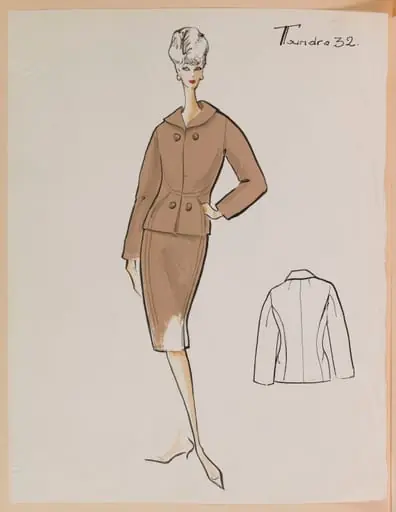
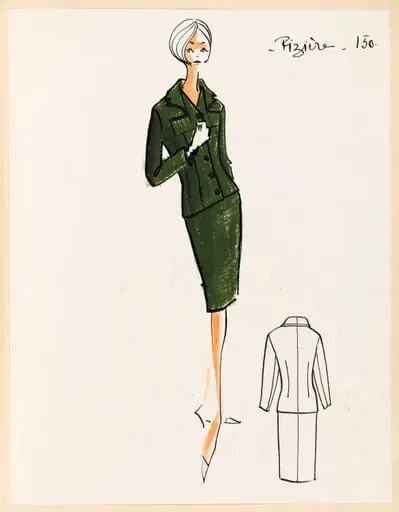
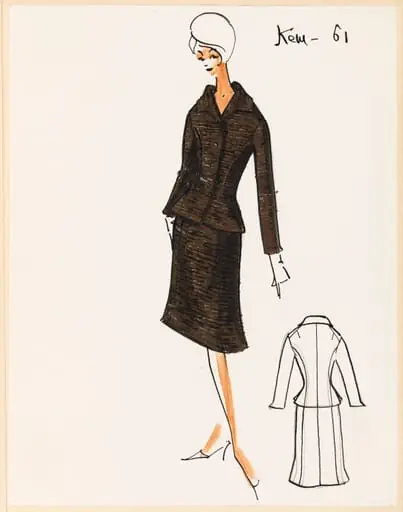
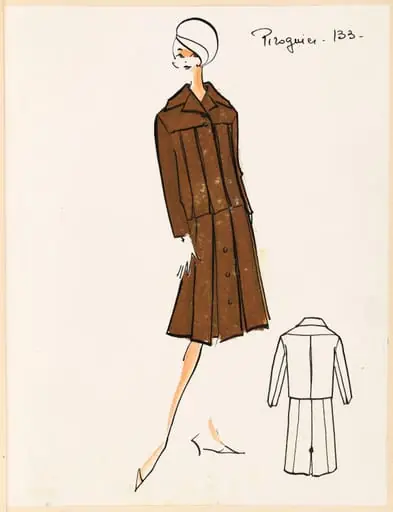
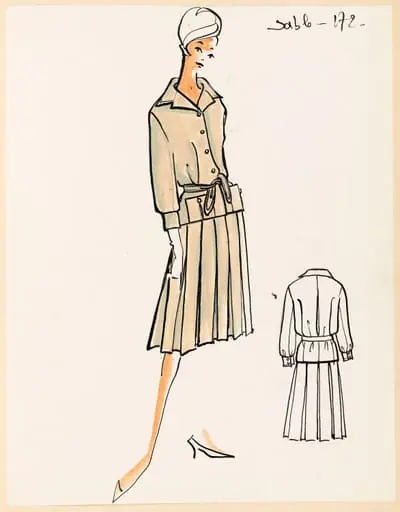
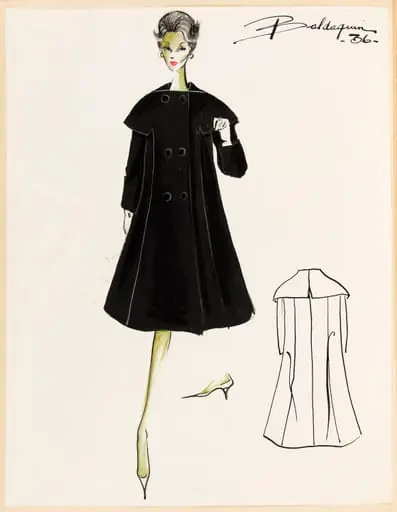
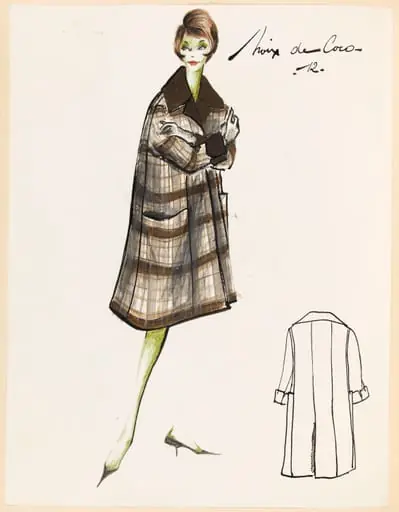
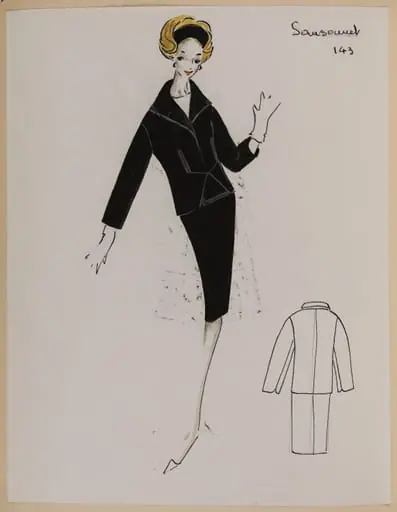
The central figure is a woman with short blonde hair and red lipstick, dressed in a light brown suit and holding a darker brown coat over her arm.
The central figure is a woman with short blonde hair and red lipstick, dressed in a light brown suit and holding a darker brown coat over her arm. Her poised posture and stylized features suggest a model or client, possibly representing the idealized customer of Carven’s designs. The accompanying sketches of a dress, coat, and jacket imply a connection between personal identity and the clothing she embodies.
Technique & Style
The drawing employs minimal line work without shading or color, focusing on silhouette and structure. The woman’s features are simplified yet distinct, while the garments are rendered as schematic outlines—functional rather than decorative. This restrained aesthetic reflects the precision of fashion illustration used for design reference, prioritizing clarity and reproducibility over artistic embellishment.
History & Provenance
Created circa 1959, the drawing entered the collection of the Museum of Ethnography, where it is preserved as part of a broader archive of fashion-related materials. Its inclusion suggests institutional interest in fashion as cultural artifact. The work’s origin within Carven’s design practice is evident, though specific documentation of its commission or use remains unrecorded in public sources.
Context
In late 1950s Paris, fashion houses like Carven produced illustrations to communicate designs to clients and ateliers. This drawing aligns with industry practices of the time, where illustrative records served both promotional and technical purposes. The presence of a portrait alongside garments reflects a personalization of fashion, linking the wearer to the design in a way that distinguished haute couture from mass-produced clothing.
Legacy
Jonque endures as a quiet example of mid-century fashion illustration, preserving the visual language of a designer’s studio. It contributes to the historical record of how clothing was conceptualized and presented before digital tools. Its preservation in an ethnographic museum underscores the evolving recognition of fashion as a cultural practice worthy of scholarly attention.
Artist & collection
Artist
These delicate ink-on-paper drawings capture the quiet poetry of everyday things: pinecones, reeds, apples.
Museum
Palais Galliera - Musée de la Mode de la Ville de Paris
Continue through works from the same source collection.