Artwork
Rizière
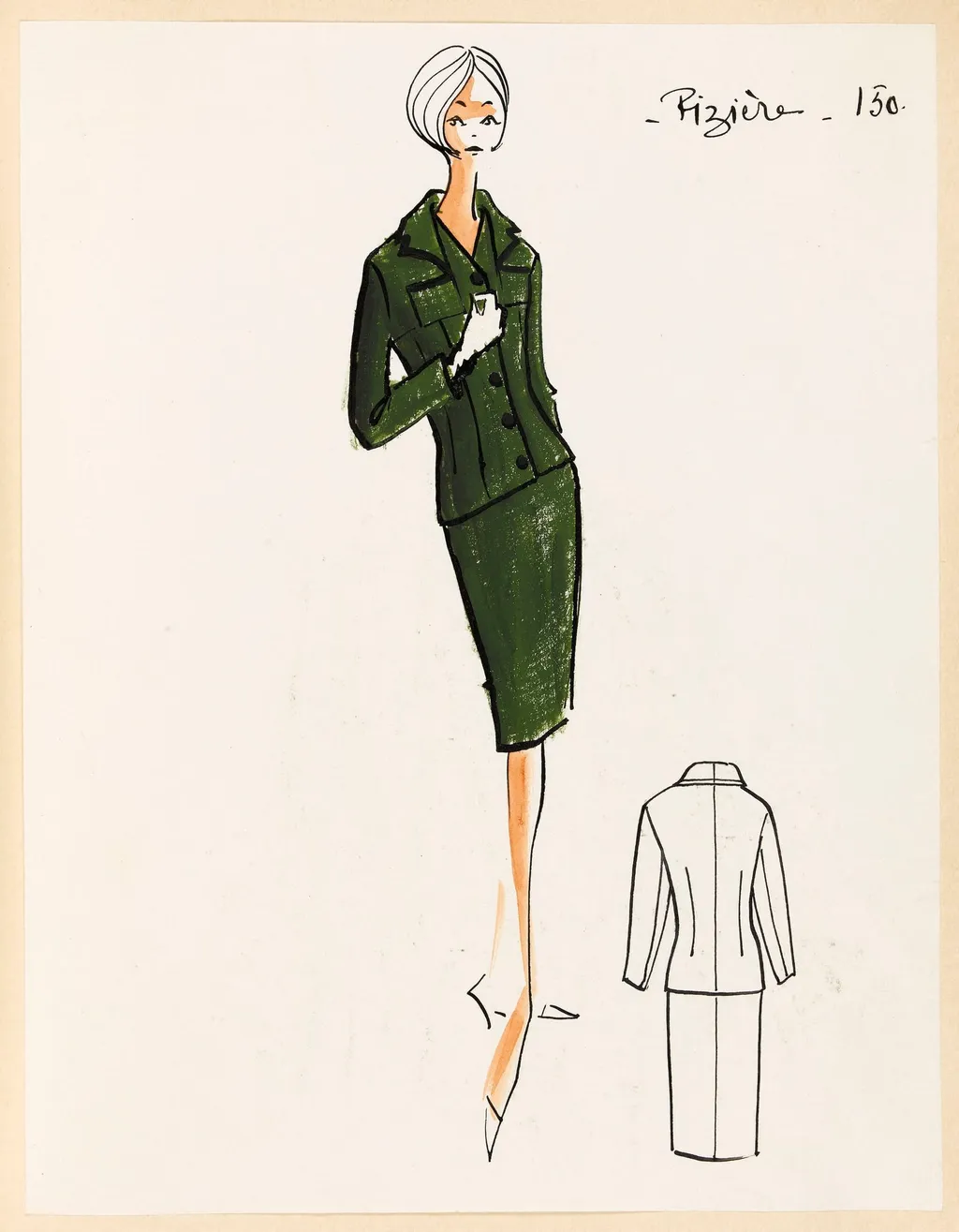
Rizière is a drawing by Marie-Louise Carven. It dates from 1959 and is held in the collection of the Palais Galliera - Musée de la Mode de la Ville de Paris.
About this work
Overview
Rizière is a fashion illustration created around 1959 by Marie-Louise Carven, founder of the Parisian fashion house Carven.
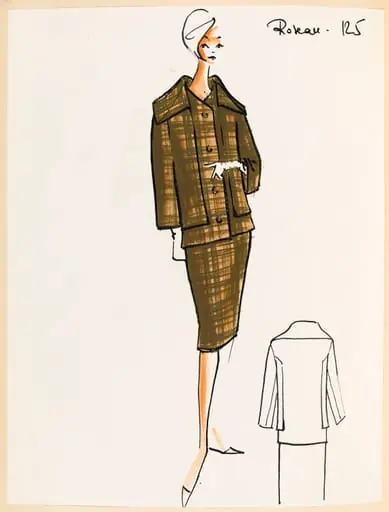
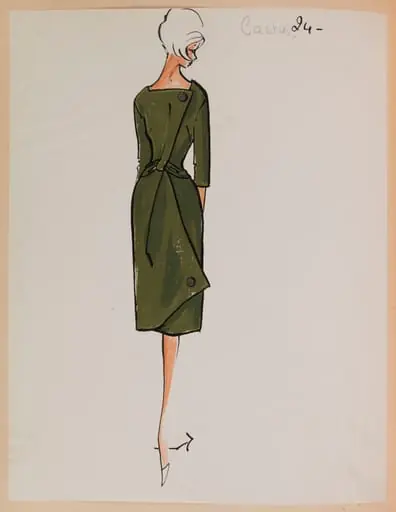
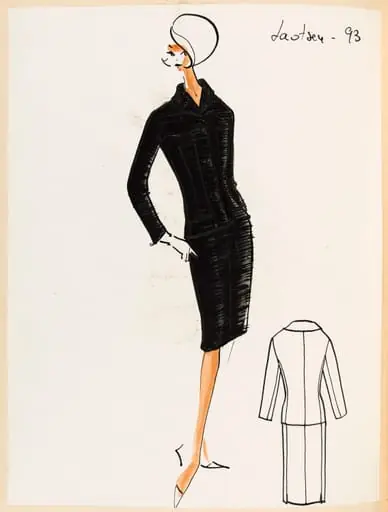
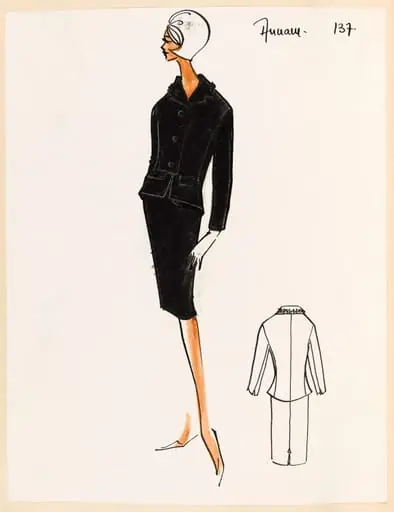
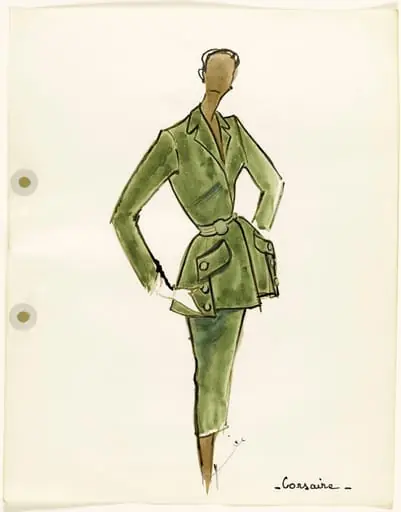
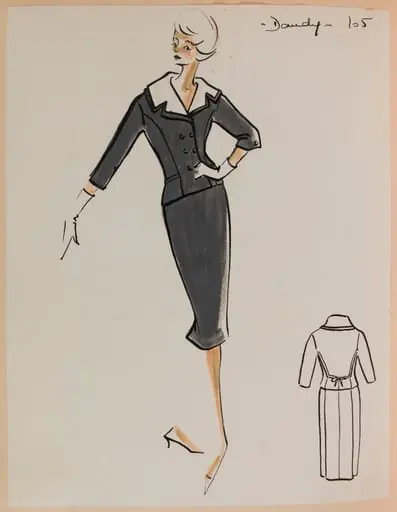
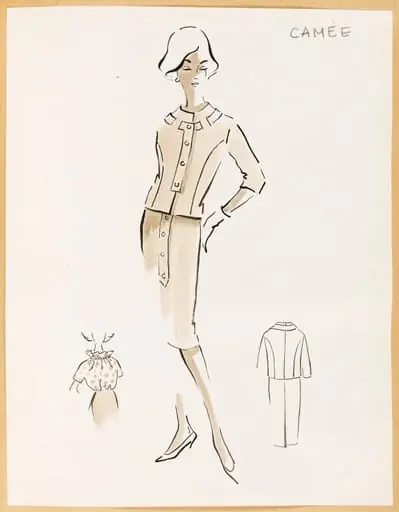
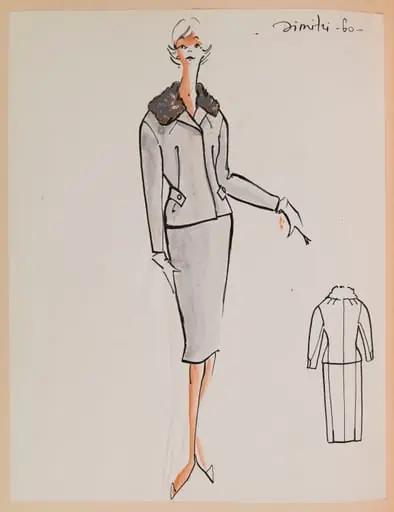
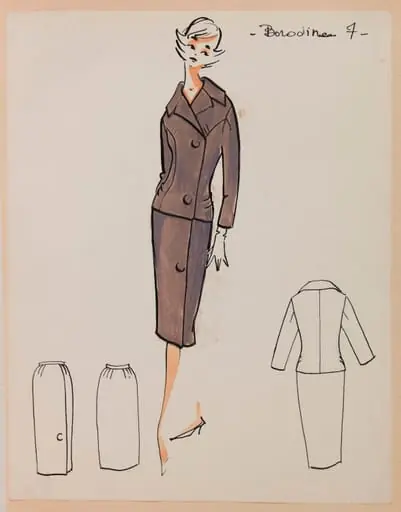
Rizière is a fashion illustration created around 1959 by Marie-Louise Carven, founder of the Parisian fashion house Carven. Though labeled as an image, it functions as a design study rather than a fine art piece. The drawing captures a woman in a tailored green suit, rendered with minimal color and precise lines, reflecting Carven’s emphasis on clean, wearable silhouettes for petite figures within the emerging prêt-à-porter movement.
Subject & Meaning
The central figure stands with one hand resting on her chest, a posture suggesting quiet composure. The title, Rizière—French for rice field—may allude to the rhythmic patterns of cultivation, subtly mirrored in the structured lines of the garment. The illustration does not depict an actual landscape but uses the title to evoke a sense of natural harmony, aligning the wearer’s form with organic order rather than overt symbolism.
Technique & Style
Carven employed a restrained palette of green, white, and black, emphasizing form over ornamentation. Clean, unbroken lines define the jacket’s double pockets and the skirt’s knee-length hem. A secondary sketch on the right isolates the back of the garment, revealing her methodical approach to construction. The bobbed hair and white gloves reinforce a mid-century ideal of polished, understated femininity.
History & Provenance
Created during Carven’s peak influence in postwar French fashion, Rizière reflects her commitment to accessible, well-constructed clothing. As one of the first designers to focus on ready-to-wear for smaller frames, her sketches like this one served as both design records and marketing tools. The drawing likely originated in her atelier, used internally to guide production or present to clients.
Context
In the late 1950s, Parisian fashion was transitioning from haute couture to mass-produced garments. Carven’s work stood apart by prioritizing practical elegance over spectacle. Rizière embodies this shift: a tailored suit designed for daily life, not ceremonial occasions. Its simplicity aligns with broader cultural movements favoring functionality and quiet refinement in postwar Europe.
Legacy
Rizière exemplifies Carven’s enduring contribution to modern fashion: democratizing style through thoughtful design. While not widely exhibited as art, such drawings remain vital to understanding how ready-to-wear evolved. Her focus on proportion, comfort, and subtle detail influenced later designers who valued restraint over excess, embedding her aesthetic into the foundations of contemporary womenswear.
Artist & collection
Artist
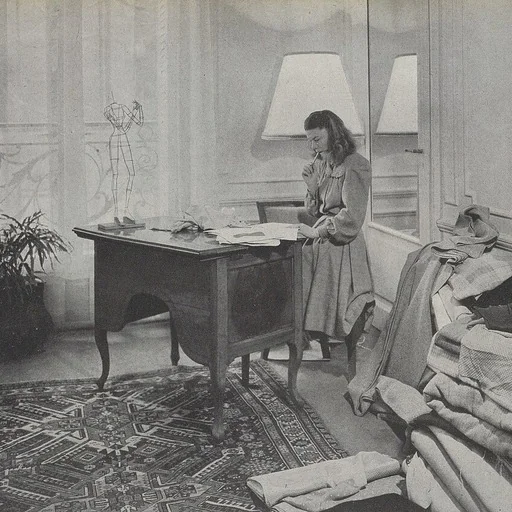
Marie-Louise Carven (31 August 1909 – 8 June 2015), born Carmen de Tommaso, was a French fashion designer who founded the house of Carven in 1945.
Museum
Palais Galliera - Musée de la Mode de la Ville de Paris
Continue through works from the same source collection.
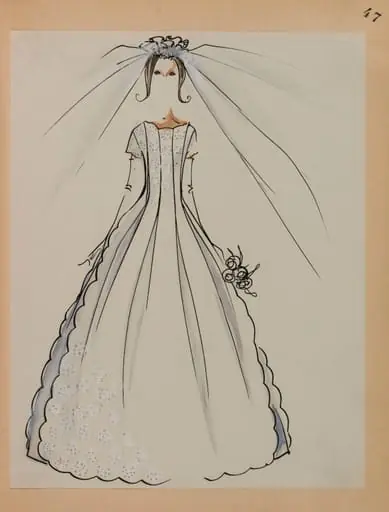 Robe de mariée festonnée et son voile
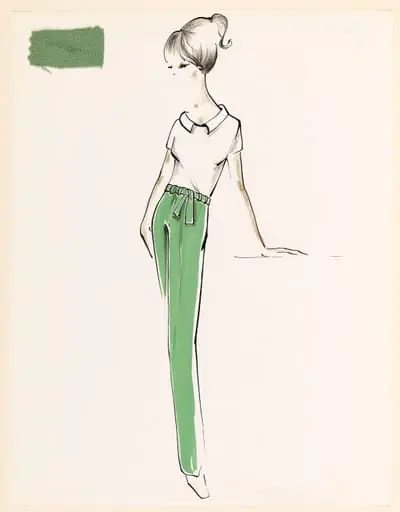 Haut blanc à manches courtes et pantalon vert à ceinture nouée
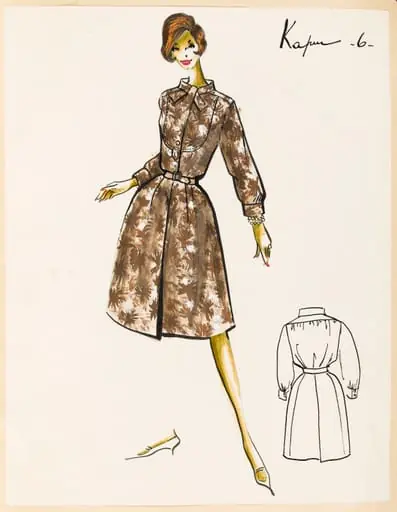 Kapur
Kapur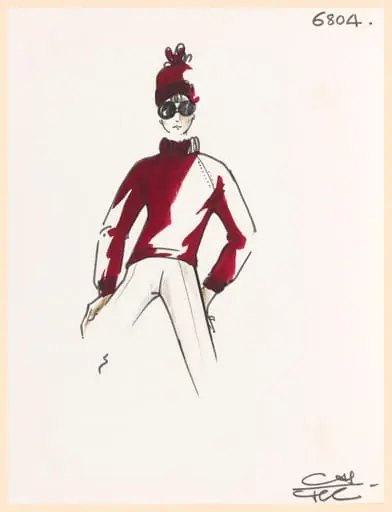 Pull-over à manches longues pourpre, bonnet assorti, pantalon et lunettes de soleil
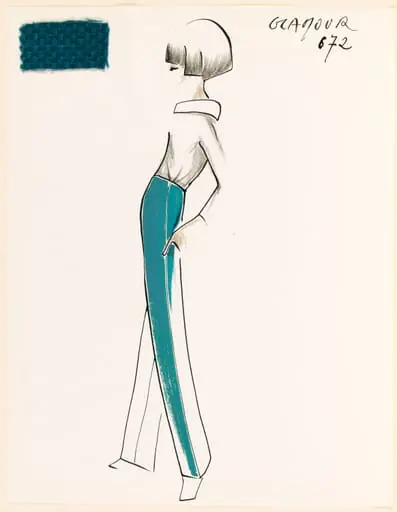 GLAMOUR
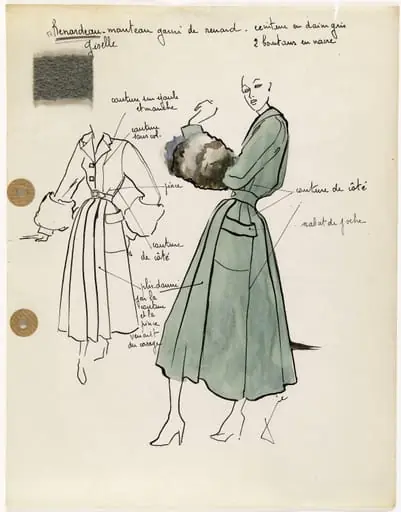 'Renardeau'
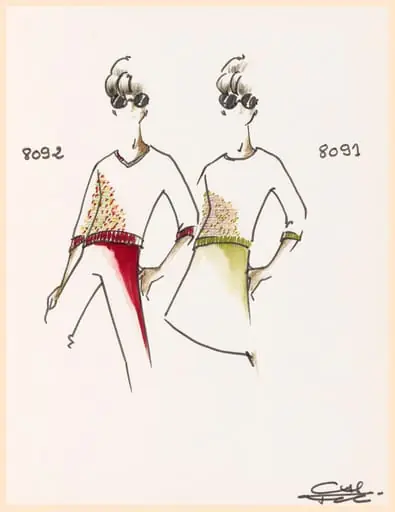 Pull-over à manches trois quarts et à encolure V à motifs multicolores, pantalon cerise et lunettes de soleil
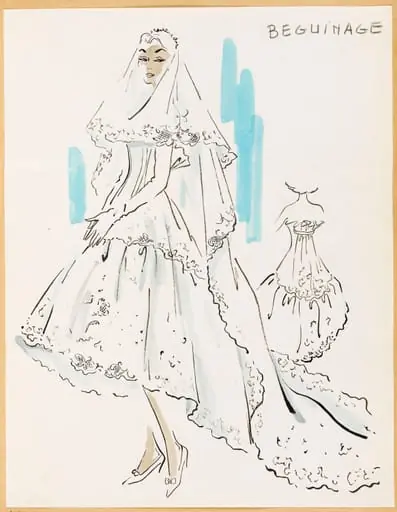 Béguinage