Artwork
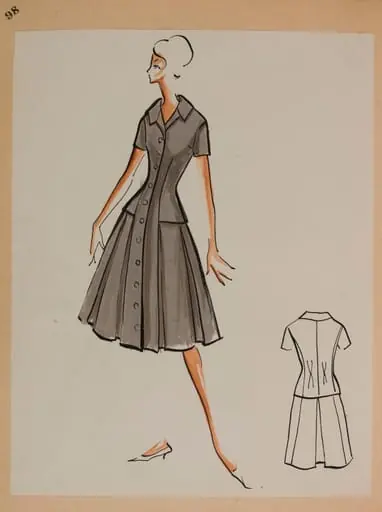
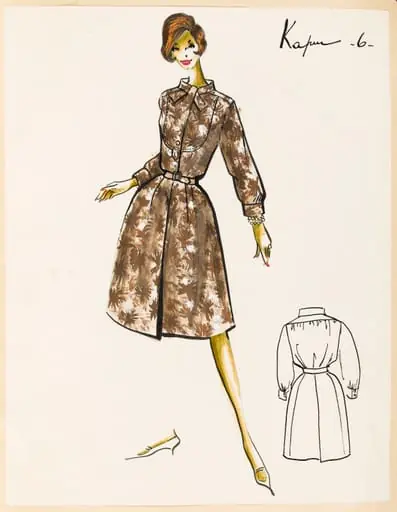
Robe grise cintré à grand pan boutonné sur le devant
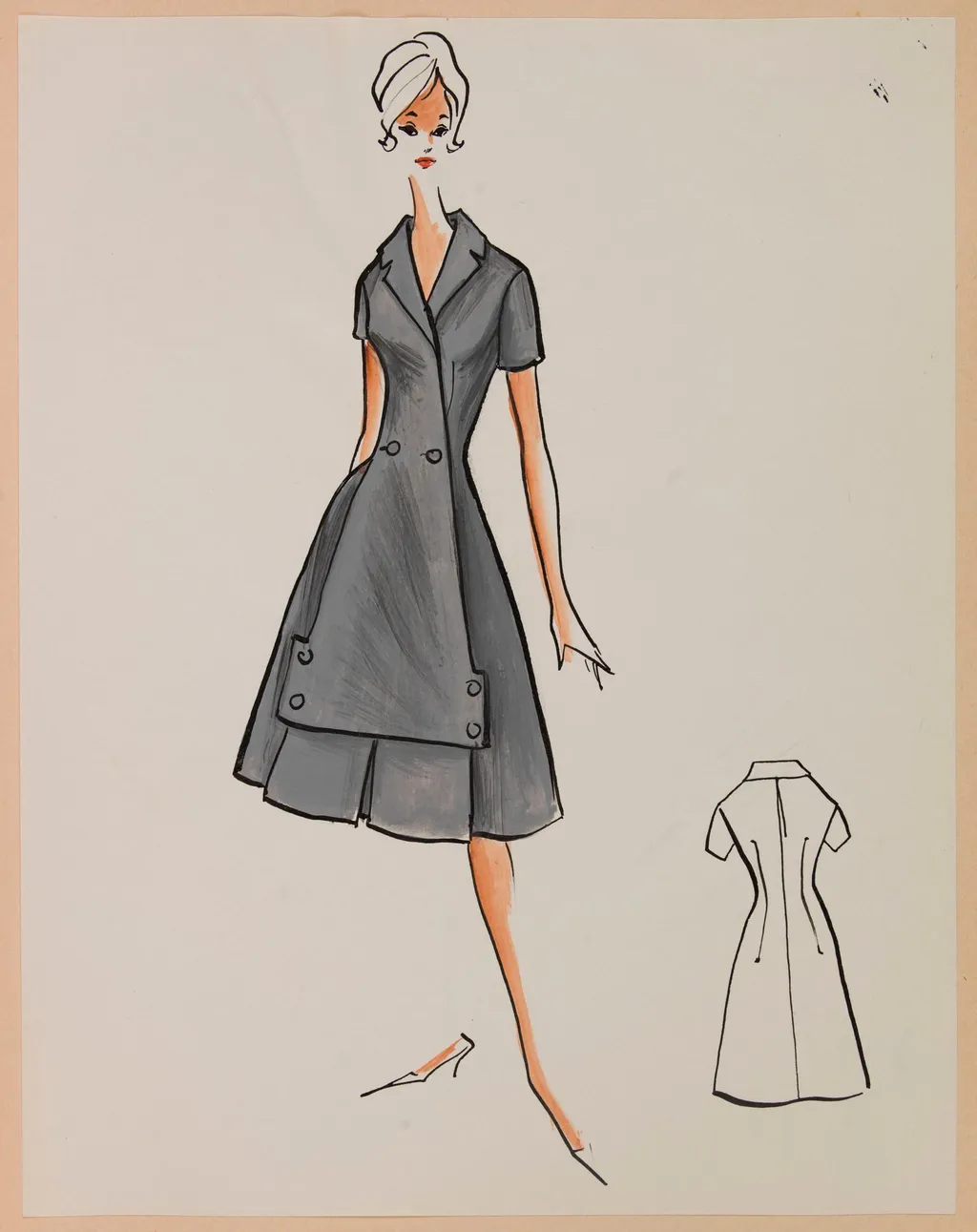
Robe grise cintré à grand pan boutonné sur le devant is a drawing by Marie-Louise Carven. It dates from 1959 and is held in the collection of the Palais Galliera - Musée de la Mode de la Ville de Paris.
About this work
Overview
The design reflects Carven’s focus on wearable elegance for smaller frames, blending couture precision with emerging ready-to-wear sensibilities.
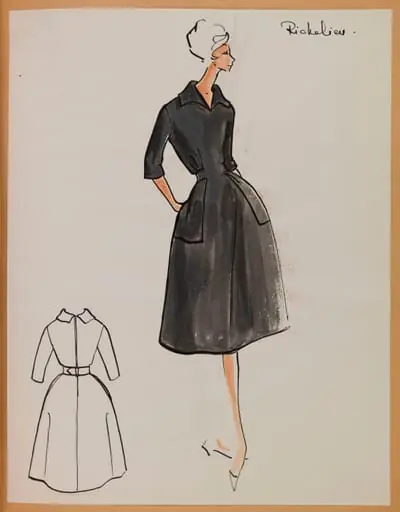
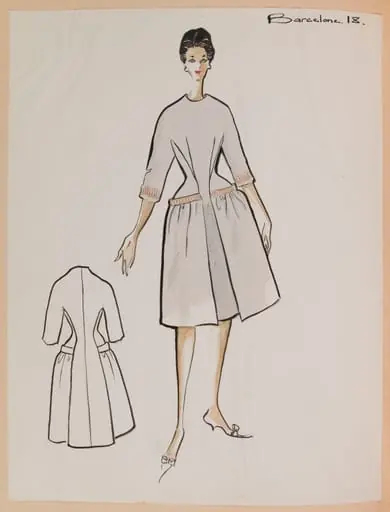
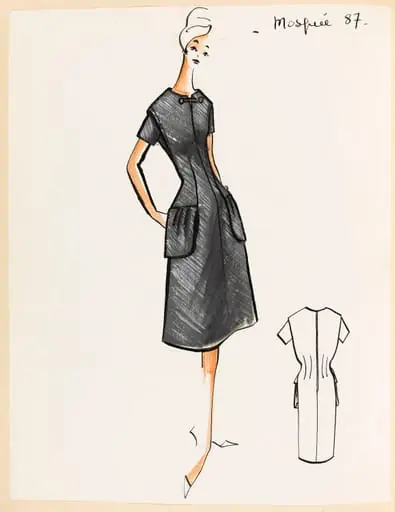
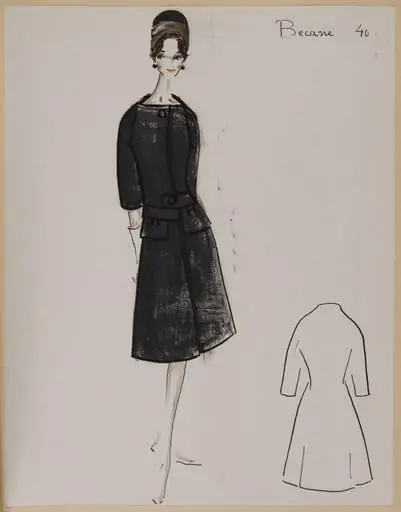
Created around 1959 by French designer Marie-Louise Carven, this gray dress features a tailored silhouette with a pronounced front panel fastened by vertical buttons. Rendered as a fashion sketch, it captures the garment’s structure with minimal detail and fluid lines, emphasizing form over ornamentation. The design reflects Carven’s focus on wearable elegance for smaller frames, blending couture precision with emerging ready-to-wear sensibilities.
Subject & Meaning
The dress presents a structured yet accessible femininity, balancing volume at the hem with a cinched waist to create a flattering, upright posture. The bold front buttons serve both functional and aesthetic purposes, drawing the eye vertically and reinforcing a sense of order. Its simplicity suggests a shift toward practical luxury, aligning with postwar demands for refined, everyday attire.
Technique & Style
The sketch employs loose, confident brushwork to define the dress’s contours, avoiding intricate rendering in favor of suggestive forms. The front view and rear flat pattern are presented side by side, a standard fashion-drawing convention that communicates construction without distraction. Minimal shading and clean outlines prioritize clarity, reflecting the discipline of professional design documentation.
History & Provenance
Marie-Louise Carven founded her namesake house in 1945 and was among the first Parisian designers to launch a prêt-à-porter collection, democratizing high fashion. This sketch entered the collection of the Museum of Ethnography as part of a broader effort to document 20th-century dress as cultural artifact, bridging artisanal craft and industrial production.
Context
In the late 1950s, Parisian fashion was transitioning from exclusive couture to accessible ready-to-wear. Carven’s designs responded to changing lifestyles, offering tailored silhouettes suited to active, urban women. This piece aligns with broader trends favoring clean lines and reduced ornamentation, reflecting postwar modernity in both material and philosophy.
Legacy
Carven’s integration of couture techniques into ready-to-wear influenced later designers seeking balance between craftsmanship and commercial viability. Her emphasis on proportion and fit for petite figures remained distinctive in an industry often centered on standard sizing. This sketch endures as a quiet testament to her role in reshaping postwar fashion accessibility.
Artist & collection
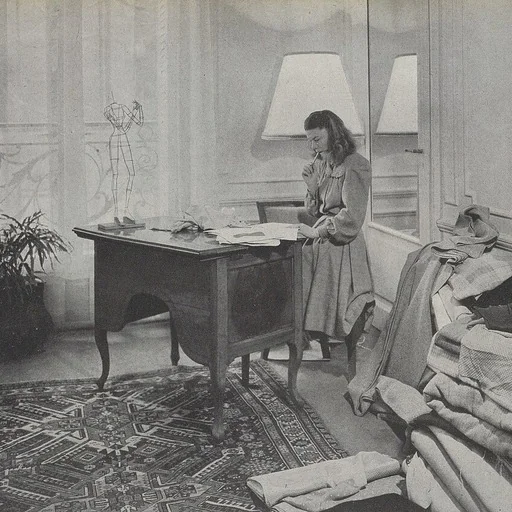
Artist
Marie-Louise Carven (31 August 1909 – 8 June 2015), born Carmen de Tommaso, was a French fashion designer who founded the house of Carven in 1945.

Museum
Palais Galliera - Musée de la Mode de la Ville de Paris
Continue through works from the same source collection.
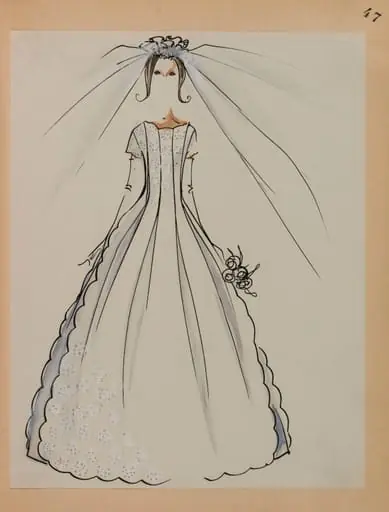 Robe de mariée festonnée et son voile
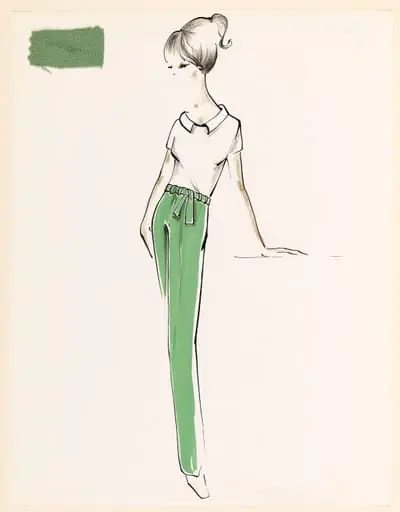 Haut blanc à manches courtes et pantalon vert à ceinture nouée
 Kapur
Kapur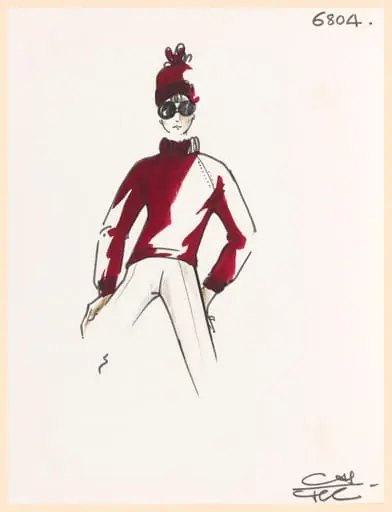 Pull-over à manches longues pourpre, bonnet assorti, pantalon et lunettes de soleil
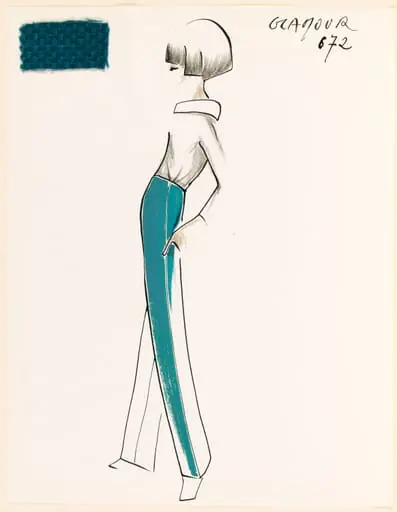 GLAMOUR
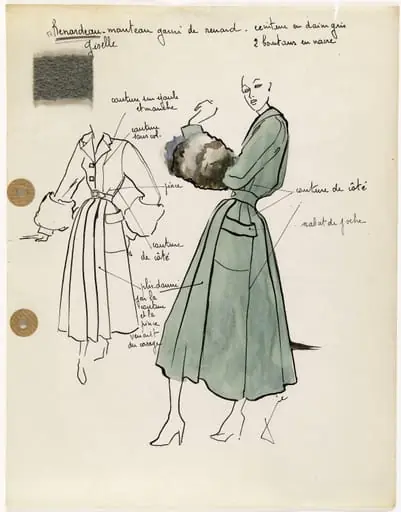 'Renardeau'
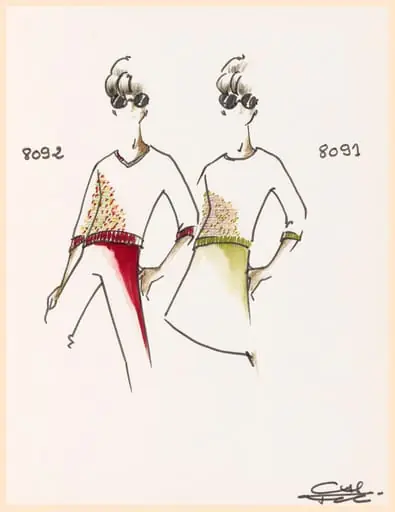 Pull-over à manches trois quarts et à encolure V à motifs multicolores, pantalon cerise et lunettes de soleil
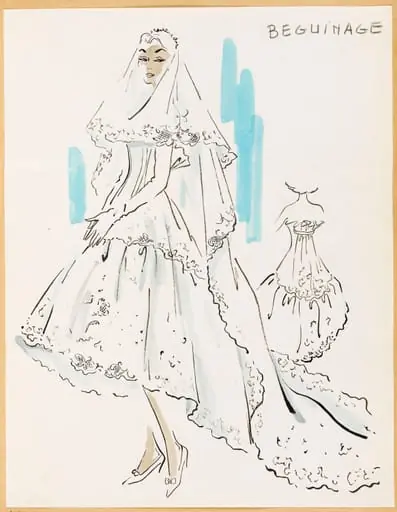 Béguinage