Artwork
Kathy
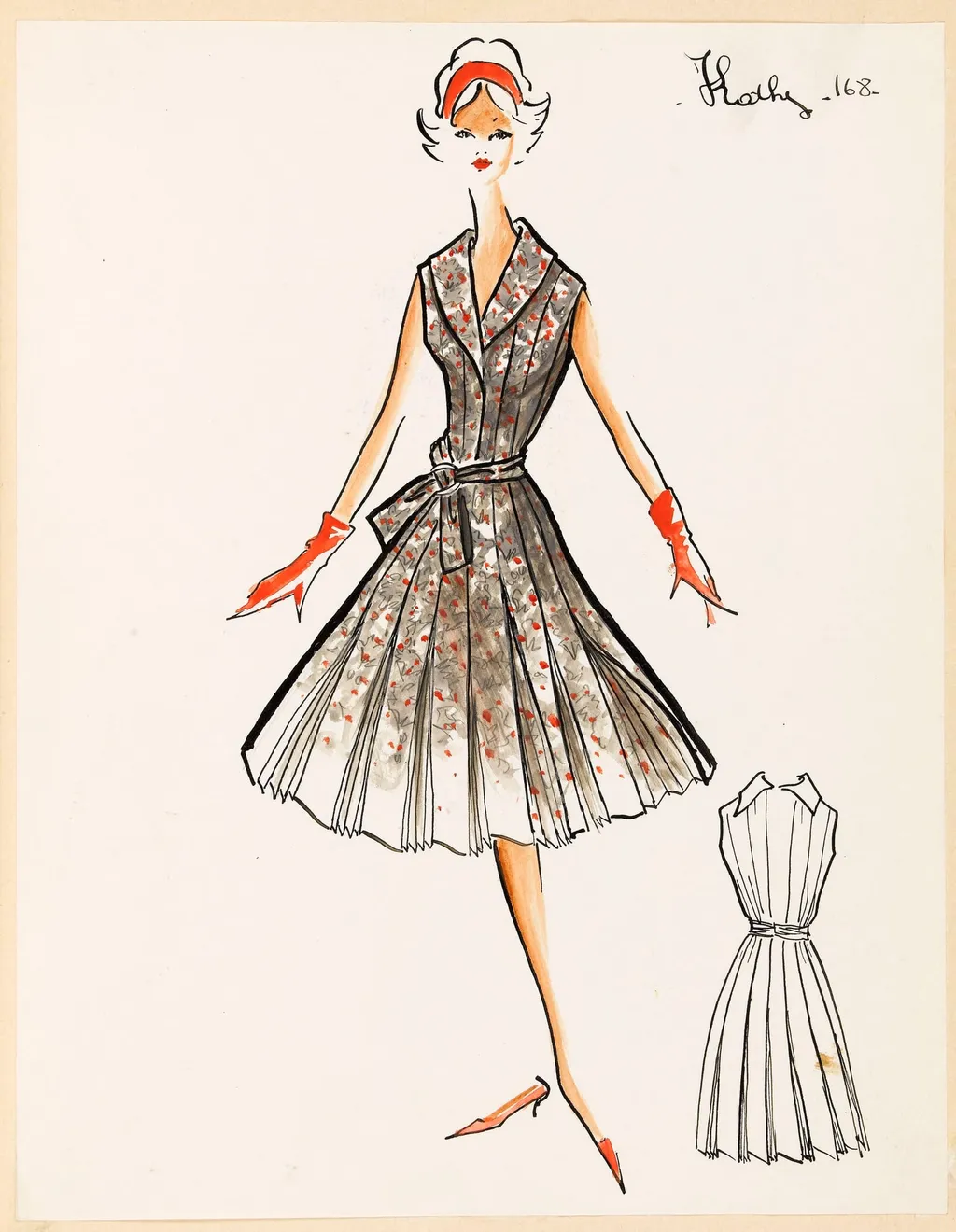
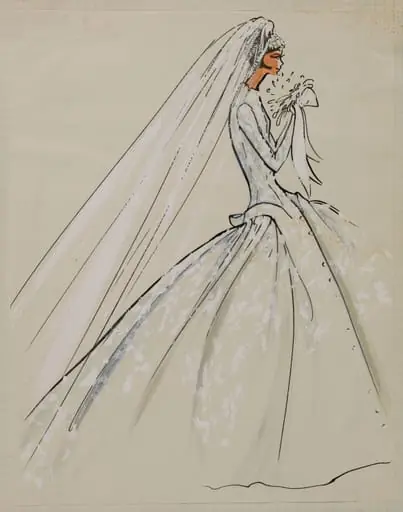
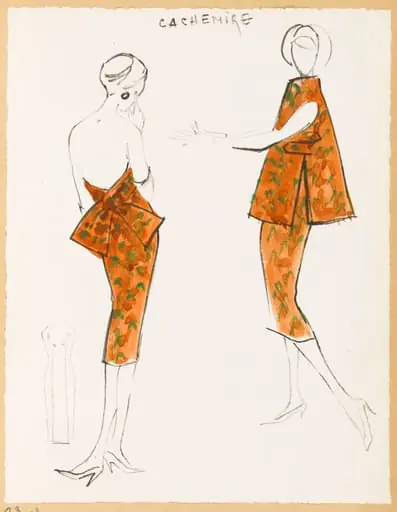
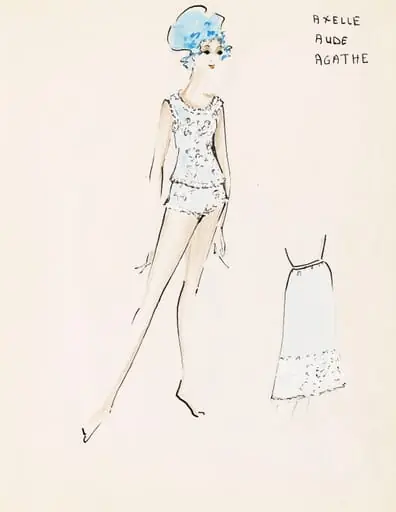
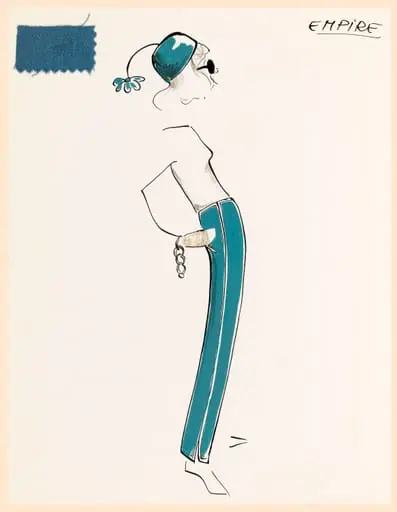
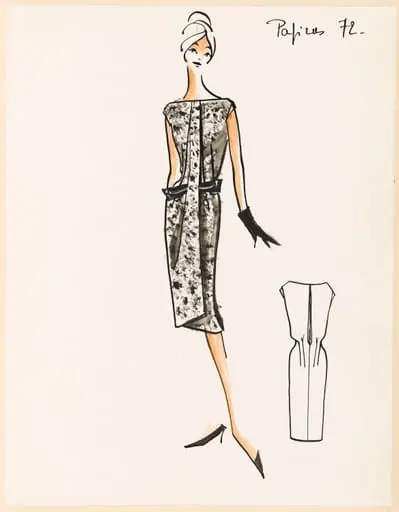
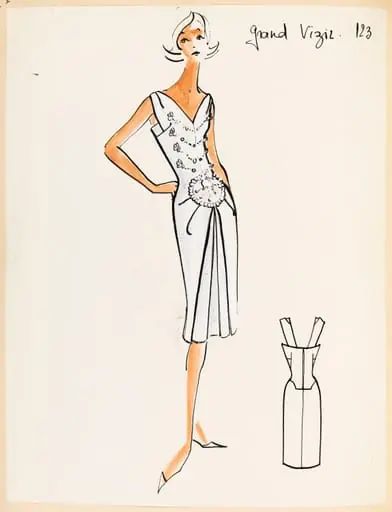
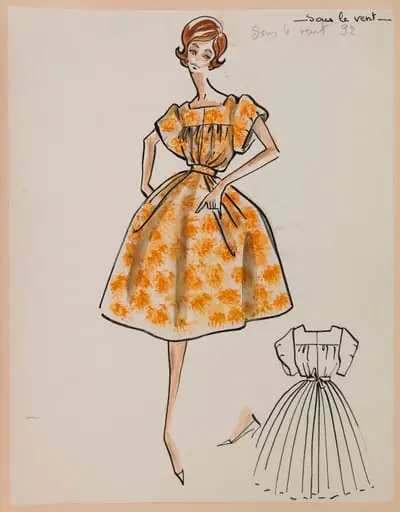
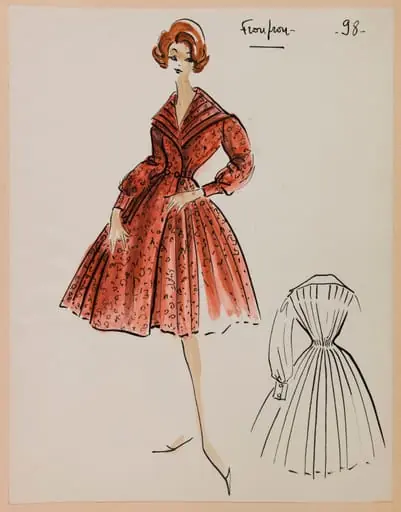
Kathy is a drawing by Carven. It dates from 1959 and is held in the collection of the Palais Galliera - Musée de la Mode de la Ville de Paris.
About this work
Overview
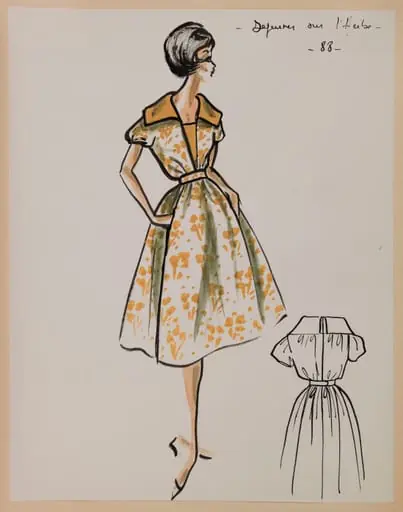
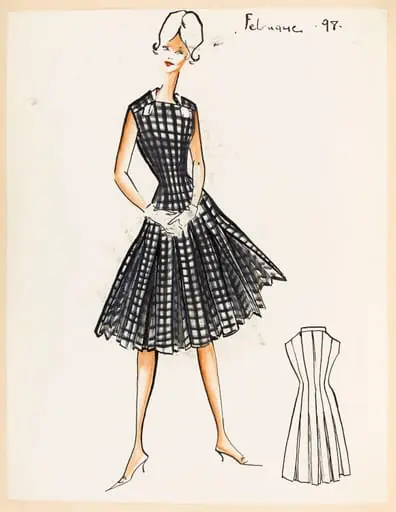
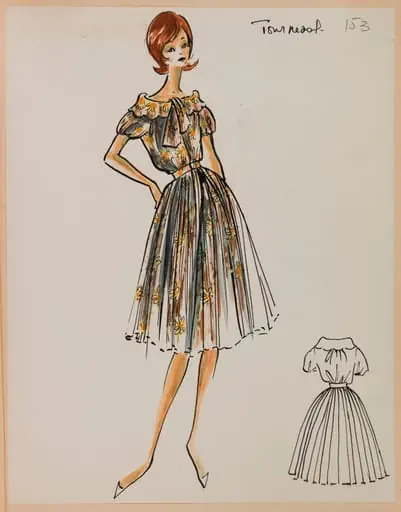
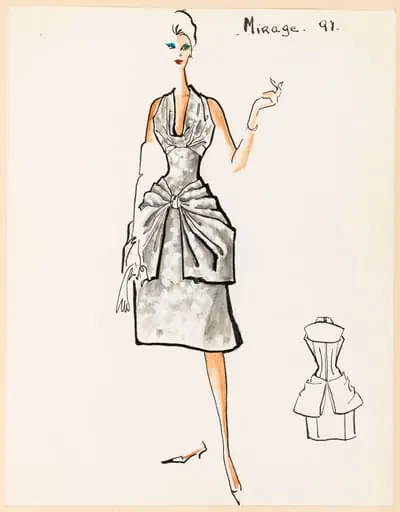
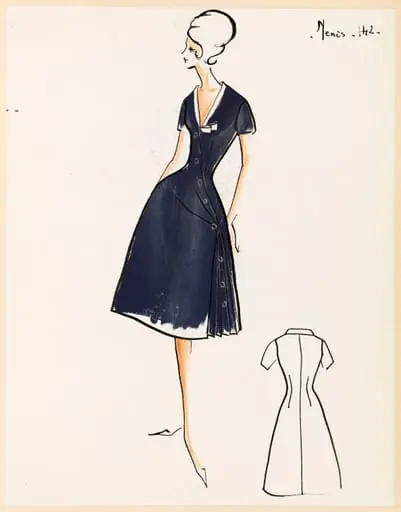
Created around 1959, this ink sketch by designer Carven depicts a woman in a tailored mid-century ensemble. The drawing, held by the Museum of Ethnography, functions as a study for a garment design, capturing both the front and rear silhouette of the outfit. The artist’s signature appears in the lower corner, affirming its origin as a working document from the fashion house.
Subject & Meaning
The figure stands with poised confidence, one hand resting on the hip, suggesting self-assurance and elegance. The outfit—featuring a floral-patterned dress, wide belt, flared skirt, and red accessories—reflects postwar ideals of feminine refinement. The inclusion of a rear sketch indicates the designer’s attention to structural detail, emphasizing the garment’s form as much as its aesthetic.
Technique & Style
The floral pattern is suggested through delicate, repeating marks in gray, white, and red, while the dress’s volume is conveyed through contour and shading.
Rendered in fine ink lines, the sketch combines precision with fluidity. The floral pattern is suggested through delicate, repeating marks in gray, white, and red, while the dress’s volume is conveyed through contour and shading. The red cuffs and hat contrast sharply against the muted dress, drawing focus to the figure’s posture and the garment’s silhouette. The smaller rear view is integrated without disrupting the composition’s clarity.
History & Provenance
The drawing entered the collection of the Museum of Ethnography as part of a broader acquisition of fashion design materials from Carven’s atelier. Its preservation reflects institutional interest in documenting the technical processes behind mid-century haute couture. No record of prior ownership or exhibition history is publicly documented beyond its current institutional custody.
Context
In the late 1950s, Parisian fashion houses emphasized structured yet feminine silhouettes, often blending tailoring with decorative elements. Carven, known for its refined aesthetic, produced designs for a clientele valuing subtlety and craftsmanship. This sketch aligns with the era’s emphasis on wearable elegance, where even preparatory drawings served as records of design intent and technical innovation.
Legacy
As a working drawing, it offers insight into the iterative process of fashion design before mass production. While not a finished garment, it preserves the designer’s hand and decision-making. Today, such sketches are valued for their role in understanding the evolution of 20th-century dress, particularly in how form, function, and ornament were balanced in ready-to-wear and couture alike.
Artist & collection
Artist
These delicate ink-on-paper drawings capture the quiet poetry of everyday things: pinecones, reeds, apples.
Museum
Palais Galliera - Musée de la Mode de la Ville de Paris
Continue through works from the same source collection.