Artwork
Léonore
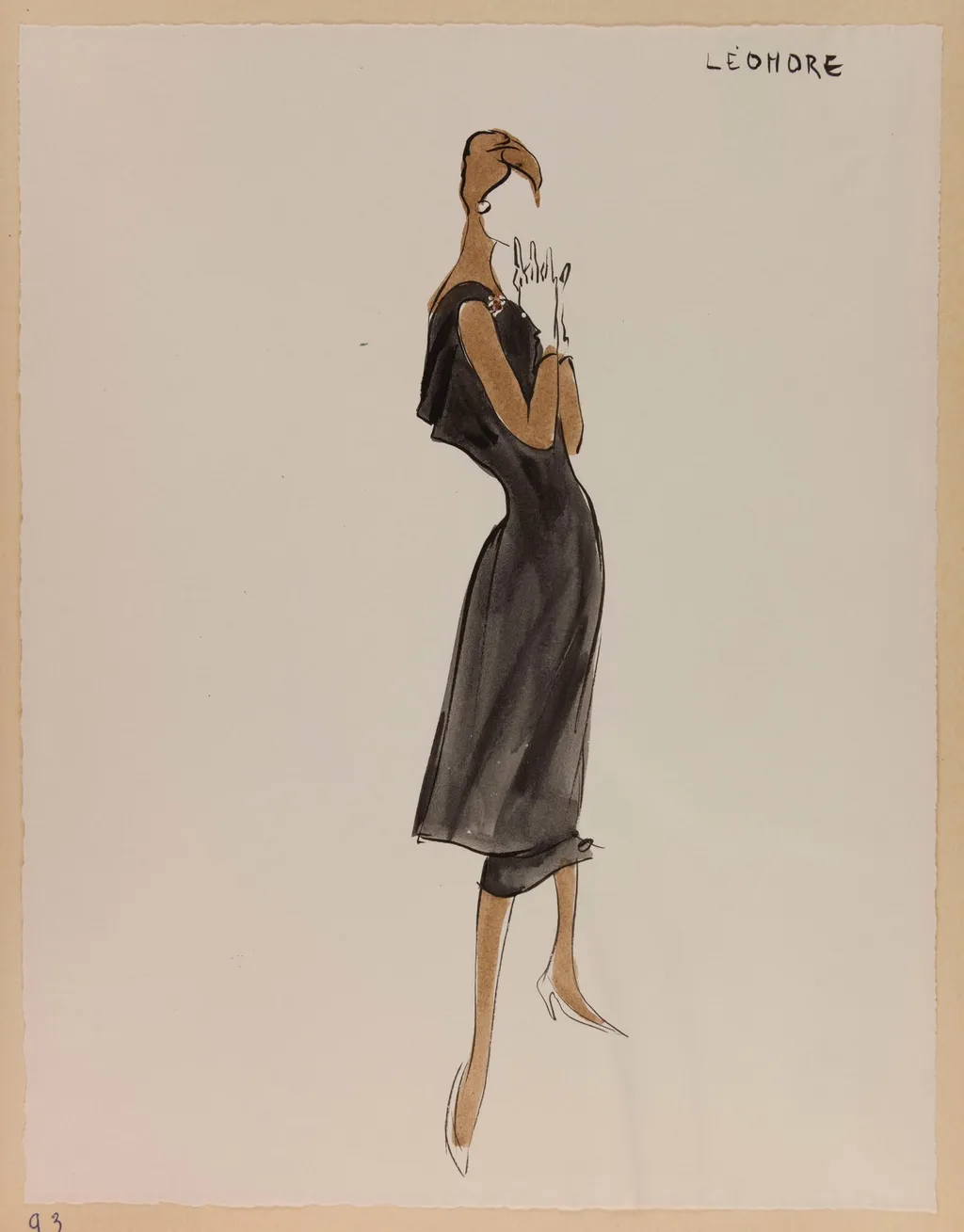
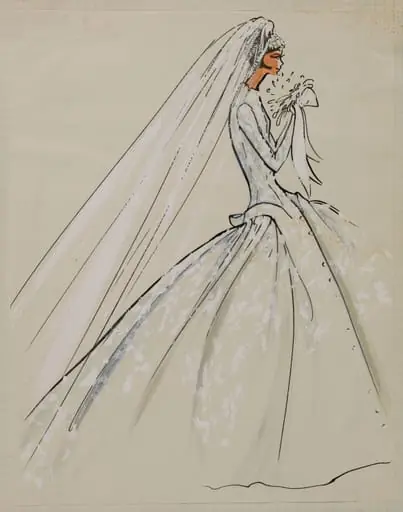
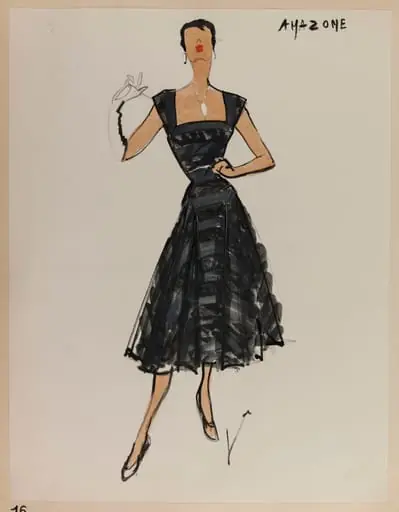
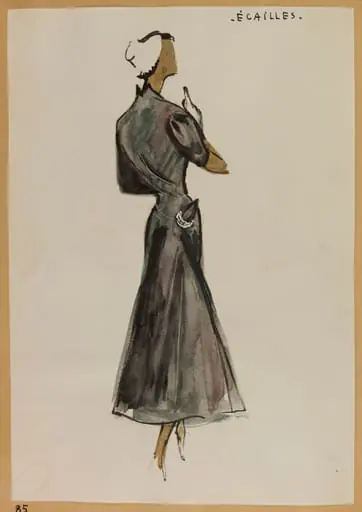
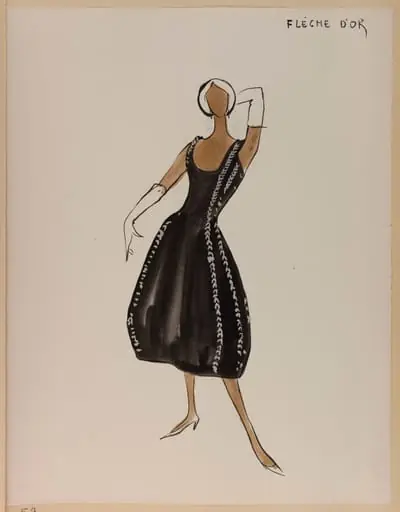
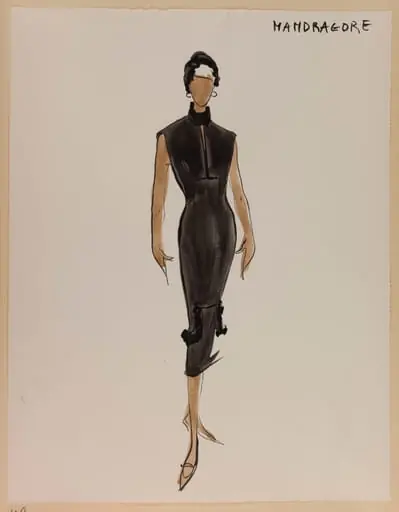
Léonore is a drawing by Carven. It dates from 1956 and is held in the collection of the Palais Galliera - Musée de la Mode de la Ville de Paris.
About this work
The name "Léonore" is written in the top right corner, but we don’t know who she is or why she’s called that.
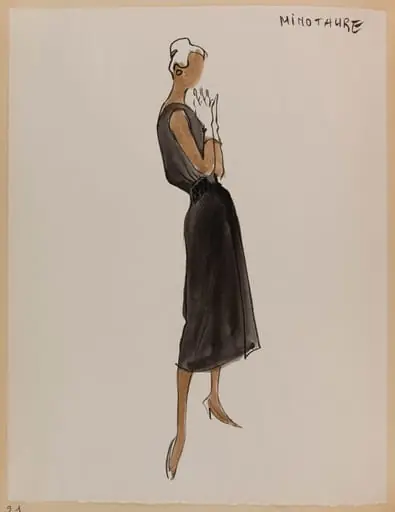
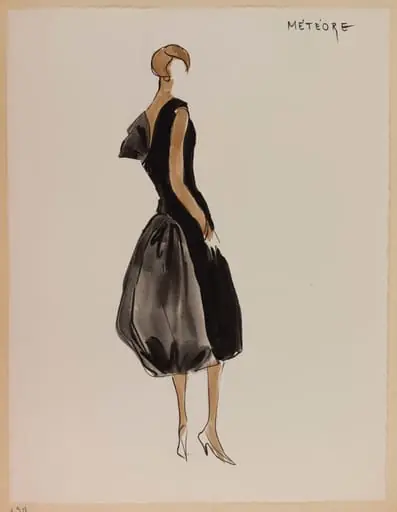
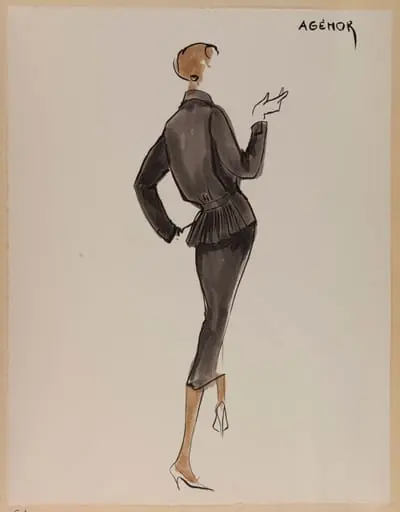
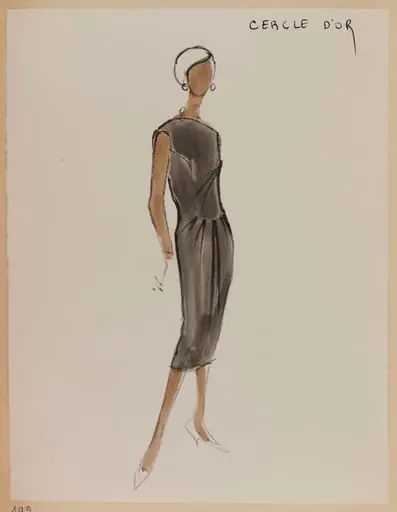
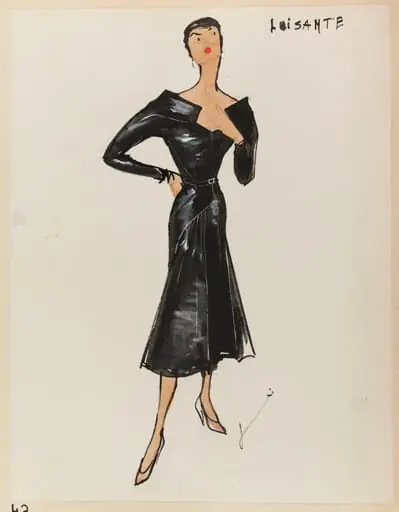
This drawing shows a woman in a simple black dress with a high neckline and long sleeves. Her hair is pulled back, and she stands with one hand resting on her chest. The lines are loose and quick, giving the figure a sketchy, unfinished look.
The name "Léonore" is written in the top right corner, but we don’t know who she is or why she’s called that. The artist signed it "Carven," which is also the name of a famous fashion designer—maybe a clue.
Check out Carven to see how fashion and art mixed in the 20th century.
Overview
Created around 1956, Léonore is a pencil drawing attributed to an artist using the name Carven. It resides in the collection of the Museum of Ethnography. The work presents a solitary female figure rendered in loose, rapid strokes, with minimal detail and no background. The title and signature appear in the upper right, but neither provides clear biographical context. The attribution to Carven aligns with the surname of a known French fashion house, suggesting possible crossover between fashion and fine art circles in mid-century Europe.
Subject & Meaning
The figure, identified only as Léonore, stands still with one hand gently pressed to her chest, her posture conveying quiet introspection. Dressed in a plain black gown with high neckline and long sleeves, she appears neither adorned nor theatrical. The absence of facial features and contextual elements invites ambiguity—she may represent an individual, a type, or an imagined persona. The name, possibly a reference to literary or familial tradition, remains unverified, leaving her identity open to interpretation.
Technique & Style
The drawing employs swift, fluid pencil lines that suggest immediacy rather than polish. Forms are suggested with minimal contour, and shading is sparse, emphasizing gesture over detail. The sketchlike quality evokes preparatory studies or spontaneous notation, as if capturing a fleeting moment. This approach contrasts with the precision typical of fashion illustration, yet shares its economy of line. The unfinished appearance may reflect intentional aesthetic choice or the artist’s working method.
History & Provenance
The drawing entered the Museum of Ethnography’s collection without documented provenance prior to its acquisition. No exhibition history or correspondence linking it to the fashion designer Carven has been found. The use of the name 'Carven' as a signature raises questions about authorship—whether it is the artist’s pseudonym, a misattribution, or a deliberate reference to the brand. Its origins remain obscure, and no related sketches or records have surfaced to clarify its creation.
Context
In the mid-20th century, boundaries between fashion, illustration, and fine art were increasingly porous in Parisian cultural circles. Designers often collaborated with artists, and illustrators drew from everyday life with a sketchbook sensibility. Léonore’s restrained aesthetic aligns with this trend, though its ethnographic placement suggests curators viewed it as a cultural artifact rather than a work of fine art, possibly reflecting broader institutional interest in personal, anonymous imagery of the era.
Legacy
Léonore remains an enigmatic piece within the museum’s holdings, rarely exhibited and seldom studied. Its significance lies in its quiet ambiguity and the unresolved connection to the Carven name. It stands as a quiet example of how personal, unattributed drawings from this period can resist categorization—neither fully fashion, nor fine art, nor ethnography—offering a glimpse into the informal visual culture of postwar Europe.
Artist & collection
Artist
These delicate ink-on-paper drawings capture the quiet poetry of everyday things: pinecones, reeds, apples.
Museum
Palais Galliera - Musée de la Mode de la Ville de Paris
Continue through works from the same source collection.