Artwork
'Lavande'
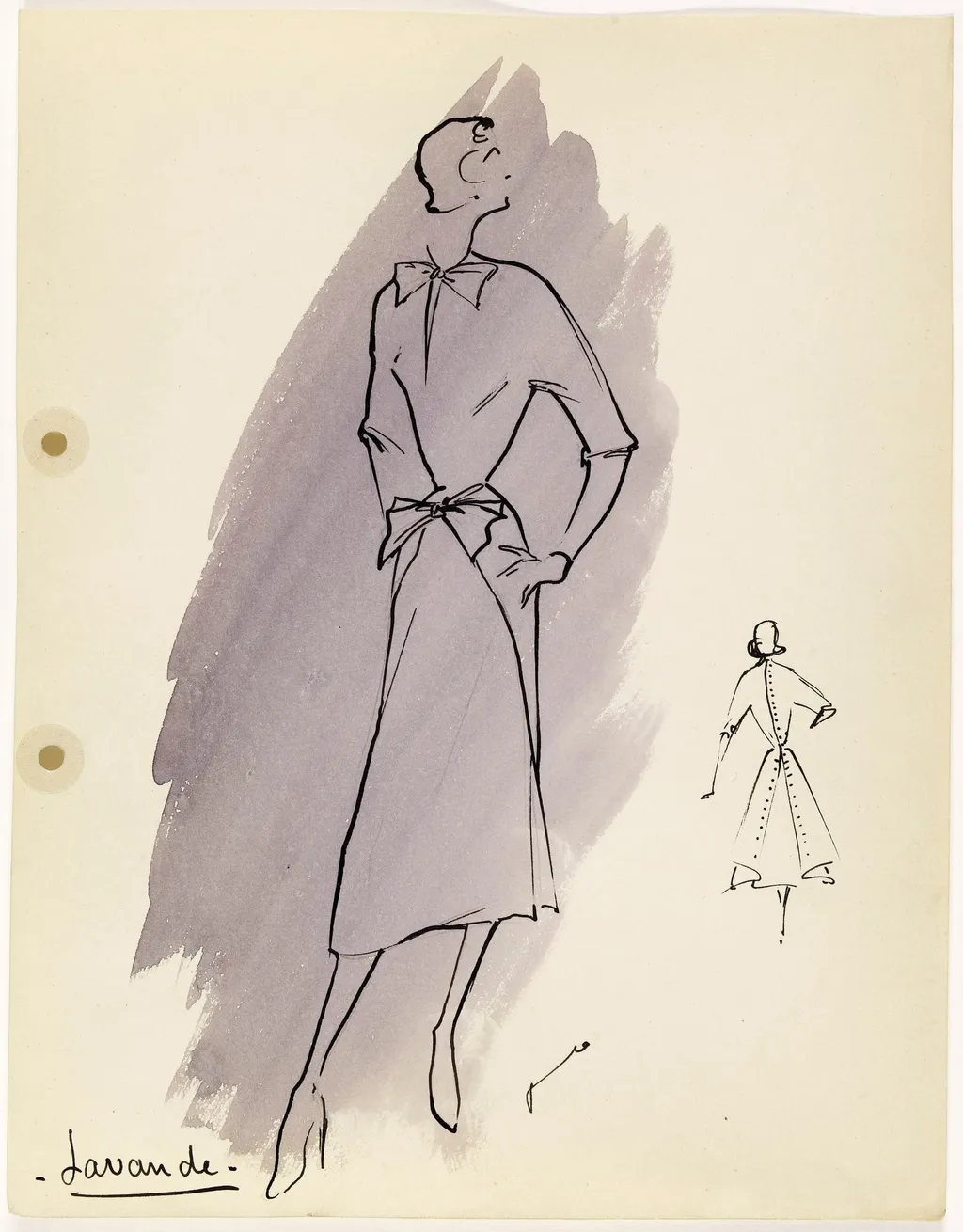
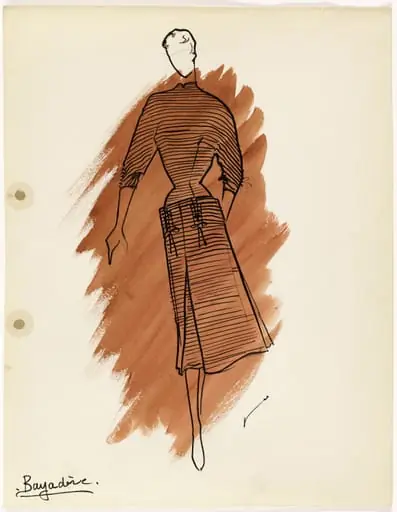
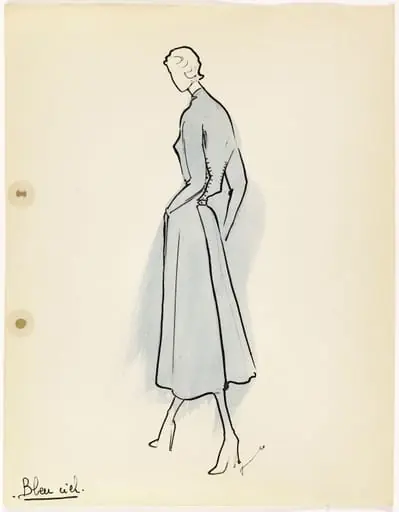
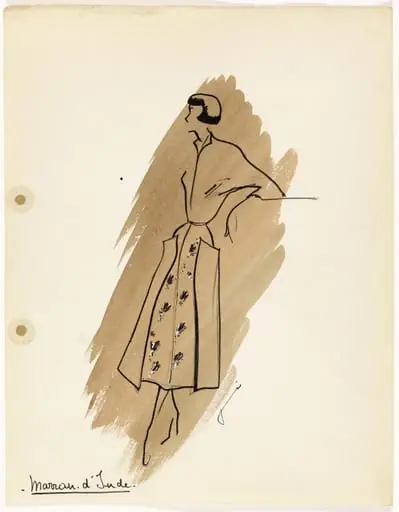
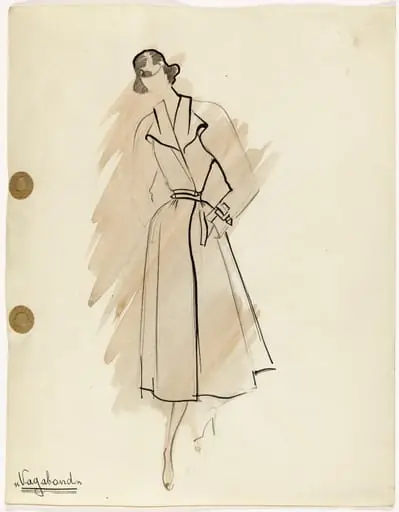
'Lavande' is a drawing by Carven. It dates from 1949 and is held in the collection of the Palais Galliera - Musée de la Mode de la Ville de Paris.
About this work
Overview
Created around 1949, 'Lavande' is a delicate watercolor and ink sketch attributed to the designer Carven.
Created around 1949, 'Lavande' is a delicate watercolor and ink sketch attributed to the designer Carven. It resides in the collection of the Museum of Ethnography. The work captures two female figures in motion, rendered with minimal detail and a sense of immediacy. Its lightness and spontaneity reflect a focus on garment form rather than individual identity, aligning with fashion illustration practices of the mid-20th century.
Subject & Meaning
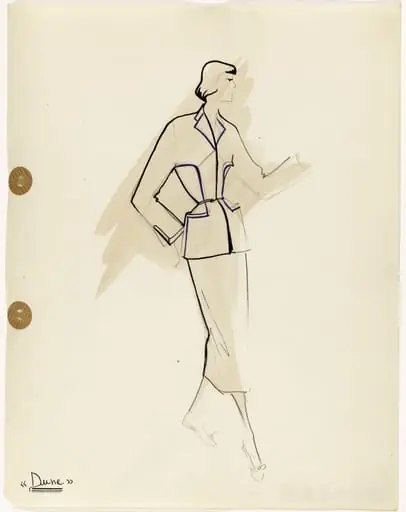
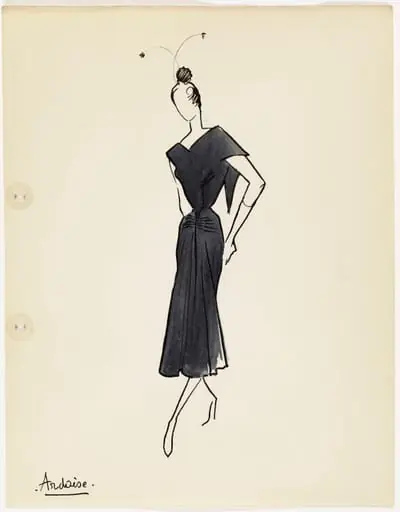
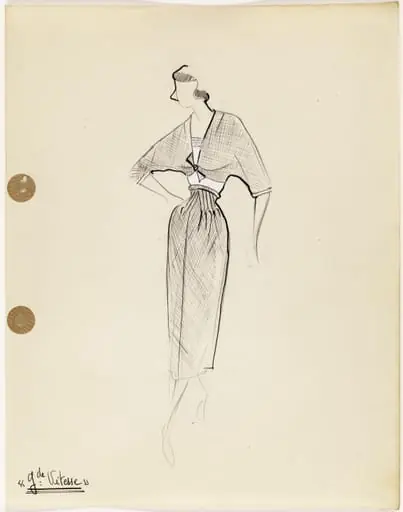
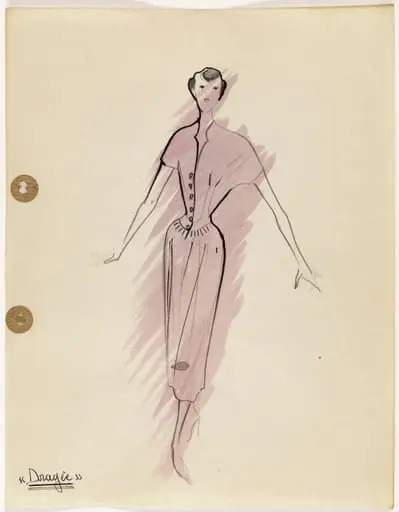
The two women depicted move in quiet harmony, their postures and attire suggesting everyday presence rather than staged performance. One stands still, her coat and neck bow implying structure; the other walks, her dress marked by rhythmic lines that suggest fabric flow. The absence of facial features shifts attention entirely to clothing as expression, emphasizing how dress conveys movement and social bearing.
Technique & Style
Carven employed watercolor and ink with swift, loose strokes, creating an effect akin to visual shorthand. Shading is suggestive rather than defined, and contours are implied rather than outlined. The technique prioritizes speed and fluidity, capturing the drape and weight of fabric through minimal marks. This approach reflects an illustrator’s instinct to record form quickly, likely for design reference or editorial use.
History & Provenance
The work entered the Museum of Ethnography’s collection as part of a broader archive of fashion-related sketches from the mid-20th century. Its attribution to Carven is based on stylistic consistency with known design studies from her studio. Though not exhibited widely, it has been referenced in scholarly studies on postwar French fashion documentation, where such sketches served as working tools rather than finished art.
Context
In the late 1940s, fashion houses relied on illustrators to translate designs into visual proposals for clients and press. 'Lavande' exemplifies this practice, where garments were rendered with attention to silhouette and motion rather than realism. The sketch aligns with contemporaneous work by French designers who valued elegance in simplicity, reflecting a cultural shift toward understated postwar femininity.
Legacy
Though not widely known outside specialized circles, 'Lavande' remains a representative example of how fashion designers documented movement and texture before the rise of photography. Its preservation in an ethnographic museum underscores its value as cultural artifact—evidence of the quiet, functional artistry behind clothing design in mid-century France.
Artist & collection
Artist
These delicate ink-on-paper drawings capture the quiet poetry of everyday things: pinecones, reeds, apples.
Museum
Palais Galliera - Musée de la Mode de la Ville de Paris
Continue through works from the same source collection.