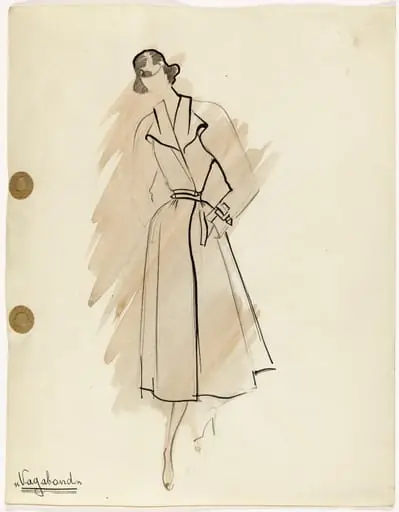
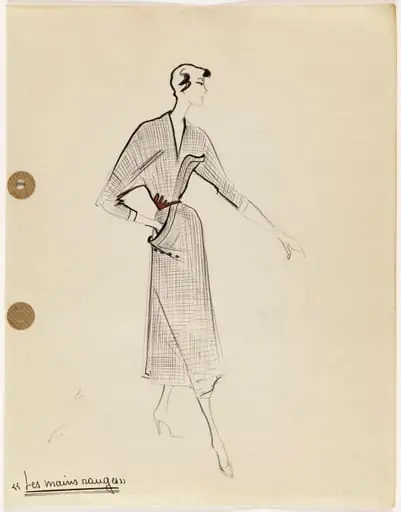
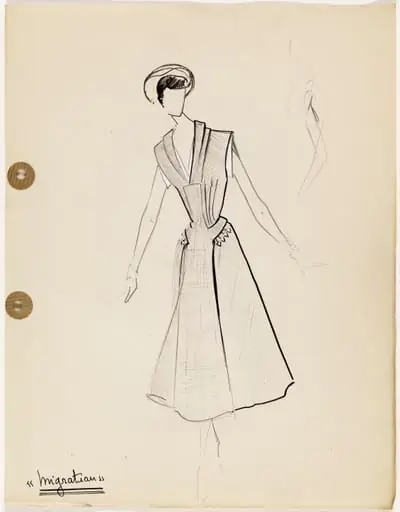
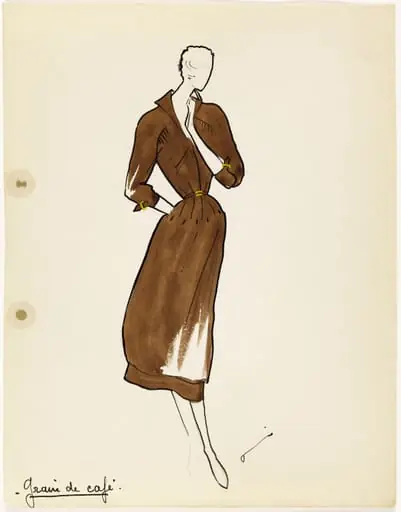
Artwork
'Cannibale'
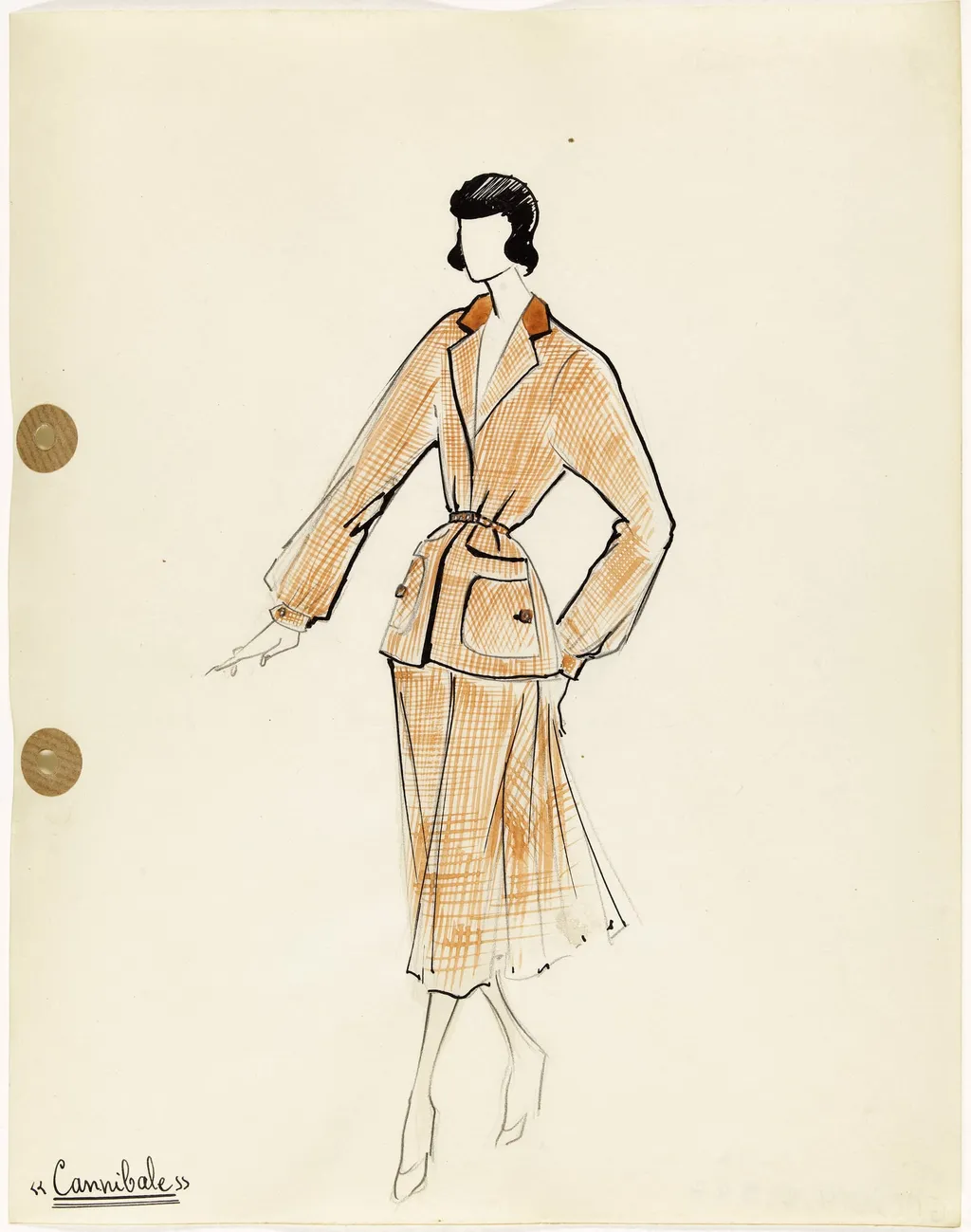
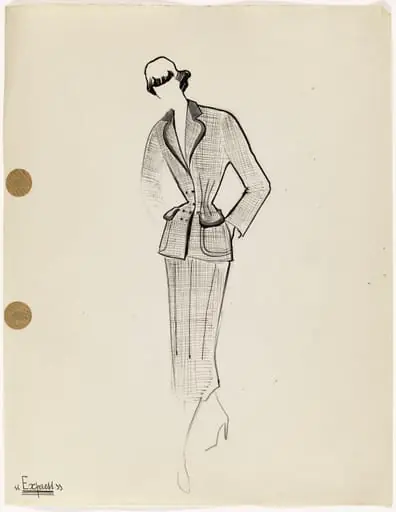
'Cannibale' is a drawing by Marie-Louise Carven. It dates from 1949 and is held in the collection of the Palais Galliera - Musée de la Mode de la Ville de Paris.
About this work
Overview
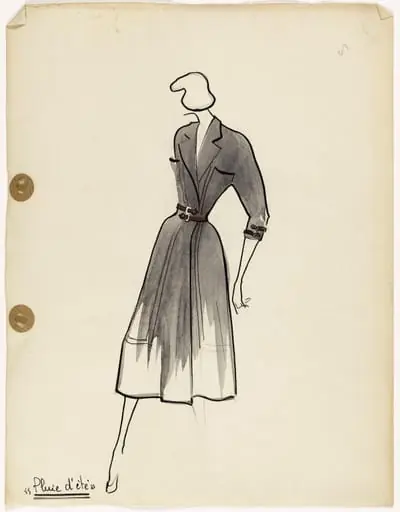
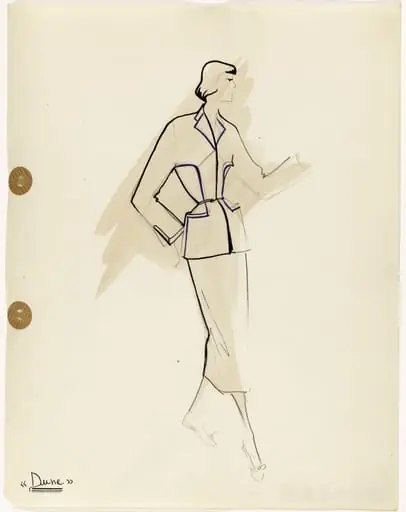
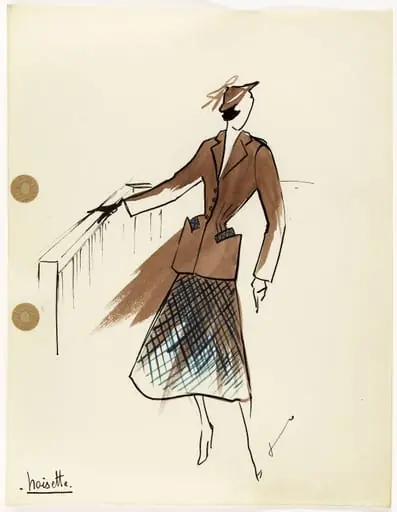
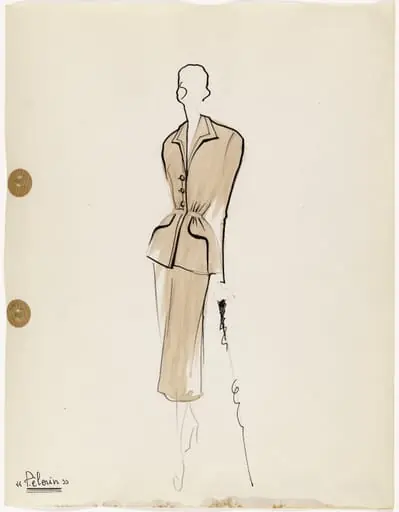
The drawing depicts a two-piece ensemble in light brown fabric with a subtle check pattern, reflecting Carven’s focus on wearable, feminine silhouettes.
Created in 1949, 'Cannibale' is a fashion sketch by Marie-Louise Carven, founder of the Parisian label Carven established in 1945. The drawing depicts a two-piece ensemble in light brown fabric with a subtle check pattern, reflecting Carven’s focus on wearable, feminine silhouettes. Though presented as a design study, it was later acquired by the Museum of Ethnography, suggesting its cultural significance beyond commercial fashion.
Subject & Meaning
The outfit, named 'Cannibale,' presents a relaxed yet structured look: a belted jacket with large pockets paired with a flared skirt. The title may hint at a playful subversion of postwar norms, referencing primal or folk motifs in contrast to the refined tailoring. Carven’s choice of name and form invites interpretation without explicit narrative, leaving room for viewers to consider the interplay of utility and symbolism in everyday dress.
Technique & Style
Carven rendered the design with clean, confident lines and delicate shading, emphasizing form over ornamentation. The sketch captures the drape and volume of the garments with precision, using minimal detail to convey texture and movement. The light brown fabric’s check pattern is suggested through subtle linear repetition, demonstrating her ability to communicate materiality through draftsmanship alone.
History & Provenance
Carven, one of the first French couturiers to develop a prêt-à-porter line, produced 'Cannibale' during a period of transition in postwar fashion. The sketch entered the collection of the Museum of Ethnography, indicating institutional recognition of fashion as cultural artifact. Its preservation there, rather than in a fashion archive, reflects broader mid-century efforts to document everyday dress as part of social history.
Context
In late 1940s Paris, fashion was redefining itself after wartime austerity. Carven’s designs catered to petite figures and emphasized ease, aligning with a growing demand for practical elegance. 'Cannibale' emerged alongside other innovations in ready-to-wear, challenging the dominance of haute couture. Its modest scale and functional details mirror a shift toward democratized style and accessible design.
Legacy
Though not widely exhibited, 'Cannibale' remains a representative example of Carven’s approach to design—elegant, unpretentious, and attuned to the modern woman’s needs. Its presence in an ethnographic museum underscores how her work contributed to redefining fashion’s role in cultural documentation. The sketch endures as a quiet testament to the quiet revolution in postwar women’s clothing.
Artist & collection
Artist
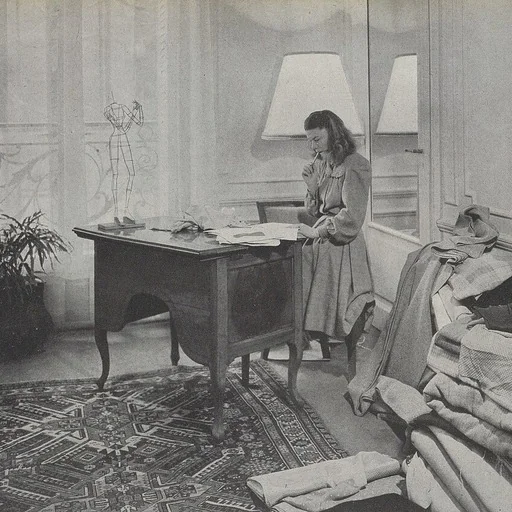
Marie-Louise Carven (31 August 1909 – 8 June 2015), born Carmen de Tommaso, was a French fashion designer who founded the house of Carven in 1945.
Museum
Palais Galliera - Musée de la Mode de la Ville de Paris
Continue through works from the same source collection.
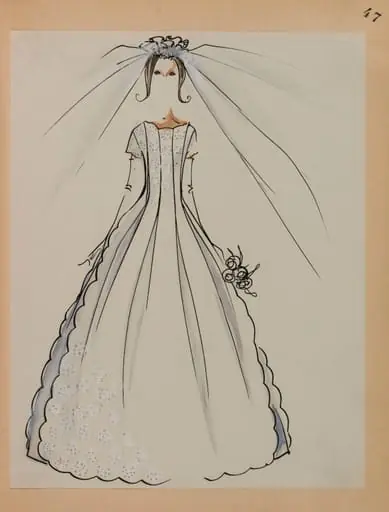 Robe de mariée festonnée et son voile
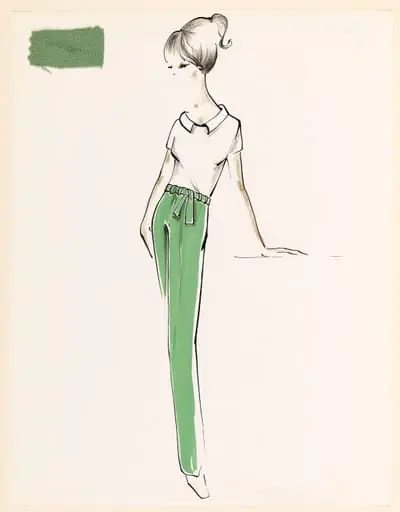 Haut blanc à manches courtes et pantalon vert à ceinture nouée
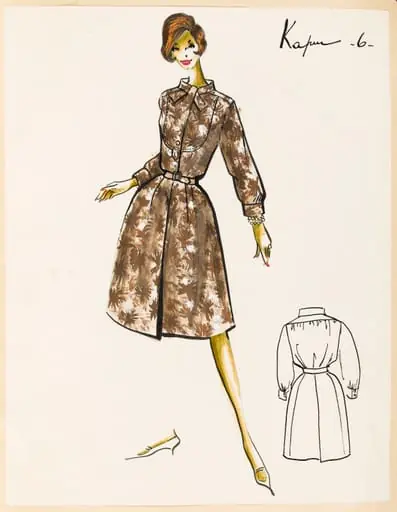 Kapur
Kapur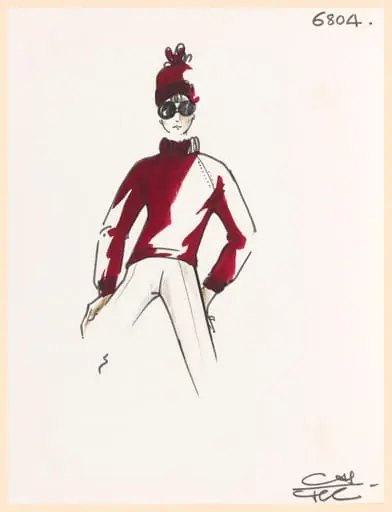 Pull-over à manches longues pourpre, bonnet assorti, pantalon et lunettes de soleil
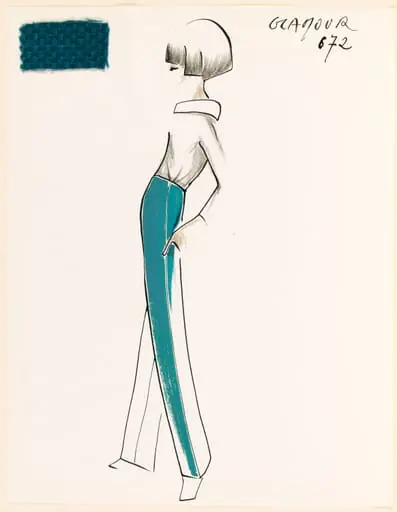 GLAMOUR
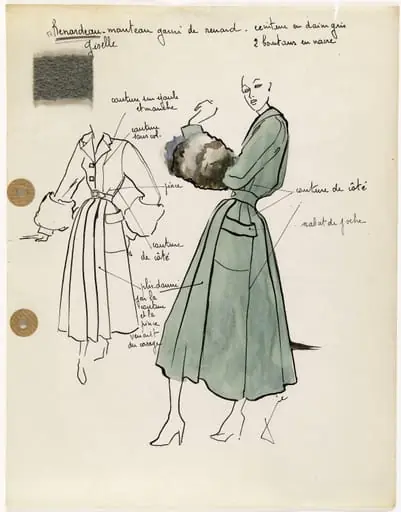 'Renardeau'
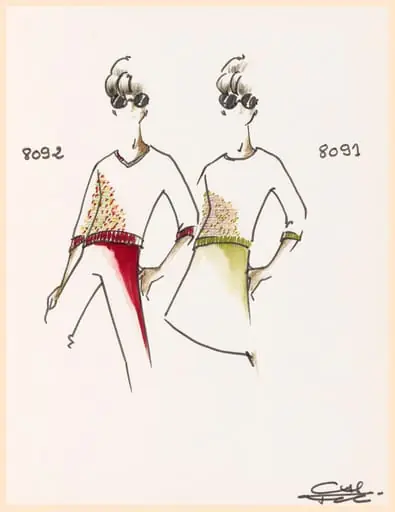 Pull-over à manches trois quarts et à encolure V à motifs multicolores, pantalon cerise et lunettes de soleil
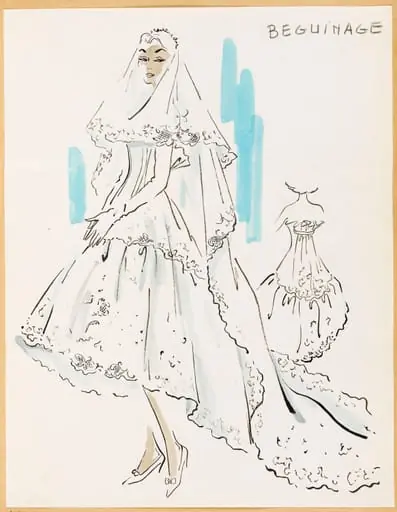 Béguinage