Artwork
'Marron d'Inde'
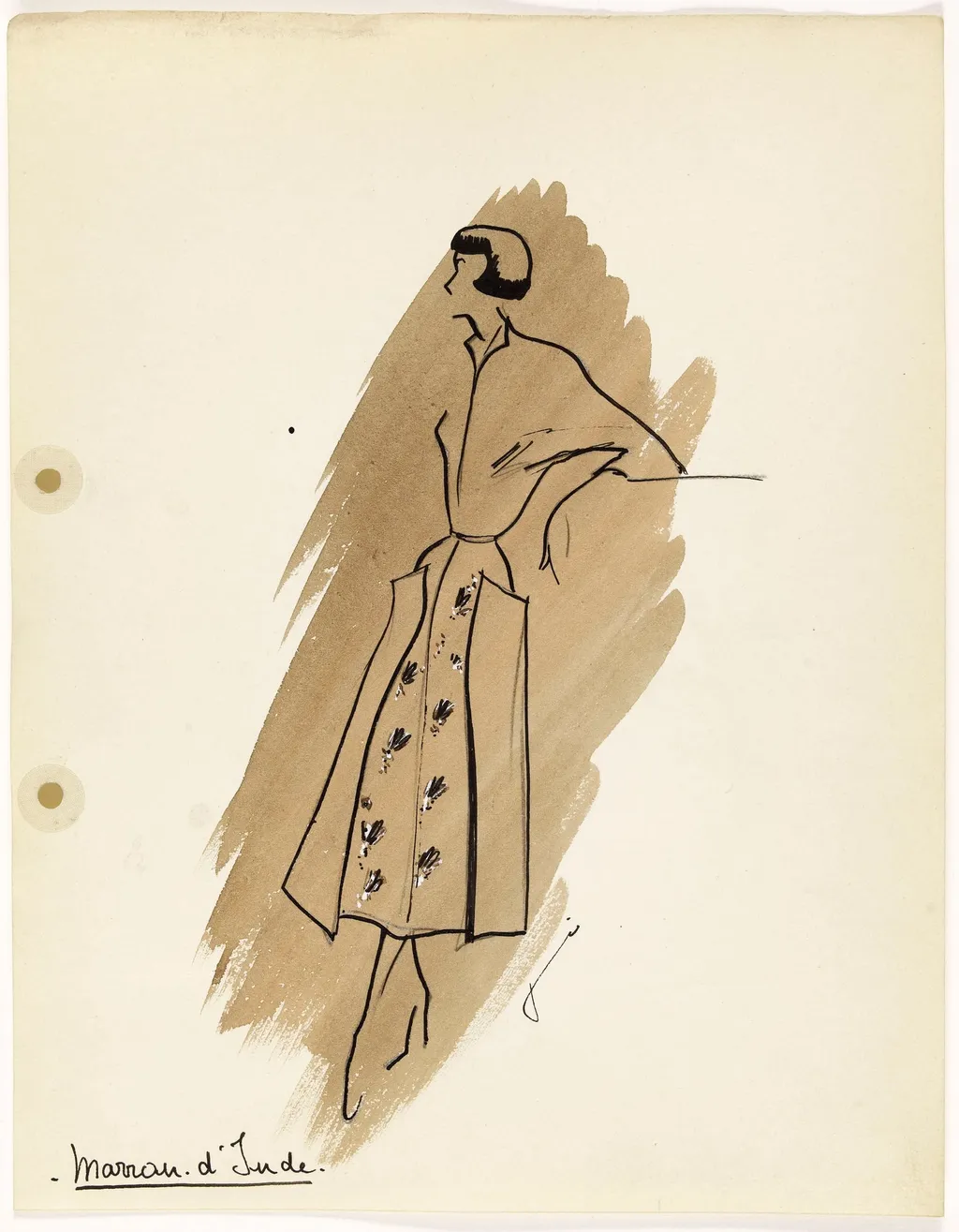
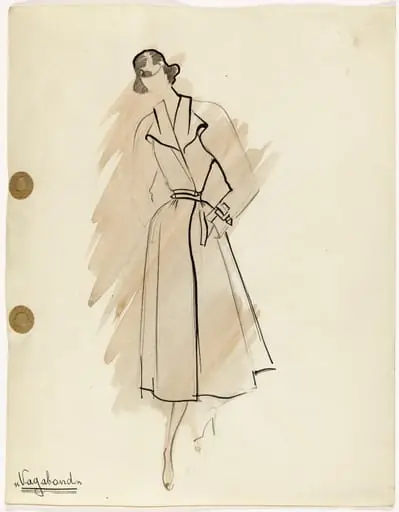
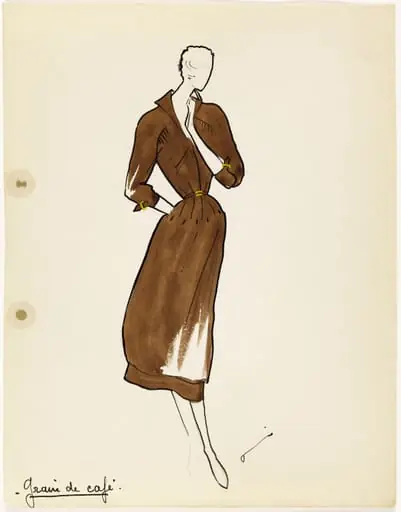
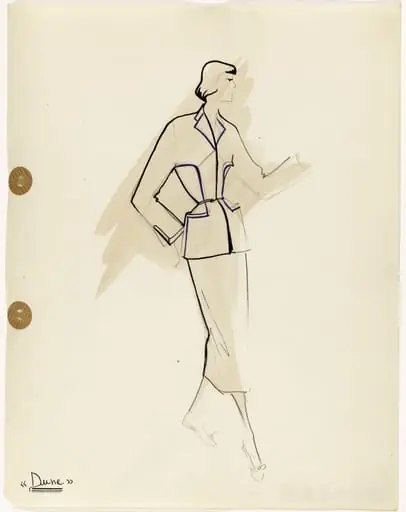
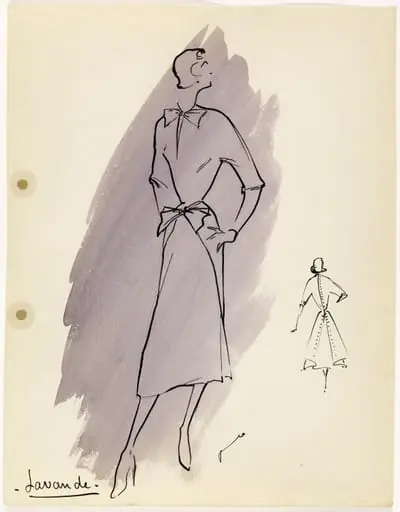
'Marron d'Inde' is a drawing by Marie-Louise Carven. It dates from 1949 and is held in the collection of the Palais Galliera - Musée de la Mode de la Ville de Paris.
About this work
Overview
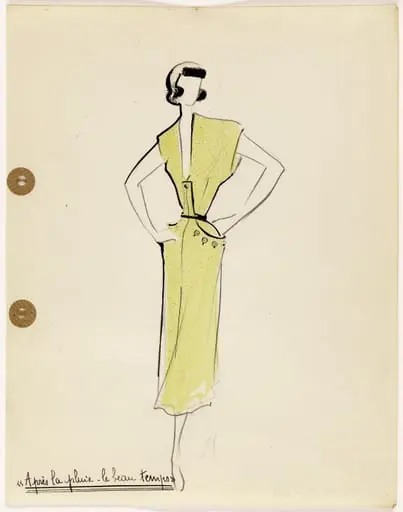
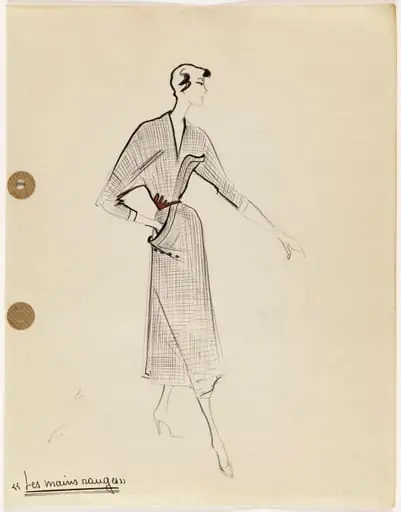
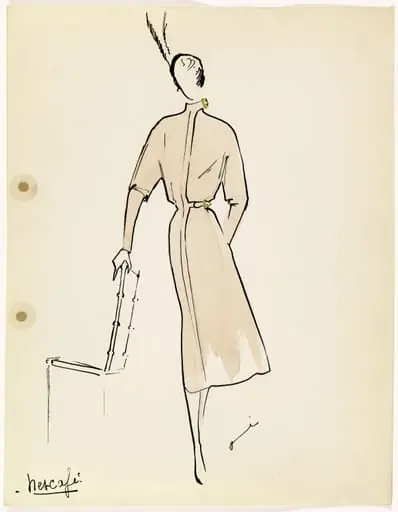
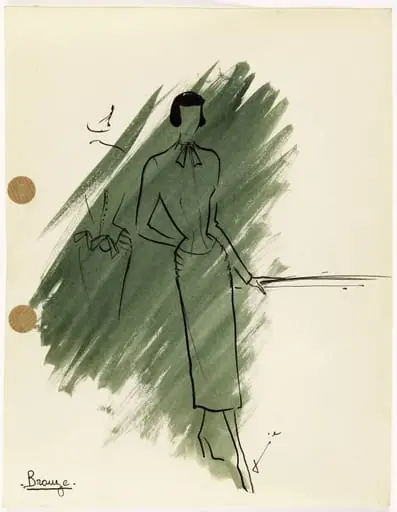
Marron d'Inde, created circa 1949 by French fashion designer Marie-Louise Carven, is a fashion sketch depicting a woman in a long, flowing dress with a high neckline and simple floral patterns. Characterized by loose, quick lines prioritizing shape over detail, the work showcases Carven's affinity for lightweight fabrics.
Subject & Meaning
The subject is a woman dressed in a named design, 'Marron d'Inde', likely indicating the dress's title. The portrayal emphasizes comfort and elegance through the relaxed pose and simple, airy design, reflecting Carven's focus on petite women's fashion.
Technique & Style
Executed with loose, expressive lines, the sketch prioritizes the overall silhouette and movement of the lightweight fabric, suggested to be silk. This technique aligns with Carven's design philosophy of emphasizing ease and fluidity.
History & Provenance
Created around 1949 by Marie-Louise Carven, founder of the Carven fashion house (established in 1945), Marron d'Inde is now part of the Museum of Ethnography's collection. Carven was a pioneer in introducing prêt-à-porter lines among couturiers.
Context
Marron d'Inde sits within the broader context of post-WWII fashion, where designers like Carven were influencing the shift towards more accessible, ready-to-wear clothing without sacrificing elegance. Comparisons with 1920s womenswear highlight the evolution of feminine silhouettes.
Legacy
As part of Carven's work, Marron d'Inde contributes to the legacy of French couture's adaptation to modern, wearable fashion. It showcases the designer's impact on petite women's fashion and the prêt-à-porter market.
Artist & collection
Artist
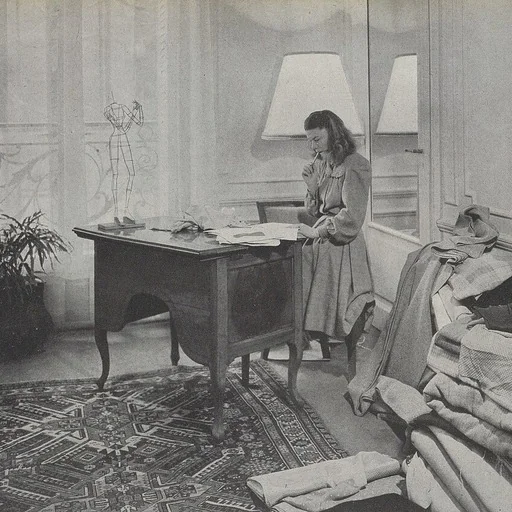
Marie-Louise Carven (31 August 1909 – 8 June 2015), born Carmen de Tommaso, was a French fashion designer who founded the house of Carven in 1945.
Museum
Palais Galliera - Musée de la Mode de la Ville de Paris
Continue through works from the same source collection.
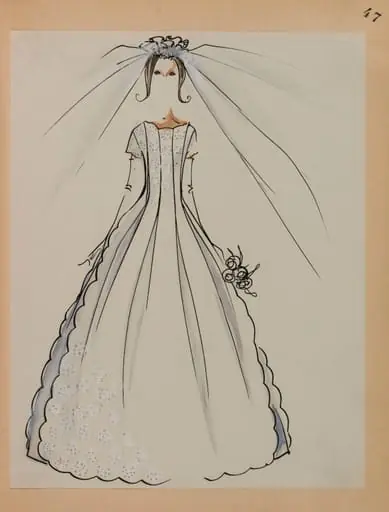 Robe de mariée festonnée et son voile
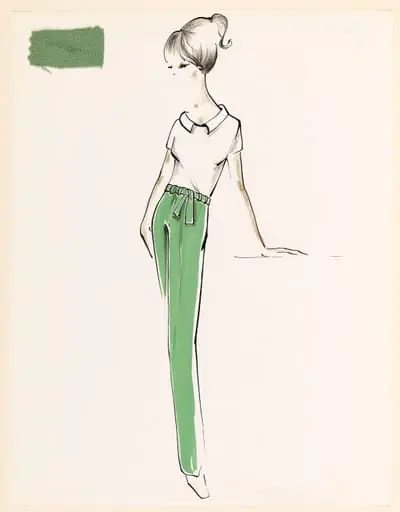 Haut blanc à manches courtes et pantalon vert à ceinture nouée
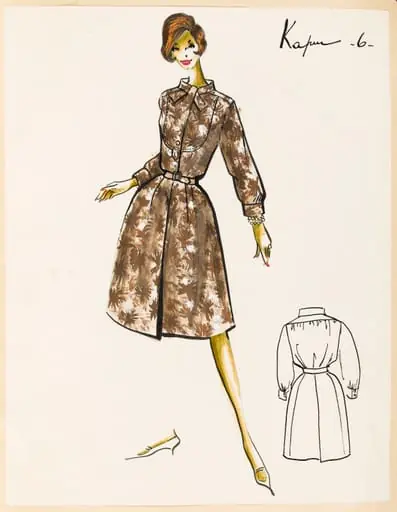 Kapur
Kapur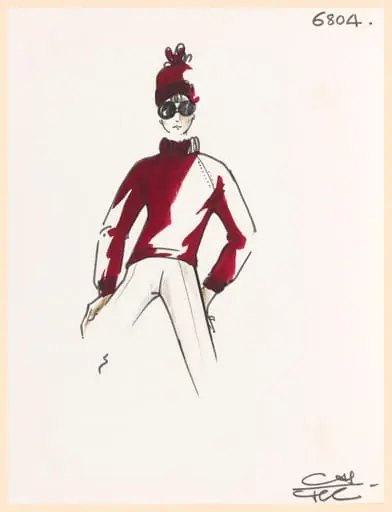 Pull-over à manches longues pourpre, bonnet assorti, pantalon et lunettes de soleil
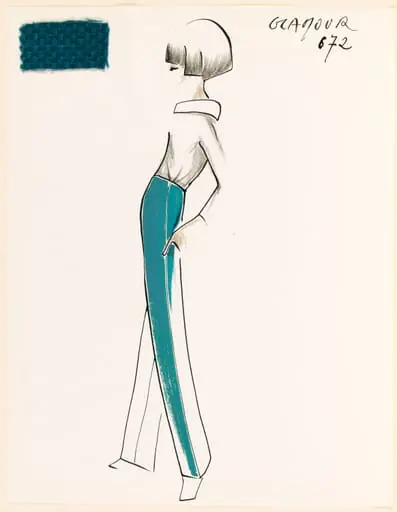 GLAMOUR
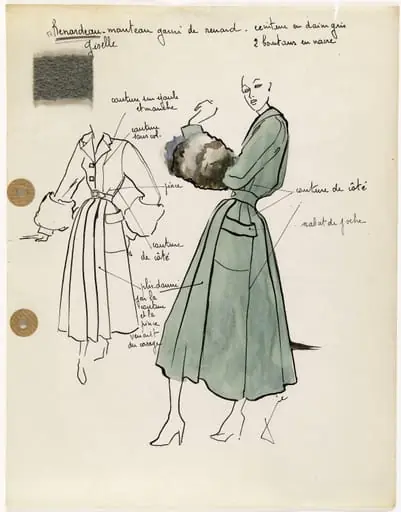 'Renardeau'
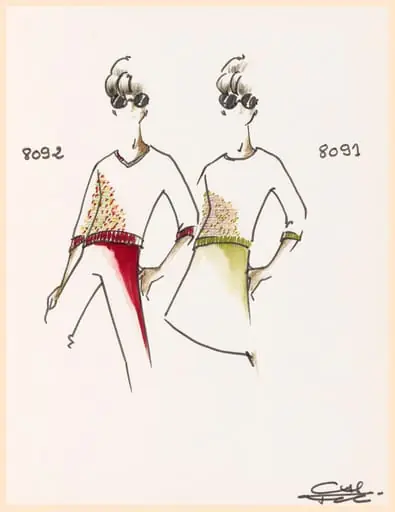 Pull-over à manches trois quarts et à encolure V à motifs multicolores, pantalon cerise et lunettes de soleil
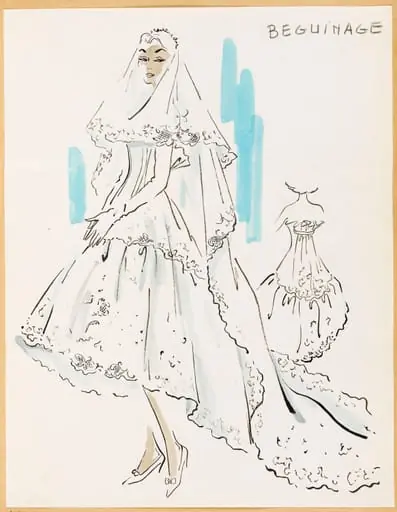 Béguinage