Artwork
Leki
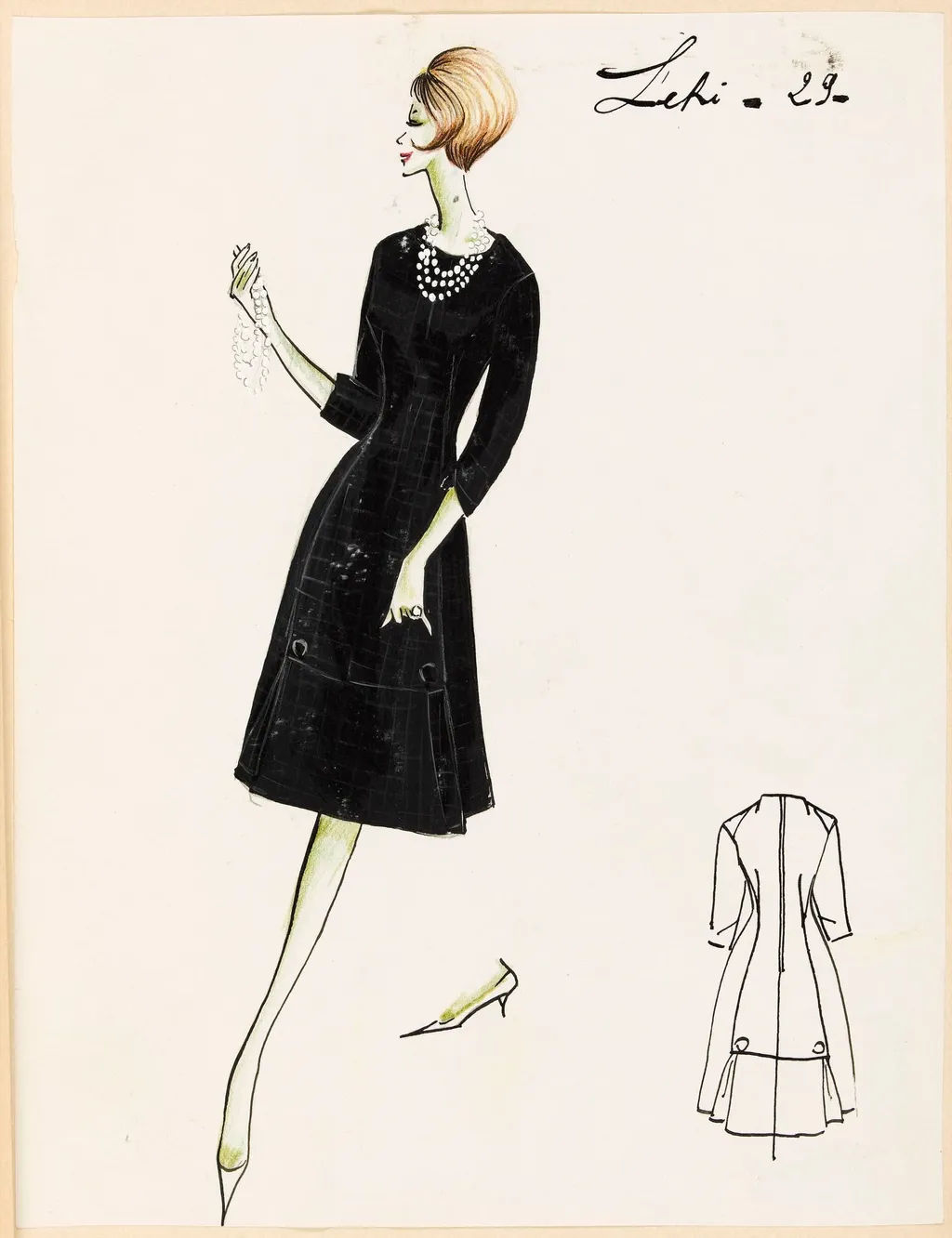
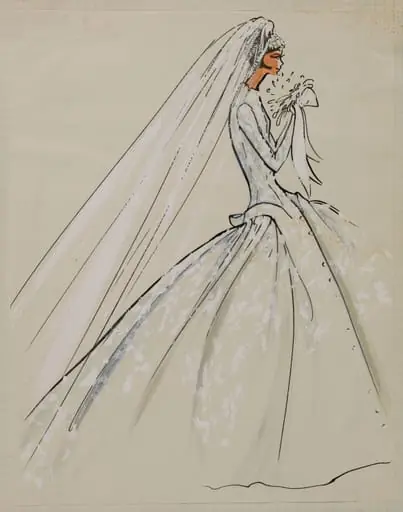
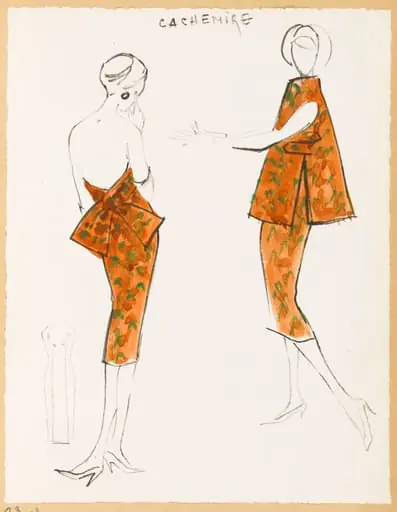
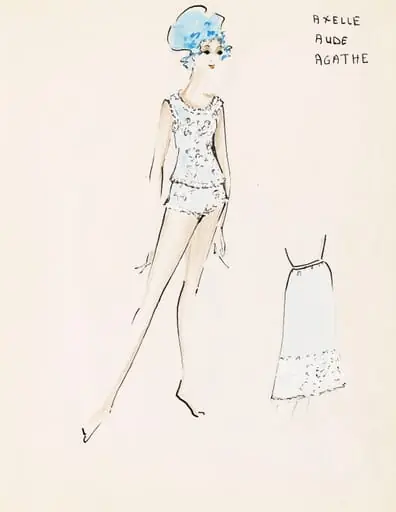
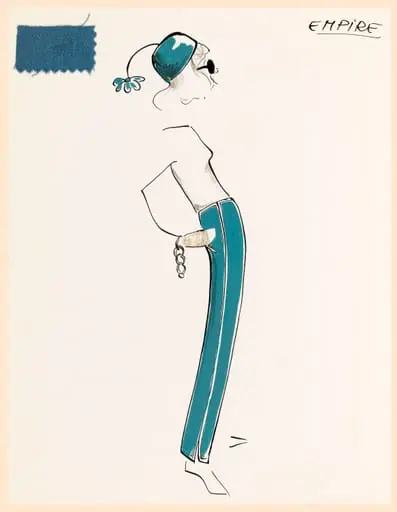
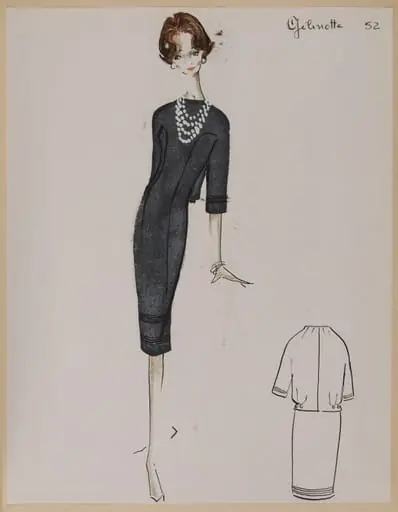
Leki is a drawing by Carven. It dates from 1959 and is held in the collection of the Palais Galliera - Musée de la Mode de la Ville de Paris.
About this work
Overview
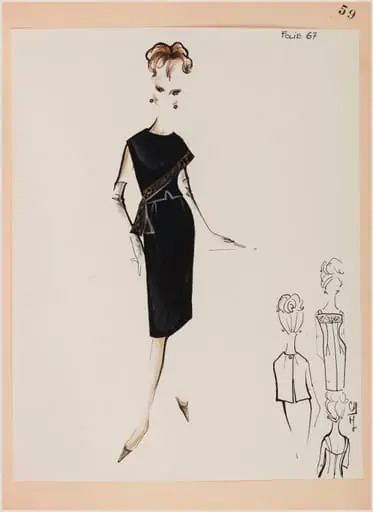
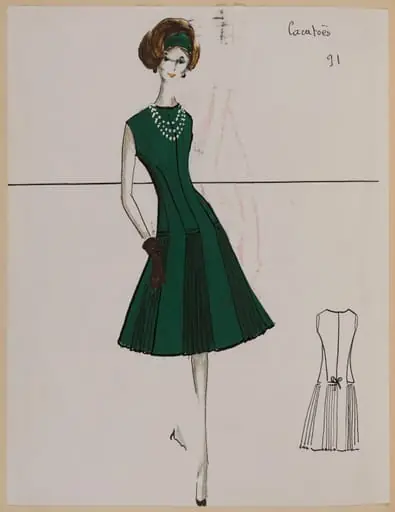
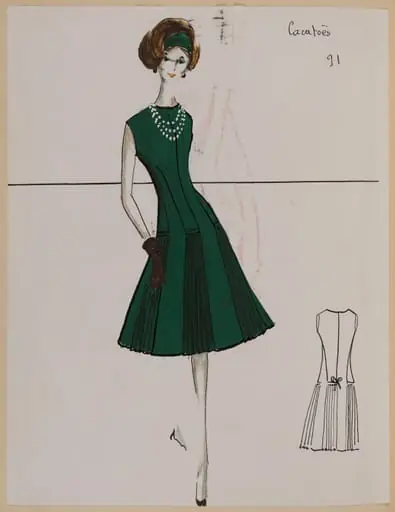
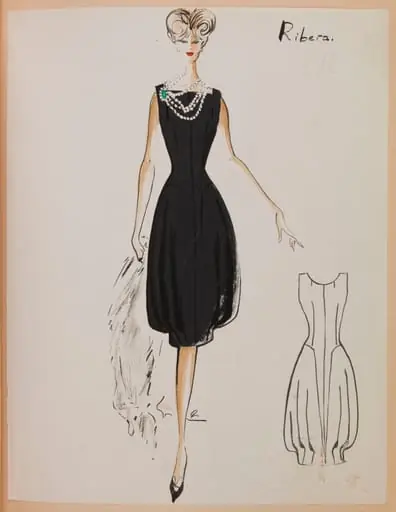
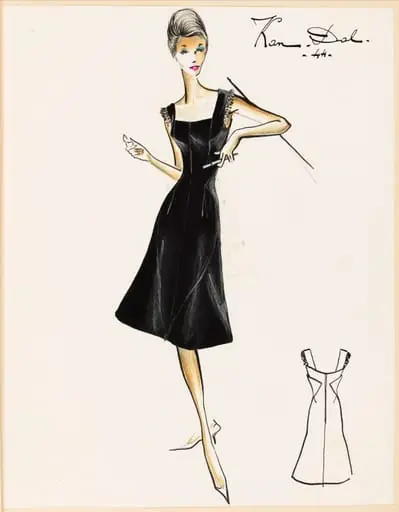
A secondary sketch of the dress’s back appears beside the main figure, suggesting an interest in garment construction as much as appearance.
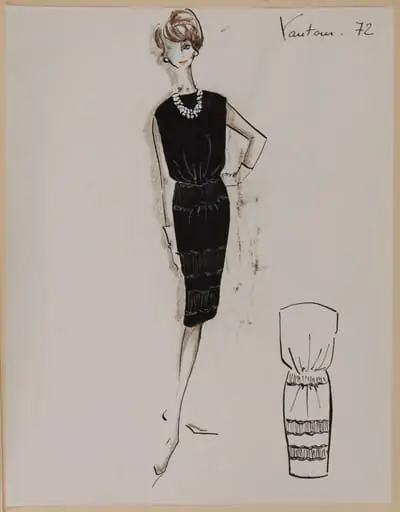
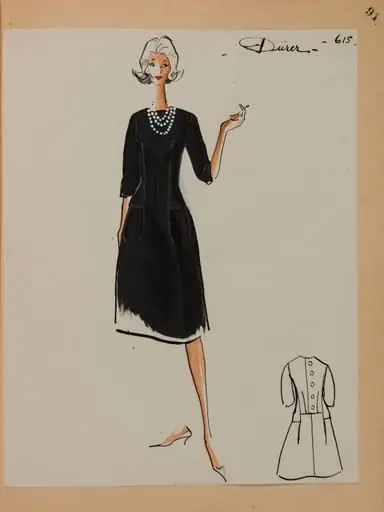
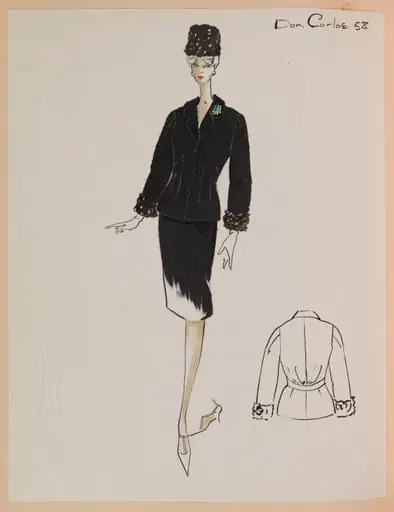
Leki is a pencil drawing attributed to the French designer Carven, dated approximately 1959. It resides in the collection of the Museum of Ethnography. The work presents a stylized portrait of a woman in contemporary attire, rendered with clean lines and minimal detail. A secondary sketch of the dress’s back appears beside the main figure, suggesting an interest in garment construction as much as appearance.
Subject & Meaning
The subject is a woman dressed in a modest, A-line black dress with a high neckline and short sleeves, accessorized with a pearl necklace and black heels. Her poised stance and refined clothing reflect mid-century urban femininity. The inclusion of a small purse and the back-view sketch implies a focus on the practicality and structure of fashion, rather than narrative or emotional expression.
Technique & Style
Executed in pencil, the drawing employs precise, restrained lines to define form and silhouette. The absence of shading or texture emphasizes clarity over realism. The dual presentation of front and back views aligns with fashion illustration conventions of the period, prioritizing garment anatomy. The signature 'Leki' in the corner suggests a personal or pseudonymous attribution, though its relationship to Carven remains unverified.
History & Provenance
The drawing entered the Museum of Ethnography’s collection without documented provenance prior to its acquisition. No date is inscribed, and the attribution to Carven is based on stylistic comparison with known works. The absence of exhibition history or archival references leaves its original purpose—whether study, presentation, or personal sketch—uncertain.
Context
Created in the late 1950s, Leki reflects the era’s emphasis on tailored, minimalist fashion in postwar Europe. Fashion houses like Carven were redefining women’s wear with clean lines and functional elegance. This drawing aligns with the period’s shift toward practicality in design, where clothing was both aesthetic and wearable, often documented through technical sketches rather than fine art.
Legacy
Leki contributes to the understudied archive of fashion-related drawings held in ethnographic institutions. Its presence there signals an interest in everyday material culture rather than haute couture spectacle. While not widely reproduced, it remains a quiet example of how fashion design was internally documented, bridging utility and visual record in mid-century Europe.
Artist & collection
Artist
These delicate ink-on-paper drawings capture the quiet poetry of everyday things: pinecones, reeds, apples.
Museum
Palais Galliera - Musée de la Mode de la Ville de Paris
Continue through works from the same source collection.