Artwork
Folie
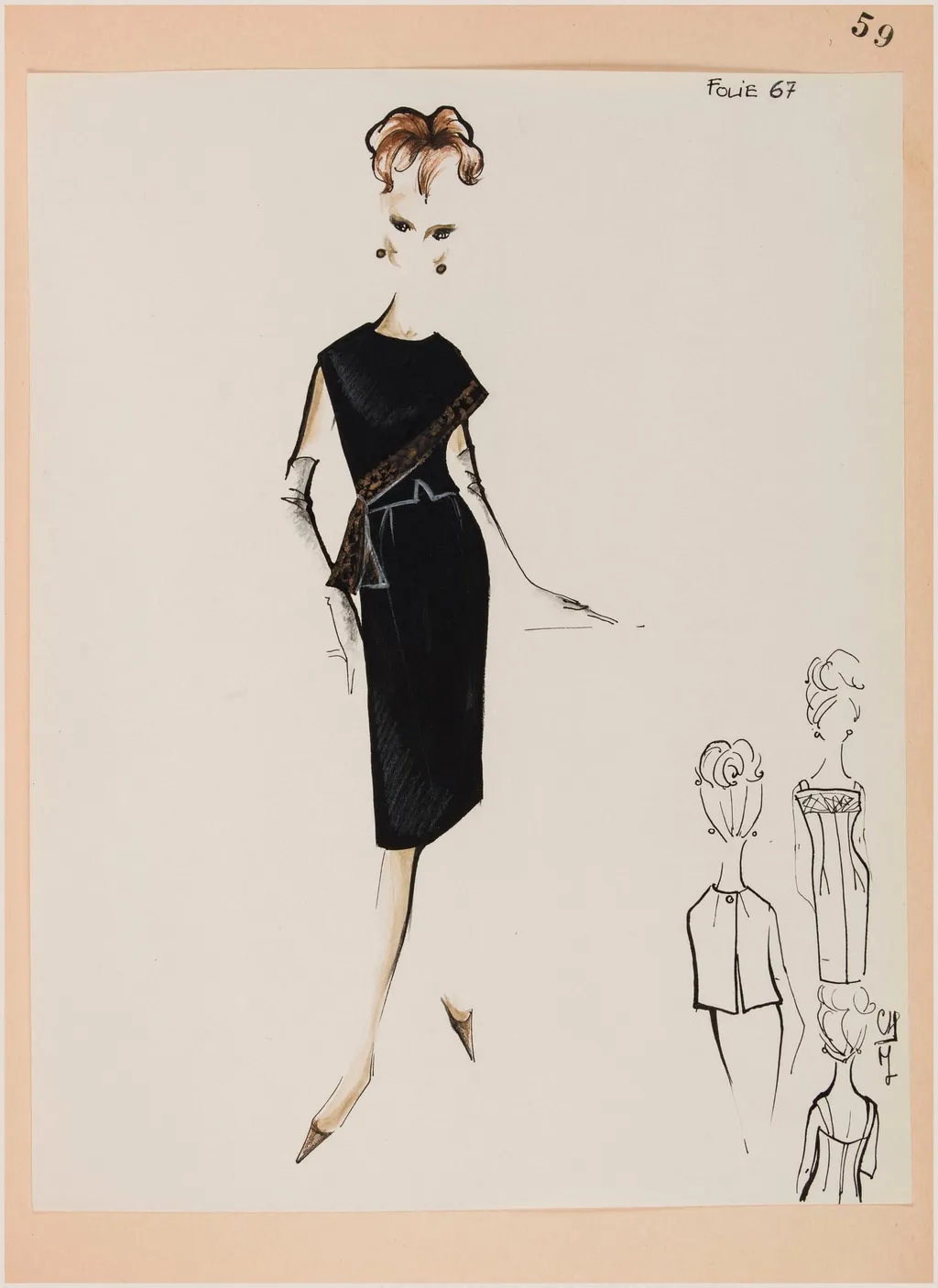
Folie is a drawing by Marie-Louise Carven. It dates from 1963 and is held in the collection of the Palais Galliera - Musée de la Mode de la Ville de Paris.
About this work
Overview
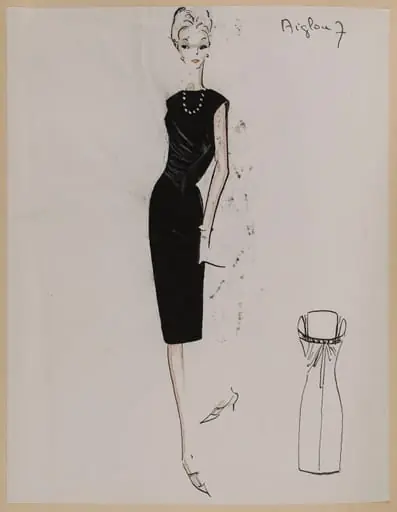
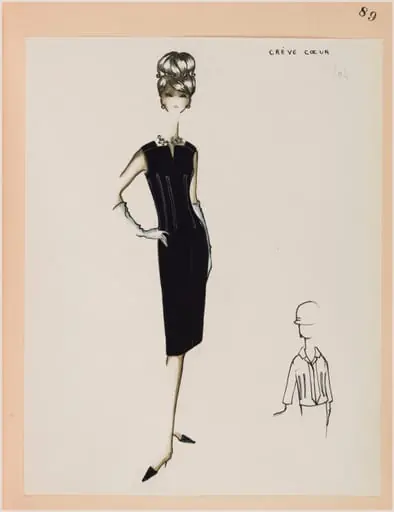
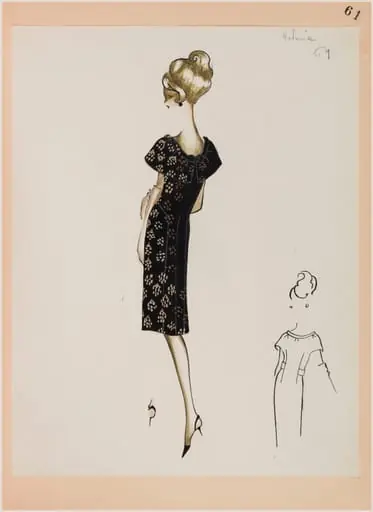
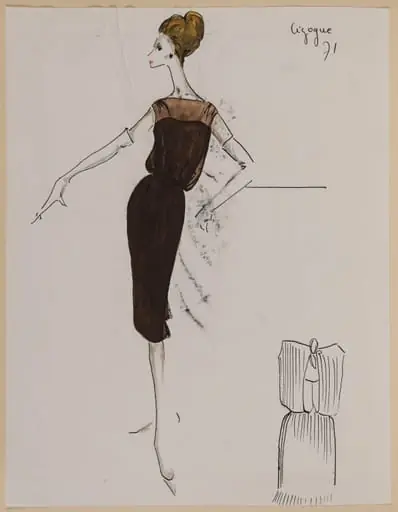
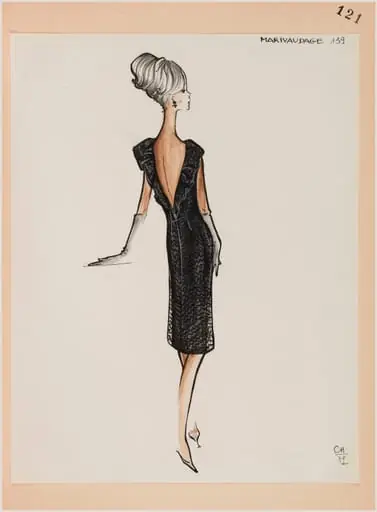
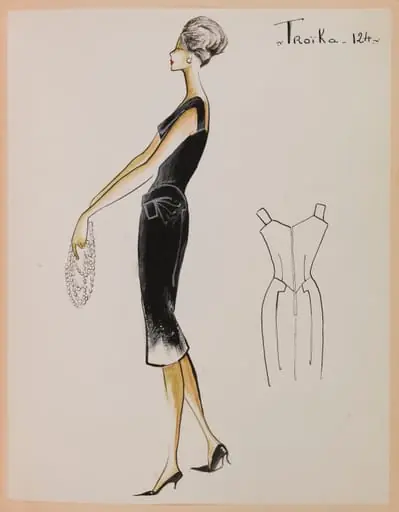
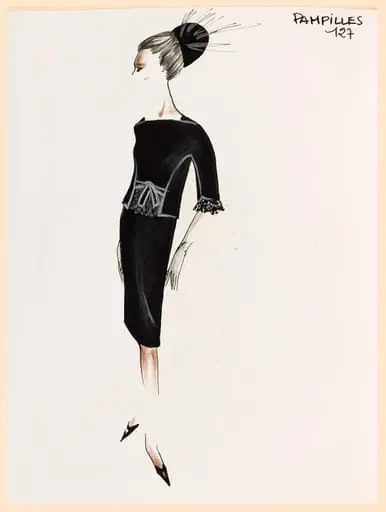
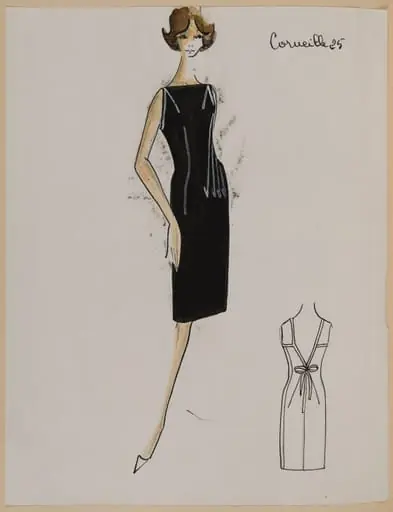
Executed in ink, the drawing captures a woman in a minimalist black ensemble—fitted bodice, short skirt, and a delicately bowled belt.
Created in 1963, *Folie* is a fashion sketch by Marie-Louise Carven, founder of the Parisian label Carven. Executed in ink, the drawing captures a woman in a minimalist black ensemble—fitted bodice, short skirt, and a delicately bowled belt. The composition includes multiple angular views of the figure, suggesting iterative design thinking. It resides in the Museum of Ethnography’s collection as an artifact of mid-century French ready-to-wear development.
Subject & Meaning
The figure embodies Carven’s design philosophy: tailored yet unpretentious, intended for the petite frame. The absence of ornamentation, save for the belt’s small bow, reflects a quiet elegance. The sketch’s focus on proportion and movement, rather than embellishment, signals a shift toward practical, wearable fashion. It represents a vision of modern femininity rooted in ease and structure, not spectacle.
Technique & Style
Carven used swift, assured ink lines to convey form and fabric behavior. The loose, overlapping profiles on the right suggest exploratory drafting—common in fashion design before final patterns. Subtle details, like the skirt’s drape and the belt’s curvature, reveal an understanding of how materials respond to the body. The sketch’s immediacy underscores its function as a working document, not a finished illustration.
History & Provenance
Carven established her fashion house in 1945, becoming one of the first French designers to prioritize prêt-à-porter. *Folie* emerged during a period when her brand was expanding its ready-to-wear lines. The sketch entered the Museum of Ethnography’s holdings as part of a broader effort to document design processes, not merely finished garments. Its preservation highlights the value placed on preparatory work in fashion history.
Context
In the early 1960s, Parisian fashion was transitioning from haute couture dominance to accessible, mass-produced clothing. Carven’s focus on lightweight fabrics and petite sizing catered to a growing middle-class clientele. *Folie* reflects this shift, aligning with broader societal changes in women’s lifestyles and the rise of urban, mobile wardrobes. The sketch’s simplicity mirrors postwar ideals of efficiency and understated refinement.
Legacy
*Folie* stands as a testament to Carven’s role in democratizing fashion. Her emphasis on fit, proportion, and wearable detail influenced later designers who prioritized functionality without sacrificing grace. The sketch’s preservation in a museum of ethnography signals a recognition that fashion design is a cultural practice, not merely an art form. It invites reflection on how everyday clothing shapes identity.
Artist & collection
Artist
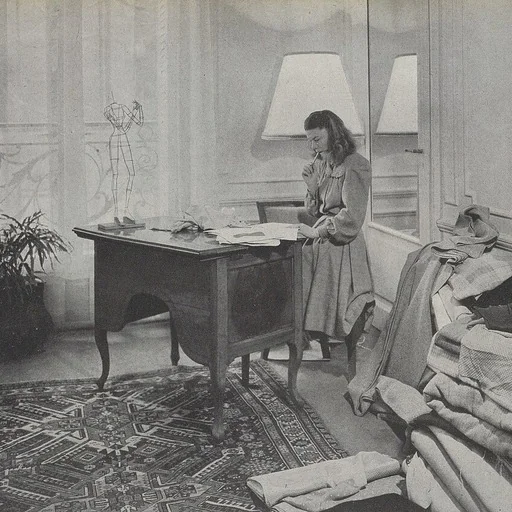
Marie-Louise Carven (31 August 1909 – 8 June 2015), born Carmen de Tommaso, was a French fashion designer who founded the house of Carven in 1945.

Museum
Palais Galliera - Musée de la Mode de la Ville de Paris
Continue through works from the same source collection.
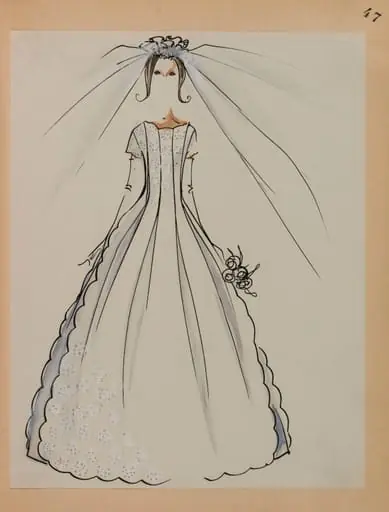 Robe de mariée festonnée et son voile
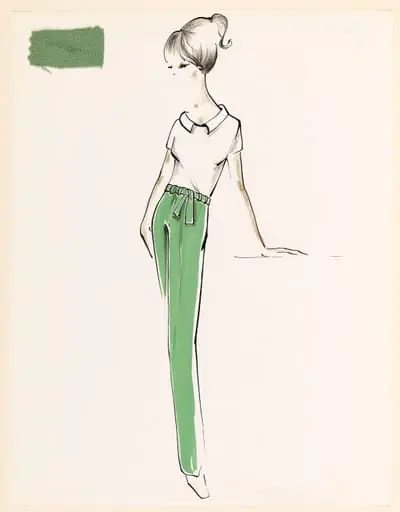 Haut blanc à manches courtes et pantalon vert à ceinture nouée
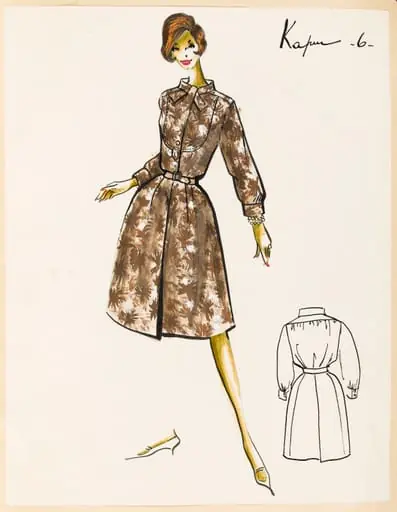 Kapur
Kapur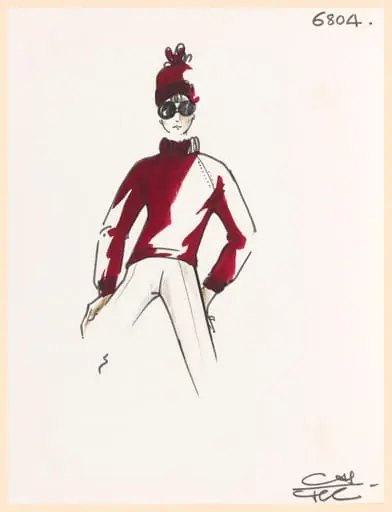 Pull-over à manches longues pourpre, bonnet assorti, pantalon et lunettes de soleil
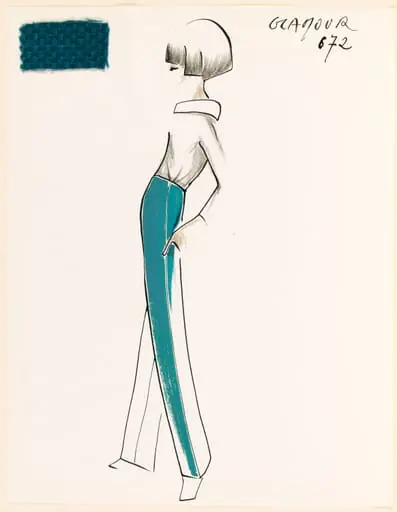 GLAMOUR
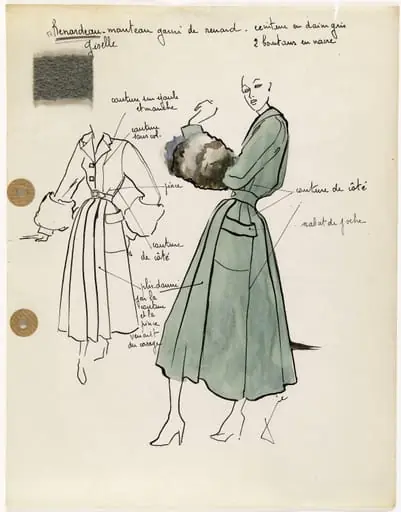 'Renardeau'
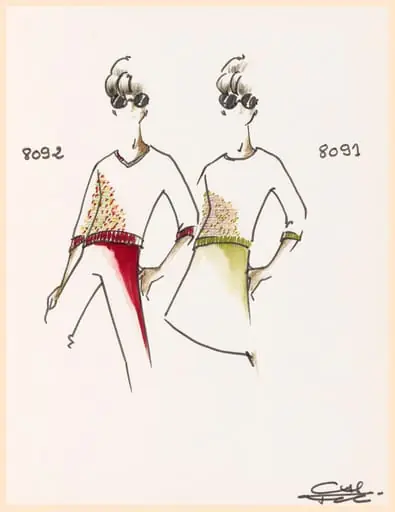 Pull-over à manches trois quarts et à encolure V à motifs multicolores, pantalon cerise et lunettes de soleil
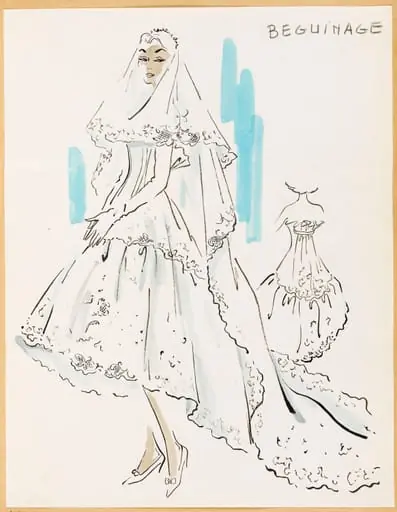 Béguinage