Artwork
Lotus
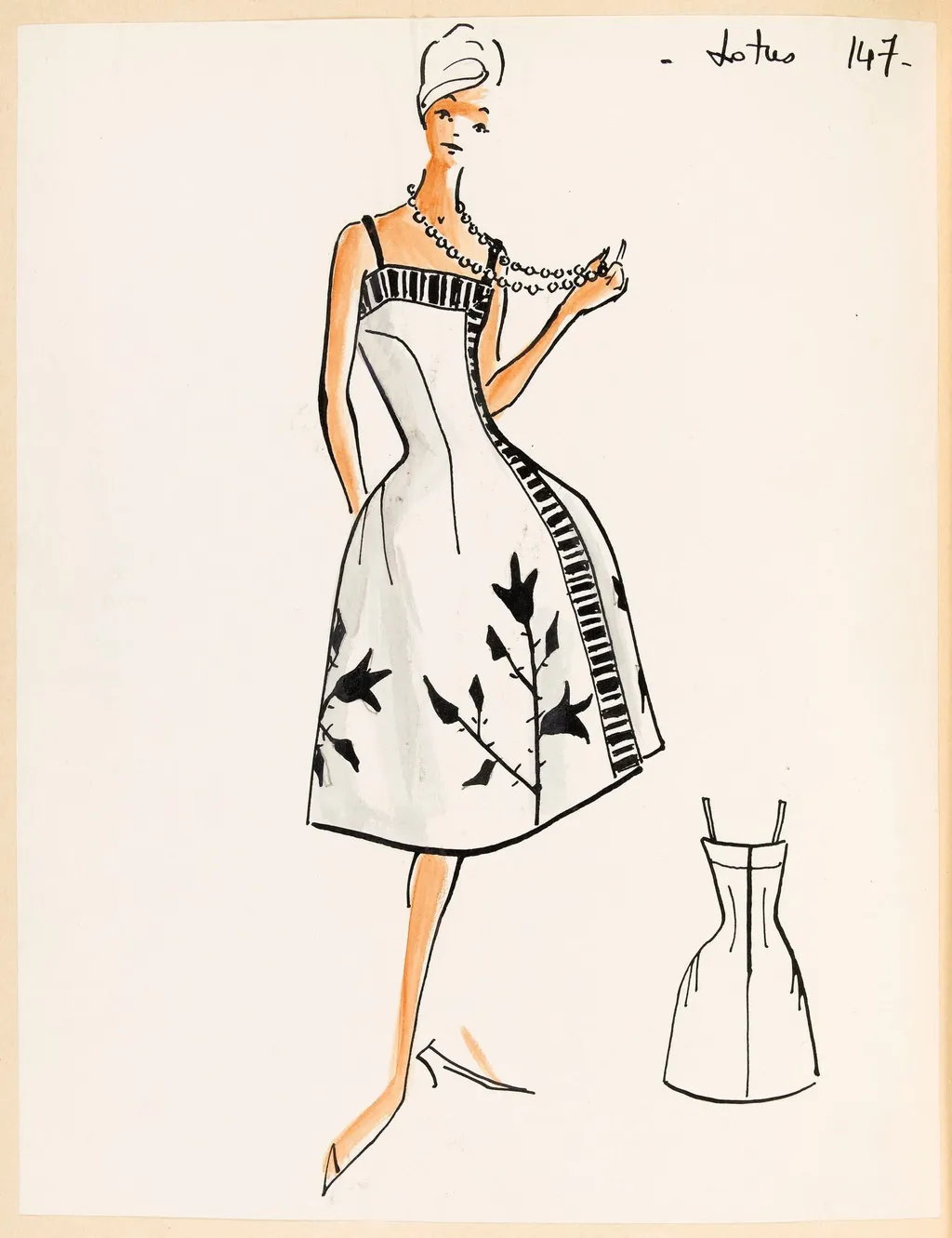
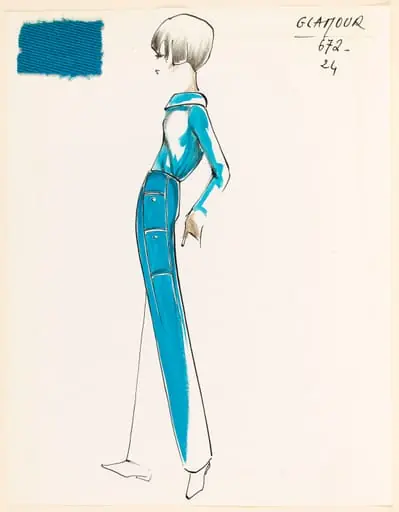
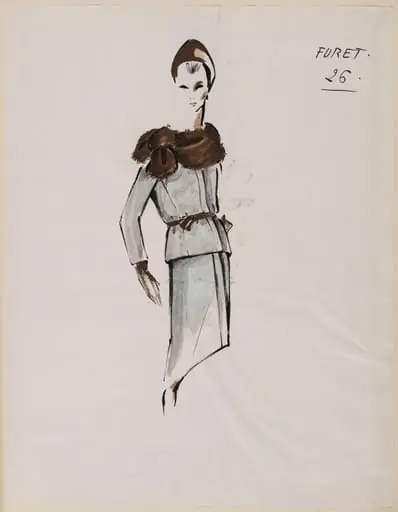
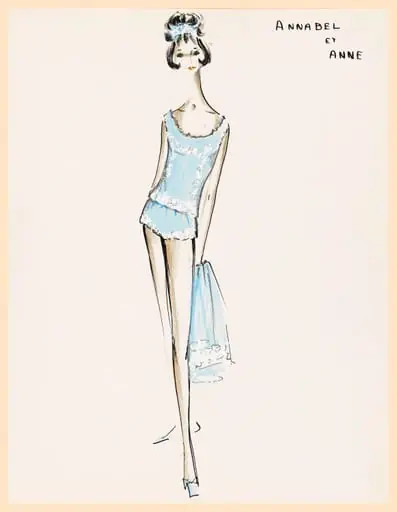
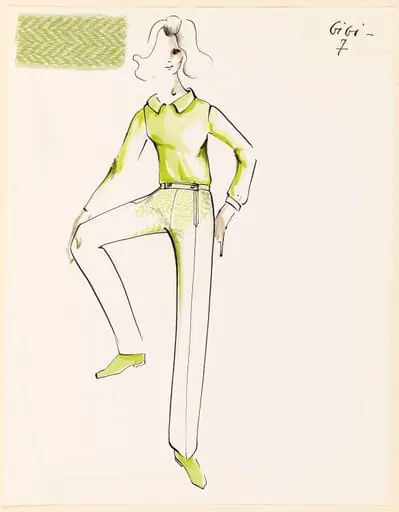
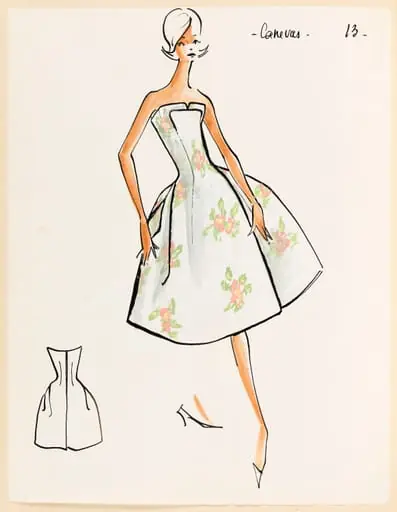
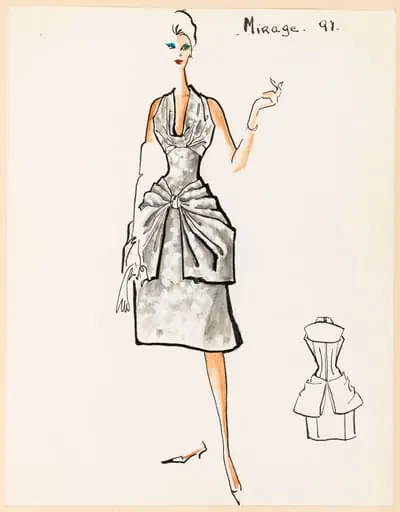
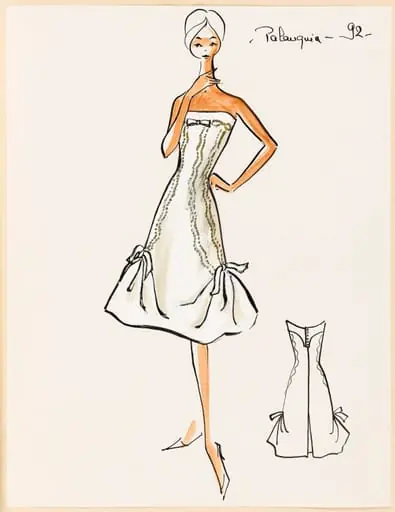
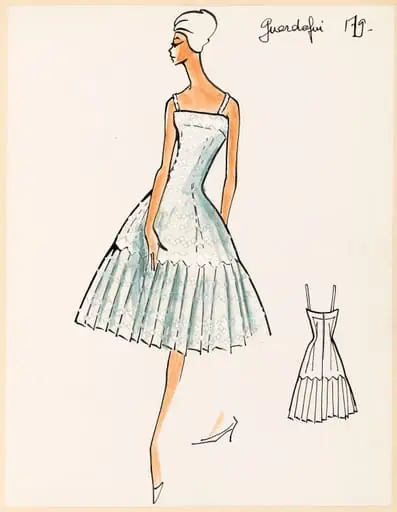
Lotus is a drawing by Carven. It dates from 1959 and is held in the collection of the Palais Galliera - Musée de la Mode de la Ville de Paris.
About this work
Overview
Created around 1959 by Carven, this ink sketch depicts a seated woman in a minimalist style. The work is part of the Museum of Ethnography’s collection and reflects a deliberate reduction of form, emphasizing silhouette and pattern over detail. Its simplicity suggests a focus on cultural attire and quiet movement rather than narrative complexity.
Subject & Meaning
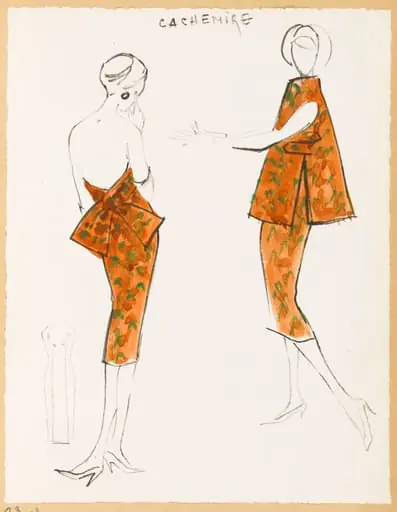
The figure, dressed in a loose, striped bodice and a skirt adorned with stylized leaf motifs, appears engaged in a calm, private moment. She holds a small, indistinct object, possibly a tool or ritual item, while her headscarf frames her face. The absence of facial detail invites interpretation, suggesting a representation of everyday dignity rather than a specific individual.
Technique & Style
Carven employed bold, unbroken black outlines and flat, unmodulated color to define form. Shading is suggested through sparse cross-hatching, particularly around the skirt’s patterns and the vase-like form to the right. The composition avoids depth, favoring a two-dimensional clarity that aligns with graphic traditions and ethnographic documentation.
History & Provenance
The sketch entered the Museum of Ethnography’s holdings shortly after its creation, likely acquired during the artist’s fieldwork or through direct donation. Its preservation suggests it was valued as a study of dress and gesture, though no detailed records of its initial context or commission have been publicly documented.
Context
Made in the late 1950s, the work coincides with a period when artists and anthropologists increasingly collaborated to record material culture. Carven’s approach—emphasizing textile patterns and posture—reflects a broader interest in non-Western dress as both aesthetic and functional, detached from exoticism but attentive to detail.
Legacy
Though not widely exhibited, the sketch remains a quiet reference in studies of mid-century ethnographic drawing. Its restrained style influenced later illustrators seeking to represent cultural attire without embellishment, preserving a sense of authenticity through formal clarity and deliberate omission.
Artist & collection
Artist
These delicate ink-on-paper drawings capture the quiet poetry of everyday things: pinecones, reeds, apples.
Museum
Palais Galliera - Musée de la Mode de la Ville de Paris
Continue through works from the same source collection.