Artwork
Palanquin
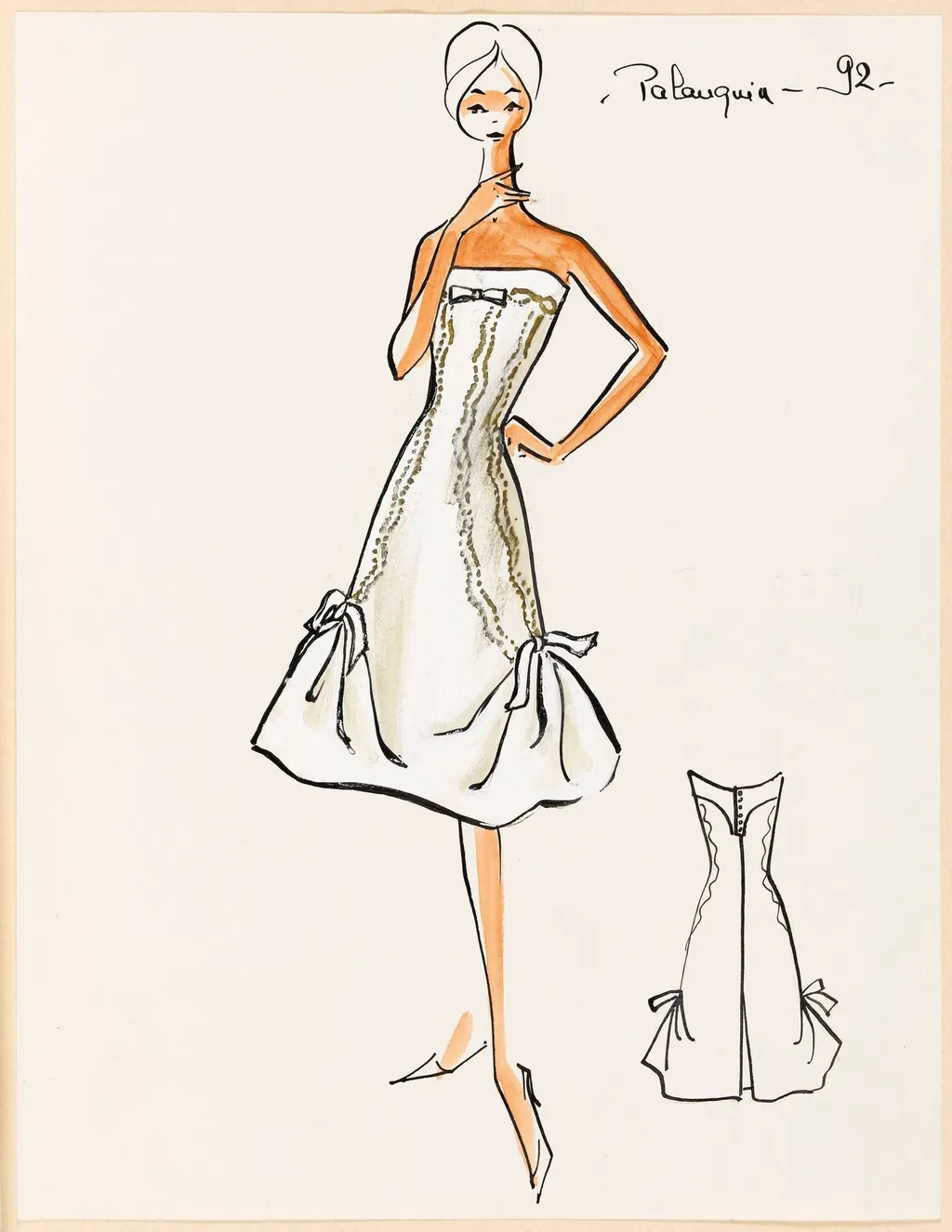
Palanquin is a drawing by Marie-Louise Carven. It dates from 1959 and is held in the collection of the Palais Galliera - Musée de la Mode de la Ville de Paris.
About this work
Overview
The work bridges couture design and commercial illustration, typical of her approach to translating fashion into visual form.
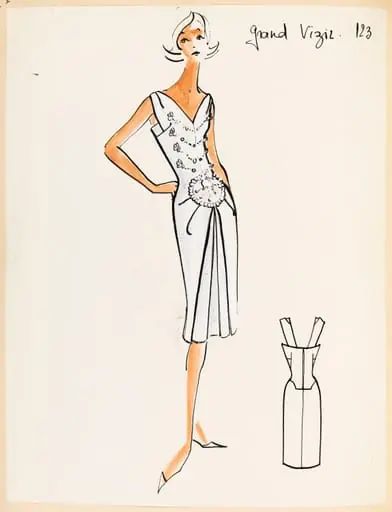
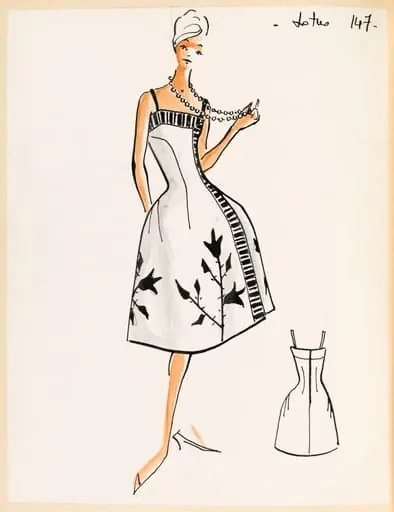
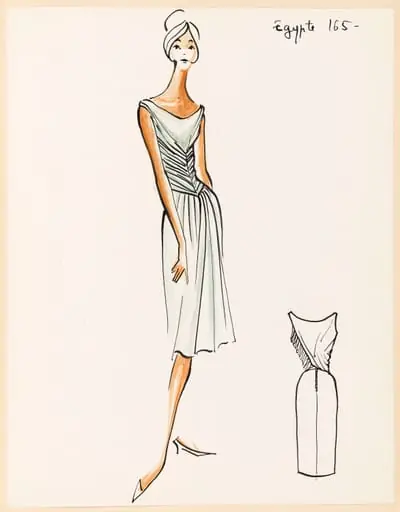
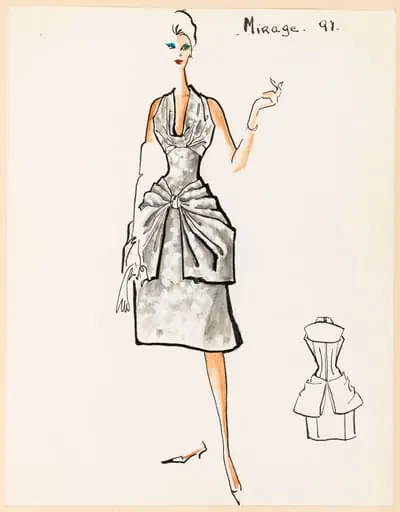
Created around 1959, *Palanquin* is a fashion illustration by Marie-Louise Carven, founder of the Parisian house Carven. Though labeled as an image, it functions as a design study rather than a fine art painting. It captures a formal gown in precise detail, reflecting Carven’s focus on refined, wearable elegance for smaller frames. The work bridges couture design and commercial illustration, typical of her approach to translating fashion into visual form.
Subject & Meaning
The subject is a woman in a strapless white dress with gold embroidery, a black belt, and a bow at the hem. Her poised stance—hand on hip, arm bent—suggests quiet confidence. The inclusion of a secondary sketch of the dress’s back, showing a zipper and bow, reveals the garment’s construction. This duality emphasizes function alongside beauty, underscoring Carven’s belief that sophistication lies in thoughtful detail, not ornament alone.
Technique & Style
The illustration employs clean lines and muted tones, with the beige background isolating the figure. Gold embroidery is rendered with subtle highlights, suggesting texture without heavy pigment. The dress is depicted from front and rear in a single composition, a practical method for communicating design to clients or manufacturers. The woman’s updo and high heels reinforce a sense of refined formality, consistent with Carven’s aesthetic of understated glamour.
History & Provenance
Marie-Louise Carven established her fashion house in 1945 and was among the earliest French designers to launch a ready-to-wear line, democratizing Parisian style. *Palanquin* emerged during the late 1950s, a period when her brand balanced couture craftsmanship with accessible design. While the work’s exact provenance is undocumented, it aligns with Carven’s archival design sketches, used internally to guide production and communicate vision.
Context
In the postwar era, Parisian fashion was redefining itself through practicality and modernity. Carven’s work stood apart by prioritizing comfort and proportion for petite figures, a niche largely unaddressed by her contemporaries. *Palanquin* reflects this ethos: a formal dress designed for movement, with hidden functional elements like zippers, signaling a shift from rigid tradition toward adaptable elegance in women’s wear.
Legacy
Though not widely exhibited as fine art, *Palanquin* exemplifies Carven’s influence on 20th-century fashion illustration. Her integration of technical detail into elegant presentation helped shape how garments were visualized beyond the runway. The piece remains a quiet testament to her role in expanding the scope of French fashion to include thoughtful, everyday sophistication.
Artist & collection
Artist
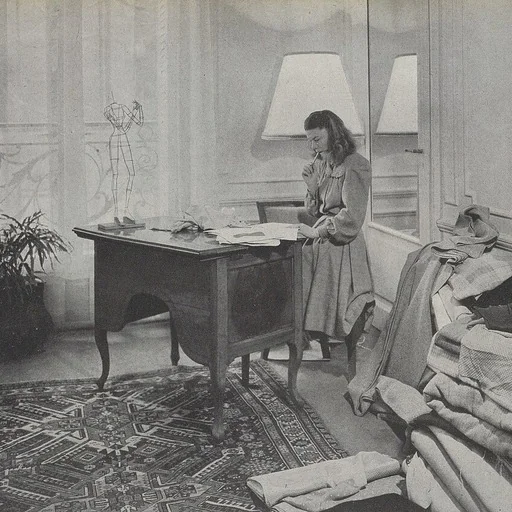
Marie-Louise Carven (31 August 1909 – 8 June 2015), born Carmen de Tommaso, was a French fashion designer who founded the house of Carven in 1945.
Museum
Palais Galliera - Musée de la Mode de la Ville de Paris
Continue through works from the same source collection.
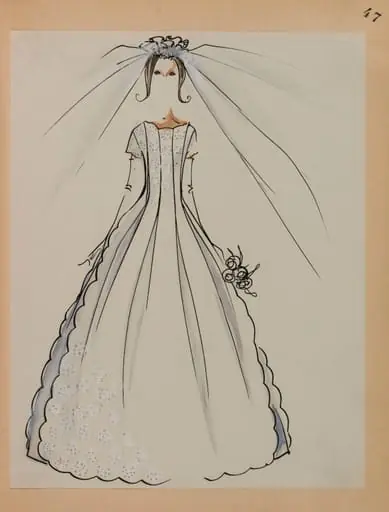 Robe de mariée festonnée et son voile
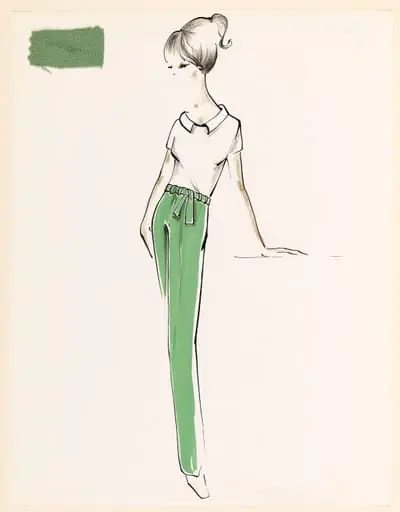 Haut blanc à manches courtes et pantalon vert à ceinture nouée
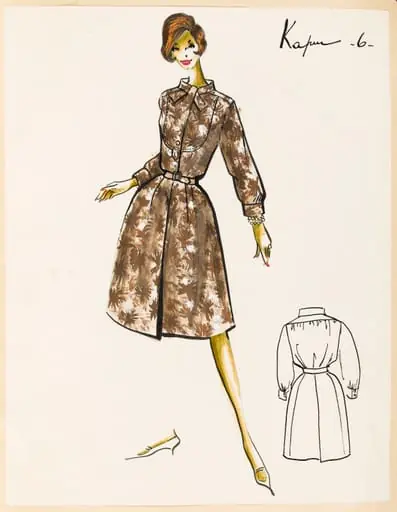 Kapur
Kapur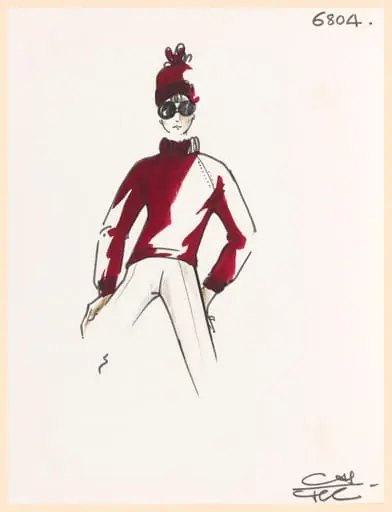 Pull-over à manches longues pourpre, bonnet assorti, pantalon et lunettes de soleil
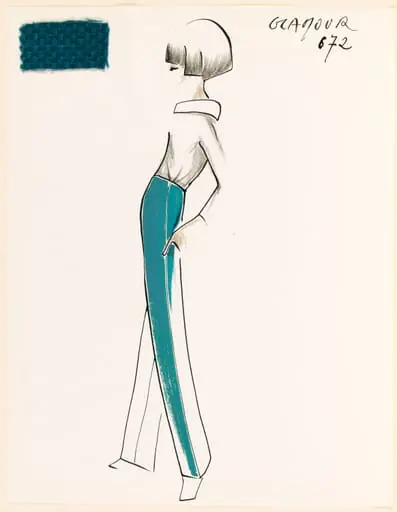 GLAMOUR
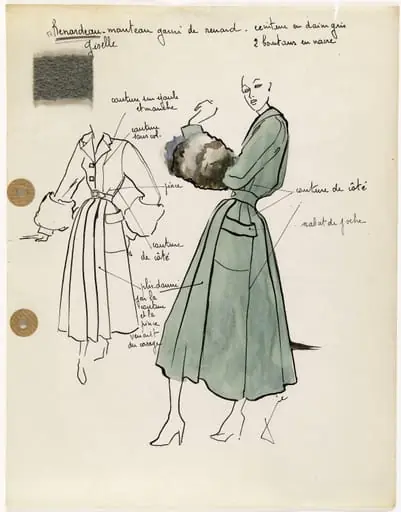 'Renardeau'
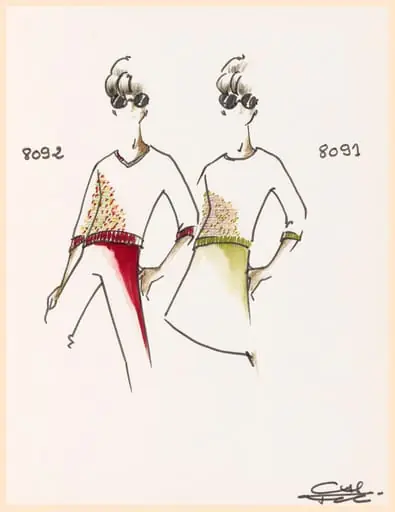 Pull-over à manches trois quarts et à encolure V à motifs multicolores, pantalon cerise et lunettes de soleil
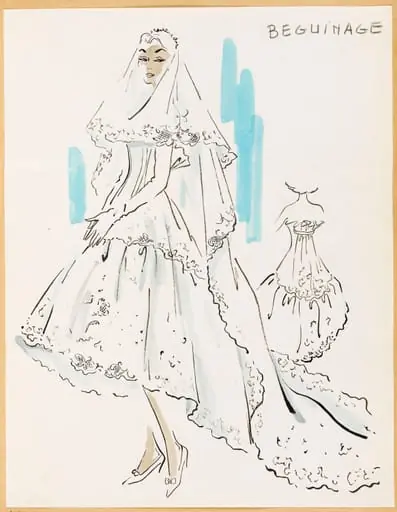 Béguinage